Culture

Culture

The good, the bad and the ugly in books, exhibitions, cinema, TV, dance, music, podcasts and theatre.

Transport to Australia was the saving of Carmen Callil’s family

More from Books

If 2020 has given us something to talk about other than Covid, it’s been history — and, more precisely, to whom history belongs and how we’ve chosen to define it. Well into the modern era, the philosopher Thomas Carlyle’s definition of the subject as ‘the biography of great men’, seems to endure. Most remember their school history lessons as a force-fed diet of monarchs’ names, battles and key dates, or as a narrative about palace-dwelling elites whose experiences seemed utterly removed from reality. It is undoubtedly why the subject in its most uncut Victorian form can seem so unpalatable to the general public. Conversely, it also goes a long way to explaining the popularity of the BBC hit series Who Do You Think You Are?

War was never Sir Edward Grey’s métier

More from Books

This meaty but easily digested biography pivots around the events either side of that fateful evening of 4 August 1914 when Britain’s ultimatum to Germany over Belgium ran out and Sir Edward Grey memorably remarked that the lamps were going out over Europe. As foreign secretary for almost a decade before that, Grey had deftly orchestrated a web of alliances designed to keep the peace in Europe, and Britain the dominant global power. But war and its attendant carnage unravelled his life’s work, leaving him a nervous wreck. He hung on in office until 1916 when the new prime minister David Lloyd George unceremoniously swept him out.

James Kelman’s ‘Memoirs’ are a misnomer

More from Books

James Kelman doubtless remains best known for his 1994 Booker prize win for How Late It Was, How Late and the subsequent furore. The brouhaha looks painfully absurd 25 years later with the plaudits Kelman has received (when not being dismissed as akin to an ‘illiterate savage’) perhaps the greatest in post-war English literature. Here is a writer to stand alongside Zola, Beckett and Joyce.Yet since then it feels as though Kelman’s audience has grown more selective — a process perhaps aided by his move to the USA in 1998 to teach creative writing at the University of Texas at Austin. But with Kelman now in his 75th year, it’s long past time for the man himself to step forward. So we have What I Do (Memoirs), published by the small press thi wurd.

The tug of war over the Rosetta Stone

Lead book review

The Rosetta Stone is the icon of decipherment. As one of the most popular objects in the British Museum, its irregular shape and the once white-on-black of its three scripts — hieroglyphic, demotic, Greek — are distinctive enough to sell countless socks, keyrings and nail files in the museum shop. The stone’s marketable popularity testifies both to the allure of hieroglyphs, including a persistent orientalising idea of their ‘mystery’, and the seemingly miraculous achievement of code-breaking. The latter is most associated with the two men of The Riddle of the Rosetta’s subtitle: the ‘English polymath’ Thomas Young (1773-1829) and the ‘French polyglot’ Jean-François Champollion (1790-1832).

The British Empire is now the subject on which the sun never sets

More from Books

Wrestling with the history of the British Empire is the unfinished and unfinishable project of our history. Time’s Monster takes a meta-approach to this. Its author Priya Satia has read widely, and has written essentially a cultural history of the Empire from the early modern period to today, of the way Britain’s colonial expansion has been interwoven with the culture. Many of the connections she draws are intriguing and her narrative is nuanced enough to be sympathetic to both pro- and anti-imperial arguments past and present.

The plight of the migrant: Crossed Lines, by Marie Darrieussecq, reviewed

More from Books

‘We should be living in a brave country and on a brave planet that bravely distributes its occupants,’ thinks Rose Goyenetche, a middle-class, middle-aged Parisian child psychologist and the heroine of Marie Darrieussecq’s Crossed Lines. As their hands touch, Rose feels a familiar electric ping, and their futures become linked The story unfolds on a Mediterranean cruise ship, where Rose is holidaying in a deluxe cabin (‘that is, economy class’) on an all-inclusive-without-alcohol-without-wifi package sponsored by her mother as a chance for Rose to get some perspective on her life.

Bright and beautiful: the year’s best art books reviewed

More from Books

When he was a student, the celebrated American modernist master Robert Rauschenberg once told me that his ‘greatest teacher’ — Josef Albers — would proclaim ‘art is svindle’ in heavily accented English at least ten times a day. By that provocative remark Albers probably meant not so much that art was a cheat but that intellectualising about it is usually bogus. He once thanked his lucky stars that his father was a painter-decorator rather than an intellectual. For him it involved simple forms, clear colours and no nonsense. Albers and his equally brilliant wife are the subject of a remarkable and visually beautiful joint biography, Anni & Josef Albers by Nicholas Fox Weber (Phaidon, £100).

No one ‘got’ the Sixties better than David Bailey

More from Books

What caught my eye towards the end of Look Again was this conversation between David Bailey and the shoe designer Manolo Blahnik. They are talking about a brief golden age, a perfect moment in their lives: Blahnik: So sometimes I just have to sit down and say: ‘God, did all this happen?’ All the excitement, it doesn’t exist any more, maybe because I’m old.Bailey: It’s not because you’re old. It doesn’t exist. This is the autobiography of David Bailey, as told to James Fox (‘my collaborator’). It starts with Bailey as a child in the East End, and ends with Bailey returning there as an old man.

Roy Strong’s towering egotism is really rather engaging

Lead book review

There is nothing wrong with being self-invented. The most interesting people in the world designed themselves. And in this matter Roy Strong, once upon a time the director of the Victoria & Albert Museum and National Portrait Gallery, can offer a master class. He has discovered the mines of self-invention to be very deep and richly seamed with treasure. This is no less than his third bulky volume of diaries, and readers have been generously treated to autobiographies as well. While convinced that a scheming Alan Yentob conspired to keep him off the telly for more than 30 years, Roy, with his singular voice, is a national asset, recognisable from innumerable radio broadcasts.

Is there anything left worth joking about?

More from Books

Here are a couple of books that seek to tackle the difficult issue of comedy on the front line. One deals with an increasingly toxic global cultural war; the other plunges into the battle to take on jihadists by laughing at them. In their different ways both ask the same questions: what’s funny and what’s not? And both examine the consequences of challenging those who police what is and what is not considered acceptable. Find yourself on the wrong side of cancel culture and you lose your career. Take on the jihadists and you lose your head. Andrew Hankinson, a journalist and writer from Newcastle, is the author of the cult study You Could Do Something Amazing With Your Life [You Are Raoul Moat], a modern take on Truman Capote’s In Cold Blood.

Suicide was always a spectre for John Berryman

More from Books

‘A matter that hurts me is that I have made many hundreds of people laugh, in various cities, during the last year or so, but not you — and your father is thought to be a wit.’ This was the poet John Berryman to his nearly-estranged son Paul in 1964. The hurt, off-kilter tone and the humble-brag speak to the Berryman one encounters in this capacious Selected Letters. One of the great extremists of a brilliant generation, which included Robert Lowell, Randall Jarrell and Elizabeth Bishop, Berryman’s entanglement of art and risk, his view of poetry as a ‘terminal activity’ and the artist’s life as one of self-annihilating labour, is present early, and enduringly. In 1936, just graduated from Columbia, Berryman writes to R.P.

Animal magic: children’s books for Christmas

More from Books

J.K. Rowling has written a book for children — and you know what? It’s a charmer. The Ickabod (Hachette, £20) was created for her own children between the Harry Potter books (how does she do it?) and was stashed away until the arrival of Covid, when she found that children were stuck indoors without much to do. So she published it online initially and invited illustrations from her young readers. Now it’s a proper book, with some of those pictures. It’s not a bit like HP. It has some of the elements, including fabulous eatables, but it’s more of a fairy story. Think A.A. Milne’s Once Upon a Time crossed with Eva Ibbotson’s The Abominables with a bit of Fattipuffs and Thinnifers and you’re there.

Four German-speaking philosophers in search of a theme

More from Books

How do you write a group biography of people who never actually formed a group? Such is the challenge Wolfram Eilenberger sets himself in a book about the philosophers Martin Heidegger, Ludwig Wittgenstein, Walter Benjamin and — the surprisingly unstarry fourth subject — Ernst Cassirer, an urbane and now nearly forgotten neo-Kantian who might have deserved the made-up title of ‘symbologist’, thus far reserved for the heroes of Dan Brown’s novels. What these men have in common is that they spoke German and were philosophically active during the 1920s, but that is about it.

Alasdair Gray gives us a vivid new Paradiso

More from Books

As every Italian schoolchild knows, The Divine Comedy opens in a supernatural dark wood just before sunrise on Good Friday 1300. Dante Alighieri, a figure in his own work, has lost his way in middle age and is alone and frightened in the darkness. The ghost of the Roman poet Virgil is about to show him Hell: Midway in the journey of our life I found myself in a dark wood, for the right path was lost. Begun in the early 14th century, Dante’s poem is, for many, the greatest single work of western literature. With its dramatic chiaroscuro of hellish fuming mists and paradisal stellar regions, the poem is ‘awful’ in the archaic sense of the word (still valid in the Italian terribile), meaning to inspire awe.

No writer was better suited to chronicle the Depression than John Steinbeck

More from Books

John Steinbeck didn’t believe in God — but he didn’t believe much in humanity either. When push came to shove, he saw people as cruel, selfish, dishonest, slovenly and, at their very best, outmatched by environmental forces. Like his friend, the biologist Ed Rickett, Steinbeck considered human beings to be no better and no worse than any community of organisms: they might aspire to do great things, but they always ultimately failed. In The Grapes of Wrath, the hard-working Joad family travel west, seeking a good life, and get taken apart by poor wages, malignant farm cooperatives and company stores. In Cannery Row, Mack and his boys want to repay their friend Doc for all his generosity, and end up burning down his lab after a drunken party.

When sedition was rife in 18th-century London

More from Books

Researching the seditious literature of earlier periods is seldom suspenseful, pulse-quickening work. For every thrill of archival discovery, there are countless hours of slow, methodical, sometimes crushingly unproductive labour aimed at uncovering the individuals and agencies behind books that, as clandestine productions, were primarily designed not to surrender such secrets. The underground networks behind dissident pamphlets in 17th- or 18th-century England, for example, frequently hid their own involvement by withholding the names of authors, printers and places of publication from their title pages, leaving puzzling blanks or laughable fictions in their stead.

Barack Obama was decidedly a man of action as well as words

Lead book review

Well, it’s quite the title, isn’t it? It tends to invite comparisons. The first one that occurred to me, though, was that the original Promised Land guy managed to get all the important stuff down on two stone tablets. His would-be successor doesn’t have quite that gift for compression. As he semi-apologises in the opening pages (he feels bad about it, but not bad enough to do a ruthless edit), this memoir was originally envisioned as a 500-pager. A Promised Land is just north of 700 pages, and there’s another volume to come. That speaks of a certain self-regard. Then again, Barack Obama has a good bit to be self-regarding about.

Sunshine on a plate: the year’s best cookbooks

More from Books

In the dark days of a terrible winter, Elizabeth David began writing her first book, about Mediterranean food. The timing should have been wrong. People enduring post-war rationing would rather not think about sunlit shores and dishes of bright food, surely? But oh, how depressed, broke Britain lapped up A Book of Mediterranean Food when it was published in 1950. David’s prose and recipes ‘flew’ readers to Greece, Italy, the south of France and Egypt, stirring up an appetite for garlicky seafood stews, saffron-suffused pilaffs and artichokes dipped in anchoiade. In an echo, 70 years on, I have found my thoughts wandering to places that currently cannot be visited except via their dishes.

Cheering for Jürgen Klopp: Liverpool FC’s manager can do no wrong

More from Books

As his biographer, I feel obliged to quote John Updike’s wise sayings — among them the first rule in his code for book reviewers: ‘Try to understand what the author wished to do, and then do not blame him for not achieving what he did not attempt.’ Too bad about the gendered pronoun; otherwise, spot on. Rules are made to be broken, though, and when it comes to Anthony Quinn’s Klopp, I have to say I wish there were more Klopp, less Quinn. In the prologue, the author warns us: ‘This book is not a biography of Jürgen Klopp.’ So what’s with the title? Jürgen Norbert Klopp arrived at Anfield five years ago to take charge of Liverpool Football Club.

A brutal education: At Night All Blood is Black, by David Diop, reviewed

More from Books

Alfa Ndiaye, a Senegalese soldier fighting for France in the trenches of the Great War, is consumed by bloodlust, which you’d think might be an asset under the circumstances. But after watching the protracted, gruesome death of his friend and ‘more than brother’, Mademba, a switch is flicked in Alfa’s mind. He becomes, in effect, a sadistic serial killer, until war itself cannot provide sufficient cover for his extremity. David Diop’s powerful novel, not much more than novella length, is full of echoes and portents. Over the course of his self-justifying narrative, Alfa says ‘God’s truth’ so often that the notion is drained of meaning.

Poise and wit: The Collected Stories of Shirley Hazzard reviewed

More from Books

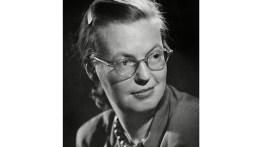
Shirley Hazzard was in her late twenties when, in 1959, somewhat diffidently, she submitted her first short story to the New Yorker. It was, William Maxwell remembered, ‘an astonishment to the editors, because it was the work of a finished literary artist about whom they knew nothing whatever’, and he immediately accepted it for publication. Hazzard’s arrival as a fully formed and refreshingly cosmopolitan writer was a result of her peripatetic and often unhappy early life. ‘By the time I was 25, I had emerged from a lot of trouble,’ she recalled. ‘I had also, more interestingly, lived for appreciable periods in six countries and diverse languages.

A closing of ranks: The Searcher, by Tana French, reviewed

More from Books

If the homage wasn’t clear from the title, Tana French makes sure throughout The Searcher, her seventh novel and second stand-alone, that there’s no doubt which genre we’re in. ‘We’ll bring you for a pint, welcome you to the Wild West,’ a cheery local Garda tells her hero, Cal Hooper. ‘They used this rifle in the Wild West,’ Cal explains to someone later, when he gets his Henry shotgun. Cal is a former Chicago cop, recently retired and divorced, and the lawless west here is the west of Ireland, where he has bought a beat-up old farm in search of ‘a small place. A small town in a small country. It seemed like that would be easier to make sense of. Guess I might’ve had that wrong.

Claire Messud helps us see the familiar with new eyes

More from Books

The title of this collection of journalism is a problem. Not the Kant’s Little Prussian Head bit, which, though opaque, is explained in the text. It’s from Thomas Bernhard’s novel The Loser and is quoted by Claire Messud in the title essay: ‘We study a monumental work, for example Kant’s work, and in time it shrivels down to Kant’s little East Prussian head.’ As a novelist, she explains, she strives to resist that shrivelling — to avoid being condensed into a ‘little American head’, to retain and convey all the detail of life. The problem is with the claim that this is an autobiography through essays. It isn’t.

High-speed trains, planes and automobiles are increasingly redundant

More from Books

Should the world be faster or slower? This is a question relevant to global economics, politics and culture. But not to Martin Roach. The History of Speed is a one-dimensional book — if it has any dimensions at all. Speed and pace are often confused. One is distance over time, the other is time over distance. A snail’s pace is actually a snail’s speed, or about 0.002 mph. At the other extreme is the speed of light: 671,000,000 mph. The shelled gastropod is nearer to the average speed of London traffic today, about 7 mph if you are lucky. Roach, who has written bestsellers on boy bands, suffers no sort of confusion over his subject. Indeed, his focus is hard and sharp.

Harold Bloom finally betrays how little he really understood literature

Lead book review

Tennyson’s poem ‘Mariana’ has gone everywhere in the world since 1830. A professional scholar in Uruguay, Papua New Guinea or New Haven, Connecticut, reading the lines ‘Weeded and worn the ancient thatch/Upon the lonely moated grange’ might want to ask a few questions. Do English houses ever have moats? (Yes — Ightham Mote and Madresfield Court are famous examples.) Can we find houses with a humble thatch and also a moat? (A harder question – Tennyson’s poem set a vogue in landscape design as well as poetry.) Or, taking a different tack, where does the use of the word ‘moat’ as a verb come from? (Easy — ‘moated grange’ is from the poem’s subject, Measure for Measure.) What sort of word was it by 1830?