John Maier

Friendships and rivalries in the golden age of Oxford philosophy

From our UK edition

Though it is startling to think of it now, analytic philosophy was once considered a promising subject for satire on mainstream television. When Beyond the Fringe was broadcast in 1964, the viewing public could apparently be relied upon to recognise the archetype of the post-Wittgensteinian linguistic philosopher being impersonated by Jonathan Miller and Alan Bennett. The discursive style on display was anguished, effete and reflexively pedantic; the setting, a kind of implied common room (the only atmosphere this particular creature was able to breathe); the repartee hopelessly clogged with qualifications and smug little obiter dicta and minutely alert to exquisite verbal distinctions of doubtful relevance to the point in hand.
Lionel Shriver, Theo Hobson and John Maier

From our UK edition

25 min listen

This week: Lionel Shriver asks whether we are kidding ourselves over Ukraine (00:56), Theo Hobson discusses Martin Luther King and the demise of liberal Protestantism (09:28), and John Maier reads his review of Quentin Tarantino's new book Cinema Speculation (18:11). Produced and presented by Oscar Edmondson.

The films of Quentin Tarantino’s childhood

From our UK edition

Explaining how she managed to kick her cocaine habit, the singer Fiona Apple recalled ‘one excruciating night’ she spent trapped in Quentin Tarantino’s home cinema with Paul Thomas Anderson listening to the two Hollywood directors brag competitively, and apparently indefatigably, about their professional achievements. ‘Every addict should just get locked in a private movie theatre with QT and PTA on coke, and they’ll never want to do it again,’ she informed the New Yorker some years later. I suppose that’s one accolade the pair will have to agree to share: conversation so unstimulating it undoes all the good effects of hard drugs.

After Aberfan, clairvoyants had a field day

From our UK edition

In the wake of catastrophe, however random or unpredictable, one of the first things people can be relied upon to do is look around for somebody to blame. There isn’t always an obvious candidate, of course, but disaster makes us resourceful, and often the casting process is simply a matter of laying hands on someone who happens to be fairly near by and looks like a good enough fit for the role. Assigning responsibility is an extremely effective therapy, after all, restoring a feeling of control over the capricious environment. Someone should have known, we insist. Someone ought to have seen this coming. John Barker, the central figure of The Premonitions Bureau, took this final claim rather literally.

What did the Russians make of Francis Bacon?

From our UK edition

The KGB might not have known much about modern art, but they knew what they liked. For instance, at what came to be called the ‘Bulldozer show’ of 15 September 1974, the Soviet secret service instructed a small militia of off-duty policemen to besiege an unofficial exhibition being staged by a group of underground artists in a field on the outskirts of Moscow. As James Birch recalls, KGB goons ‘attacked the show, using bulldozers and water cannons. Artists and onlookers were beaten up, some paintings were set on fire, other works were thrown into tipper lorries where mud was piled on top by diggers’. Surviving artworks were ‘driven off to be buried’ in an unknown location.

Contains moments of spellbinding banality: Radio 4’s The Poet Laureate has Gone to his Shed reviewed

From our UK edition

The interview podcast is a genre immoderately drawn to gimmicks, as the logical space of possible formats is gradually exhausted. The interviewee, quite often themselves a podcaster, might be, for example, invited to noisily eat lunch while nominating their top-five deceased childhood pets. The theory is that fanciful formats encourage the interviewee to open up. Under such conditions, the interview itself can come to seem incidental to the main event, the atmosphere chummy, comfortable, back-scratching, but fundamentally uninterested: you do my interview, I’ll do yours, no real questions asked.

Our need to get drunk in company may be innate

From our UK edition

It was once a favourite theory of optimistic drunkards that a suitably ‘moderate’ level of alcohol consumption provided covert health benefits. The mechanism was always a little obscure. But it was a fairly sure thing that reds — or was it all booze? — by virtue of some enzyme or vitamin or whatever, and judiciously drunk in something between homeopathic and industrial quantities, protected against heart attack — or was it ischaemic stroke... or memory loss? This, at any rate, was the glass-half-full defence of moderate drinking. Then a paper published in the Lancet in 2018 pulled the rug out from underneath the moderate drinker (not something, needless to say, that he finds terribly helpful).

Yuri Gagarin – poster boy of manned space flight

From our UK edition

To an observant outsider, the Soviets might have appeared to have developed an oddly intolerant attitude towards stray dogs. Every so often throughout the late 1950s, a fresh pack of homeless mongrel bitches was picked off the streets of Moscow and transported to a remote region of Kazakhstan, where they were promptly strapped into the nose of a ballistic missile and fired into space. If they survived till re-entry, they would likely be blown up by a remotely detonated on-board bomb designed to prevent their earthbound remains from falling into enemy territory. It was, as the phrase goes, a dog’s life. This elaborate and rather costly method of canine population control was one of only a very few signs that the Soviets planned imminently to put a man in space.

Enjoyably tasteless: Power – The Maxwells reviewed

From our UK edition

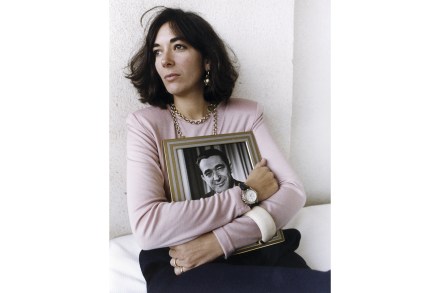
This year marks three decades since Robert Maxwell fell naked to his death from the deck of his yacht, The Lady Ghislaine. Power: The Maxwells is the latest contribution to the never-ending autopsy of Maxwell’s character and the circumstances of his death. It follows a now well-established formula, juxtaposing the lives of Ghislaine and her father, marvelling at how against seemingly unbeatable odds she can have managed to disgrace the good name of Maxwell, and throwing in the occasional Trump soundbite as a garnish of relevance.

maxwells

Power: The Maxwells is enjoyably tasteless

This year marks three decades since Robert Maxwell fell naked to his death from the deck of his yacht, The Lady Ghislaine. Power: The Maxwells is the latest contribution to the never-ending autopsy of Maxwell’s character and the circumstances of his death. It follows a now well-established formula, juxtaposing the lives of Ghislaine and her father, marveling at how against seemingly unbeatable odds she can have managed to disgrace the good name of Maxwell, and throwing in the occasional Trump soundbite as a garnish of relevance.

The programme of art plunder initiated by Hermann Göring continued long after the war’s end

From our UK edition

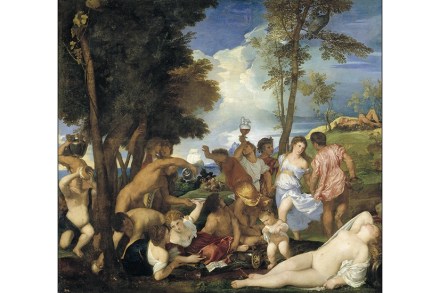
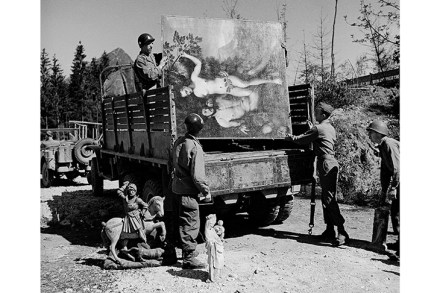
Making one’s fortune in Occupied Paris was largely a matter of knowing the right people: in fact, the further to the right the better. In 1941, Bruno Lohse, a lowly SS officer and art history PhD, was languishing on the Baltic coast recovering from a gunshot wound when he was seconded by Hermann Göring to work as his ‘personal art agent in Paris’, where he became one of history’s ‘greatest all-time art looters’.

Enjoyably bad-tempered: The Lock In with Jeremy Paxman reviewed

From our UK edition

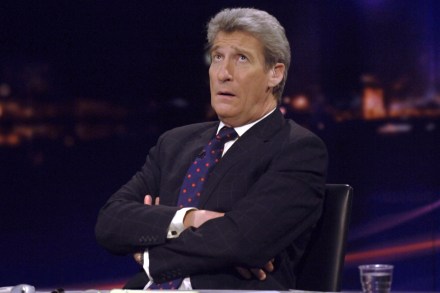
‘I used to be Mr Nasty! That was good! Mr Nasty was easy!’ Jeremy Paxman bellows at Michael Palin on his new podcast. Now Paxman wants to know: ‘Have you got any recommendations as to how you become the nicest man in Britain?’ ‘I’m a very angry, cross person half the time!’ Michael Palin protests, pleasantly. The Lock In with Jeremy Paxman is Paxman’s attempt at a more convivial register — ‘just interesting people, over a pint, with me’ — in contrast to the tone he deployed famously on Newsnight for 25 years: that of the professional curmudgeon. Luckily Paxman is still a hopeless grouch and cannot easily sustain common standards of politeness even over the course of a half-hour interview.

A passion for pastiche: China’s Potemkin villages

From our UK edition

Closely inspect No. 23 Leinster Terrace, Bayswater and you might notice the house has no letter box. Push at the door and you might find it stuck; force your way in and you might find you plummet 40 feet through open space down an obsolete ventilation shaft on to the tracks of the District Line. The house is a fake; a five-storey façade; an architectural trompe l’oeil disguising a disused steam outlet on the London Underground. (Or, as the estate agent might yell down to you, the property combines an airy open-plan design with excellent transport links right on the doorstep.) Flaws notwithstanding, the white stucco frontage — owned and pristinely maintained by TfL— is, like its neighbours, Grade II listed. And the chameleon-like No.

Is this the last round in the great celebrity Punch and Judy show?

From our UK edition

It’s been tough recently being Woody Allen, something that didn’t look too easy to begin with. Last year Amazon breached his four-film contract, preferring to settle out of court. Actors have lodged their public regret at working with him. He is one of Hollywood’s notable sinking stars. In March, following a demonstration by staff, Hachette pulped this book. ‘Everybody should take responsibility for their actions,’ one protesting employee told the Guardian — anonymously, and apparently without irony. The New York Times called him ‘a monster’. And if you think that’s social rock bottom, in 2016 the Clinton campaign refused his donation. Imagine that: money so tainted that not even the Clintons will bank it.