David Kynaston

The ups and downs of high-rise living

From our UK edition

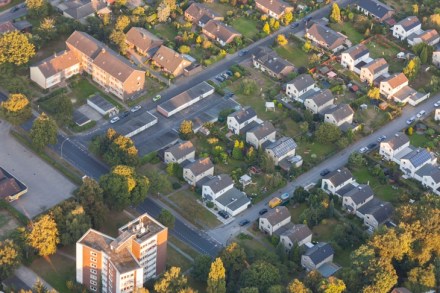
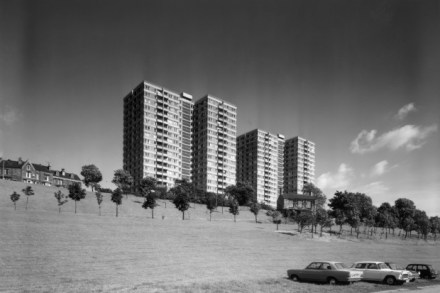
‘On BBC 2 last Monday,’ noted the Sunday Telegraph’s TV critic Trevor Grove in February 1979, ‘the return of Fawlty Towers was immediately followed by a programme about faulty towers.’ He went on: This was odd, but on close examination turned out to be without significance. After all, what connection could there possibly be between a comedy series based on the exploits of a domineering, havoc-wreaking megalomaniac called Basil Fawlty and a serious study of what has been done to Britain’s urban environment by a bunch of domineering, havoc-wreaking megalomaniacs who call themselves architects? The programme was Christopher Booker’s still remembered City of Towers, a ferocious attack on Le Corbusier-inspired concrete high-rise, especially when used for public housing.

Was the closure of the grammar schools really such a tragedy?

From our UK edition

In 1959, the public (i.e. private) schools were responsible for 55 per cent of the Oxbridge intake. By 1967 they were down to 38 per cent, with the majority of places going instead to the grammar schools. Four years later Anthony Sampson welcomed how ‘the trickle of grammar school boys to Oxbridge has turned into a flood’, adding that ‘both in intelligence and ambition they compete strongly with the public school boys’. In short, a new, largely state-funded elite was now emerging to rival the familiar products of Eton, Winchester et al.

Were the Sixties really so liberated?

From our UK edition

Lolita, the Lady Chatterley trial, the pill, Christine Keeler, ‘(I Can’t Get No) Satisfaction’, love-ins, Oh! Calcutta!, the Oz trial — sex, even more than usual, was on people’s minds in the 1960s, that semi-mythical decade which, to stretch a point, lasted from the late 1950s to the early 1970s. That, anyway, is the plausible contention of Peter Doggett, whose Growing Up is a refreshingly undogmatic, well-researched and highly readable survey of some of the emblematic episodes and controversies surrounding the subject during these years. More detailed sociology would have been helpful — how, if at all, did everyday/everynight sexual practices and attitudes change in Barnsley, in Dunfermline, in Ashby-de-la-Zouch?

Social mobility has become a meaningless mantra

From our UK edition

‘Whatever your background,’ Margaret Thatcher told the Sun’s readers in 1983, she was determined that ‘you have a chance to climb to the top’. So, too, Tony Blair in 2004 (‘I want to see social mobility a dominant factor of British life’), David Cameron in 2015 (‘Britain has the lowest social mobility in the developed world — we cannot accept that’) and Theresa May in 2016 (‘I want Britain to be a place where advantage is based on merit not privilege’).

Ever decreasing circles

From our UK edition

‘The area’s isolation has given it a strong sense of community and independence,’ runs the Wikipedia entry on New Addington. The presence of the library, youth clubs, leisure centre, shops, churches and street market enables locals to lead full lives in many ways. The Addington Community Association has provided an important hub for the community. It has been notable for its local gangs. John Grindrod’s illuminating and enjoyable Outskirts is in part a memoir about growing up in New Addington, in part an intimate family history, and in part a history-cum-gazetteer of the green belt, along with a meditation on its uncertain future. My strong suspicion is that most Spectator readers, even if Londoners, barely know where New Addington is, let alone have been there.

Big is beautiful: A crushing case for brutalism — with the people left out

From our UK edition

First things first: this is one of the heaviest books I have ever read. Eventually I finished with it resting uncomfortably on my knees, as I perched on the edge of my bed. It reminded me of when I met Jennifer Worth (of Call the Midwife fame) and she showed me her hardback copy of my own substantial tome Austerity Britain — neatly spliced in half to make two separate manageable entities. Reluctantly I can now see her point; but in the case of Elain Harwood’s Space, Hope and Brutalism, the doorstopper’s doorstopper, I doubt if I would have the strength to do the same.