Lara Feigel

Hero and villain: The Two Loves of Sophie Strom, by Sam Taylor, reviewed

From our UK edition

Counterfactual thinking can be compelling. We imagine love affairs missed out on, tragedies averted. What if I hadn’t boarded that bus or woken from that sleep? Sam Taylor throws this thinking into a vital moment in a young boy’s life that has massive, world- historical resonance. Vienna, 1933. Nazi sympathisers burn down the flat of a Jewish family. Max Spiegelman, aged 13, escapes, but his parents burn to death. Or do they? In a parallel narrative, Max awakes from this dream into the very fire he’s just dreamed about, early enough to rescue his parents.

How country living changed the lives of three remarkable women writers

From our UK edition

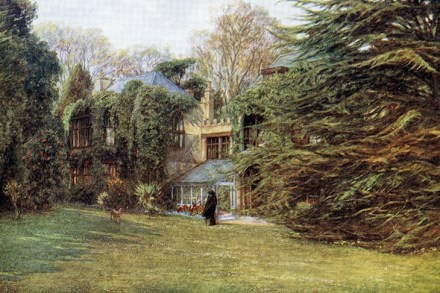
Very fine hot day. (Bank Holiday). Sound of band in Lewes from the Downs. Guns heard at intervals. Walked up the down at the back. Got plenty of mushrooms. Butterflies in quantities. Ladies Bedstraw, Roundheaded Rampion, Thyme, Marjoram. This isn’t what we expect from Virginia Woolf, known for her caustic investigations of friends and filigree portraits of her own inner life. But in 1917, after three years of mental illness, she moved to Asheham in Sussex and began a slow but dogged recovery that took the form of these daily walks and list-filled diary entries, which rarely contain the word ‘I’.

Two sinister siblings: The Mountain Lion, by Jean Stafford, reviewed

From our UK edition

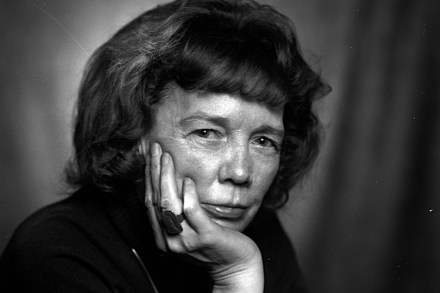
Many of the best literary children – think the creations of Henry James or Elizabeth Bowen – have something creepy about them. These are girls and boys who see through the hypocrisy of adults, and there’s going to be something unnerving about their precocity. Jean Stafford’s Mollie and Ralph took their place in a lineage with James’s Flora and Miles and Bowen’s Henrietta and Leopold when she flung them, bespectacled and prone to nosebleeds, into the world in 1946. Stafford was the first wife of Robert Lowell, and it’s the main thing most people know about her now – unsurprisingly. Lowell was a man who made his mark on his wives, and in Stafford’s case the marks were literal – he drunkenly drove her into a brick wall.

A child’s eye view: Fight Night, by Miriam Toews, reviewed

From our UK edition

Writing from a child’s point of view is a daredevil act that Miriam Toews raises the stakes on in her latest novel. The nine-year-old narrator is meant to have written the words that appear on the page. But then there is something inherently risky about Toews’s whole undertaking as a novelist. She has made her name in fiction that grapples with the restrictive Mennonite community in which she was raised – keeping faith with it and betraying it simultaneously. Her masterly Women Talking confronted the community head on, depicting the secret meetings of a group of women deciding how to respond to pervasive sexual violence.

The Belfast Blitz: These Days, by Lucy Caldwell, reviewed

From our UK edition

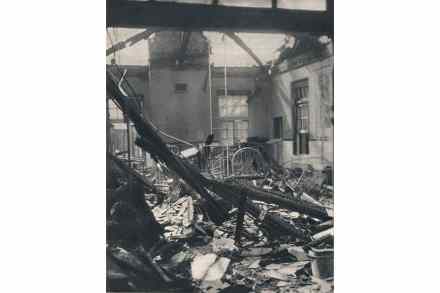
Caught outside at the start of a raid in the Belfast Blitz as the incendiary bombs rain down, Audrey looks up at the sky, transfixed by its eerie beauty. She watches ‘the first magnesium flares falling, bursting into incandescent light, hanging there over the city like chandeliers’. It is the sort of thing you never forget, she thinks, ‘not in a lifetime’. This scene in These Days, by the Northern Irish writer Lucy Caldwell, brilliantly captures familiar territory for anyone who has read about the Blitz. The awe at the peculiar beauty, the feeling that this is unforgettable and will change people forever, the desire to domesticate these undomesticated happenings (the chandeliers): all this comes up often in fiction and memoir from the period.

The stuff of fiction: Elizabeth Bowen exploits her extra-marital affairs

From our UK edition

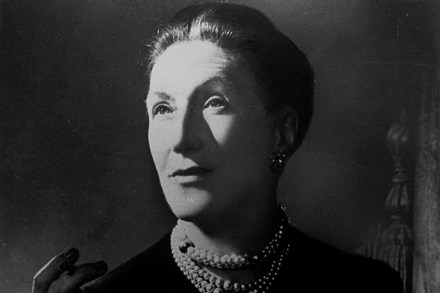
‘Why, Elizabeth, did you not tell me when we first slept together that you were a virgin?’ This is one of the most peculiar letters in English literary history, written in 1934 by the writer Humphry House to Elizabeth Bowen, now widely recognised as one of the major novelists of the 20th century. Bowen was 34 and had been married for ten years when she first went to bed with House in 1933. It’s not surprising that he shouldn’t have expected her to be a virgin, though his rendition of their encounter is bafflingly obtuse: ‘I thought you had some malformation... had I known... how much less gloom would have sat across that breakfast tray!’ The story of Bowen’s affair with House was under wraps for years.

Where would any writer be without a room of their own?

From our UK edition

If you seek out the home of an admired writer, you might find, as with Ernest Hemingway’s house in Havana, that there’s a pen on the desk, mid-novel, and it feels as though he’s about to return from a day’s fishing. You might encounter, as Hermione Lee did visiting the novelist Elizabeth Bowen’s beloved ancestral home in Ireland, only a pile of grass and stones, because the building has been razed to the ground. Or you might discover, as Kate Kennedy did seeking out the Gloucester mental asylum where the poet and composer Ivor Gurney was incarcerated, that it has been turned to a new use.

Cuckoo in the nest | 11 April 2019

From our UK edition

What kind of loyalty do we owe a robot we’ve paid for — one who exhibits a convincingly human kind of consciousness? Less loyalty than we owe to our own children? But what about to someone else’s child? And do we commit murder if we destroy him? These are the questions facing Charlie when he spends his inheritance on a robot called Adam. Charlie is a trained anthropologist with an enthusiasm for computers who hopes to give his life meaning by experimenting in ‘electronics and anthropology — distant cousins whom late modernity has drawn together and bound in marriage’. He and his girlfriend Miranda join forces in programming Adam with a personality, playing at parenthood as they create a new quasi-human.

Opposites attract

From our UK edition

‘Marianne had the sense that her real life was happening somewhere very far away, happening without her, and she didn’t know if she would ever find out where it was and become part of it.’ This is the most frustrating part of being alienated and young. You hope that there’s a better life in store for you but you can’t yet bank on it. Sally Rooney appeared two years ago with Conversations with Friends and has rightly been fêted as one of the most important writers of her generation. The question of generation matters because she’s writing about young people. Both novels feature protagonists who are undergraduates in Rooney’s own Dublin.

Love becomes a duty

From our UK edition

The story, as it emerges, feels both familiar and inevitable. A bored 19-year-old student, on his university holidays in mid-century Metroland, joins the local tennis club, where he dismisses all the girls his age as wholesome ‘Carolines’ but falls for Mrs Susan Macleod, a spirited, sarcastic woman in her forties. Paul shocks the village by taking her for drives (both are soon barred from the tennis club) and then starts taking her to bed in her marital home. Here he manages to become a familiar presence. Though Susan’s husband mocks Paul as her ‘fancy boy’, he also teaches him to do the crossword and only occasionally lashes out at him with peculiarly sudden moments of physical violence.