Claire Lowdon

Paul Wood, Sean Thomas, Imogen Yates, Books of the Year II, and Alan Steadman

From our UK edition

30 min listen

On this week’s Spectator Out Loud: Paul Wood analyses what a Trump victory could mean for the Middle East (1:16); Sean Thomas gets a glimpse of a childless future while travelling in South Korea (8:39); in search of herself, Imogen Yates takes part in ‘ecstatic dance’ (15:11); a second selection of our books of the year from Peter Parker, Daniel Swift, Andrea Wulf, Claire Lowdon, and Sara Wheeler (20:30); and notes on the speaking clock from the voice himself, Alan Steadman (25:26).  Produced and presented by Patrick Gibbons.
Tory wars, the reality of trail hunting & is Sally Rooney-mania over?

From our UK edition

43 min listen

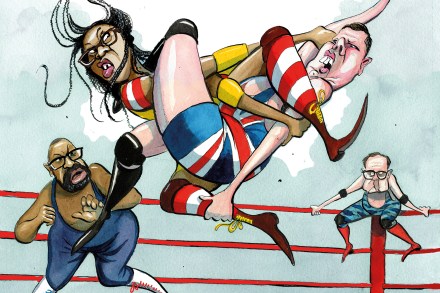
This week: who’s on top in the Conservative leadership race? That’s the question Katy Balls asks in the magazine this week as she looks ahead to the Conservative Party conference. Each Tory hopeful will be pitching for the support of MPs and the party faithful ahead of the next round of voting. Who’s got the most to lose, and could there be some sneaky tactics behind the scenes? Katy joins the podcast to discuss, alongside Conservative peer Ruth Porter, who ran Liz Truss’s leadership campaign in 2022. We also include an excerpt from the hustings that Katy conducted with each of the candidates earlier this week. You can find the full interviews on The Spectator’s YouTube channel: https://www.youtube.

A wish-fulfilment romance: Intermezzo, by Sally Rooney, reviewed

From our UK edition

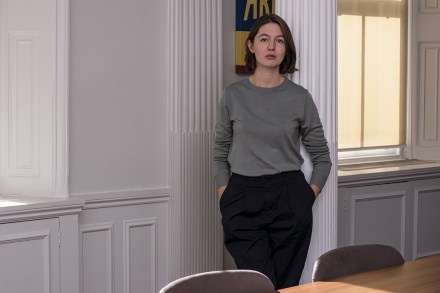
An earworm from the time of Covid: the sound of Connell and Marianne having breathless sex, bedsprings squeaking. I’m talking not about 2020’s hit TV adaptation of Sally Rooney’s bestselling second novel, Normal People but about the relentless piss-take featured on BBC Radio 4’s Dead Ringers. After every few skits the show would cut to an audio clip of the two undergraduates going hard at it. The joke was in the repetition – an exaggeration of the extraordinary density of earnest sex scenes in Rooney’s writing. It was crude, cruel and very funny.

Emily Dickinson was not such a recluse after all

From our UK edition

This is fanciful, I know, but I can’t help wondering about the great poetry that will surely be written in the early 2060s. Think about it: in the early 1960s, Sylvia Plath had her great creative outpouring, waking at 4 a.m. each day to work on the ‘Ariel’ poems that would make her name. Exactly 100 years earlier, Emily Dickinson was in full spate, writing 295 poems in 1863 alone. (Her total oeuvre amounts to nearly 1,800 poems, most of them unpublished during her lifetime.) The concentrated intensity with which these two women produced their best work has the quality of a natural phenomenon: a butterfly migration, or a swarm of plankton ablaze with bioluminescence. To read The Letters of Emily Dickinson is to experience this phenomenon in real-time.

A potent seam of violence: The Wren, the Wren, by Anne Enright, reviewed

From our UK edition

The Irish novelist Anne Enright is now in her sixties. Her deceptively modest new novel, The Wren, The Wren, opens with a long section narrated by Nell, a woman in her early twenties living in contemporary Dublin. Nell scrapes by, ‘writing content non-stop’: travel pieces about places she’s never been to, stories for a wealthy ‘actress/eco-influencer’. Adrift and vulnerable, she falls into an on-off relationship with a man called Felim, who is emotionally cruel and photographs her naked without her permission. With this extended portrait of a much younger woman, Enright quietly establishes her excellence.

Woman of mystery: Biography of X, by Catherine Lacey, reviewed

From our UK edition

Catherine Lacey’s new book is the second literary novel I’ve read recently to radically rewrite American history. In last year’s To Paradise, Hanya Yanagihara imagined a different outcome for the Civil War: the Confederate states secede to become the thoroughly racist ‘United Colonies’. Up north are several political unions, such as the ‘Free States’ (including New York), where gay marriage is not just legal but widespread by the end of the 19th century. Lacey plants her sensational plot-twist a little later on the timeline. In Biography of X, ‘the Great Disunion’ occurs at the end of the second world war, when a wall goes up around the ‘Southern Territory’, a theocratic entity eager to protect its citizens from the purportedly communist north.

Ian McEwan’s capacity for reinvention is astonishing

From our UK edition

McEwanesque. What would that even mean? The dark psychological instability of The Comfort of Strangers and Enduring Love? The gleeful comedy of Solar and Nutshell? The smart social realism of Saturday and The Children Act? The metafictional games of Atonement and Sweet Tooth? Ian McEwan’s brilliant capacity for reinvention is a hallmark of his literary career. It’s simpler to say what McEwanesque is not: baggy, meandering, plotless, long. Yet all of these adjectives could be applied to his surprising new novel, Lessons. This cradle-to-grave (well, seven-ish to seventy-something) narrative concerns the life and times of Roland Baines, born, like McEwan, in 1948. Roland shares more than just a birth date with his author.

Variations on a theme: To Paradise, by Hanya Yanagihara, reviewed

From our UK edition

My daunting brief: to tell you about Hanya Yanagihara and her new, uncategorisable 720-page novel in 550 words. It’s the book-reviewing equivalent of a heated round of Articulate. Bums on the edge of the sofa, team. Flip that egg-timer. Here goes! American, born 1974, childhood spent largely in Hawaii. Debuted with The People in the Trees, 2013: clever, concept-led story about a fictional island whose inhabitants stumble upon the secret of extreme longevity. Best known for her second novel, the 800-page A Little Life, sold more than a million copies, shortlisted for the Booker. Come on, you know this one! Four gay friends, but mainly about Jude, the victim of terrible child abuse, addicted to self-harm.

Anthony Holden is nostalgic for journalism’s good old bad old days

From our UK edition

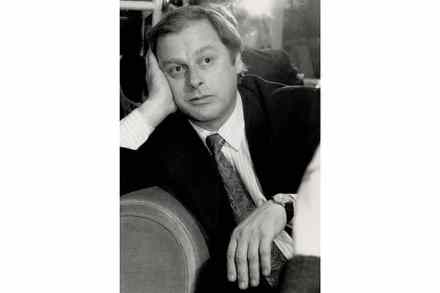
After a career spanning 50 years, 40 books and about a million parties, Anthony Holden has written a memoir. Based on a True Story is bookended by touching accounts of his childhood and old age. Born in 1947, Holden grew up in Southport. His adored grandfather, Ivan Sharpe, played football for England, winning gold at the 1912 Olympics. In later life he was a sports writer, and would take the young Holden to the press box at Liverpool or Everton, tasking him with noting down the game’s statistics. Holden dates his journalistic ambitions to the early thrill of ‘seeing my numbers in print in the very next day’s edition of the Sunday Times’. In 2017, Holden suffered a stroke that left him wheelchair-bound.

Reality and online life clash: No One is Talking About This, by Patricia Lockwood, reviewed

From our UK edition

Some writers — Jane Austen, for example — get to funny sideways, using irony and understatement. The American poet and essayist Patricia Lockwood isn’t one of them. She is straightforwardly hit-the-rubber-nail-on-the-head funny. There are punchlines, there are callbacks. On Twitter she is known for her zany ‘sexts’: ‘I am a living male turtleneck. You are an art teacher in winter. You put your whole head through me.’ In 2013 she went viral with her prose-poem ‘Rape Joke’, which was deliberately, powerfully not funny, yet still let in some killer laughs. (‘The rape joke it wore a goatee. A goatee.’) Her memoir Priestdaddy (2017) featured a hilarious, tender portrait of her guitar-shredding, gun-loving Catholic priest father.

Aunt Munca’s murky past

From our UK edition

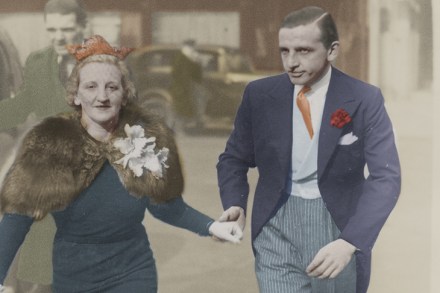
Kiss Myself Goodbye. It sounds a bit like a William Boyd novel. It looks likea William Boyd novel, too: the cover shows an old hand-coloured photograph of a fur-stoled woman, determinedly leading a man in morning dress towards the camera. And, indeed, the raw material would likely make a very good William Boyd novel — only Boyd would have to jettison at least half of the breakneck hairpin bends in the mad, mazy plot for the sake of believability. This could be the ultimate case of a tale too strange to be fiction. Ferdinand Mount has crafted the perfect, custom-made receptacle for his extraordinary story. The (anti)-hero is the millionairess Aunt Munca, self-named after the mouse in the Beatrix Potter story. It turns out to be just one of her many names and identities.

Less radical, less rich: Elizabeth Strout’s Olive, Again is a disappointment

From our UK edition

Elizabeth Strout’s Pulitzer-prize winning Olive Kitteridge (2008) is the novel I recommend to friends who don’t read much. Talk about bang for your buck. Strout packs more character and life into 337 pages than you’d expect to find in a novel twice that length and combines classic storytelling with elegant formal innovation. Each chapter works individually as a short story, yet they are all harnessed together by the deceptively simple title. By announcing that the novel is about Olive Kitteridge, Strout frees herself to depict many other inhabitants of the small coastal town of Crosby, Maine. Sometimes, a chapter’s protagonist only interacts briefly with Olive, but this piecemeal portrait is deepened by the variety of angles from which Strout approaches her subject.

Ranting and raving

From our UK edition

Q: What’s worse than listening to someone ranting hysterically about Donald Trump? A: Listening to Bret Easton Ellis ranting hysterically about people ranting about Trump. I gave him a fair hearing, I really did. Some of what Ellis has to say in White, his first work of non-fiction, is not stupid. It’s true that teeth-gnashing over Trump’s presidency can seem alarmingly out of touch with the realities of modern America. I share his concern that aesthetics are increasingly, regrettably, being sidelined in favour of ideology. His film criticism is unfailingly lucid and intelligent. I wish there had been more of it. Ellis is used to being pilloried for his tweets, podcasts and journalism.

How to be good

From our UK edition

Suffering, wrote Auden, takes place ‘while someone else is eating or opening a window or just walking dully along’. His poem ‘Musée des Beaux Arts’ emphasises the mundanity of pain (‘even the dreadful martyrdom must run its course/ Anyhow in a corner, some untidy spot’) and how irrelevant it is to all but the sufferer: ‘Everything turns away quite leisurely from the disaster.’ Alice McDermott’s eighth novel, The Ninth Hour, is peopled by women who refuse to turn away from the disasters of others. The ‘untidy spot’ is Brooklyn, sometime in the first half of the 20th century, and the unsung heroines with no time for leisure are the Little Nursing Sisters of the Sick Poor.

The fearful forties

From our UK edition

In an early chapter of All Grown Up, the narrator Andrea says to her therapist: ‘Why is being single the only thing people think of when they think of me? I’m other things, too.’ ‘Tell me who you are, then,’ says the therapist. And so Andrea tells her that she’s a woman, a New Yorker, that she works in advertising as a designer, that she’s a daughter, a sister and an aunt. In her head, she adds: ‘I’m alone. I’m a drinker. I’m a former artist. I’m a shrieker in bed. I’m the captain of the sinking ship that is my flesh.’ We meet Andrea when she’s 39, asking herself, with increasing desperation, ‘What next?

Spectator Books of the Year: Fairy tales about sex

From our UK edition

Does size matter? This year my go-to stocking filler will be the pocket-sized Grow a Pair by Joanna Walsh, from Readux Books: 64 pages of unadulterated pleasure ($4.99). Walsh’s collection of hilarious, nimbly interlinked ‘fairy tales about sex’ (‘The Three Big Dicks’, ‘The Princess and the Penis’) is a comic gem to set beside Nicholson Baker’s slim masterpiece Vox (1992), a book about phone sex. Make like Monica Lewinsky and give Vox to the Bill Clinton in your life, or treat yourself and go solo: either way, both these books will make you laugh, blush, and nod in delighted — if risqué — recognition. Not so good on sex was Eimear McBride’s highly anticipated The Lesser Bohemians (Faber, £16.99).

The curse of Mr Kurtz

From our UK edition

Marie Darrieussecq shot to literary fame in France when her bestselling debut, Pig Tales (1996), was a finalist for the Prix Goncourt. Featuring a woman who turns into a pig, the novel earned Darrieussecq a reputation as a surrealist writer in the tradition of Kafka, and many of her subsequent works have involved fantastical elements and a dreamy, drifting prose style. Her two most recent novels, however, are rooted in the real, and narrated in a crisp, clear, present tense. Translated by Penny Hueston, both All The Way (2010) and her new book, Men, are about the same woman, Solange. All the Way was shot in close-up, focussing on the minutiae of Solange’s sexed-up adolescence in small-town France. In Men, the camera never leaves the boom.

The folly of youth

From our UK edition

Let’s start with arithmetic. Edmund White’s 11th novel is a book about age and ageing. The young man of the title is a French model called Guy. Like Dorian Gray, Guy never seems to grow old. By the middle of the novel he is nearly 40, but he can still convince people — crucially, a desirable 19-year-old called Kevin — that he’s 25. The other characters constantly comment on Guy’s age. Guy himself obsesses over it and goes to great lengths to hide the truth, pretending not to recognise cultural references from earlier decades. Subterfuge so successful, apparently, that not even Edmund White knows how old his hero is.

Stop calling me ‘Goat’

From our UK edition

The title of Tim Parks’s 17th novel is false advertising, because Thomas and Mary: A Love Story is barely a love story, and it’s certainly not about Mary. The intended effect is irony: the dust jacket promises ‘a love story in reverse’, and the opening chapter describes Thomas Paige losing his wedding ring on Blackpool beach during a family holiday. The next few chapters are reasonably successful. Parks opens little windows on to the Paiges’ dying marriage. ‘Bedtimes’ takes us through a week of evenings, with the Paiges always going to bed at different times. ‘Goat’ explains the nicknames they’ve had for one another over the years, ending with a painful scene in which Thomas asks Mary to stop calling him ‘Goat’.

Too much gush

From our UK edition

The cover of Edna O’Brien’s 17th novel sports a handsome quote from Philip Roth: ‘The great Edna O’Brien has written her masterpiece.’ Late Roth and late O’Brien have something in common. In The Plot Against America (2004), Roth provided an alternative history of the 20th century: what if Roosevelt had been defeated by the anti-Semitic Charles Lindbergh? O’Brien, whose stellar career began 55 years ago with her wonderful debut, The Country Girls (1960), is increasingly interested in exploring real-life events. Down by the River (1997) fictionalised the true story of a 14-year-old rape victim, while In the Forest (2002) was inspired by the Cregg Wood murders of 1994.