Juliet Nicolson

Juliet Nicolson is an author and contributing editor to Harper’s Bazaar magazine. The Book of RevelationsWomen and their Secrets from the 1950s to the Present Day  (Chatto & Windus) will be published on 2nd October 2025

The anxious gaiety of Britain’s interwar years

From our UK edition

However many times one absorbs the brevity of the interlude between the first catastrophic worldwide conflict of the 20th century and the next, it was the not-knowingness of that timetable that allowed society to cope. In the 20 years between world wars that shattered several generations, Britain’s full emotional recovery was never really accomplished. But with his eye for the political and the cultural, for the game-changing and the deliciously absurd, for comedy and for tragedy, Alwyn Turner demonstrates the irrepressible optimism of humanity, whatever the circumstances: ‘Highbrows and lowbrows [lived] cheek by jowl, rubbing along with politicians, priests and pressmen.


What publishing a book has in common with childbirth

From our UK edition

‘Are you ready?’ a kind but optimistic friend asked me a few weeks ago with a look of genuine concern. But I am not on the verge of moving house, getting married, starting a new job or having a baby, all of which might have merited her anxiety. Instead, my friend was cautioning me to prepare for the scrutiny involved in publishing a book. The analogy is often made between childbirth and the moment of a book’s emergence into the world after a period of largely private gestation. But the unconditional applause given to the parents of a much longed-for newborn, wrapped in a soft blanket, is not guaranteed for the creator of something made of paper and enclosed in unforgiving boards.

The shame of being an alcoholic mother

From our UK edition

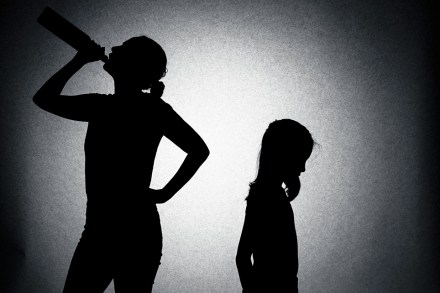
Recollections of crimes, misdemeanours and shameful stories can pall, especially when viewed through the bleary-eyed lens of alcohol. But In the Blood, a memoir of devastating clarity – the result of an unprecedented collaboration between a mother and daughter whose alcoholic gene was ‘baked into them like a curse’ – provides a frightening insight into the labyrinthine workings of the addict’s devious mind.  The illness had run riotously through many generations until Julia Hamilton and Arabella Byrne both rejected what had ‘zig-zagged through [their] family like a knight in chess’.

The summer I dwelt in marble halls

From our UK edition

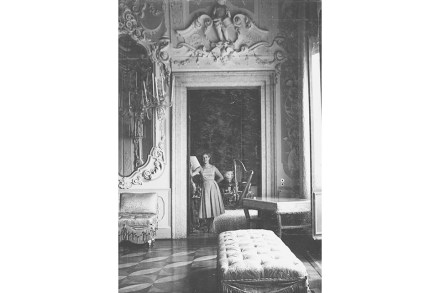
The discovery of a cache of long-lost love letters might be an over-familiar inspiration for a memoir, risking a bit of a dusty lane indulgence – a charming, nostalgic featherbed flop into a past romance. But although the events described by this delightful nonagenarian first-time author took place three-quarters of a century ago, there is nothing sepia-flattened about Gill Johnson’s writing. This is a book which shimmers with remarkable recall as the author returns us to the post-war vibrancy of Venice and the dazzling inhabitants who transformed her young life. The youngest of four children, Gill reached adulthood in Blitz-scarred, rationed 1950s London.

Brutality rules in paradise – a memoir of Jamaican childhood

From our UK edition

The blue-skied, hibiscus-clad ‘postcard’ beauty of Montego Bay, where the seasons shift with the rhythm of the sea breeze, veils the terrifying reality of Safiya Sinclair’s life at home. Until the age of five, Safiya lived in a small Jamaican hamlet on the white sand close to the endless beaches that attract the tourists, many of whose ancestors, ‘the white enslavers’, stole Jamaicans’ freedom and left behind their unforgettable, unforgiveable legacy. But for a while, as music and the sweet scent of ganja fill the salt air, Safiya, born in 1984, remains convinced that her country has given her all the blessings she could ask for.

Why I queued to see the Queen

From our UK edition

I went there with Rachel my best friend from childhood. We both wore black. Even our trainers were black. We took the train together from our homes in Sussex and joined the queue in London at 7 p.m., when day light was still strong, in the knowledge we might be part of this slow-moving mass of humanity for twelve hours or much more. Our backpacks were filled with sweaters, extra socks, bananas, energy bars, phone chargers and handkerchiefs. The journey, or what increasingly felt like a pilgrimage, was buzzing with chat, with introductions that followed a very Queen-like sort of conversation.  ‘Have you come far?’ ‘What do you do?

Who would be a farmer’s wife?

From our UK edition

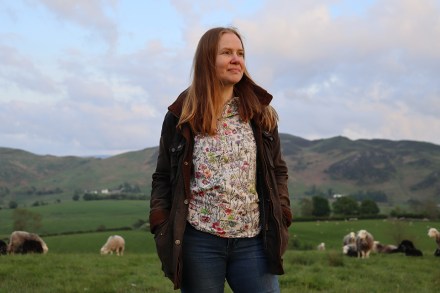
On the opening page of The Farmer’s Wife, Helen Rebanks quotes George Eliot’s famous passage from Middlemarch. Dorothea adds to ‘the growing good of the world’ through her ‘unhistoric acts’ and by having ‘lived faithfully a hidden life’. With this enchanting, funny, fearless book, Rebanks brings her own ‘unhistoric’ life unequivocally out of hiding. The blood, mud, slog, exhaustion, bureaucracy and financial angst of farming are ever-present She lives with her husband James (a bestselling writer) and their four children in the Lake District on their farm shared with six sheepdogs, two ponies, 20 chickens, 500 sheep and 50 cattle.

Polly Toynbee searches in vain for one working-class ancestor

From our UK edition

Polly Toynbee’s fascinating, multi-generational memoir comes with a caveat to a Spectator reviewer. While her book is written with ‘self-conscious awareness’, Toynbee predicts, with a cautionary wag of the finger, that it will be reviewed in publications where ‘introspection is inconvenient’. Not a page goes by without a reference to the iniquities of class, accent, snobbery or patriarchal dominance Of course, introspection drives her narrative. Toynbee, a self-confessed ‘silver-spooner’, was born into a family of towering academic and literary influencers who, while enjoying connections and lifestyles as posh as they come, almost consistently resisted and campaigned against conservative elitism and privilege.

My memories of Raymond Briggs

From our UK edition

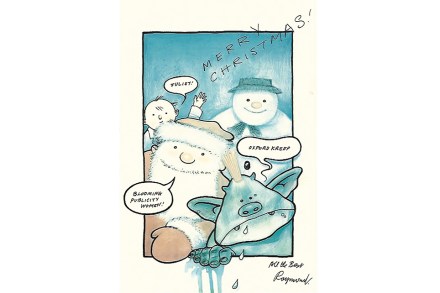
I really loved Raymond Briggs. I first met him in 1976, before his mega-fame had arrived. I was working in the publicity department of Raymond’s publishers, Hamish Hamilton, and every so often he would trundle a wheelie suitcase into the office containing the painted boards of artwork for his latest cartoon story. His visits were a joy because he was so funny, but also tricky because unlike every other author under our promotional care, Raymond considered the less media attention he received to be the better. He referred to us as ‘blooming publicity women’ and we had to beg him to agree to talk to eager interviewers, and to submit to the scrutiny of TV and radio chat shows. The broadcaster Chris Evans, for example, was dismissed as ‘that ginger-haired git’.

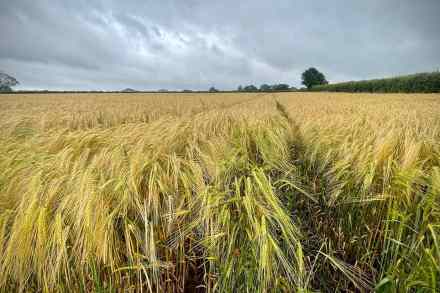
A call to farms: how a London barrister rediscovered her agricultural roots

From our UK edition

Farming threaded its way through the fields, mud, hedgerows and lifeblood of the people who made up Sarah Langford’s childhood. But her grandfather, ‘an oak of a man’ with his high-waisted trousers and ‘smelling of butter, honey and dust’, occupies no romantic sepia image in her memory. A tenant farmer, proud to have provided for the local Hampshire population during the second world war, he remains in the author’s mind a figure unfaded in achievement and identity. Having spent her early adult years as a successful London-based barrister, Langford and her husband were bringing up their two young sons with hard pavement beneath their feet until a sudden job loss and a wipe-out fire changed their lives.

A vroom of one’s own: how I loved my old Mini

From our UK edition

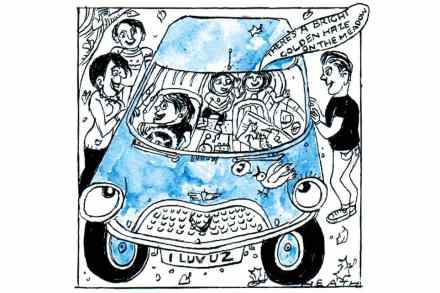
Almost 100 years ago the writer Virginia Woolf advised women to find themselves a room of their own: a refuge away from the busy, crowding demands of life, where they could focus instead on themselves and write, think, be. At a time of austerity, when space is at an expensive premium and when post-pandemic empty nests have been re-occupied by returning offspring and spare rooms newly identified as shared office space, I have found an alternative sanctuary. For the past 20 years or so my refuge was my car, acquired with the first real money I ever earned as a writer. My Mini offered me an unconditional escape during the milestones, the turbulence, the highs and lows of two decades.

Abandoned for a bogus guru – Lily Dunn’s harrowing family memoir

From our UK edition

Sins of My Father begins with an ending. Describing her 61-year-old parent’s final desperate flight from a life of vibrant glitter, creativity and affluence, Lily Dunn reveals the extent to which it was simultaneously riddled with devastating addiction. After alcoholism, drugs, money and sex played their destructive role, her father (who is never given a first name) died incontinent, with shoes that ‘let the rain in’, having subsisted on a diet of vodka and scones and, due to the removal of all his teeth, with a mouth that had ‘turned in on itself, a perpetual downward curve of misery’, a smile reversed.

My mother’s secret life was a Dickensian horror story

From our UK edition

What happens to a child raised without love? This is the agonising question that the American lawyer Justine Cowan braces herself to address in a memoir that seeks to explain her relationship with Eileen, her monster of a mother. As her parent’s gaunt figure lay in hospital, vanishing within the fog of a disease that had robbed her of ‘a few words here, a memory there’, Justine forced herself to say the words that she thought her mother wanted to hear. However, long devoid of empathy for someone whose behaviour had baffled, undermined and almost destroyed her, Justine knew a false expression of love was ‘balm for a dying old woman’.

Diplomatic daughters go behind the scenes at Yalta

From our UK edition

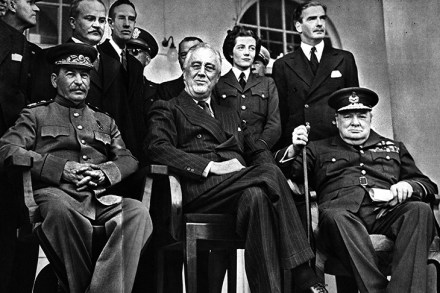
From Downing Street to Pennsylvania Avenue, history’s powerful inter-family influencers, whether spouses or children, have long operated behind weighty political front doors. With an unerring eye for the revealing detail, Catherine Grace Katz has uncovered a fascinating generational back-story to the Yalta summit of February 1945. The three varyingly spirited daughters of Churchill, Roosevelt and Averell Harriman who accompanied their world-leading fathers to the freezing bleakness of the Crimea to thrash out terms for ending the second world war all played their crucial role.

Bringing up Benzene: Charlie Gilmour adopts a magpie

From our UK edition

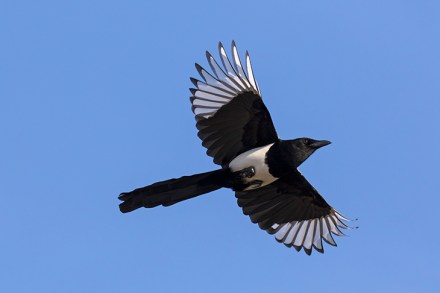
One day a baby bird falls from its nest into an oily scrapyard in Bermondsey, south London and seems unlikely to survive. As the writer Charlie Gilmour and his set-designer fiancée Janina (Yana) find themselves scrutinised by the tiny creature’s ‘gemstone eyes’ they become caught up in an unexpected urge to save the fledgling’s life. As part of the unglamorous, much maligned, even feared Corvid species, Charlie’s foundling magpie, with its sinister ‘undertaker tails’ is not an obvious pet. And yet Charlie has ‘never felt so seen by an animal’. Growing out of this strange first encounter is a magical book of exhilarating complexity, the story of blood, bird shit, tears and hope.

A passionate wartime love story is rescued from oblivion

From our UK edition

Once in a while, just at the right moment, a truly gorgeous real-life love story appears out of the blue, or in this case out of a chance purchase on eBay. Thanks to a serendipitous sequence of connections, including a perspicacious dealer and a fast-moving literary agent, the wonderful (and super-latively edited) seat-of-the-pants romance of Eileen Alexander and fellow Cambridge student Gershon Ellenbogen has been saved from oblivion. Having survived a serious car accident on the eve of the second world war with her only-just-platonic friend Gershon at the wheel, Eileen begins writing him some of wartime’s funniest, most unexpected and possibly unintentionally sexiest letters as she reports on her convalescence.

Beyond SAD

From our UK edition

As travel writer, nature writer, memory retriever and, I would add, prose-poet of mesmerising lyricism, Horatio Clare is a celebrant and observer of what is lovely, less lovely and sometimes, thankfully, absurd in the world. But Clare has come to fear winter. Recently the season has sapped his emotional and creative energy, masking his joy in living things, rarely in mankind but in everything that might alert him to the vibrancy and beauty of a wintry countryside.

Listing or sinking?

From our UK edition

The arrival at a new foreign posting for a junior diplomat’s wife in the first half of the last century was no glamorous picnic, as she grappled with a ceremonial sword in a golf bag, three months supply of toothpaste, a crate of hot water bottles and enough safety pins for every emergency. Born in 1915, and having lived in Brussels, Paris, Latvia, Persia and China as a diplomat’s daughter, Elisabeth Knatchbull-Hugessen, aged 24, married Gerry Young, a man from her father’s profession. With marriage she continued the familiar routine of packing and unpacking, and arriving at, and departing from, different countries.

Listen with Auntie

From our UK edition

The camouflage-painted, smoke-blackened entrance to London’s 1940s Broadcasting House, moated with sandbags and battered by bombs, provided its staff with a refuge from attack. Inside, a gender-segregating blanket divided the employees’ emergency dormitory in two. But such propriety masked the energy, idiosyncrasy and influence that ballooned within the Portland Place walls during the wartime years. From the morning of 3 September 1939, when Neville Chamberlain used the wireless to announce that Britain was at war with Germany, the same day that the Alexandra Palace indefinitely shut down all television broadcasting, radio became the nation’s indispensable source of up-to-the-minute information.

The best Brontë

From our UK edition

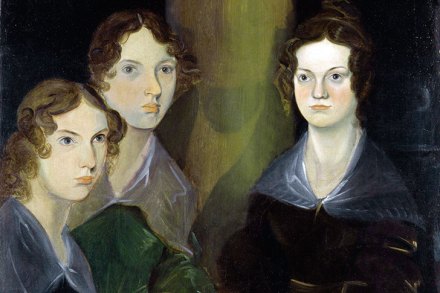
Fans of the novels and poems written by the sibling inhabitants of Haworth Parsonage always have a Top Brontë. Fame-seeking Charlotte and mysteriously reclusive Emily usually grab the limelight. My father reread Emily’s only novel every five years, annotating his student copy of Wuthering Heights and monitoring his opinions depending on how his own love life was going. He shared his choice with the playwright and journalist Samantha Ellis, until the day she read Anne’s final letter, and was taken aback as its sudden significance ‘catches at my heart’, making her wonder about the less wowed, less known, youngest sister. This wonderful biography begins at a disadvantage. All but five of Anne’s letters are missing.