Culture

Culture

The good, the bad and the ugly in books, exhibitions, cinema, TV, dance, music, podcasts and theatre.

Haunted by the soft, sweet power of the violin

More from Books

An extraordinary omission from Neil MacGregor’s A History of the World in 100 Objects is the lyre, the instrument closest to Homer’s heart. Without it, the evolution of bowed stringed instruments — rebec, lira da braccio, violetta — would not have taken place. Ipso facto, there would be no violin, nor its larger siblings; no chamber music, no orchestra, no Hot Club de France. In such a parallel world, Helena Attlee would be much time-richer, given that she has spent more than four years researching the provenance of a single violin.

Despotic laws can — even should — be ignored, says Jonathan Sumption

More from Books

Jonathan Sumption has developed ‘many strange habits over the years’, he tells us disarmingly, and one of these is to read the international press. ‘I read the French and German press most days, and sometimes the Italian and Spanish press as well.’ Some might think the retired Supreme Court justice was showing off. But these remarks were addressed to a group of German judges at the end of 2019. His message to them was that the British people might have been wrong to vote for Brexit — but they were not, as reported in the continental press, ‘at best naive and at worst mad’. That’s good to know.

Pilgrimage is beginning to resemble any other kind of holiday

More from Books

Hidden away in the Old City of Jerusalem is a tattoo parlour which has been serving pilgrims for the past 700 years. The Razzouk family parlour near the Jaffa Gate claims to have been inking crosses into travellers’ skins since the 1300s. True or not, it’s a good example of how contemporary pilgrimage sites draw on an occasionally dubious history to offer something unique in a crowded travel market. The pilgrim parlour is one of many memorable details from Peter Stanford’s Pilgrimage, which looks at how this ancient tradition has been revived for the 21st century.

Steam trains make a comeback under the guise of heritage

More from Books

So far as most of us are concerned, steam trains vanished in a puff of smoke back in the 1960s, around the time much of the railway network itself disappeared. Other than a few survivors pulling day-trippers along short stretches of track, the received wisdom is that steam is over. Yet the reality is different. True, there is little or no chance of steam trains replacing electric and diesel trains on our modern rail network. But if steam remains history, it is an unusually active and extensive variety of history. Steam has made an impressive comeback under the guise of heritage, to become an enormous national asset. There are an awful lot of those day-trippers. Steam trains (and some rescued diesel locomotives) are now pulling 13 million passengers back in time each year.

Puzzle Pieces: Cowboy Graves, by Roberto Bolaño, reviewed

More from Books

This might seem an odd confession, but the work of Roberto Bolaño gives me very good bad dreams. When I first read his epic masterpiece 2666 I had three nights of fractured nightmares. This happened with every other book as well — usually dreams about reading a book by Roberto Bolaño, except the words melt and shift and are land mines or tripwires on the page. It happened again with Cowboy Graves: 3.08 a.m., and I’m re-reading the central piece, convinced there is a character and a scene in it that doesn’t exist. In an eloquent afterword, Juan Ródenas gives a plausible reason for Bolaño’s seeming capacity to hack the subconscious.

Sun, sex and acid: Thom Gunn in California

More from Books

San Francisco is a fantastic place... it’s terribly sunny... I am having a splendid hedonistic time here... I find myself continually going to marvellous orgies where I meet unbelievably sexy people... I dropped acid for Christmas Day... had sex for SIX HOURS... Then to New York, which I’ve never enjoyed so much... Some of the people I met introduced me to cocaine (one of the people was a singer for a pop group called Looking Glass), and that is a fine drug... Life is such fun here... I had an extraordinary three-way with two guys I met in a bar... I am really pretty happy... I’ve been doing a lot of nice acid this year... It was absolutely brilliant — a five-way on my 64th birthday. Age is apparently exactly the same as youth...

Stephen Hawking: the myth and the reality

More from Books

I could never muster much enthusiasm for the theoretical physicist Stephen Hawking. His work, on the early universe and the nature of spacetime, was Nobel-worthy, but those of us outside his narrow community were horribly short-changed. His 1988 global bestseller A Brief History of Time was incomprehensible, not because it was difficult but because it was bad. Nobody, naturally, wanted to ascribe Hawking’s popular success to his rare form of motor neurone disease, Hawking least of all. He afforded us no room for horror or, God forbid, pity. In 1990, asked a dumb question about how his condition might have shaped his work (because people who suffer ruinous, debilitating illnesses acquire compensating superpowers, right?

Not just a trolley dolly: the demanding life of an air hostess

More from Books

Come Fly the World is not the book I thought I was getting. The slightly (surely deliberately) pulpy cover — a glamazonian stewardess, her mirrored cat-eye sunglasses reflecting a runway — promised a Mad Men-era history of silver service and highballs at 30,000 feet, glamour, frocks and sexual shenanigans. Admittedly, deprived of the quixotic delights of a Ryanair snack pack shared with a fractious toddler on a delayed 5 a.m. flight to Alicante at the moment, I ignored the subtitle: ‘The Women of Pan Am at War and Peace.’ That sets the tone more accurately.

A meditation on everyday life: Early Morning Riser, by Katherine Heiny, reviewed

More from Books

There were many moments in Early Morning Riser that made me laugh out loud in recognition. An episode where the main character, Jane, coaxes a wailing child to the car with marshmallows and milk after ‘a temper tantrum so severe that it might have qualified as a psychotic break’ so precisely pinpoints the absurdity of life with small children that it is hard to know whether to laugh or wince. ‘Patrice took a sip and yelled, Kalt! Apparently she had returned from psychosis speaking German.

Stalin as puppet master: how Uncle Joe manipulated the West

More from Books

Of the two dictators who began the second world war as allied partners in crime but ended it in combat to the death, there is no doubt who has received more attention from historians and in the popular imagination. So much so, indeed, that the conflict is often labelled ‘Hitler’s War’. In this unashamedly revisionist account, the American academic historian Sean McMeekin asserts that we have been looking at the war through the wrong end of the telescope. The tyrant who, while not launching the conflict, took advantage of the circumstances that it presented at every turn, and certainly ended up by winning it, he says, was the man he constantly calls the Vozhd (the boss): Joseph Stalin.

Beware the woke misogynist

More from Books

The #MeToo movement isn’t all it seems. More than three years after countless sexual abuse allegations shook the world, the relationship between men and women has mutated into something ‘subtle and insidious’, writes Sam Mills. Her new book — an intriguing blend of feminist theory, memoir, psychological sleuthing and self-help — investigates the rise of what she calls ‘chauvo-feminists’: men who champion women’s rights in public to appear woke while in private their ‘shadowy doppelgänger’ is misogynistic. ‘If sexual harassment is not just about desire but about power,’ Mills says, then ‘the means will no longer be a hand on a knee as a way of implying threat’.

The jab that saved countless lives 300 years ago

More from Books

This timely book celebrates one of the most remarkable women of the 18th century. Lady Mary Wortley Montagu was so impressed by the Turkish technique of ‘engraftment’ to prevent smallpox that in 1721, exactly 300 years ago, she arranged for the first such inoculation in England — and, even more controversially, had it carried out on her own three-year-old daughter. Smallpox pus from a sufferer was carried in a walnut shell and applied to a cut made in her daughter’s arm. She discovered the technique too late to use it on herself. As a young woman and court beauty, she had contracted smallpox during one of the frequent epidemics that swept London, leaving her scarred and without any eyebrows.

Apostle of modernism: Clive Bell’s reputation repaired

More from Books

Clive Bell is the perennial supporting character in the biographies of the Bloomsbury group. The husband of Vanessa Bell, brother-in-law of Virginia Woolf and friend of Maynard Keynes and Lytton Strachey, he is often depicted as a witness to historical events rather than a participant in them, a sort of modernist Forrest Gump. At best he is a dilettante with good taste who didn’t quite belong with the intellectuals of Bloomsbury; at worst he is a womaniser with Nazi sympathies who took advantage of Virginia Woolf. In this useful book Mark Hussey lets him take centre stage and delivers a far more nuanced portrait. Bell liked to play up to his bad reputation — describing himself as ‘made for...

The problem of the Benin Bronzes will never go away

More from Books

A book about the looted African art known as the Benin Bronzes begins by clarifying that most of them are not actually bronze, and none of them comes from the country of Benin. Yet as this gripping work of live history makes clear, such name ambiguity feels entirely appropriate for art so sophisticated in creation yet so controversial in acquisition. Little about the Benin Bronzes is black and white. The exact age is unknown for the cache of carved ivory, coral and metal plaques, heads, statuary, swords and other ceremonial objects, the best guess emphasising the circa in ‘circa 16th century’.

A study in vulnerability: The Coming Bad Days, by Sarah Bernstein, reviewed

More from Books

When the unnamed narrator of Sarah Bernstein’s The Coming Bad Days leaves the man with whom she has been living because she can’t bear the sight of the tidy line of his shirt collars hanging in the wardrobe, she triggers an existential crisis that dominates this debut novel: ‘The notion that I was free in theory but also in practice to do whatever I liked with my life was terrifying: it was nothing short of a nightmare.’ She moves to a cottage, where she lives alone, worrying variously about the plight of women and the state of a world that is on fire or under water depending on the season.

Marina Warner becomes her mother’s ‘shabti’

More from Books

There comes a time after the death of parents when grief subsides, the sense of loss eases, and you, the child, are left wondering who those people were. What were they like? Not as you knew them as parents, but as people? For most of us, as the cliché goes, time is a healer, and these questions, thoughts, urges and memories lose their urgency. For others, and Marina Warner is clearly one, there is a more active, urgent, passionate and, yes, Proustian process at work — a need to bear witness — and it does not leave you alone until the questions are answered. For Warner, the questions relate in particular to her mother, but a decade passed before she approached the objects, images and written words her mother left behind.

Two of a kind: Monica Jones proved Philip Larkin’s equal for racism and misogyny

Lead book review

By the time Philip Larkin died in 1985, he’d long since achieved national treasure status: his poems were critically admired as well as widely read; his reticence (‘the Hermit of Hull’) was a matter of affectionate respect; and his cantankerous published remarks about ‘difficulties with girls’, children, left-wing politics, and ‘abroad’ were generally embraced as proof of valiant individualism — or possibly a grouchy kind of joke.

Dark days for Britain: London, Burning, by Anthony Quinn, reviewed

More from Books

Not long ago, a group of psychologists analysing data about national happiness discovered that the British were at their unhappiest in 1978. Reading Anthony Quinn’s enjoyable novel set in that year and early 1979, it’s not difficult to see why. In case you’ve forgotten, strikes were spreading like wildfire. The National Front were reaching a peak of popularity. Most alarming of all, the Provisional IRA were expanding their bomb attacks on mainland Britain. There were compensations. Kate Bush’s whiny lament ‘Wuthering Heights’ was released in 1978, and there was a new Pinter at the National Theatre (Betrayal). Punk rock was going commercial.

Spectacular invective: Jonathan Meades lets rip about Boris and Brexit

More from Books

The title alludes to Jonathan Meades’s first collection of criticism, Peter Knows What Dick Likes, and to the album by Peter Cook and Dudley Moore in their scabrous personae of Derek and Clive. Meades explains the title in his introduction: ‘It’s akin to “Two-Hour Dry Cleaners” where the operative, out of her head on perchloroethylene, tells you that’s just the name of the shop and it’ll be ready a week Tuesday.’ This does not exactly clear matters up but at least I found it funny. And there is much to find funny here. A critic or essayist who is incapable of humour should be discarded. That said, bear in mind Meades’s humour, like that of Derek and Clive, is often not for the squeamish.

Shock tactics: the flamboyant life of a Hanoverian maid of honour

More from Books

At the masquerade celebrating the end of the War of Austrian Succession no one could take their eyes off the beautiful Elizabeth Chudleigh. She had come, she said, as ‘Iphigenia, ready for the sacrifice’, and it was what she was wearing — or to all appearances not wearing — that caused a sensation that lasted for months. In the candlelight, her clinging costume of flesh-coloured silk made her appear completely naked; ‘a perfect review of the unadorned mother of mankind’, said one account. The furore caused by this episode was only eclipsed when, 27 years later, Elizabeth, now the widowed Duchess of Kingston, was put on trial for bigamy.

The home life of Shirley Jackson, queen of horror

More from Books

‘One of the nicest things about being a writer,’ Shirley Jackson once noted in a lecture titled ‘How I Write’, ‘is that nothing ever gets wasted. It’s a little like the frugal housewife who carefully tucks away all the odds and ends of string beans and cold bacon and serves them up magnificently in a fancy casserole dish.

Yuri Gagarin – poster boy of manned space flight

More from Books

To an observant outsider, the Soviets might have appeared to have developed an oddly intolerant attitude towards stray dogs. Every so often throughout the late 1950s, a fresh pack of homeless mongrel bitches was picked off the streets of Moscow and transported to a remote region of Kazakhstan, where they were promptly strapped into the nose of a ballistic missile and fired into space. If they survived till re-entry, they would likely be blown up by a remotely detonated on-board bomb designed to prevent their earthbound remains from falling into enemy territory. It was, as the phrase goes, a dog’s life. This elaborate and rather costly method of canine population control was one of only a very few signs that the Soviets planned imminently to put a man in space.

Ghosts of the past: The Field, by Robert Seethaler, reviewed

More from Books

Give dead bones a voice and they speak volumes: George Saunders’s Lincoln in the Bardo was clamorous with the departed having their say. Edgar Lee Masters, 100 years earlier, startled the American literary world with Spoon River Anthology, poems that were miniature autobiographies of the occupants of a small Illinois graveyard. Now, The Field by the Austrian novelist Robert Seethaler has the post-lifers of a German town delivering their own epitaphs. In a neglected corner of an old cemetery a man sits on a bench, listening to the people whose resting place this is. Who they were. The lives they led. Not damned souls from Dante’s circles, or creatures in limbo, but local citizens, focusing on a moment that shaped their life, or the moment it ended.

Nostalgia for seedy nightclubs reeking of sex and poppers

More from Books

Gay bar, how I miss you. Barely any lesbian joints have survived the online dating scene, and Grindr has replaced the cruising bars. Why get dressed up and brave the buses when all you have to do to get a date is access an app? I was keen to indulge in some nostalgia when I picked up Jeremy Atherton Lin’s Gay Bar: Why We Went Out. I would now prefer dinner with friends to seedy nightclubs reeking of sex and poppers, but as a youngster I loved a gay disco. Taking us through a personal, historical and political view of the gay bars of London, San Francisco and Los Angeles, Lin skilfully recreates the throb of disco, invoking the stench of beer and sweating men. ‘It’s starting to smell like penis in here,’ is a memorable opening line for any book.

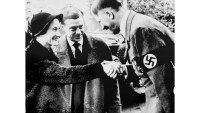
An unsuitable attachment to Nazism: Barbara Pym in the 1930s

Lead book review

Novelists’ careers take different paths, and sometimes don’t look much like careers at all. It’s true that some start publishing between 25 and 35, and write a novel respectably every two or three years until they die, like Kingsley Amis. Others don’t start until they are 60, like Penelope Fitzgerald, or stop abruptly without warning, like Henry Green, or write one novel and no more, like Harper Lee. Inspiration, or interest, comes and goes, and both the audience and the industry will have their wilful way with creativity. The ultimate aim of a novel, to be read with pleasure decades after its creator’s death, is reached in tortuous ways.

What does it really mean to feel English?

More from Books

Referring to the precarious future of the Union of England and Scotland, the authors of Englishness: The Political Force Transforming Britain conclude their book with the observation that ‘it is hard to imagine that any break-up would not be the source of regret and recrimination’. I imagine our present prime minister, even though he has a pandemic to handle, thinks of this with increasing force. There would be few faster routes from office for him than to awake one morning to find he had presided over the end of the Union. We are weeks away from elections in Scotland that seem certain to bring another SNP victory, and calls from its Maoist leadership for another referendum.