Kate Womersley

How much does Britain still ‘love’ the NHS?

From our UK edition

‘Of course I support the NHS. Everybody supports the NHS, or says they do,’ poked the comedian Frankie Boyle in one of the many campaigns promoting the health service. To admit you don’t believe in this national institution is as taboo as not caring about Britishness, about goodness, about people. The public is keen to find evidence for this collective belief. Nigel Lawson famously said that ‘the NHS is the closest thing the English have to a national religion’ – words which tend to be heard as praise. But his comment was laced with criticism. He continued, ‘with those who practise in it regarding themselves as a priesthood. This made it quite extraordinarily difficult to reform.
Great men don’t shape history – but tiny microbes do

From our UK edition

On Tuesday afternoons, pathology teaching at medical school required me to peer down a microscope for two hours, screwing my inactive eye ever more tightly shut as if that would make the looking eye suddenly see clearly. Each eosin-stained slide with its pink and purple lines and splodges of diseased cells was as legible to me as a barcode. The tiny world beneath my lens created an illusion of human supremacy, a world where the truth was small, immobilised and bored of itself. Pathogenesis – the cause of disease, its development and the impact it has on cells and organisms – is thankfully not what Pathogenesis is about. Jonathan Kennedy is a sociologist, not a microbiologist, and his unit of interest is the epidemic event, not the single bacterium.

The danger of learning too much from Covid

From our UK edition

When Ray Bradbury was asked if his dystopian vision in Fahrenheit 451 would become a reality, he replied: ‘I don’t try to predict the future. All I want to do is prevent it.’ In the hot embers of the Covid-19 pandemic, it may not be enough to foresee infectious disease threats if we lack the ability to forestall them. After all, predictions were made about 2019. In a Ted talk four years earlier, Bill Gates warned about what he later called ‘Disease X’, a respiratory disease that would cause millions of fatalities. Devi Sridhar, a professor of public health at the University of Edinburgh, addressed the Hay Festival in 2018 with an uncanny description of a zoonotic virus from China that could spread across the globe.

TB is back with a vengeance

From our UK edition

If you were a teenager before 2005, one reminder of tuberculosis in British life is that small circular scar on your bicep. Maybe you’ve explained to your children why it’s there, if you ever knew. The BCG is no longer a routine vaccination in the UK, a revision which signalled to many that TB was over. What used to be known as consumption became treatable, preventable and ostensibly consigned to medical history as a threat of the past. We tell stories about diseases as if they are constant things. ‘It’s no worse than flu’ has become a familiar phrase; but flu is not all that common, it varies wildly in severity and changes strain every year. Pathogens evolve and mutate, avoiding the risk of staying the same for too long.

Rationality is like a muscle that needs constant flexing

From our UK edition

In the 1964 film My Fair Lady after Colonel Pickering has secured the help of an old friend to pull strings at the Home Office (plus ça change) in the hope of finding the absconded Eliza Doolittle, Professor Higgins snaps: Why is thinking something women never do? And why is logic never even tried? Straightening up their hair is all they ever do. Why don’t they straighten up the mess that’s     inside? Today the sex and gender wars are more nuanced than that, at least in public, but the charge of stupidity and unthinkingness has found many other targets: anti-vaxxers, Brexiteers, conspiracy theorists, climate- change activists on the M25, Republicans, Democrats and the Prime Minister (if only he’d straighten up his hair).

The history of transplants had many false starts

From our UK edition

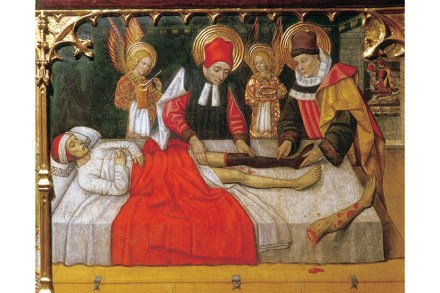
On watching transplant surgery, I can give prosaic but essential advice: have a good breakfast. Each operation can last 12 hours, and you’re unlikely to get a seat. Relocating a liver that was recently inside someone else is a feat of preparation, choreography and collaboration (with the patient too, who must agree to alcoholic abstinence). However, transplants can also be organised in minutes. Every day, thousands of units of red cells are requested from NHS blood banks and delivered through IV drips with little ceremony. What then actually is a transplant, which moves ‘life itself... from one man’s body into another’s’? Spare Parts edges up against this question, revealing our hopes of both restoration and enhancement.

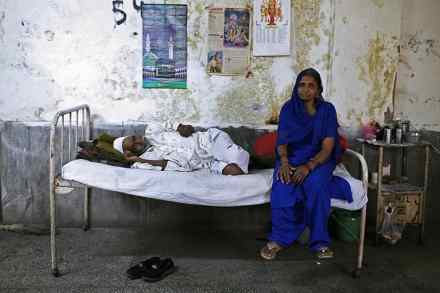
Why did no one diagnose my sister’s TB?

From our UK edition

In 2016, Arifa Akbar’s elder sister, Fauzia, died suddenly in the Royal Free Hospital, London at the age of 45. Until the last hours of her life, the cause of her coughing, chest pain, night sweats and breathlessness had eluded a series of baffled experts. But you do not need a medical degree to hazard a guess at what might have been behind these symptoms. From Keats’s famous death to the consumptive heroines of 19th-century opera, spots of blood on a handkerchief were all that was missing to complete the picture. Only after Fauzia had a catastrophic cerebral haemorrhage, however, did someone think to test a sample of her spinal fluid for tuberculosis. It was positive. Sense came too late. The mycobacteria had disseminated through her organs and were nesting in her brain.

Masculinity in crisis: Men and Apparitions, by Lynne Tillman, reviewed

From our UK edition

Masculinity, we are often told, is in crisis. The narrator of Men and Apparitions, Professor Ezekiel (Zeke) Stark, both studies this crisis and personally confirms it. ‘I came naturally — haha — to observing my posse and me, guys late twenties to forty, and our attitudes to women, ourselves as “men,” etc’ he says, by way of introduction to his anthropological thesis about growing up under feminism. Prepare for mansplaining littered with tedious verbal tics, which is oddly compelling to read. Zeke is between things. Born on the cusp of Gen X, a middle child to middle-class parents, he’s loitering on the tenure track of East Coast ‘Acadoomia’.

The skeleton is key to solving past mysteries

From our UK edition

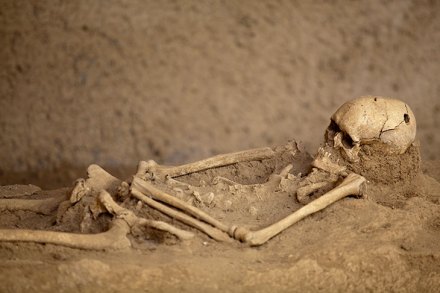
One hot summer’s morning, as a nine-year-old girl living on the rim of a Scottish loch in the hotel owned by her parents, Sue Black was unaware she was about to ‘leave those days of innocence behind’. A man delivering groceries sexually assaulted her. Many years later, Black imagines how this unspeakable childhood trauma might have been written into her very bones. Extreme stress can cause a temporary halt in the growth of a child’s arms or legs, which leaves a ‘Harris line’ that is visible on X-ray. This white mark would have said what she couldn’t. The abuse remained secret for a decade, and when she finally told her mother, she wasn’t believed.

Even after a vaccine, smallpox took two centuries to eradicate

From our UK edition

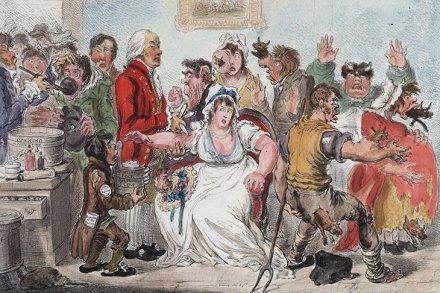
In supposedly unprecedented times such as ours, there are compelling reasons to turn to the history of medicine. For hope, that epidemics do indeed come to an end; for consolation, that the people of the past suffered even more than us; and for insight into how we could be doing better. The story of smallpox satisfies all three. Imagine an airborne disease such as Covid-19, but one in four people who get it will die. It causes a fever, but also a rash which cloaks the body in disfiguring pustules that fuse into reptilian scales. It leaves its victims, if not dead, scarred or blind. Few agree about why this disease spreads, how the body defends itself, or which treatments work. Nobody has heard of antibodies. Louis Pasteur’s immunological discoveries are more than a century away.

We all breathe – 25,000 times a day – so why aren’t we better at it?

From our UK edition

Covid-19 has been bad news for writers with books coming out — unless the book is about breathing. We’re all now gripped by our airways, by the significance of a runny nose, a sore throat or chest tightness. We know to dread that once obscure symptom, anosmia. We debate the risks of breathing through two-ply cotton. Thousands of ITU patients delegate their respiratory effort to machines that punch at compliant lungs. The world was winded by George Floyd’s last words: ‘I can’t breathe.’ James Nestor’s fascinating new book is playful and optimistic. Everyone breathes — 25,000 times each day — but few of us are good at it.

Compassion fatigue is as damaging to a doctor’s health as to a patient’s

From our UK edition

Medical training is a process of toughening up: take iron that’s vulnerable to rust, add carbon and make steel. That’s the hope. In a large university lecture hall, I remember a consultant standing in front of a PowerPoint slide showing two triangles, one widening to its base, the other tapering to a point. They represented how our clinical knowledge would expand with time, while our compassion would very probably diminish. It was a warning, but one delivered with a tone of inevitability. As a student I deeply resented this idea, but also worried it might prove necessary for survival. Doctors and their patients are surprised when training’s protection proves not to be that of an alloy but rather a metal paint that can be scratched and worn away.

All skin and bones

From our UK edition

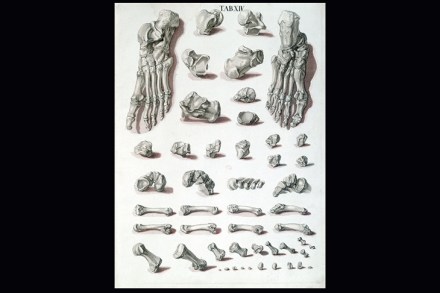
Nobody warns you when you start medical school that your career decisions have only just begun. Up to a decade of recruitment pitches follow: have you thought about becoming a haematologist? Leave the ward for the drama of theatre! If you don’t like patients, try radiology. A recent flush of popular medical non-fiction lets the public sample this professional pressure. From the heart to the gut, each author claims his or her chosen organ has been unfairly overlooked. The genre’s most recent additions are about skin and bone. Dermatologists and orthopods are often sidelined as medicine’s aestheticians and carpenters, responsible for the paintwork and scaffolding that encase and buttress the vital organs.

Murder will out

From our UK edition

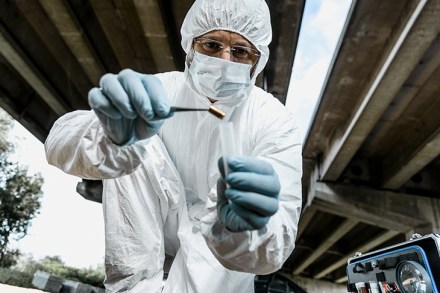
When the 24-year-old Angela Gallop started working at the Home Office forensic science service, her boss lost no time in telling her that ‘a woman’s place is in the home — literally, at the kitchen sink’. Many years later, having contributed to solving some of the UK’s highest profile criminal cases, Gallop may have remembered those words with a smile as she mopped the office floor. This was no display of domesticity; she was in pursuit of a murderer. A man had been accused by his wife of killing his boss. The wife said that the spatters of blood on the wall of the fast-food café where they worked had resulted from her husband’s violent kicks and punches to the owner’s body.

Who’s aping whom?

From our UK edition

For a practical at medical school on the subject of the nervous system, it was thought unwise to wire students up to a live electrical circuit, so we used worms instead. The task was to measure lumbricus terrestris’s giant neurons as they fired. My worm’s bruise-coloured rings concertinaed in a final effort to escape before I made the necessary incisions, stuck pins through its body, and connected its extremities to the electrodes. The paper instructions suggested: ‘You can if you wish cut off the worm’s head.’ I guess we were lucky; apparently similar lessons used to be taught using live dogs. I’ve always disliked the spirit of historical re-enactment involved in amateur lab work.

Outpourings of the heart

From our UK edition

The numbers invite awe: three billion beats in a lifetime; 100,000 miles of vessels. But on the hospital floor, wonder is often in short supply. Doctors forget how intimate their examinations and investigations can be. Stethoscope to chest. Order a blood test. I remember on a morning ward round at medical school, our consultant wanted to check that the oximeter was working (a device which measures heart rate and blood oxygenation through the nail bed). He asked a harassed junior doctor to present her forefinger. The screen’s digits betrayed her stress levels. She was clinically tachycardic. Her pulse was so fast it would have been worrying had it been the patient’s. I have not forgotten this uninvited invasion of her heart.

The burden of freedom

From our UK edition

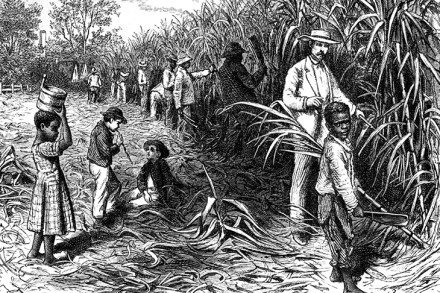
It’s 1830, and among the sugar cane of Faith Plantation in Barbados, suicide seems like the only way out. Decapitations and burnings are performed with languorous cruelty. Women give birth and are sent straight back to work after lying their ‘tender-skinned newborns down in the furrows to wail against the hot sun’. Esi Edugyan’s third novel does not retreat to softer ground after her last, Half-Blood Blues, dealt with Nazi ideology. Both Germany and Barbados have chapters in their histories when humans were treated like mere creatures. Hope arrives with the plantation master’s brother, Christopher ‘Titch’ Wilde, a scientist, inventor and abolitionist. Titch chooses a slave boy, George Washington Black, to be his apprentice.

Unlucky in love

From our UK edition

‘The most interesting novels are a bit strange,’ Kirsty Gunn once told readers of the London Review of Books. ‘They reject the predictable progress of conventional plotlines in favour of something that feels more risky.’ It’s surprising then that Gunn’s latest novel-ish offering is about unrequited love — a middle-aged banker for his glamorous landlady — set in the moneyed comfort of London’s Richmond. It’s a storyline so conventional, so timid, chick-lit would be embarrassed to claim it. Evan Gordonston falls — at first sight, of course — for Caroline Beresford, familiar in PR and pony club circles, but who now spends her days mostly avoiding her husband, practising pilates, drinking cocktails and popping Ativan.

A man, a boy, a bed

From our UK edition

Stephen Bernard has led an institutionalised life. Behind the doors of the church presbytery, at public school, on hospital wards after repeated suicide attempts, in therapists’ offices, at Oxford University — he has sought protection and cure. Some institutions woefully failed, while others revived Bernard from the appalling child abuse inflicted by Canon T.D. Fogarty, Latin teacher, priest and rapist. An account of the open wounds left by years of assault, Paper Cuts is also a memoir about the anxiety of seeking to belong, yet as a survivor never quite finding a part. We follow Bernard for a day, now aged 40 and an Academic Visitor at Oxford’s Faculty of English. He has a looming deadline to finish an article for the TLS.

The germ of a revolutionary idea

From our UK edition

Every operation starts the same way. Chlorhexidine scrubbed under nails, lathered over wet hands, palm-to-palm, fingers interlaced, thumbs, wrists, forearms. A soothing routine accompanied by the sound of water hitting a steel trough sink. Washing is an act of safety but also humility. It acknowledges a doctor’s capacity to cause disease as well as cure it. More than once I have thought of Joseph Lister — the father of antisepsis (killing germs) and forefather of asepsis (excluding germs completely) — as I perform this hygienic set-piece. Not that he would have liked the idea of me, his sister’s great-great-great granddaughter, studying medicine.