Ian Birrell

Are western governments actively facilitating money laundering?

From our UK edition

On the outskirts of Fort Worth, Texas, there is a two-storey factory churning out a vast number of dollar bills every day for the United States Federal Reserve. When Oliver Bullough visited, he counted 129 pallets in one room, collectively containing more than $4 billion. He also watched a woman use a jack to casually shift another $64 million across the concrete floor. Yet he barely used cash on his visit to the Lone Star state, relying on credit cards and smartphone apps, apart from when tipping waiters. As he points out, this is increasingly typical: many fewer Americans or Brits are bothering with cash, and when they do it is for small transactions. So why is more and more money being printed in such places, and in the biggest denominations?

The insoluble link between government and crime

From our UK edition

In the 18th century, the cash-strapped British crown imposed customs duties on tea imports that rose as high as 119 per cent. Unsurprisingly, such huge tariffs sparked a smuggling boom in coastal towns such as Deal, in Kent, where the cliffs were pockmarked with secret tunnels and half the inhabitants lived off profits from such illicit activities. When the government tried to crack down in 1781, it had to send in a 1,000-strong militia, headed by 100 men on horseback. Yet smuggling may have accounted for more than half of England’s trade at the time – and it often involved respected figures in communities who regularly bribed officials. This underlines how the imposition of taxes creates illegal markets that can eat into state revenues and corrupt society.

The nerdy obsessive who became the world’s richest man

From our UK edition

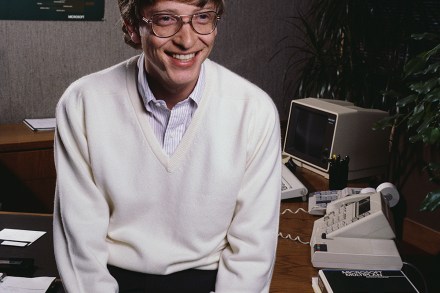
Shortly before Bill Gates’s seventh birthday in 1962, his parents stuffed their son into a button-down shirt and blazer for a visit to Century 21, a bold showcase of scientific prowess in their home town of Seattle. This futuristic fair was intended as the nation’s rebuff to Soviet Russia following the Sputnik satellite launch, which sparked the space race. The family enjoyed the new 600ft Space Needle. They also saw the Mercury capsule that carried the first American into space; Ford’s concept of a six-wheeled nuclear-powered car; and IBM’s idea of a cheap computer, costing $100,000. Best of all in the boy’s view was rattling around on the Wild Mouse Ride, which felt risky and thrilling, stoking a lifelong love of rollercoasters.

What do we mean when we talk about freedom?

From our UK edition

When the Yale historian and bestselling author Timothy Snyder was 14, his parents took him to Costa Rica, a country lauded for its conservation of natural resources that is rated freer and happier than the United States. He recalls feeling liberated and unfettered as he hiked in cloud forests with his brothers, seeing monkeys, sloths and spectacular birds. One day, a local friend led the boys on a mysterious quest to view something special; after walking for three hours through a maze of paths, they arrived at a cascade hiding a cave, where they could gaze out at the green world through curtains of falling water.

The new alliances dedicated to destroying democracy

From our UK edition

After staging a failed coup and going to prison, the Venezuelan army officer Hugo Chavez ran to be president in 1998, campaigning against corruption and offering revolutionary change. His nation was seen as a prosperous beacon of stability, built on its great oil wealth, envied by many people elsewhere in the region. He won by promising to tackle the inequality that scarred it so badly and take on the oligarchs enriching themselves through favours and nepotism. Western celebrities, journalists and politicians, from Sean Penn through to Jeremy Corbyn, started flocking to South America to hail their new progressive hero supposedly fighting for social justice.

Why are the German authorities so reluctant to believe in neo-Nazi attacks?

From our UK edition

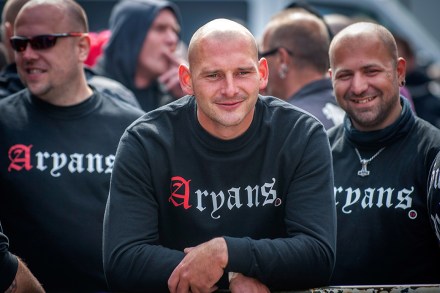
Enver Simsek’s life story was one familiar to many migrants. He moved from Turkey to a small town in Germany, then worked hard in a factory during the week and as a cleaner at weekends before starting his own business as a florist. By the turn of this century, he employed almost a dozen people selling his blooms from stalls and stands across Bavaria. So in the summer of 2000, he took his wife and two teenage children back to his native land for a break. Soon after returning, the 38-year-old was shot eight times in the head and shoulder, left dying in a pool of blood amid the bouquets of baby’s breath, daisies and roses in his van parked in Nuremberg. As Simsek’s life ebbed away in hospital, his distraught family faced a barrage of questions from police.

The freedom fighters who dared to take on a communist superpower

From our UK edition

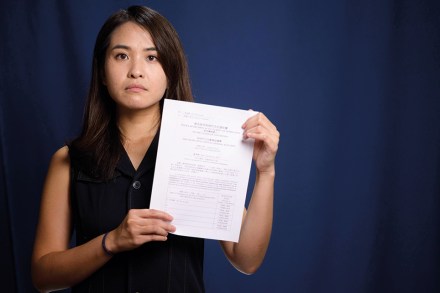
In May 2020, as the planet grappled with the pandemic, China’s state media declared that there were ‘obvious deficiencies’ in Hong Kong law enforcement needing to be addressed. Any delusions this might have referred to intensifying police brutality in response to massive pro-democracy protests, let alone the unleashing of Triad thugs to attack participants, were dashed rapidly. Details emerged days later of a draconian new security law that criminalised any form of dissent, whether at home or abroad, with threat of life imprisonment. ‘When the world is not watching, they are killing Hong Kong,’ said Dennis Kwok, a lawyer and pro-democracy legislator. He was right.

The conman who duped thousands with a patently absurd story

From our UK edition

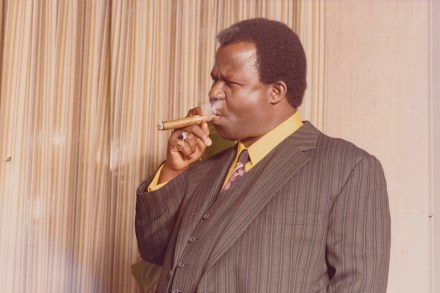
In the early months of 1981, investors in a Swiss fund stuffed with cash, diamonds and gold began arriving at a five-star London hotel to await an audience with the fiscal wizard making them fabulously rich. Dr John Ackah Blay-Miezah would turn up in his grey chauffeur-driven Rolls-Royce, clad in an immaculately tailored suit and clasping a big cigar in bejewelled hands. Then he would regale them with tales from his student days at the University of Pennsylvania, even singing the famous Penn fight song, and talk of developing Ghana using wealth plundered by his close friend Kwame Nkrumah, the country’s first post-independence president. ‘No one could create such a story,’ said one investor.

The agony and frustration of reporting from the Middle East

From our UK edition

For 25 years, Abed Takkoush assisted foreign reporters like Jeremy Bowen when they arrived to cover the chaos and conflicts in Lebanon. He drove them around in his battered Mercedes, pointing out with grim relish the places where dark deeds had taken place: the assassinations, atrocities, kidnappings and slaughter of civilians that scar this mesmerising nation. During one Israeli onslaught in 1996, Abed sped past a gunship firing at cars on the highway between Sidon and Tyre, laughing with relief when shells exploded on the road rather than the car. ‘We laughed with him,’ writes the veteran BBC reporter. ‘It was a calculated risk. The alternative was turning back to Beirut without a story.’ Four years later their luck ran out on the last day of Israeli occupation.

Abolishing slavery was no cause for smugness

From our UK edition

When the 13 colonies of the United States declared independence in 1776, the first country to recognise the new nation was France. Other leading European powers, such as Britain and Spain, acknowledged its arrival at the Treaty of Paris, two years after a decisive victory by American forces. Yet when Haiti asserted independence in 1804, it was ostracised by Britain, France, Spain and the US. During its first fragile years as a fledgling state, that self-declared guru of liberty Thomas Jefferson even imposed a rigid blockade while president. Washington then took more than half a century to recognise its Caribbean neighbour. The reason for such contrasting attitudes towards the first and second independent nations in the western hemisphere was simple.

America sees red: how fury prompted the slide into Trumpism

From our UK edition

After leaving college more than two decades ago, Evan Osnos landed a job on the Exponent Telegram, one of two daily papers published for the 16,400 citizens living in the West Virginia town of Clarksburg. Like many local reporters in those far-off days before the internet, he covered pretty much everything in his community, from boxing bouts and house fires to local politics and miners’ strikes. Later, working abroad in China and the Middle East, he would often check the paper’s website to keep up with events, observing from afar the drastic decline of both his own industry and the Appalachian state. West Virginia was a Democratic stronghold when Osnos was driving around its farms, mines and schools.

The scandal of OxyContin, the painkiller that caused untold pain

From our UK edition

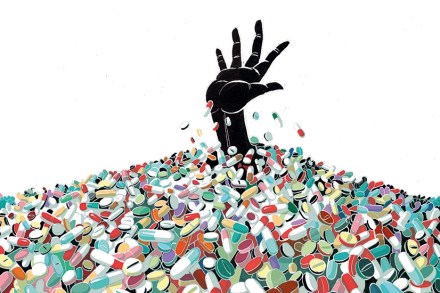
Last week I was staying in a cool hotel in the middle of San Francisco. When I walked out to find coffee in the morning, I came across a man with his trousers lowered as he injected himself in the groin. An older fellow nearby used the street as a toilet, adding to the human excrement on the pavement. A woman lay crashed out, hair matted over her face in the heat. Returning later in the day, passing the clusters of tents and people chasing dragons from foil, I was asked: ‘Do you want anything?’ These disturbing scenes of human despair were beside a smart shopping mall in the city with the most billionaires per capita on the planet.

Sacrificing to the false god of gold

From our UK edition

Deep in Peru’s Amazon rainforest sits a desolate zone, stretching for miles and pockmarked with chemical-tainted water that glistens orange and blue. This was the centre of the country’s illegal gold-mining operations, where tens of thousands of desperate people dug into the soil in search of a precious mineral that could make the difference between destitution and wealth. For every ounce found in the crime-infested badlands, nine tonnes of toxic waste are thought to be left behind in an environmental catastrophe that will contaminate the region for decades. No wonder Pope Francis, on a visit to the impoverished area, called gold ‘a false god’ when so much wreckage is left behind in its wake.

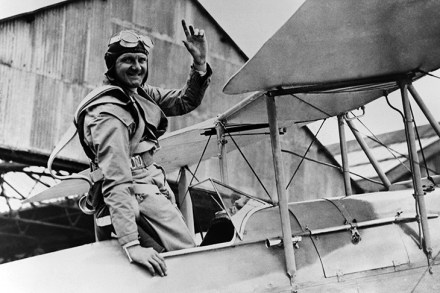
The courage of a madman: Maurice Wilson’s doomed assault on Everest

From our UK edition

Reinhold Messner, the first person to climb all 14 of the planet’s peaks higher than 8,000 metres, is probably the finest high-altitude mountaineer in history. His list of astonishing achievements on dangerous ice-clad crags includes the first solo ascent of Mount Everest without use of oxygen. Yet as he sat exhausted at 26,000 feet with two days still to go on that pioneering ascent, he thought of an eccentric Englishman ‘tougher than I am’ who had set out before him with one crippled arm and no crampons, let alone knowledge of some basic climbing techniques. ‘Do I understand this madman so well because I am mad myself?’ he wondered.

Trump’s autocratic antics risk becoming the new normal

From our UK edition

It is easy to forget the abnormality of Donald Trump’s presence in the White House. Before his election it would have seemed unthinkable to have the leader of the free world bragging of being a ‘very stable genius’ on social media, then taunting the despotic ruler of a nuclear-armed nation as ‘Little Rocket Man’ and threatening annihilation of his country. Or for a United States president to lie so frequently and casually that the Washington Post counted more than 10,000 ‘fishy claims’ by the end of last April alone. But we have become inured to Trump’s self-obsessed boasts and infantile tantrums.

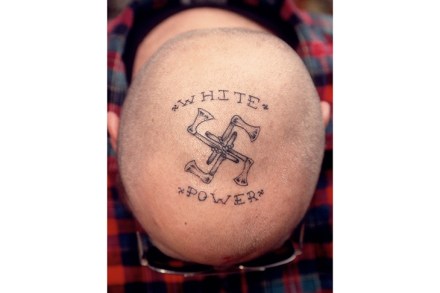
A dark journey into a fanatical underworld

From our UK edition

Two years ago, the counter-extremist analyst Julia Ebner decided she needed to delve deeper into the extremists trying to disrupt and destabilise our democracies. So the Austrian researcher invented five identities and joined a dozen secretive digital worlds of white nationalists, radical misogynists and jihadi women to explore their networks, their strategies and their recruitment techniques. This sobering book tells the tale of her journeys into a swampy underworld filled with fanatics and fantasists. Many of the people she came across seem like the saddest of losers. She joins a white nationalist dating site — motto ‘Love your race and procreate’ — where people admit they received ‘negative’ feedback on mainstream forums.

Jamal Khashoggi’s assassination was one of the century’s blackest farces

From our UK edition

The story of Jamal Khashoggi’s death is well known. A prominent Saudi journalist, he walked into his nation’s consulate in Istanbul on 2 October 2018 to obtain divorce papers permitting him to marry his fiancée Hatice Cengiz. Eighteen minutes later, he was drugged and then murdered by a hit squad sent from Riyadh. After another six minutes, a bone saw brought in by a forensic doctor was heard chopping up the body, although the parts were never found. The killers, all senior intelligence figures, returned home in private jets. This act of savagery, which showed stunning contempt for diplomatic norms, rightly sparked an international storm.

How politicians failed to learn from the charity sex abuse scandal

From our UK edition

When Tamsyn Barton was summoned before MPs last month to be quizzed on her suitability to run the official aid watchdog, she was asked about priorities in the post. She insisted she planned ‘to build back public trust in the effectiveness of aid,’ admitting support for the government’s £13.4bn spending spree was waning. This rising concern is unsurprising given a tide of sex abuse scandals, furores over fat cat pay, disclosures of dodgy behaviour and endless exposure of appalling waste. Sadly the core problem is a government policy that shows contempt for the public. Voters see politicians running an indebted economy who impose tax rises and spending cuts at home while squandering vast sums on vanity projects abroad.

Millions of shattered lives

The fateful day five years ago began like any other for the family. A pot of black tea with cardamon seeds sat on the table as Sara roused her youngest children and prepared them for school. But there were tiny clues. Leila, just turned 16 and wearing a floor-length dress, unusually offered to help. Her older sister Ayan appeared from her bedroom with a suitcase, which she said was being lent to a friend. Before they left, Leila whispered to each of her parents that she loved them. The pair did not return after school. Sara tried to call them, but their phones were switched off. She knew they were good girls, however; it was their brother, slipping away from his Somali heritage, that was her source of concern.

Every horror imaginable

From our UK edition

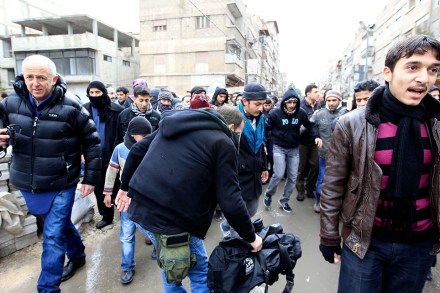
The group of kidnapped women were terrified. They had been brought back to the camp as booty and were being urged to convert to Islam with machetes pressed to their necks. They did their best to gabble words that sounded like the prayers they were being taught before one fighter noticed a captive with a swollen belly. ‘I’m not pregnant,’ she insisted, spreading her hands over her belly in an instinctive reaction that only showed she was lying. The most senior of the armed men, who looked barely 20 years old, ordered her to lie down on the ground. ‘We don’t bring any Christian babies into the world here,’ he screamed.