Clinton Heylin

Music to some ears: how 20th-century classical music led to pop

From our UK edition

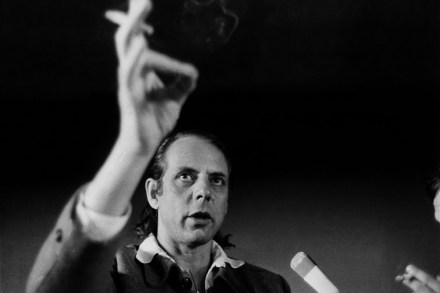
It was Sir Hubert Parry who in 1899 complained about ‘an enemy at the doors of [real] music… namely the common popular songs of the day’, ten years before he put a William Blake poem to music and came up with the most famous classical/pop fusion of all time, ‘Jerusalem’, which even featured on a mid-1970s number-one album by ELP. I did assume that a book subtitled How 20th-Century Classical Music Shaped Pop would reference such synergies. It does not. Elizabeth Alker’s is instead a competently written, entertaining if scattershot history of avant-garde electronic music, but presented as if some musical chasm separates John Cage from Sonic Youth. In fact one can easily draw a line between the two.
Thurston Moore relives the early days of Sonic Youth

From our UK edition

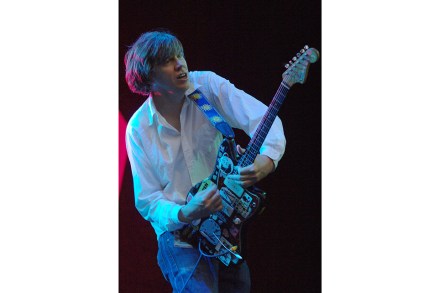
There are a surprising number of books on or by Sonic Youth, the most important of the East Coast bands to emerge in the wake of the first wave of US punk (1974-78). An excellent Spanish biography and an Italian potted history precede the three English language bios to date, while Thurston Moore’s ex-wife Kim Gordon published her own embittered memoir (Girl in a Band) in 2015. Seems Thurston had been a very naughty boy, and she was determined to tell the world all about it. In fact he may well be the least naughty boy in the history of rock music. ‘Neither hardcore sex nor drug action figured very much in my world,’ he writes. ‘Boys have always wanted to be in rock bands to get laid, or so it’s said. But that was not a defining factor for me.

Bob Dylan’s idea of modern song is nothing of the sort

From our UK edition

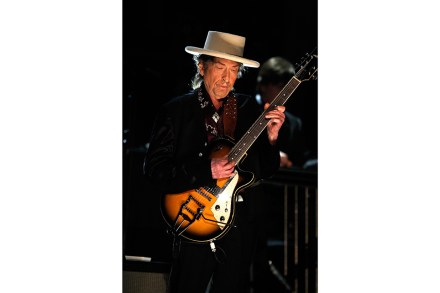
Between 2007-9, Bob Dylan compiled no fewer than 100 Theme Time Radio Hour broadcasts of songs he rated, prefaced by seemingly off-the-cuff verbal riffs on their meaning, history and importance. He was no natural DJ, but his love for the form shone through, as did a well-honed gruff ol’ man persona. The series was produced by Dylan’s ‘fishing buddy’ Eddie Gorodetsky, a successful sitcom scriptwriter (Mom, Big Bang Theory), with many of the selected songs more reflective of his taste than Dylan’s. Now we have Dylan’s The Philosophy of Modern Song, and the suspicion remains (confirmed by a generous dedication) that Gorodetsky is in the wings, throwing out suggestions again. For Dylan’s idea of modern song is nothing of the sort.

Folk music is still very much alive and kicking

From our UK edition

As a writer who obsesses over the right title to grab a target audience, seeing a book subtitled ‘Song Collectors and the Life and Death of Folk Tradition’ I say, count me in. It’s a challenging subject, not often trodden with aplomb. I wasn’t even dissuaded when the first line on the inner jacket — ‘This is the first ever book about song collectors...’ — caused me to wonder what those multiple volumes cluttering up my groaning shelves were. Michael Church could have started with Mary Beth Hamilton’s admirable study of blues collectors, In Search of the Blues (2007), an excellent template.

A tender portrait of Leonora Carrington, painter, writer — and a mother who was not always there

From our UK edition

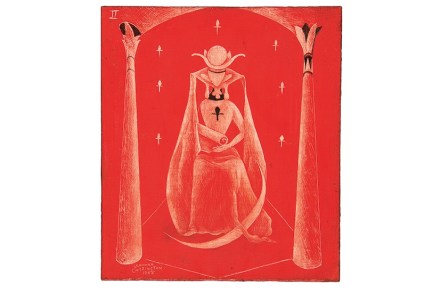
Ever since Leonora Carrington, the last of the Surrealists, died in 2011, having made it to her 94th year with her creativity undimmed — like that other postwar English exile P.G. Wodehouse — her afterlife has reaffirmed the old maxim ‘Now that I’m dead I’m finally making a living’. Her collected short stories (as grotesquely funny and sharp as her paintings and their titles) were published on her centenary in 2017. So, too, was a biography by Joanna Moorhead which to most editors would barely have qualified as a proposal. It ran to just over 200 pages, written by a journalist who is ‘especially interested in relationships and family life’ — but didn’t discover until middle age that her second cousin was a world-famous painter.

Richard Thompson’s memoir is worth reading for the ‘Fairport years’ alone

From our UK edition

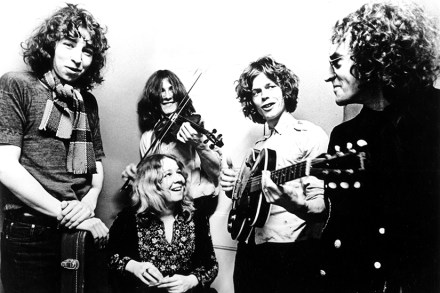
One of the more surreal conversations I have had with a musical hero of mine came in 2017 when I found myself arguing with Linda Thompson about the merits of Nick Drake’s music compared with her own and her ex-husband Richard Thompson’s. She suggested Nick’s had a quality that was missing in the work she and Richard created, which explained its posthumous popularity. I maintained that Drake’s music appealed largely to coeds and other hopeless romantics, lacking the lyrical depth and musical breadth of the six albums the star-crossed couple made between 1973 and 1981, from the timeless I Want to See the Bright Lights Tonight to the equally acclaimed Shoot Out the Lights.

Happy 80th birthday, Bob Dylan

From our UK edition

40 min listen

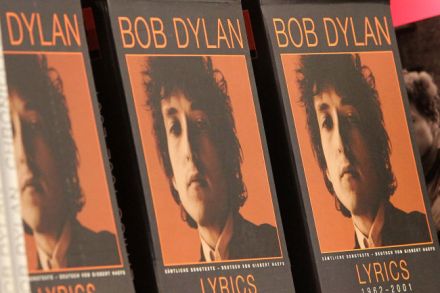
In this week's Book Club podcast, we're celebrating the 80th birthday of Bob Dylan. My guests are the former Poet Laureate Andrew Motion, and Clinton Heylin, the Dylanologist's Dylanologist and author most recently of The Double Life of Bob Dylan: A Restless Hungry Feeling 1941-66. I ask what makes Dylan special, whether what he does - even if we admire it - can be called literature, how Dante and Keats found their way into his work, whether there's anything he does badly (spoiler: yes); and if it can really be true that he writes songs with a typewriter rather than a guitar.

‘There were no rules then’: Dana Gillespie’s 1960s childhood

From our UK edition

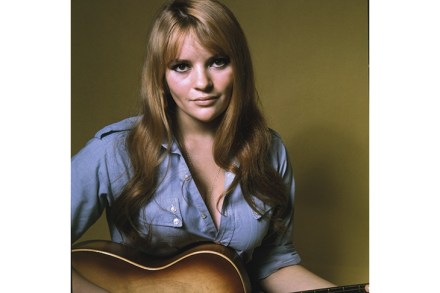
Although I can understand why Dana Gillespie might choose to call her memoir after her most famous album, for the first 170 pages I remained convinced she should have taken a leaf from John Cleland and called it Memoirs of a Woman of Pleasure. For hers has been an extraordinary life (or perhaps half life, as the trail of hi-jinks runs its course by the end of the 1970s). And so, despite reading at times like a cross between Terry Southern’s Candy and Confessions of a Window Cleaner’s screenplay — but with A-listers the ones shaking their sticks — as an evocation of the 1960s SW7-style, Weren’t Born a Man rings wholly true.

When the King of the Delta Blues came home — the family life of Robert Johnson

From our UK edition

Whatever would Robert Johnson, self-styled King of the Delta Blues, have made of the Black Lives Matter movement? His was certainly a life that mattered, but it was lived at a time when black lives mattered not a jot to white America. The circumstances of his death in 1938, at the age of 27 (he was probably poisoned by a jealous rival), demonstrate the disenfranchised existence of any peripatetic black performer in Depression-era USA. The murder was never investigated and his body was dumped in an unmarked grave.

A combustible combo

From our UK edition

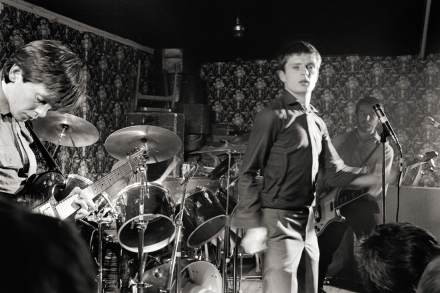
Once upon a time there was the arche-typal Manchester band — half of which came from Macclesfield, in leafy Cheshire, and a quarter of which grew up in Salford, a city in its own right, full of fans of a famous football club equally confused about its true home. This combustible combo was Joy Division — or it was after they dropped Warsaw, because of its Nazi connotations, adopting instead a moniker given to the brothels in Nazi concentration camps. Not a mass of contradictions, then. Bathed in such muddy waters, Joy Division remains a band in need of serious re-evaluation 40 years after the release of their debut LP, Unknown Pleasures.

Wells of silence

From our UK edition

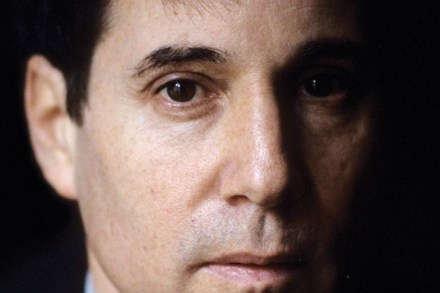
Someone has gone to a lot of trouble choosing the jacket cover of Robert Hilburn’s authorised biography of Paul Simon (reproduced right). It is both flattering and enigmatic, which is entirely appropriate, given its contents. Half of Simon’s features are lost in a shadow cast across his face — again, entirely appropriate, as Simon wrestled with Hilburn for more than two years, determined to ensure his true self remain partly or wholly in the shadows. One can’t help wondering why thesinger-songwriter even agreed to sit for what the jacket copy assures us was 100 hours of interviews; or, indeed, what happened to the other 99.

Hey nonny nonny

From our UK edition

After hundreds of densely packed pages on folk song in England — a subject for which I share Steve Roud’s passion — I am none the wiser as to why folk song collectors assumed that a man singing in a pub for free drinks in, say, 1890 or 1920 was de facto a folk singer? A singer of folk songs, yes. A folk singer, maybe not. Such men were ‘professional’ singers of popular songs. They sung what people wished to hear, for recompense: a pint.

Pretentious rock on a grand scale

From our UK edition

There is many a book that has been cooked up over a liquid lunch, but rarely has one been so obviously ill-conceived as The Show That Never Ends, which comes complete with hyperbolic blurb from the esteemed novelist Michael Chabon. Yet what David Weigel provides is a masterclass in how not to write non-fiction. To paraphrase The Producers, having picked the wrong writer, the wrong editor, the wrong researcher, where did the publishers go right? The answer, sadly, is nowhere. I say sadly, because for some time there has been an abiding need for a good history of rock’s most reviled ‘aberration’: Prog (short for Pretentious Rock On a Grand scale).

The Band’s Barnacle Man

From our UK edition

The recent spate of rock memoirs has proved one of the less rewarding sub- genres in the post-digital Gutenberg galaxy. Obeying few rules of a good read, they usually suggest a variant on Frank Zappa’s biting assessment of rock journalists: ‘People who can’t write, ghosting for people who can’t talk, targeting people who can’t read.’ So it’s refreshing to find that Bruce Springsteen and Robbie Robertson, the two notable rock memoirists this festive season, have both dispensed with the ghostly intermediary, dusted off their PCs, loaded a thesaurus programme and writ large. Doorstop large.