John Self

Spirit of place: Elsewhere, by Yan Ge, reviewed

From our UK edition

This collection of stories is so assured, and delivered with such aplomb, that it’s hard to believe it’s a debut – and, as it turns out, that’s because it isn’t. Although Elsewhere is Yan Ge’s first book written in English, she is a seasoned novelist in China, where she has been publishing fiction for more than 20 years. For the past decade, Ge has lived in Britain and Ireland, and the collection captures the spirit of both her birthplace and her adopted homes in a variety of registers. The stories set here have a whiff of autofiction to them, but transcend their origins with style and wit.
The novels that became instant classics

From our UK edition

In the world of books, a modern classic is an altogether more slippery thing than a classic: it must walk a line between freshness and durability; reflect the current age but hope to outlast it. For individual publishers, given many 20th-century writers are still in copyright, a modern classics list will necessarily be partial. However, few such partial lists are as complete as Penguin Modern Classics (PMCs), founded in 1961 four years after Penguin’s general editor A.S.B. Glover said: ‘We don’t want — without outstandingly good reasons — to start any new series such as “Modern Classics”.

A smart take on literary London: Dead Souls, by Sam Riviere, reviewed

From our UK edition

Sam Riviere has established himself as a seriously good poet who doesn’t take himself too seriously: his first collection, 81 Austerities, opened with an account of how he blew all the arts funding money awarded him, and his second, Kim Kardashian’s Marriage, is the only appearance of that august celebrity’s name in the distinguished Faber livery. Now we have his first ‘proper’ novel, following some experimental prose works. ‘Of course,’ as John Cheever wrote, ‘one never asks is it a novel? One asks is it interesting’, and Dead Souls is definitely interesting. It also fits the pattern of the poetry: this is a funny, even silly, but smart take on the literary world and the clash of commerce and creativity generally.

Family secrets: Life Sentences, by Billy O’Callaghan, reviewed

From our UK edition

Despite innovative work by younger writers, there remains a prominent strain in Irish literature of what we might call the ‘sad but nice’: tales of desperation elegantly unfolded, popularised by William Trevor and John McGahern and refined by Colm Tóibín and Mary Costello. A newcomer in this lane is Billy O’Callaghan, whose previous books have been so orgiastically praised by the Booker Prize winner and former literary editor of the Irish Times John Banville that I began to think O’Callaghan might be another of his pseudonyms. And if there’s one feature in Irish novels that shouts louder — or with more forceful quietness — than others, it’s the family and its secrets.

Young female Irish writers are setting a new trend in fiction

From our UK edition

Publishers everywhere are looking for the new Sally Rooney, which is odd since as far as I know the old one is still around. As a result Ireland, which has never lacked literary talent, is giving us a lot of debut novels by young female writers this year. True, being the new Sally Rooney makes a change from being the new Irish Chekhov, but it is a high-risk strategy when many are called but few are chosen. Here are two of the most prominent debuts, with more, including Elaine Feeney’s much-vaunted As You Were, due in the coming months.

Another alien in our midst: Pew, by Catherine Lacey, reviewed

From our UK edition

It needs authorial guts to write a novel in which details are shrouded, meaning is concealed and little is certain. Step up Catherine Lacey, and welcome. Her previous novels specialised in confounding the reader, taking the frames of road trip and science fiction and giving them a good yank. Now she’s gone full religious allegory on us: or has she? ‘Pew’ is the name the villagers in her novel give to a stranger they find sleeping on a pew in the local church. Lacey’s character offers no name, no story, no age or gender (so let’s use the pronoun they; though I admit I kept thinking of Pew as male, but that may just reflect my preconceptions about taciturn weirdos).

The scars of public school: English Monsters, by James Scudamore, reviewed

From our UK edition

‘James Scudamore is now a force in the English novel,’ says Hilary Mantel on the cover of English Monsters, which, given that it’s his fourth book, has the whiff of a backhanded compliment (‘Have you lost weight?’). But despite its less exotic setting than his earlier novels, there is a reach and scope here that makes me think Mantel might be right. This is an English public school story (come back!) that gives us four decades in the life of Max Denyer. Max’s jet-setting parents leave him in the care of the sort of sparky grandfather of whom Roald Dahl would approve (gadgets, projects, home-made cider vinegar: ‘Electric jolt. Scalp ripple.

Cosy, comforting and a bit inconsequential: Here We Are, by Graham Swift, reviewed

From our UK edition

There’s something — isn’t there? — of the literary also-ran about Graham Swift. He was on Granta’s first, influential Best of Young British Novelists list in 1983, and he won the Booker Prize in 1996, but he has never attained the public-face status of his contemporaries. That may not be so surprising, given who those publicity-hoovering contemporaries are, Amis, Barnes, McEwan and Rushdie among them. Once in a while, one of his books rises a little higher in the sky — 1983’s Waterland, 1996’s Last Orders, 2018’s Mothering Sunday — but will Here We Are be one of them? It's comforting and cosy: a bit sad, a bit funny, a bit interesting - but only a bit The title gives a clue to what sort of book this is.

Baron Wenckheim’s Homecoming is a long, hard slog

From our UK edition

The Hungarian writer László Krasznahorkai, who sounds like a sneeze and reads like a fever, is on a mission to build our collective stamina. His novels have always resisted easy interpretation, with their page-long sentences and catastrophic air, and in his ‘most popular’ book, Satantango, the clanging language and doomy setting worked to great effect. Now Krasznahorkai, who won the Man Booker International Prize in 2015, has declared that that book was the first in a quartet, which is now completed with Baron Wenckheim’s Homecoming, his longest novel yet, translated by Ottilie Mulzet. ‘With this novel I can prove that I really wrote just one book in my life.

The good sex award goes to Sarah Hall: Sudden Traveller reviewed

From our UK edition

Sarah Hall should probably stop publishing short stories for a while to give other writers a chance. If she’s not the best short story writer in Britain, then — but why even finish that sentence? Her novels are good, but it’s in the short form that she excels, with strange, unsettling tales that have made her the only author to be shortlisted three times for the BBC National Short Story Award. (She won it once.) Her greatest gift is, through a blend of the carnal and the cerebral, to invoke a physical response, something atavistic, in the reader.

Stone walls do not a prison make

From our UK edition

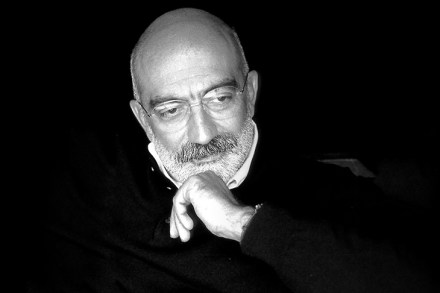
There’s no getting away from that title. I will never see the world again. It catches your eye on the bookshelf. I will never see the world again. It’s there, at the top of every page. I Will Never See the World Again. It’s a killer opening, before the book has even begun, and it’s all true. Ahmet Altan, one of Turkey’s leading writers, in 2016 was arrested on charges of providing subliminal messages to coup supporters, and has since been sentenced to life imprisonment: Never again would I be able to kiss the woman I love, embrace my kids, meet with my friends, walk the streets. I would not have my room to write in, my machine to write with, my library to reach for. I would not be able to open a door by myself.

Black and white and read all over

From our UK edition

In 1956, after Penguin Classics had published 60 titles, the editor-in-chief of Penguin Books, William Emrys Williams, wondered: ‘How many more titles in the classical literature of the world are there?’ As a case study in heroic shortsightedness, this measures up to Bobby Charlton’s question to his brother Jack after England’s World Cup victory in 1966: ‘What is there to win now?’ Williams needn’t have worried. Penguin has not run out of new classics, and there are currently around 1,200 in print. Like the NHS, Penguin Classics is an institution — a miracle of curation, covering 4,000 years of human thought, albeit with a largely Eurocentric vision — that didn’t exist 75 years ago. It began in 1946, with E.V.

The evil that men do | 3 August 2017

From our UK edition

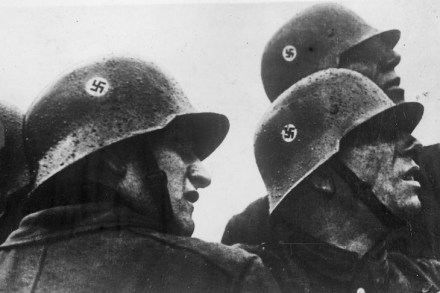
The first thing to say about Claudio Magris’s new novel is that it is, in an important sense, unreadable. There is no possibility of turning page after page engaged in finding out what comes next, of being lost in the characters’ stories. The usual pleasures of fiction are so thoroughly absent that the reader emerges at the other end blinking into the light, struggling to remember what all the fuss about books is anyway. This is apt, perhaps, for a novel about historic suffering and man’s inhumanity to man. The conceit is that an unnamed collector has amassed a hangar-sized museum of war, full of weaponry and the historical accoutrements of conflict.