Brian Martin

No good deed goes unpunished: A Better Life, by Lionel Shriver, reviewed

From our UK edition

Lionel Shriver is a first-rate storyteller. And yet… A Better Life is a satire on the immigration problem that particularly faces the US. All the clichéd arguments on both sides of the debate are laid bare. In fact, the whole novel is a cliché. Yet clichés come into existence because their substance is what everyone is talking about. Shriver’s problem is that her plot and her characters can seem like ciphers for her polemical views; they dominate the novel’s form. Gloria Bonaventura, a 62-year-old divorcée, lives with Nico, her 26-year-old, Fordham educated, unemployed layabout son, in a Queen Anne mansion in a fashionable part of New York.

A small world: Shibboleth, by Thomas Peermohamed Lambert, reviewed

From our UK edition

Two shibboleths are treated in Thomas Peermohamed Lambert’s audacious debut novel. The first is the University of Oxford; the second is the Israeli-Palestinian controversy. ‘It is the great issue, isn’t it? The great shibboleth.’ Edward, the protagonist, is a state-educated undergraduate whose connection to Islam is a Muslim grandfather from Zanzibar. He finds himself in a world of wealthy public school boys with ‘a social calendar, rugby fixtures and sexual assault hearings’, and girls from sister schools, ‘fully recovered from eating disorders’. This fictitious world is outdated, but Lambert’s satirical touch still hits the mark about ‘the creatures of the written word [the university] specialised in churning out, as if the country needed more of them’.

Learning difficulties: The University of Bliss, by Julian Stannard, reviewed

From our UK edition

You have been warned. First, David Butterfield has excoriated Cambridge University in these pages, leaving its standing devalued. Now Julian Stannard, a poet and novelist, delivers in fiction a devastating evisceration of other current universities. The University of Bliss belies its title. This is a work of high satire and Stannard vents his frustration with more than a touch of Swiftian saeva indignatio. His ridicule is extreme and addictively readable. The novel follows the career of the newly appointed vice chancellor Gladys Nirvana, partial to foot massages which transport her to regions signalled by her surname and give her acute sexual gratification.

Barker

Pat Barker dives into the first part of Aeschylus’ Oresteia

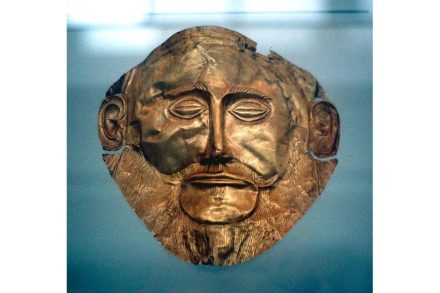
Emily Wilson, the distinguished translator of Homer, has remarked that Pat Barker’s The Silence of the Girls about the Trojan War is a distinctly feminist book. Renowned for her first world war Regeneration trilogy, Barker has now written The Voyage Home, a powerful novel about the first part of Aeschylus’ Oresteia. She takes the infrastructure of legend and invests it with brutal realism. Agamemnon’s return home to Mycenae after ten years of war is told entirely from the points of view of women. The narrator is Ritsa, Cassandra’s maid, her intimate “catch-fart.” (There is no reticence throughout about the use of crude colloquialisms.) Agamemnon the victor becomes the victim.

A death foretold: The Voyage Home, by Pat Barker, reviewed

From our UK edition

Emily Wilson, the distinguished translator of Homer, has remarked that Pat Barker’s The Silence of the Girls about the Trojan War is a distinctly feminist book. Renowned for her first world war Regeneration trilogy, Barker has now written a powerful novel about the first part of Aeschylus’s Oresteia. She takes the infrastructure of legend and invests it with brutal realism. Agamemnon’s return home to Mycenae after ten years of war is told entirely from the points of view of women. The narrator is Ritsa, Cassandra’s maid, her intimate ‘catch-fart’. (There is no reticence throughout about the use of crude colloquialisms.) Agamemnon the victor becomes the victim.

Fools rush in: Mania, by Lionel Shriver, reviewed

From our UK edition

Pearson Converse teaches literature at Verlaine University, Pennsylvania. She exists in an alternative universe to our own in which the Mental Parity Movement holds sway.  There is intellectual levelling, and no ‘cognitive discrimination’. This is high satire, exaggerated, crude, inviting ridicule of the social system portrayed, close to the great satirists of the 18th century in tone if not in style.   Yet Lionel Shriver’s Mania is more than just a satire. It is a study of Pearson’s family life and her ‘unbalanced’ relationship with her best friend from childhood, Emory. Pearson has three children: an intellectually gifted girl and boy by a high-IQ sperm donor, and an averagely intelligent girl conceived with her tree-surgeon partner, Wade.

Bribery and betrayal in Stuart England: The Winding Stair, by Jesse Norman, reviewed

From our UK edition

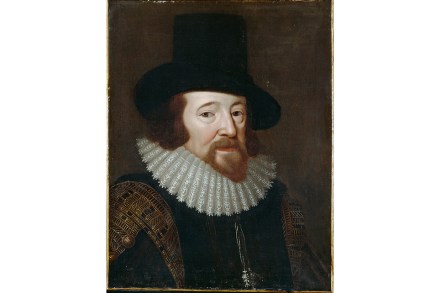
The philosopher and statesman Francis Bacon wrote: ‘All rising to great place is by a winding stair.’ This historical novel is about him and his use of it. The way up is long, intricate and difficult; downwards there is nothing to ‘slow his fall’. His antagonist in his ascent to worldly power was the lawyer Edward Coke. Bacon rose to be lord chancellor of Great Britain. Coke became attorney general under James I. Both fell from grace. It is a political story. Judging from what has been happening recently, nothing has changed. Ambition, ruthless achievement, favour, bribery, corruption and betrayal are the features of the political world. Jesse Norman’s novel is about Bacon’s political career, not about him as a natural philosopher. He is portrayed as a Vicar of Bray figure.

Frederic Raphael settles old scores with a vengeance

From our UK edition

Last Post is a collection of reminiscences, anecdotes and a settling of old scores by Frederic Raphael in the form of imaginary letters to many of the people who have been part of his long life. You might expect a nonagenarian’s critical faculties to have ‘mellowed by the stealing hours of time’, but far from it. Raphael’s intelligence and acerbic wit are undiminished.  George Steiner suffers a sustained attack for being gauche, malicious and too obviously ambitious Those who have crossed his path will be aware of his ability to ‘verbalise easily’ and, as he himself confesses: ‘It is one of my failings that I know how to hurt people.’ Jonathan Miller is criticised for being insufficiently conscious of his Jewish heritage.

A.N. Wilson has many regrets

From our UK edition

‘Spare thou them, O God, which confess their faults.’ A.N. Wilson seems, on the surface, to have taken to heart the wise words of the Anglican general confession. Aged 71, he looks back on his life and career and records his regrets and failures both private and professional. His major concern is the failure of his marriage, at the age of 20, to Katherine Duncan-Jones, the Renaissance scholar. Katherine, ten years his senior, was a distinctive Oxford figure, recognisable by her sideways limp and for riding a wicker-basketed sit-up-and-beg bicycle. In later years they reconciled and met weekly for lunch. Wilson records Katherine’s sad, slow descent into dementia, which mimics that of one of his chief mentors, Iris Murdoch.

Nazi on the run: The Disappearance of Josef Mengele, by Olivier Guez, reviewed

From our UK edition

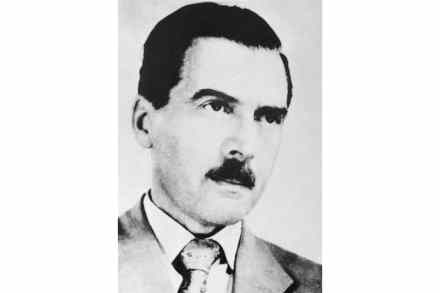
Who would have thought that someone would write a novel about Josef Mengele, the Auschwitz doctor and infamous experimenter on live human bodies? Other characters in the French writer Olivier Guez’s story are also from the Nazi gang of debased criminals: Adolf Eichmann, Franz Stangl, the concentration camp commandant, and Klaus Barbie, the Butcher of Lyons. This is a historical novel, and Guez has researched it well. He invests the structure of events with his imagination and has Mengele relate his experiences throughout his long avoidance of capture. There’s a vivid sense of reality about the crazed, unrepentant eugenist’s attempt at an acceptable fugitive way of life, and Guez holds our attention by building dramatic suspense.

Connecticut connections: A Little Hope, by Ethan Joella, reviewed

From our UK edition

A Little Hope, Ethan Joella’s debut novel, is about the lives of a dozen or so ordinary people who live in smalltown East Coast America. By helicopter over Connecticut ‘you wouldn’t notice Wharton right away’. Yet the problems its inhabitants face are universal. There is the seemingly American Dream family – Greg, Freddie, Addie the daughter and Wizard the dog. In line with the novel’s themes of ‘hurt’ and ‘hope’, Greg develops an aggressive blood cancer and is fighting for his life. Chemo and radiotherapy weaken him; ginger ale tastes like metallic fizz and the side-effects diminish his resolve. Freddie helps out as a seamstress at Crowley Cleaners, which Darcy Crowley established after her husband Van’s death.

A visit from Neanderthals: The Red Children, by Maggie Gee, reviewed

From our UK edition

This is the kind of novel that will be discussed jubilantly in the book clubs of places like Lib Dem north Oxford. It is a social polemic disguised as fiction. Maggie Gee’s concerns are topical: migration, global warming, ‘the virus’, colour prejudice and first nations. The Red Children will be selective in its appeal. Strange red people with large heads suddenly appear in Ramsgate, and stand about naked on the seafront The plot is a surreal fantasy set on ‘the edge of England’, in Ramsgate, where Gee lives. Strange red people with large heads turn up suddenly and stand about naked on the seafront looking out to the Channel or in to Pegwell Bay.

Culture clash: Things We Don’t Tell the People We Love, by Huma Qureshi, reviewed

From our UK edition

Apart from what the title tells us, these stories are about a fundamental difference in cultures. Huma Qureshi writes like a psychotherapist, considering, analysing, explaining, seeking out conflicts, evasions, and discomforts. The clash is between London and Lahore, Britain and Pakistan. The girls who appear in these tales are westernised, but still hostages to their heritage. The narrator of ‘Superstition’ escapes the shalwar kameez that she has to wear at family dinners on Saturday evenings in suburban London. She is smitten with a boy at a neighbour’s house, and then endures a conspiracy of male, religious dominance: ‘All this happened over an unfortunate teenage kiss.

In search of Great-Aunt Pearl’s will: a black comedy of familial strife

From our UK edition

Lendal Press has found a brilliant novelist in Matt Cook: funny, shrewd, satirical, disturbingly and entertainingly analytical in his psychology of character. This debut novel is narrated by a precocious 14-year-old, Benjamin Carter, whose family on his father’s side is having a collective nervous breakdown. Great-Aunt Pearl has died; her derelict house, ‘a riot of mould and malfunction’, must be sold for the benefit of family members, but first, within the chaotic mess, they must find her will. Cook is master of the judicious turn of phrase.

On the cowboy’s trail: Powder Smoke, by Andrew Martin, reviewed

From our UK edition

Detective Inspector Jim Stringer is back. This is a York novel, or rather a Yorkshire crime novel. The LNER railway policeman investigates a supposed double murder, tracing a young fairground sharpshooter, Kid Durrant, through the Yorkshire countryside. The action takes place over five days in early December 1925, but is interspersed with flashbacks to the previous summer. At the York Gala, Stringer sees Durrant perform his fairground act, quick on the draw and deadly accurate with his pistol and rifle-shooting. His entertainment persona is a Wild West cowboy, presented with appropriate Western colloquialisms, spoken with an American accent acquired by way of Sheffield. The gala is observed by a rare female balloonist, Mary Ainsworth, who hovers bizarrely above the crowd.

Appearances are deceptive: Trio, by William Boyd, reviewed

From our UK edition

Talbot Kydd, film producer; Anny Viklund, American actress; Elfrida Wing, novelist; these make the trio of the title. Private lives are the issue. Wing’s long-suffering agent tells her if you want to know what’s going on in people’s heads, ‘behind those masks we all wear — then read a novel’. The main setting of Trio is Brighton in revolutionary 1968. The actress says: ‘I’m meant to be a famous film star who’s making a film in Brighton.’ That’s the core of the novel. William Boyd is one of our best contemporary storytellers; remember An Ice-cream War and Restless. He tells this morality tale with sustained humour; remember the Nat Tate hoax.

A Wiltshire mystery: A Saint in Swindon, by Alice Jolly, reviewed

From our UK edition

This novella is suited to our fevered times. Scheduled to coincide with the Swindon spring festival of literature, now cancelled, it reflects the way we are now living. Inspired by the collective imagination of a Swindon book group, Alice Jolly has written a prophetic story. The narrator is Janey, married to the older Phil and running Hunter’s Grove, a B&B in the Swindon suburbs. Phil is an impediment: ‘Retirement — twice as much husband and half as much money.’ Tuesday afternoons mean tea and sex with Len the builder — ‘Tea with Len, Cider with Rosie, what’s the difference?’ Other than that, Janey is visited by her girl friends, among whom is Carmen, who claims to be a modern-day illuminatus, a confusion of religious thought.

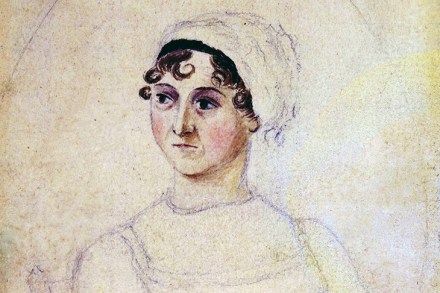
Desperate to preserve her sister Jane’s reputation, Cassandra Austen lost her own

From our UK edition

Poor Cassy. The Miss Austen of this novel’s title is Cassandra, Jane’s elder sister. She was to have married Thomas Fowle, but he died of yellow fever in 1797 on an expedition to the West Indies. Before he left, she vowed to remain faithful to him and, if he didn’t return, never to marry anyone else. It would be her undoing. In later life when she herself falls ill, Tom’s sister Isabella remarks: ‘It will take more than a fever to undo you, Cassandra.’ Yet, by Tom’s death, she was already undone. The narrative moves back and forth between the 1790s and the 1840s. Towards the end of her life Cassandra is on a mission to find and destroy potentially disparaging letters written by Jane and by herself to Eliza, Isabella’s mother.

Cuckoo in the nest?

From our UK edition

You might think The Carer rather an unpromising title, but Deborah Moggach’s book delivers a wickedly witty entertainment. Towards the end, she describes the setting where a crucial event takes place — ‘somewhere as humdrum as a caravan park, toilet block, clock golf, Tupperware’. So very good at describing the ordinary, she transforms it into the unusual, shocking and fascinating. Behind the normality of people’s lives there often lies an extraordinary story. It’s this that Moggach tells with insight, acute observation of character and mordant humour. The carer is Mandy, ‘doughy-faced’, fat-legged, stout of person and of purpose: ‘I speak as I find.

Cat and the King

From our UK edition

The scene is London in 1667, the city recovering from the Great Fire the year before, with 80,000 people homeless and refugee camps established on the outskirts. Andrew Taylor introduces his readers to life as it survived there and involves them in the politics of Charles II’s court. Cobblestones are ‘slick with rain’, rushlights smell vile because of the rancid fats they were dipped in; in Covent Garden, thieves, peddlers and beggars ply their trades ‘like lice in a head of hair’  — and if you want to travel on a Sunday you must acquire a magistrate’s warrant. The King’s Evil is the third in Taylor’s trilogy about the Great Fire of London, but stands in its own right.