Culture

Culture

The good, the bad and the ugly in books, exhibitions, cinema, TV, dance, music, podcasts and theatre.

Mothers and daughters: I Couldn’t Love You More, by Esther Freud, reviewed

More from Books

A new novel by Esther Freud — her ninth — raises the perennial but always fascinating question about the use of autobiography in fiction. Since her first novel, Hideous Kinky, Freud has frequently used an underpinning of autobiography, but mostly it’s been discreet. You didn’t need to distinguish what was life, what fiction. But with I Couldn’t Love You More the auto-biographical element has become overt and somehow obtrusive. Freud’s previous novel, Mr Mac and Me, concerned with Charles Rennie Mackintosh’s stay in Suffolk at the start of the second world war, is on the cusp of being an historical novel. This one is close to autofiction.

A smart take on literary London: Dead Souls, by Sam Riviere, reviewed

More from Books

Sam Riviere has established himself as a seriously good poet who doesn’t take himself too seriously: his first collection, 81 Austerities, opened with an account of how he blew all the arts funding money awarded him, and his second, Kim Kardashian’s Marriage, is the only appearance of that august celebrity’s name in the distinguished Faber livery. Now we have his first ‘proper’ novel, following some experimental prose works. ‘Of course,’ as John Cheever wrote, ‘one never asks is it a novel? One asks is it interesting’, and Dead Souls is definitely interesting. It also fits the pattern of the poetry: this is a funny, even silly, but smart take on the literary world and the clash of commerce and creativity generally.

A Danubian Narnia: Nostalgia, by Mircea Cartarescu, reviewed

More from Books

Mircea Cartarescu likens his native Romania to a Latin American country stranded in eastern Europe. Certainly, his writing delivers not the pared-down parables and ironies of his self-exiled compatriot (and Nobel laureate) Herta Müller, but a rainbow-hued riot of fantasy, imagination and invention. The gender-switching narrator of ‘The Twins’ — one of five linked tales that make up Nostalgia — urges his lover to remember that ‘under the obscene rococo of our world and flesh, our bones are gothic and our spirit is gothic’. That feels about right, although Cartarescu fills his grotesque and hallucinatory scenes with tropical warmth, colour and light on top of the sepulchral chills of old Europe.

It takes a trained ear fully to appreciate Indian music

More from Books

At George Harrison’s 1971 concert for Bangladesh, awkwardly, the audience applauded after Ravi Shankar and his musicians had paused to tune their sitars and tablas. ‘If you appreciated the tuning so much,’ Shankar said, half in jest, ‘I hope you’ll enjoy the music even more.’ To the untrained ear, Indian music may sound unmelodious and directionless as it strays into apparent pre-concert tuning registers and monotony. Nonetheless, its transcendental Zen-like qualities impressed Richard Wagner, who was drawn to the spirituality and joss-stick mysticism (as he saw it) of the east. A devotional song performed by the Punjab Sufi vocalist Nusrat Fateh Ali Khan can soar as ecstatically as Parsifal.

The defiance of the ‘ghetto girls’ who resisted the Nazis

More from Books

‘Jewish Resistance in Poland: Women Trample Nazi Soldiers,’ ran a New York headline in late 1942. That autumn, the Nazi occupying forces in the ancient town of Lubliniec, in southern Poland, had forced the Jewish community to assemble in the square. As men, women, the elderly and children were ordered to strip, a dozen women suddenly attacked their persecutors, scratching, biting and hurling stones. Stunned by this unexpected defiance, the Nazi soldiers fled. The influence of such courageous acts of resistance was tremendous. Galvanised by largely left-wing youth activists and connected by mainly female couriers, Jewish defence groups were soon staging armed attacks and operations across occupied Poland.

What happens next? Gauging the fallout from the pandemic

More from Books

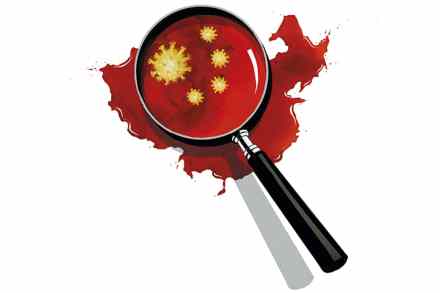
What just happened? Some 15 months after the pandemic first struck, it’s still horribly unclear, which is perhaps why there have been no decent books making sense of Covid-19. This is not just about a virus but a collision of politics, panic, digital media, human behaviour and incompetence. Niall Ferguson’s Doom looks at each of these aspects, putting them into historical perspective in a book of dazzling range and rigour. He offers several answers — and none of them is comforting. For most of human history, viruses were unexceptional — hard to research, because no one thought them remarkable. When plagues struck in the Middle Ages, we’d rush into quarantine, which acquired its name in 1383 when Marseilles asked sailors to self-isolate for 40 days.

And then there were five: The High House, by Jessie Greengrass, reviewed

More from Books

In 2009 Margaret Atwood published The Year of the Flood, set in the aftermath of a waterless flood, a flu-like pandemic that almost extinguishes human life. Twelve years ago such apocalyptic visions still felt speculative. Today, Jessie Greengrass’s new novel, The High House, imagining a near future in which civilisation is engulfed by an actual watery flood, does not. It feels chillingly inevitable. The author of a prize-winning short story collection and Sight, a novel shortlisted for the Women’s Prize for Fiction 2018, Greengrass grew up partly in Devon and lives in Berwick-upon-Tweed. Her affinity with the countryside permeates this book, in which nature is both sublime and implacable.

It’s time the British faced some uncomfortable truths, says Matthew d’Ancona

More from Books

As Britain starts its long Covid recovery, are deeper problems lurking beneath the surface? Matthew d’Ancona certainly thinks so, and in this brief, rather shrill polemic, he urges us to face some uncomfortable truths. Uppermost in his mind is the threat posed by the populist right, which he worries will try to blame Britain’s post-Covid economic hardship on immigrants. D’Ancona suggests that a message of intolerance would fall on fertile ground. Britain, he says, is already in a state of disarray: Public confidence in our institutions has plummeted, as has the belief in a widely honoured social contract; the notion of shared universal rights and responsibilities is mortally threatened in many places by a sense of futility and voicelessness.

Orcadian cadences: celebrating the reclusive poet George Mackay Brown

Lead book review

Few journalists can have conducted such a dismal interview as mine with George Mackay Brown in the summer of 1992. The Times had sent me to Orkney, and the night before we met I sat up in my B&B reading his poetry, spellbound. So much to ask him! But that first meeting was a disaster. Brown was so shy he answered my questions in monosyllables. After five minutes he sat back and rested his lantern jaw on long hands, silent. Seamus Heaney called Brown ‘the praise singer’. There was no singing that afternoon. But the next day I ran into Brown at Mass (he was that rare thing, an Orcadian Catholic). He invited the whole congregation — five of us — to tea. In familiar company he was transformed: a generous host, a brilliant raconteur.

The road to firebombing Tokyo was paved with good intentions

More from Books

In the 1930s, a group of American airmen had a dream. Air power, they believed, would do away with the need for armies and navies. The aeroplanes of the future would be able to drop bombs so accurately that there would be no need to kill soldiers in their millions: a handful of strikes on a few key factories would be enough to cripple an enemy’s economy and force them to sue for peace. It did not take long for this dream to turn sour. When the second world war broke out, the Americans soon discovered that their precision bombing was not nearly so precise when they were being shot at. When they flew high, clouds often obscured their targets.

An orange or an egg? Determining the shape of the world

Lead book review

Thirty-two years ago the young Nicholas Crane, who would go on to become one of England’s most esteemed television geographers, set out to woo a young woman by spiriting her off to the unfailingly romantic landscape of Chimborazo and Cotopaxi. The couple spent their high-altitude idyll walking the hills in hobnail boots, making river passage in dugout canoes and boarding a Quito-bound steam train through the Andes, run by the estimable Empresa de Ferrocarriles Ecuatorianos. Their journey had its moments: at one stage both parties were to be found at 13,000 feet, crusted with ice and huddled overnight from the gales inside a pair of plastic rubbish bags; they then got themselves lost for a while among a wilderness of huge and very active volcanoes.

The sweet smell of success: the story behind Chanel No 5’s popularity

More from Books

This is a curious book, by turns profound and whimsical. Karl Schlögel, a professor of Eastern European history at Frankfurt, begins by stating he didn’t know anything about his chosen subject of perfume beyond going into department stores and duty-free shops to encounter a ‘peculiar mélange of scents... the light and sparkle of crystal, the rainbow of colours, mirrors and glass’. Although he always felt this to be an alien environment, he was also repeatedly captivated. Then by chance he discovered a link between Chanel No. 5 and the Soviet perfume Red Moscow.

Russian memoirs are prone to a particular form of angst

More from Books

Perhaps the secret to understanding Russian history lies in its grammar: it lacks a pluperfect tense. In Latin, English and German the pluperfect describes actions completely completed at a definite point in the past... Early Russian had such a tense, but it was erased. This grammatical lack costs its speakers dear. Russian history never becomes history. Like a stubborn page in a new book, it refuses to turn over. Thus wrote the Soviet dissident and writer Igor Pomerantsev, my father, during his exile in London in the 1980s. When I returned to Russia in the 2000s I had the sense that beneath the Potemkin democratic veneer, Putin’s Russia was actually a case of history repeating, and retrod my parents’ route back to England.

Good luck enjoying eating salmon ever again

More from Books

‘I saw the best minds of my generation destroyed by cat videos,’ begins Henry Mance’s How to Love Animals, winningly. That is the paradox he sets out to unpick in this densely factual and intermittently horrifying book: how a world in thrall to cuteness, endlessly compelled to click on videos of kittens and owls having a special friendship, can remain indifferent to the suffering of almost all other animals, whether farmed, in captivity or in the wild. That’s a tough brief. I’m not sure it’s a book I would choose off the shelf, because the subject matter is deeply unpalatable.

The foghorn’s haunting hoot is a sad loss

More from Books

Halfway through what must count as one of the more esoteric quests, Jennifer Lucy Allan finds herself on a hill near Birkenhead, in a cottage which houses the archive of the Association of Lighthouse Keepers. In a small bedroom long since surrendered to the past, she is handed a homemade CD of 90 foghorn recordings of ‘uncertain provenance’. Let’s call them Bootleg Blasts. She sits on the end of the single bed, craning her neck, ‘listening for more than what is there, listening for answers, listening for meaning’. Allan is a British writer, journalist and broadcaster with a passion for experimental music: I have had a long affair with ‘weird’ sounds and music.

Bird-brained: Brood, by Jackie Polzin, reviewed

More from Books

This is not a novel about four chickens of various character — Gloria, Miss Hennepin County, Gam Gam and Darkness — that belong to the nameless narrator of Brood. That is incidental. It is a novel about a miscarriage — ‘our baby had been a girl’ — and, because it is a novel about the loss of a child pretending to be a novel about chickens, it is a brilliant novel about chickens. They have a biographer now, but they can’t be grateful, and that is why she loves them. ‘By the time a snowflake has landed, snowflakes are all a chicken has ever known.’ Or: ‘Gloria is wedded to the egg, not the idea of the egg. If the egg is removed, her memory of the egg goes with it.’ Or: ‘A chicken speaks of the moment.

The empire that sprang from nowhere under the banner of Islam

More from Books

When the British formed the basis of their empire in the 1600s by acquiring territories in India and North America, they already had many centuries’ experience of foreign involvement. One of the most remarkable aspects of the force that reshaped Eurasia 1,000 years earlier is that there was no prelude: the Arab conquests, and the Islamic empire that they created, came out of nowhere. By the time of the death of the Prophet Mohammed in 632 most of the tribes of the Arabian peninsula had united under the banner of Islam, some out of faith, others from expediency. But few people outside Arabia knew who Muslims were or worried about the threat they might pose.

An impossible guest: Second Place, by Rachel Cusk, reviewed

More from Books

A great writer must be prepared to risk ridiculousness — not ridicule, although that may follow, but the possibility that the work will collapse into some or other version of nonsense. If it doesn’t, though, it is precisely the elements that flirt with disaster that will likely make it both superficially distinctive and artistically substantial. For the novelist and memoirist Rachel Cusk, whose most recent creation, the ‘Outline’ trilogy, attempted a savage blending of the two forms, risk comes frequently in the form of sailing dangerously — and, for her admirers, thrillingly — close to the parodic.

Poems are the Duracell batteries of language, says Simon Armitage

More from Books

Ezra Pound in ABC of Reading: ‘Dichten = condensare.’ Meaning poetry is intensification, ‘the most concentrated form of verbal expression’. Simon Armitage saying the same thing, memorably, genially, metaphorically, democratically: ‘How much power and force could be stored in — and retransmitted by — such compact shapes. Poems as the Duracell batteries of language.’ Both poets go straight to the point. But a shift has taken place — in tone, in attack — which can be illustrated also by the photographs Armitage found as a ‘sleep-walking’ teenager leafing through Worlds, a sampler of seven contemporary poets, edited by Geoffrey Summerfield: ‘Norman MacCaig watched television and smoked fags.

Waiting for Gödel is over: the reclusive genius emerges from the shadows

More from Books

The 20th-century Austrian mathematician Kurt Gödel did his level best to live in the world as his philosophical hero Gottfried Wilhelm Leibniz imagined it: a place of pre-established harmony, whose patterns are accessible to reason. It’s an optimistic world, and a theological one: a universe presided over by a God who does not play dice. It’s most decidedly not a 20th-century world, but ‘in any case’, as Gödel himself once commented, ‘there is no reason to trust blindly in the spirit of the time’. His fellow mathematician Paul Erdös was appalled: ‘You became a mathematician so that people should study you,’ he complained, ‘not that you should study Leibnitz.

A draining experience: Insignificance, by James Clammer, reviewed

More from Books

Spare a thought for the white van man. It’s not yet nine on a summer’s morning and already Joseph, a plumber and the hero of James Clammer’s arresting novel, is having a pig of a day. He’s slept poorly. It’s the umpteenth day of a heat wave, and the biscuits left by his client Amanda Margaret Hollander are ‘a dispiriting selection, childish and sugary... unmanly biscuits’. Plus, despite her tight, ‘iridescent’ trousers, Amanda Margaret seems uninterested in a ‘little dallying, a little flirting’ and dashes off, leaving him to the job. Which, it transpires, is far more difficult than promised: ‘Truly, if it isn’t one thing it’s the other.

Stirling Moss’s charmed life in the fast lane

More from Books

‘Who do you think you are — Stirling Moss?’ a genially menacing traffic cop would ask a hapless motorway transgressor. At the peak of his popularity as the most successful English motor-racing driver, Moss personified the glamorous daredevilry of racing at top speed. Richard Williams, the author of this sympathetic, exhaustive anatomy of an international sporting hero, part-time playboy (‘chasing crumpet’) and ultimate family man, is a veteran sportswriter for national broadsheets. He has also written critically acclaimed books, including one with the wonderfully comprehensive title A Race with Love and Death.

Haunted by the past: Last Days in Cleaver Square, by Patrick McGrath, reviewed

More from Books

At the risk of encroaching on Spectator Competition territory, what is the least surprising thing for any given narrator in a particular author’s work to say? (For one of Irvine Welsh’s, a single word of four letters might be enough.) In the case of Patrick McGrath, I’d suggest, the answer comes on page 55 of his new novel: ‘I confess I feel that my sanity is under threat.’ McGrath famously grew up in the grounds of Broadmoor, where his father was the medical superintendent, and his consequent lifelong interest in psychiatry is reflected in pretty much all of his fiction.

Arthur Bryant: monstrous chronicler of Merrie England

More from Books

If you want to judge how much society has changed, you might do worse than visit a few secondhand bookshops. Obsolete volumes rest undisturbed on their shelves. The more popular they once were, the more unwanted copies accumulate. An almost inevitable presence nowadays is Sir Arthur Bryant, in his time a bestselling writer on historical subjects but now slumbering among the Great Unread. To browse in one of his books is a nostalgic experience. Their very titles — English Saga, for example, or Set in a Silver Sea — are evocative.

Out-scooping the men: six women reporters of the second world war

More from Books

Two war correspondents were hitching a lift towards Paris in August 1944 when a sudden wave of German bombers forced them to dive for cover. What the hell were they doing trying to cadge a ride when ‘war correspondents have their own jeeps and drivers?’ an American officer barked at them as his car screeched to a halt beside the shallow crater they had commandeered. ‘We happen to be women,’ Ruth Cowan replied steadily, as she straightened up and shook off the dust along with his words. Cowan was the first female journalist attached to the US army but, as a woman, she was denied the official facilities provided for the men of the press. At the outbreak of hostilities, British female correspondents were prohibited from combat zones.

A campus novel with a difference: The Netanyahus, by Joshua Cohen, reviewed

More from Books

Dr Benzion Netanyahu’s reputation precedes him. ‘A true genius, who also happens to be a major statesman and political hero,’ writes one former colleague in a letter of recommendation. Unhelpfully, another letter follows where a different former colleague describes him as a ‘prolific rabble-rouser’, with ‘a history of inciting terrorist violence’. These letters land in the pigeonhole of Ruben Blum, a historian at sleepy Corbin College in upstate New York. Ruben, the first and only Jew on the faculty (it’s 1959), is to interview Netanyahu for a position. Netanyahu is a revisionist Zionist; Ruben has carved a quiet patch in taxation studies.