Culture

Culture

The good, the bad and the ugly in books, exhibitions, cinema, TV, dance, music, podcasts and theatre.

A pawn in the Great Game: the sad story of Charles Masson

More from Books

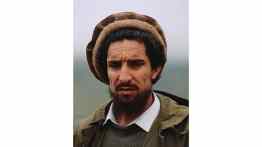
‘Everyone knows the Alexandria in Egypt,’ writes Edmund Richardson, ‘but there were over a dozen more Alexandrias scattered across Alexander the Great’s empire.’ By the early 19th century, though, very few had been identified. Moreover, the prevailing scholarly view was that there remained ‘not a single architectural monument of the Macedonian conquests in India’ — let alone in Afghanistan, which had, ‘for more than 1,000 years... been a blank space in western knowledge’. So finding one would be ‘a world-changing achievement’.

The stuff of everyday life: Real Estate, by Deborah Levy, reviewed

More from Books

Real Estate is the third and concluding volume of Deborah Levy’s ground-breaking ‘Living Autobiography’. Fans of Levy’s alluring, highly allusive fiction will appreciate the insights into her life; moreover, anyone with an ounce of curiosity will be fascinated by her compelling tour of city streets, island rocks and meandering diversions into ideas from a wealth of writers and artists. We begin the book with the author buying a plant from a flower stall. (Our modern-day Mrs Dalloway purchases a banana tree in Shoreditch rather than cut flowers in Westminster.

Blindness and betrayal still bedevil Britain’s policy in Ireland

More from Books

Charles Péguy’s adage that everything begins in mysticism and ends in politics is sharply illustrated by the development of the Irish Revolution. In his previous scintillating studies, Easter 1916: The Irish Rebellion and The Republic: The Fight for Irish Independence 1918–1923, Charles Townshend traced the progress of Ireland’s long-drawn-out severance from Britain. The completion of the trilogy is delivered with his characteristic scholarly panache.

Over the rainbow: D.H. Lawrence’s search for a new way of life

Lead book review

When it comes to biography, some authors draw the punters, and others leave the mob cold. D.H. Lawrence has been written about a lot, from the moment he died. At least ten memoirs were published in the five years after his death by authors ranging from his sister and his wife to patrons such as Mabel Dodge Luhan. More followed, and only professional Lawrence scholars will have read all of them. There must be dozens of them, and some, such as the Cambridge three-volume effort by different authors, are immensely long. By comparison, there are only a handful of full-scale lives of James Joyce, and poor old Arnold Bennett has only one (excellent) biography, by Margaret Drabble. What is it about Lawrence that draws them so?

How St Ives became Barbara Hepworth’s spiritual home

More from Books

‘To see a world in a grain of sand’, to attain the mystical perception that Blake advocated, requires a concentrated, fertile imagination. Barbara Hepworth (1903-1975), one of the leading and most popular British sculptors of the 20th century, fervently imagined that her works expressed cosmic grandeur and her own spiritual aspirations. In the foreword to this thoughtful and enjoyable biography, Ali Smith testifies that Hepworth was ‘fiercely intelligent’, while its author, Eleanor Clayton, candidly declares: ‘I write as a curator who loves the artist she presents, a fan writing of her hero.’ Her research shows how frequently the sculptures convey ‘concepts [Hepworth] considered universal and eternal’.

New Yorkers talk the talk

More from Books

New York in a nutshell? No way. New York in a New York minute? Forget about it. The city contains multitudes: it contradicts itself, wantonly. Any attempt to summarise will fail. Not even Craig Taylor’s delightful cacophony of voices, dozens and dozens of them spilling their New York stories, can compass its vastness and variety. But what a tasty slice Taylor serves up! Until you can fly into JFK and see, hear and smell for yourself, savour the grit, sweat in the choking humidity and shiver in the canyoned midtown winds — until then, his New Yorkers is just the ticket. This is Taylor’s second anthology of urban voices. It follows more or less exactly in the footsteps of Londoners (2011) which was widely and warmly praised.

We shouldn’t be so squeamish about eating foie gras

More from Books

In his excellent, brief chronicle of foie gras, Norman Kolpas lists Kate Winslet, Ralph Fiennes, Thandie Newton, Ricky Gervais and the late Sir Roger Moore as among those who don’t want you to eat it, as well as Fortnum & Mason and the state legislature of California, which declared its production and sale illegal in 2019. Why do they care about something so petty as the making and consumption of this buttery, savoury age-old delicacy? There is, of course, a hint of class warfare about advocating its prohibition, along with caviar and other treats of the well-off and indulgent. But the main opposition claim is that the production of the hyper-fatty livers of ducks and geese is physically cruel and therefore immoral.

Sacrificing to the false god of gold

More from Books

Deep in Peru’s Amazon rainforest sits a desolate zone, stretching for miles and pockmarked with chemical-tainted water that glistens orange and blue. This was the centre of the country’s illegal gold-mining operations, where tens of thousands of desperate people dug into the soil in search of a precious mineral that could make the difference between destitution and wealth. For every ounce found in the crime-infested badlands, nine tonnes of toxic waste are thought to be left behind in an environmental catastrophe that will contaminate the region for decades. No wonder Pope Francis, on a visit to the impoverished area, called gold ‘a false god’ when so much wreckage is left behind in its wake.

The first Cambridge spy: A Fine Madness, by Alan Judd, reviewed

More from Books

For his 15th novel, the espionage writer Alan Judd turns his hand to the mystery of Christopher Marlowe’s death. The result is never less than engrossing, with Judd putting the scanty known facts about the great playwright to ingenious use. The story is narrated from the King’s Bench prison by Thomas Phelipps 30 years after Marlowe’s fatal stabbing in a Deptford rooming-house brawl. Phelipps is good company, a master cryptographer and key employee of the spy-master Francis Walsingham, yet a self-proclaimed ‘simple man’ who yearns to marry and settle down. These contradictions help make him as fascinating as the mercurial Marlowe, who he’s sent to recruit at Cambridge. Phelipps immediately senses that Marlowe needs ‘protection from himself...

Cairo in crisis: The Republic of False Truths, by Alaa Al Aswany, reviewed

More from Books

Certain novels complicate the very notion of literary enjoyment. This, by the author of the international bestseller The Yacoubian Building, is such a one. Despite its gripping narrative, compelling structure and vivid characters, every time I picked it up it was with a sinking heart. In telling the story of the Egyptian revolution of 2011 through the viewpoint of a variety of Cairenes both for and against, Alaa Al Aswany holds out the slender straw of hope against the slashing shears of repression. General Ahmad Alwany has just supervised the torture of a man and the abuse of his wife at his HQ. But it’s not as though he’s devoid of human sentiment; he adores his daughter, Danya, a medical student.

Will’s world: Shakespeare as the man in the crowd

More from Books

Shakespeare’s first biographer was the gossipy antiquarian John Aubrey, who famously described the playwright as ‘not a company keeper’. It has long been tempting to see him this way: Shakespeare the aloof genius, almost divine. There’s something chilly in this vision, and scholarly work on Shakespeare of the past few decades has increasingly tended to picture him in different kinds of company. Academic studies now routinely investigate Shakespeare as a member of a group of players, or trace his links to patrons, his family and his rivals. By now it is generally accepted that Shakespeare’s plays were collaborative; the scholarly squabbles are over how much and which bits of work his co-writers did.

The gender identity issue: Kathleen Stock puts her head above the parapet

More from Books

‘Something is afoot,’ wrote the academic philosopher Kathleen Stock in 2018: Beyond the academy, there’s a huge and impassioned discussion going on around the apparent conflict between women-who-are-not-transwomen’s rights and interests and transwomen’s rights and interests. And yet nearly all academic philosophers — including, surprisingly, feminist philosophers — are ignoring it. Material Girls picks up three years after Stock’s initial musings, and feminist philosophers are knee-deep in debate. Or is debate permitted in matters of gender ideology? During the past two decades there has been a concerted effort by the likes of Stonewall to override women’s sex-based rights in favour of ‘gender identity’.

Why did Hitler’s imperial dreams take Stalin by surprise?

More from Books

The most extraordinary thing, still, about Operation Barbarossa is the complete surprise the Wehrmacht achieved. In the early hours of 22 June 1941 the largest invasion force in history, ultimately some three million men, struck at the Soviet Union on a front of nearly 2,000 miles. When Stalin was woken with the news, he wouldn’t believe it. It couldn’t be Hitler’s doing, he insisted; surely just sabre-rattling by Wehrmacht generals? Hours passed before he would accept his calamitous misjudgments and issue a general order to fight back by every means. Hitler’s strategic challenge in the late 1930s had been essentially the same as the Kaiser’s in 1914: how to make war simultaneously on two fronts.

Hitting the buffers: The Passenger, by Ulrich Alexander Boschwitz, reviewed

More from Books

‘They’ll slowly undress us first and then kill us, so our clothes won’t get bloody and our banknotes won’t get damaged.’ These words, spoken by Otto Silbermann in Ulrich Alexander Boschwitz’s The Passenger, are startling. Not because they so perfectly articulate the obscene ethos of Auschwitz but because they were written several years before the fact. Composed in 1938, after its author had escaped the more murderous developments of Hitler’s regime, The Passenger is a tense, nightmarish account of one Jewish man’s attempt to survive in a country that is systematically stripping him of his right to exist.

The evolution of England — from ragbag kingdoms to a centralised state

Lead book review

The title of Marc Morris’s new history makes me want to get up and dance a little jig. The modern Inquisition has been jabbing its finger at the term ‘Anglo-Saxon’, accusing it of thought crime and threatening it with the cucking stool. (At least one august history society in the US has renamed itself in response.) Bad people have no doubt used the word, but Alfred the Great (871–99) and Æthelstan (924–39), among others, identified as such, and so contemporary historians have a reasonable case for using it too. Bravo Mr Morris for getting on with it. Having spent many years at academic conferences around the world, I can reassure readers that if today’s Anglo-Saxon scholars are closet white supremacists, their cover is pretty darn deep.

Straight lines and grandiose schemes — Napoleon the gardener

Lead book review

On 1 January 1806, a little over one year after his coronation, the Emperor Napoleon ordered the abolition of France’s new republican calendar and a return to the old Gregorian model. Over the past seven years republicans had grown used to ‘empire creep’, but even for those who had been forced to watch the principles of the revolution dismantled one by one and a republican general metamorphose into Emperor of the French, this last insult carried a peculiarly symbolic charge. For all its engaging dottiness — each new year, coinciding with the autumnal equinox, would begin on a different date — the short-lived republican calendar had embodied some of the most attractive and fragile dreams of the revolution.

How the third world war was narrowly averted

More from Books

Nuclear weapons carry a payload of cold logic: if both sides have them, neither will ever use them. But in 1962, when the Soviet Union and US squared up to one another over Cuba, that logic broke down. As this superb new book shows, the Cuban Missile Crisis was the product of miscalculation, ignorance and staggering recklessness. The main culprit was Nikita Khrushchev. His first error was to mistake the US president for a callow weakling. ‘Don’t worry,’ he assured his Cuban friends, ‘I’ll grab Kennedy by the balls.’ After their first meeting, JFK remarked that negotiations with Khrushchev had been the ‘roughest thing in my life’.

Stealing the story: A Lonely Man, by Chris Power, reviewed

More from Books

Robert Prowe has writer’s block. An Englishman reaching middle age, he lives in Berlin with his Swedish wife and their two young daughters: two prams in the hall, two enemies of promise. Having enjoyed some success with a collection of short stories, Robert has been commissioned to write a novel; but the submission date was 18 months ago and he now spends his mornings deleting, letter by letter, the few words he produced the day before. His stories had once come easily: they grew out of his quotidian world in the form of anecdotes passed on to him by friends, family and strangers in bars. But nothing around him will feed his present fiction and he is fast fading out of his own life. ‘R U ALIVE?’ asks his agent.

From family home to mausoleum: the Musée Nissim Camondo

More from Books

The potter and author Edmund de Waal revisits familiar terrain at an angle in his third book, Letters to Camondo. Ten years after the publication of his debut memoir, The Hare with Amber Eyes, he is once again in Paris, lurking about the rue de Monceau, ruminating on dust, trying to make the dead speak. He’s particularly keen to elicit a word from Count Moïse de Camondo (1860-1935), the last patriarch of a clan of absurdly rich French Jewish bankers with roots in Constantinople. The count was a friend and neighbour of de Waal’s cousin, the art historian Charles Ephrussi, whose collection of Japanese netsuke played such a large role in The Hare with Amber Eyes. The wary reader may ask: hasn’t de Waal had quite enough of the rue de Monceau?

It is impossible to imagine Henrician England except through the eyes of Hans Holbein

More from Books

‘Holbein redeemed a whole era for us from oblivion,’ remarks the author of a trilogy of novels set at Henry VIII’s court. ‘He has forced us to believe that his vision of it was the only feasible one.’ This is a bit of a tease. It’s not written by Hilary Mantel, as you might be expecting, but by Ford Madox Ford, who, a century before Wolf Hall, published a sequence of novels about Henry’s fifth queen, Katharine Howard. Nevertheless, Ford’s point is irrefutable. It is impossible to imagine the England of Henry VIII except through the eyes of ‘the King’s Painter’, Hans Holbein.

Water, water everywhere: Touring the Land of the Dead, by Maki Kashimada, reviewed

More from Books

Maki Kashimada won the 2012 Akutagawa Prize for Touring the Land of the Dead, the strange, unsettling novella that makes up half of this volume. It is translated here for the first time from the Japanese into English by Haydn Trowell, alongside Kashimada’s ‘Ninety-nine Kisses’, a short story based on Jun’ichiro Tanizaki’s classic novel about four unmarried women, The Makioka Sisters. In Japan, Kashimada has become known for her avant-garde, nonconformist style. These two offerings are exemplary pieces. In Touring the Land of the Dead, a woman called Natsuko returns to a hotel she went to as a child with her mother and brother; now she is with her disabled husband, who suffers from seizures.

Even the Queen wasn’t spared Prince Philip’s bad temper

More from Books

Though the indefatigable Gyles Brandreth met and interviewed Prince Philip over a 40-year period, His Royal Highness managed to give very little away. ‘He would just look at me balefully and say nothing,’ Brandreth writes. Wondering what Prince Philip’s philosophy of life might be, ‘I didn’t get very far’. When asked about his childhood,‘he brushed away the subject’. Prince Philip’s attitude to parenthood was a flat: ‘We did our best.’ His opinion of the Queen Mother: ‘He would not be drawn.’ His summing up of the consort’s existence: ‘I tried to find useful things to do. I did my best’ — e.g. by introducing a footman training programme or building a log cabin at Sandringham.

The high and low life of John Craxton

More from Books

Charm is a weasel word; it can evoke the superficial and insincere, and engender suspicion and mistrust. But charm in its most authentic sense was surely the defining quality of the painter John Craxton, and it flavours this lively and richly coloured account of his life. Ian Collins only met the elderly Craxton — by now sporting the moustaches, shepherd’s stick and general demeanour of a Cretan chieftain — in the last decade of his life (he lived to 88), and was immediately seduced by his joie de vivre and his fund of recondite knowledge, stories and jokes, and drawn into Craxton’s charmed circle.

An independent observer: Whereabouts, by Jhumpa Lahiri, reviewed

More from Books

After falling in love with Italy as a young woman, the Pulitzer Prize-winning author Jhumpa Lahiri broke with English and began writing in Italian. Her new novel — a slim and bewitching tale of a woman at her midpoint — she wrote first in Italian and has since translated. The story is told in a series of vignettes, the lengthiest six or so pages. Each is titled with the setting — in the office, at the register, on the street — and paints an exquisite picture of a single soul moving thoughtfully about her city. ‘I don’t share my life with anyone,’ says that soul early on. She lives alone in a spartan apartment, and with only herself to worry about she never fills the fridge.

Eliminate the positive: Come Join Our Disease, by Sam Byers, reviewed

More from Books

Sam Byers’s worryingly zeitgeisty second novel, Perfidious Albion, imagined a post-Brexit dystopia dominated by global tech companies, corrupt spin doctors, shady think tanks and the corporate manipulation of government. So far so true — were it not for the current pandemic, one might call him a soothsayer. His third, aptly titled novel, Come Join Our Disease, dispenses with the crystal ball and instead explores the fear that the internet, despite its boons, is making us all ill. The pestilence, in this instance, is virtual. Byers’s heroine is Maya, a homeless woman once ‘peripherally employed’ in the tech world, now staying in a geographically indeterminate encampment.

Why should art have ever been considered a male preserve?

Lead book review

‘I’m a lady,’ insists the improbable damozel in David Walliams’s Little Britain sketch. I’m a lady, I kept thinking, reading these two books. More: I’m a lady art historian. Oughtn’t I to like books by other lady art historians about lady artists and ladies in art. Why don’t I? Why so out of sync with the sisterhood? Start with the positive. Jennifer Higgie’s The Mirror and the Palette follows an interesting, original line: ‘If she had access to a mirror, a palette, an easel and paint, a woman could endlessly reflect on her face and, by extension, her place in the world.

Back in the magic land of Narnia

More from Books

C. S. Lewis’s enchanting Chronicles of Narnia series has, in recent years, come under critical fire. It’s racist, sexist, colonialist; blatant propaganda for Christianity, hoodwinking children into a life of religious submission. These barbs seem to me to miss the point. As a geeky nine-year-old, I had a dim sense that Aslan had something to do with Jesus Christ. But so what — he was a talking lion! (And, even to children who weren’t Scripture swots, he clearly isn’t Jesus Christ, but something else.) Dyed-in-the-wool atheists get it wrong. I’ve never met a child who marched blindly from Narnia to Christ; but I have met children (now adults) who, already knowing Christ, have felt his joy in Aslan.