Culture

Culture

The good, the bad and the ugly in books, exhibitions, cinema, TV, dance, music, podcasts and theatre.

The dictator of the dorm: Our Lady of the Nile, by Scholastique Mukasonga, reviewed

More from Books

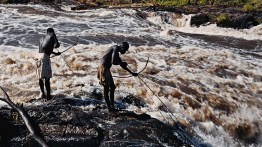
In the cloud-capped highlands of Rwanda, even the rain-makers sound like crashing snobs. When two teenage pupils from Our Lady of the Nile lycée slope off to consult the sorceress Nyamirongi about some boyfriend trouble, she sizes up their genealogies and comes over all Mitford duchess: ‘You’re not from very good families. But nowadays they say it no longer matters.’ Like so much in Scholastique Mukasonga’s novel, it’s a comic scene with a rumble of menace in the background — akin to the rainy season’s distant thunder in these lush, green hills. Where you belong — your people, your connections, your identity — has been a matter of life and death before. Soon it will be again.

Sleeping with the enemy: the wartime story of ‘La Chatte’

More from Books

The name ‘Carré’ immediately evokes the shadowy world of espionage. Ironically, however, few people today have heard of the real Carré, also known as ‘Victoire’ and ‘La Chatte’, a female intelligence agent inside Nazi-occupied France whose life had enough plot twists and moral ambiguity to satisfy any spy novelist. Mathilde Carré (1908-2007) had beena clever but rather neglected child. Desperate to give her life meaning, and inspired by the poems of a patriotic aunt, she had romantically decided ‘at all costs, to die as a martyr for France’. Thirty years later, after a number of false starts, the second world war finally presented her with the chance to live a life of real value.

Anti-Semitism and the far left

More from Books

The comic David Baddiel has written a book which explains that much of the far left hates Jews. There are exceptions. They are OK with dead Jews (the Holocaust gets a sad face emoji if it isn’t ‘exploited’ by living Jews, in which case it gets an angry face emoji), and penitent Jews (the ones who hate Israel in any form). They will deny it and call me an anti-Semite and a Nazi writing for a Nazi magazine with my Nazi fingers because they don’t understand Nazism, anti-Semitism or themselves. They are not really progressives; they are religious maniacs — and that is sometimes funny. These penitent Jews should include Baddiel, who is not a Zionist.

The magnificent fiasco of Mies van der Rohe’s Farnsworth House

More from Books

John Ruskin believed the most beautiful things are also the most useless, citing lilies and peacocks. Had he known about the Farnsworth House in Plano, Illinois, a rural community 50 miles west of Chicago, he might have suggested it too. Except this modernist building of 1951 is an evolved expression of the emerging industrial culture Ruskin so despised. But it is several other things too, notably an example of fraught transactions between architect and client. The Farnsworth test case became a trial whose transcript ran to 3,800 pages. Of all relationships, except that between a firing squad and its target, the architect-client example is the one most predictably headed for calamity.

Sowing seeds of comfort

More from Books

If you had asked me a year ago how a pandemic-panicked world of stockpiles, curfews and social isolation would influence my life in the garden, I might have drawn you a picture of myself as a kind of prepper homesteader, proudly feeding my family from the veg beds, trading spuds for loo rolls in the lanes around my house. As it was, last year was all about flowers for me, and while the lettuces and tomatoes were indeed bountiful and welcome, it was the glory of the sweet peas — the first thing I smelt on recovering from Covid — and the roses and dahlias that meant most. When all the news was ghastly and life felt scarily provisional, the nurturing of seeds into beautiful life took on an almost religious symbolism. And the high priestess of that religion is Sarah Raven.

A celebration of friendship: Common Ground, by Naomi Ishiguro, reviewed

More from Books

Naomi Ishiguro began writing Common Ground in the aftermath of the Brexit referendum. The title refers to both Goshawk Common in Newford, Surrey, where 13-year-old Stanley Gower meets 16-year-old Charlie Wells, and the threads that bind the boys despite their differences. Stan isn’t a talker; he tends ‘to stay quiet and stare at people’, which, together with his second-hand clothes and his desire to learn, has made him a target at school. Charlie is the opposite, with ‘his cigarettes and talk of girls and his recklessness and messiness’. Yet a friendship blooms on this ‘scrubby grass and tumbling hillside in the south of England’ — on common ground.

A written constitution is no defence against authoritarian government

More from Books

No one can accuse Linda Colley of shying away from big subjects. This one is as big as they come — nothing less than an exploration of the origin of written constitutions. It is built around two ideas. One is that the development of national constitutions has to be studied globally, not nationally. Only then can consistent patterns emerge. The other is that there is a consistent pattern. The great generator of written constitutions, she argues, is war. The argument is that war requires an exceptionally high degree of social organisation which makes a formal constitution desirable, perhaps even necessary. The Gun, the Ship and the Pen is a remarkable feat of scholarship on an international scale. Its reach is not quite global.

The carnage of the Western Front was over surprisingly quickly

More from Books

This book does not mess about. It tells the story of the fighting on the Western Front between 1914 and 1918, just like it says on the tin. It offers a proudly traditional military history, from the opening skirmishes, through the titanic clashes of the Marne and Verdun, the Somme and Ypres, on to the often overlooked Allied sweep to victory of the Hundred Days. It describes what happened when, where and why. There is no discussion of why the war was fought in the first place or of what the men thought they were fighting for. The war here, as it was for that generation, is simply an inescapable fact. We learn enough about the political context and manoeuvring in London, Paris and Berlin to explain events on the battlefield, but no more.

Bob Dylan — from respected young songwriter to Voice of a Generation

Lead book review

Clinton Heylin is the eminence grise of Bob Dylan scholars: co-founder of Wanted Man (the magazine dedicated to studying Dylan’s life and work), long-time editor of its quarterly magazine the Telegraph, compiler of Stolen Moments: The Ultimate Dylan Reference Book and also the author of Behind the Shades, which, when first published in 1991, was rightly praised as the most reliable account of Dylan’s life and career up to that point. Dylan has accomplished a great deal since then, including becoming a Nobel Laureate, so it’s not surprising that Heylin should want to bring his account up to date, especially since a large new collection of Dylan material has recently been deposited in the Gilcrease Museum in Tulsa.

Working remotely: five formidable female anthropologists

More from Books

I was first sent a version of Undreamed Shores: The Hidden Heroines of British Anthropology in June last year. I started my review; but publication was delayed. So I tore up my opening paragraphs, which began with the remark that only armchair travel was possible at present. By 2021, I imagined, that would be out of date. How wrong I was. Ten months later, and the book engages even more urgently. We can all sympathise even more sharply with those female would-be explorers who longed to escape from the restrictions of their lives — though an Edwardian tea party now seems to us like unimaginable freedom. The past is a foreign country; so there are two layers of escape here.

From temple to labyrinth — the art museum today

More from Books

At a certain point, the critic Robert Hughes once noted, at the heart of American cities churches began to be replaced by museums. Much the same occurred elsewhere in the world in the later 20th and early 21st centuries. Museums have sprouted from the earth in many diverse forms and numerous places. Enormous sums have been lavished on them. Vast processions of visitors file through their doors like medieval pilgrims — or at least they did before the pandemic struck. Once, there was widespread agreement as to what should go inside these temples of the arts: old master paintings, ancient carvings, the best and noblest artefacts humanity has produced. This consensus, however, has evaporated.

The windswept German island that inspired quantum physics

More from Books

Helgoland is a craggy German island in the North Sea. Barely bigger than a few fields, it reaches high above the water on precipitous cliffs and is famous for its sweet air. It has a town and a harbour, and the 1,000-odd inhabitants speak a distinct dialect. In the summer of 1925, the 23-year-old physicist Werner Heisenberg went there to sort out his hay fever and solve the problem of reality. Helgoland is a slightly misleading title for Carlo Rovelli’s inspiring, chaotic, delightfully unsatisfactory book of popular quantum physics. It isn’t about Heisenberg’s months there or his mathematical insights; ‘Helgoland’ is Rovelli’s shorthand for Heisenberg’s pellucid state of mind.

Ceramic art has been undervalued for too long

More from Books

The use of ‘Ceramic’ rather than ‘Ceramics’ in the title of this book indicates Paul Greenhalgh’s passionate belief that ‘ceramic is a thing in itself: a many-headed but nevertheless singular entity, with an on-going intellectual discourse’ which he christens ‘the ceramic continuum’. He believes that this has been ‘actively denied its place as an artistic practice’ and that ‘its exclusion from the canon of art history is squarely to do with money, class and race’. The book is a prodigious attempt to right that wrong.

Man about the house: Kitchenly 434, by Alan Warner, reviewed

More from Books

I have enjoyed many of Alan Warner’s previous novels, so it gives me no pleasure to report that his new book is so monumentally tedious that when two accountants turn up halfway through you think: great! Things might finally be getting interesting. Kitchenly 434, set in Thatcherite Britain, is narrated by Crofton Clark, an aging hippy who lives at Kitchenly Mill Race, a Tudorbethan pile belonging to the mainly absentee rock star Marko Morell. Crofton loves both Marko and the house with an obsessiveness signalled by his frequent mentions of the fact. ‘I’m your, eh, caretaker,’ he reminds the owner. ‘I’m the retainer. I’m a faithful retainer of this house that I love.

Who was to blame for the death of Jesus?

More from Books

In 1866, the Russian historian Alexander Popov made an astonishing discovery. Leafing through a Renaissance Slavonic translation of the first-century Jewish historian Josephus, Popov found detailed notes on the trial of Jesus written by none other than Pontius Pilate, the Roman governor who sentenced Jesus to death. The notes, finally published in a German edition 60 years later, were impressively detailed. They described Jesus as a ‘crooked’ and ‘horse-faced’ man whose eyebrows met over his nose. They showed how he had arrived in Jerusalem in the week before his death in the company of secretly armed partisans, intending to occupy the Temple. And they proved that Pilate had been forced to act to keep the peace. The sentence he passed was lawful.

A new blossoming: David Hockney paints Normandy

More from Books

In 2018 David Hockney went to Normandy to look at the Bayeux Tapestry, which he had not seen for more than 40 years. He liked its great panoramic length and the absence of shadows. But while there he found himself seduced by the scenery of Normandy, its winding lanes and orchards of blossom trees. He decided he would like to paint the arrival of spring there, as he had in Woldgate, East Yorkshire, a decade earlier. He asked his long-standing assistant, Jean-Pierre Goncalves de Lima, known as J-P, to look into the possibility of renting a house. He was so delighted with the first one J-P showed him, La Grande Cour, that he exclaimed: ‘Let’s buy it!

Philip Roth — most meta of novelists, and most honest

Lead book review

On page 532 of my preview copy of this biography of Philip Roth there is a footnote. In it, Blake Bailey quotes from Roth’s novel Deception, where the character of Philip Roth asks his mistress what she would do if she was approached after his death by a biographer. Would she talk to him? She replies she might, if he was intelligent and serious. Bailey then adds, with self-deprecating wit: ‘Emma Smallwood did not respond to my request for an interview.’ Emma Smallwood is the name of one of Roth’s many lovers. It is not her real name. OK, so: a fictionalised version of the subject of the biography I’m reviewing is quoted in words written by the subject of that biography, speaking about an imaginary biography to a fictionalised version of an unnamed woman.

Journey to ‘the grimmest place in the world’

More from Books

Suffering from post-traumatic stress and the effects of government austerity measures, Paul Jones resigned as the head of an inner-city secondary school and, ‘an idiot without a job’, decided to cycle from Land’s End to John o’Groats in four stages spread over ten months. He had raced occasionally with professional cyclists but had never ridden more than 127 miles in a day. His aim was to ‘dissect a brain slice of the country’, to find some relief from the ‘formless terror’ of his mental landscape, and to subject himself to the torture of a long-haul literary endeavour. It took him three years to produce this companionable and energetic book about the obsessive and strangely affable breed of record-breaking End-to-Enders.

Mommy issues: Milk Fed, by Melissa Broder, reviewed

More from Books

This is a novel about ‘mommy issues’. Rachel is a Reform Jew, ‘more Chanel bag Jew than Torah Jew’, and her mother has always been preoccupied by her daughter’s weight. ‘Anorexics are much skinnier than you’, she tells Rachel when she develops the condition as a teenager. ‘They look like concentration camp victims.’ Rachel’s therapist, Dr Mahjoub (who, we are told, fills her consultation room with elephants in trinket form) recommends a total break in contact between mother and daughter for 40 days. Before this begins, Mahjoub makes Rachel perform an art therapy exercise: to create a sculpture of how she sees herself out of modelling clay. ‘I made massive thighs, weighty calves, a voluminous ass.

Escape from reality: How to Survive Everything, by Ewan Morrison, reviewed

More from Books

Ewan Morrison is an intellectually nimble writer with a penchant for provocation. His work has included the novels, Distance, Ménage and Swung, which looked at the conditions of desire, normality and love under capitalism, and a hybrid collection of essays, reportage and fiction, Tales From the Mall. This new novel forms the final part of a loose trilogy, which is concerned with various forms of eccentric utopias. Close Your Eyes involved a spiritual commune with strict rules; Nina X was an uplifting book about a young woman freed from a Maoist cult and bemused by modernity.

The beauty of the ampersand and other keyboard symbols

More from Books

This is such a great idea: a book with one short essay per punctuation mark or typographical symbol. Of course, our commas, ampersands and exclamation marks all come from somewhere; all were invented at some point or another and their stories are ever-changing. Computer coders, for example, have recently moved previously unsung but elegant marks such as the hashtag and the ‘at’ sign back to centre stage. Claire Cock-Starkey is a confident and likeable host and makes a witty crack about her own surname in her essay on the hyphen. She somehow elevates what could have been a nerdy primer into something grander, and at various moments the book becomes meditative, poetic, philosophical and funny, as well as scholarly.

Learning to listen: Sarah Sands goes in search of spirituality

More from Books

It was the 13th-century wall of a ruined Cistercian nunnery at the far end of her garden in Norfolk that turned Sarah Sands’s thoughts to exploring monasticism in her final year as the editor of BBC Radio 4’s Today programme. She already had a soft spot for the ‘Thought for the Day’ slot — ‘an oasis of reflection’. But she was finding it increasingly hard to set aside any time for reflection in her busy, noisy, anxiety-filled ‘5G life’ — office meetings from pre-dawn to dusk and evenings of emailing with the phone beeping every few seconds.

Bugsy Siegel — the gangster straight out of a Hollywood movie

More from Books

Benjamin ‘Bugsy’ Siegel was about as meta-gangsterish as a real life gangster could get. Born in the slums of Manhattan’s Lower East Side in 1906, he was still a teenager when he teamed up with Meyer Lansky to become a successful bootlegger and mob enforcer. But when Mayor La Guardia came along in the early 1930s to clean up New York’s underworld, Siegel moved to California, and began dressing the way film adaptations of gangsters were supposed to. He befriended actors who played characters like him, and even filmed a couple of test scenes of himself playing a gangster who was based on a gangster like him. (The studios feared him too much to hire him. After all, who was going to shout ‘Cut!’ at Bugsy Siegel?

The making of a monster: Paul Kagame’s bloodstained past

Lead book review

In June, Commonwealth heads of government will meet in the Rwandan capital Kigali, a city advertised by their Tutsi host, the 63-year-old Paul Kagame, as ‘the Davos of Africa’. Kagame, Rwanda’s de facto leader since 1994 — and boasting more honorary degrees than Barack Obama, although he never finished high school — has become the ‘donor darling’ of the international community. He is why the World Bank has donated in excess of $4 billion, and why, until recently, the biggest bilateral donor has been the UK. ‘As far as I’m concerned,’ says the Tory MP Andrew Mitchell, ‘he is a hero for ending the violence.’ Michela Wrong is a British authority on Africa who begs to differ.

Slanging match: rein GOLD, by Elfriede Jelinek, reviewed

More from Books

I’ve tried hard to think of someone I dislike enough to recommend this novel* to, but have failed. Elfriede Jelinek is Austria’s leading contemporary literary figure, and to open rein GOLD at random is to get the impression that she is the successor to Thomas Bernhard — page after page without a single paragraph indentation, a general ranting tone, maddening repetitiveness, and cult status. Just in case Jelinek’s is an unfamiliar name: she is an extremely neurotic person, a sufferer from many phobias — unable to travel to collect her Nobel Prize; a copious writer, many of her books having been translated into English among other languages; and, most significantly, one of those authors whose favourite idiom is humourless parody.

Jordan Peterson is the Savonarola of our times

Lead book review

Like most novelists, I am a firm adherent to the W.H. Davies principle of finding time to stand and stare. I was once sauntering down Regent Street when a gentleman hared out of a department store, closely followed by two rather healthier specimens. They flung him to the ground, upon which large quantities of merchandise started falling from his pockets. I was fascinated, both by the level of violence the shop’s security was using and by what a captured thief actually says when he’s being subdued. (Clue: not ‘You got me bang to rights.’) After a moment or two another bloke came over to me and a couple of others gawping on the public pavement. ‘Move along there,’ he said. ‘There’s nothing for you to see here.