Culture

Culture

The good, the bad and the ugly in books, exhibitions, cinema, TV, dance, music, podcasts and theatre.

Is Johann Hari ghost-writing Russell Brand’s ‘revolutionary manifesto’?

Whispers reach Mr Steerpike that disgraced journalist Johann Hari has been tasked with ghost-writing Russell Brand’s next book, the much-dreaded revolutionary manifesto to ‘establish a personal and global utopia’. Mr S asked Brand’s publishers Random House for clarification. At first they wouldn’t comment; but then a publicist said that was the first she’d heard of it,

The great Shakespeare authorship question

Was William Shakespeare just a nom de plume? The question is usually dismissed as boring, only of interest to snobs and cranks. Clever people, like the Shakespeare scholar Jonathan Bate, know better. But the old authorship debate has been given new life of late, thanks to the energetic writer Alexander Waugh, who is adamant that

Half-poetry, half-prose, half-Belgian – and not half bad

More from Books

Patrick McGuinness’s prose trembles on the edge of poetry, occasionally indeed tipping gently over into it. This is thoroughly characteristic of a book that does sometimes feel as though it might be an abandoned sequence of poems, reconfigured in often spell-binding prose. The title itself is poetic: who the ‘other people’ are and which ‘countries’

It’s not nice being used and abused

More from Books

The term ‘psychological thriller’ is an elastic one these days, tagged liberally on to any story of suspense that explores motivations while keeping blood and chainsaws to a minimum. In many cases, the line between a thriller and a crime novel has become too blurred to be useful. In the novels of Nicci French, however,

Gavrilo Princip – history’s ultimate teenage tearaway

More from Books

Amid the vast tonnage of recent books about the first world war this must be the most unusual — and one of the most interesting. The ‘Trigger’ of the title is Gavrilo Princip, the 19-year-old student dropout who shot the Habsburg Archduke Franz Ferdinand on a Sarajevo street corner on 28 June 1914 and began

John Crace digested – twice

More from Books

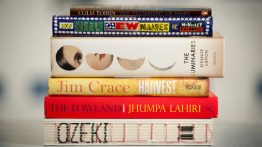
Fiction ‘So how come we’re in the same book?’ Paul from The Stranger’s Child asked Florence from On Chesil Beach. ‘Apparently,’ replied Florence looking up from the introduction to The 21st Century Digested, ‘the parodies of new books that John Crace has been doing in the Guardian since 2000 are now so popular that 131

Who’s raiding the fridge?

More from Books

There is a problem with describing what happens in Nagasaki: impossible to reveal much of the plot without flagging up serious spoiler alerts. The story demands an innocent eye; the gaining of knowledge should come page by page, and not be hurried. To set the scene: Shimura-san, a bachelor of 56, set in his ways,

Shooting prize-dispensing fish in literary barrels

More from Books

Edward St Aubyn’s new novel is a jauntily malicious satire on literary prizes in general, the Man Booker Prize in particular and, it may be presumed, the 2011 Man Booker Prize in especial particular. That was the year of the great ‘readability’ brouhaha in which — as every reviewer will point out — among many

How seriously should we take Ruskin as an artist?

More from Books

This stout and well-designed volume nicely complements Tim Hilton’s classic biography of John Ruskin. It is the catalogue for the exhibition at the National Gallery of Canada, Ottawa (till 11 May) and the Scottish National Portrait Gallery (4 July–28 September). A Scottish venue is especially appropriate. Ruskin (1819–1900) was a Londoner but proudly Scots by

The book that brought out the Lady Bracknell in me

More from Books

I’ve always said that speech is my second language, so naturally I’m somewhat slang-shy; I love words all written down properly and punctuated to within an inch of their lives. Not so Jonathon Green, who has the same relationship with slang as Jordan does with eating wedding cake in a thong; five books about it

To be topp at lat., throw your Cambridge Latin Course away

More from Books

The wisest words about learning Latin were said by that gifted prep-school boy, Nigel Molesworth: ‘Actually, it is quite easy to be topp in lat. You just have to work.’ But things have changed since Molesworth learnt Latin at St Custard’s in the 1950s. Over the last half-century, the work has been extracted from Latin

Tales of the inconsequential

My cache of conversational titbits has been considerably boosted by the most recent challenge that I threw down to Spectator readers. I asked for an extract from either a gripping thriller or a bodice-ripping romance containing half a dozen pieces of inconsequential information, and I now know that Zanzibar is the world’s largest clove producer,

An escape from New South Wales

More from Books

Thomas Keneally has constructed his latest novel around a framework of true events: the mass break-out of Japanese PoWs from a camp in New South Wales. This intrinsically thrilling incident, triggered by a fascinating clash between mutually uncomprehending cultures, is an obvious gift to a writer. There may be some who claim that any novelist

Recent crime fiction | 24 April 2014

More from Books

Louise Welsh rarely repeats herself, a quality to celebrate in a crime novelist. Her latest novel, A Lovely Way to Burn (John Murray, £12.99, Spectator Bookshop, £10.99) is a dystopian thriller set in an all-too-plausible version of contemporary London. Three members of the establishment have shot dead innocent bystanders. The weather is broiling. A plague-like

The gambler’s daily grind

More from Books

Lord Doyle is a shrivelled English gambler frittering away his money and destroying his liver in the casinos of Macau. Aptly, since he is in a place filled with mock-Venetian canals and poor reproduction paintings, he himself is a fake: the man is not a real lord, and the money is not his own. He

What most imperilled country houses in the 20th century was taxes and death duties, not requisition

More from Books

Servicemen used paintings as dartboards.   Schoolchildren dismantled banisters and paneling for firewood. Architects from the Ministry of Works acted like pocket Stalins. Sarcophagi were dumped in gardens beside beheaded statues. And overhead, Luftwaffe Dorniers droned with menace. Such hazards ravaged requisitioned country houses during the last war. Yet nothing imperilled them more, in the 20th

Up close and personal | 24 April 2014

Lead book review

What should a writer write about? The question, so conducive to writer’s block, is made more acute when the writer is evidently well-balanced, free of trauma and historically secure. It is made still more urgent when that writer is solipsistic in tendency and keen to write, not about the world, but about perceptions of the

Beauty in beastly surroundings

More from Books

The vast majority of books written about British gardens and their histories are concerned with large ones, made and maintained, sometimes over several centuries, by people with money. ’Twas ever thus. In this country, recognisable gardens began in monasteries, as well as the surroundings of palaces and noblemen’s houses, and it is only in the

I’ve finally found a point for St George’s Day

We (the English that is) share our patron saint’s day with the Catalans. On Sant Jordi’s day Barcelona fills up with bookstalls and flower sellers. The men give their women flowers and the women their men books. I lived in Barcelona a few years ago and found the whole thing charming but also a bit sexist.

The poet who welcomed war

Today, 23 April, the world celebrates the 450th anniversary of William Shakespeare’s presumed birth (and marks with less joy the date of the Bard’s death in 1616). That double date obscures another: the 99th anniversary of the death of a less celebrated Warwickshire-born literary lad, the poet Rupert Brooke. Brooke, like many of his friends

Tea with Greta Garbo’s decorator

More from Books

Many people write, or at least used to write, fan letters to their film favourites. Usually all they received in acknowledgement was a 10 x 8 glossy with a mimeographed signature. A little persistence sometimes resulted in another, with a brief ‘personal’ message written by the ladies toiling in the fan-club HQs. Not so for

A Mughal Disneyland and a ripping yarn

More from Books

Mysore, once the capital of a princely kingdom in South India, has lost its lustre. In Mahesh Rao’s darkly comic novel, grandiose futuristic visions are being floated: in a city desperate to reinvent itself for today’s brave new world, ancient temples and palaces are no longer enough. With India’s space programme about to send a

Roger Mortimer writes again

More from Books

After Dear Lupin and Dear Lumpy, here’s a slightly more prosaically titled collection of letters from Roger Mortimer, longtime racing correspondent of the Sunday Times and frequent purchaser of stamps. Who would have thought that one man could write so many letters that, 20 years after his death, so many people would still want to

Start with a torpedo, and see where you go from there

More from Books

Sebastian Barry’s new novel opens with a bang, as a German torpedo hits a supply ship bound for the Gold Coast. We experience everything through the senses of ‘temporary gentleman’ Jack McNulty — an Irish officer in the British army with a short-term commission. Brimful of whiskey, his racing winnings jingling cheerily in his pocket,