Nicky Haslam

Nicky Haslam is the author of Folly de Grandeur: Romance and revival in an English country house.

How to dress a queen

The problem with exhibiting costumes is well known. Should the mannequins be lifelike with human features, or faceless? What about trying a more surreal approach with Perspex or metals? This show of her late Majesty’s wardrobe opts for something more ghostly: hundreds of shoulderless, neckless, wristless, legless figures, floating magically in space, presented in cases at eye level, with others, higher, in serried ranks, like some gorgeously arrayed terracotta army. The unifying factor is that instantly recognisable royal silhouette – from the youthful wasp waist to the later fuller frame.

Peter Mandelson’s secret crush

From our UK edition

Back in the mists, early 1980s I suppose, I was asked to decorate a penthouse apartment in London for a tycoon who collected large-scale contemporary American art. Decor done, art hung, the porter asked if he could show it to the prospective buyer of the same-layout penthouse next door, a member of the Gaddafi family attending university in London. ‘Sure,’ we said, and a young man in black robes arrived a bit later. He did a quick recce, approved, and said he wanted to have exactly the same decoration, including the art, and ready to move into in ten days. My team pulled together a pretty good replica while Tom Bell and I spent a weekend making the art. Fake Stellas glowed with colour, fake Rothkos brooded. We slashed fake Fontanas, cartooned fake Lichtensteins, popped fake Warhols.

Cartier used to be a Timpson’s for the rich

From our UK edition

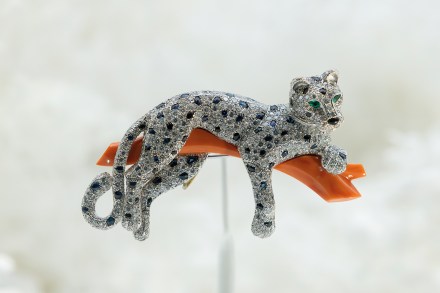
In the fall of, I suppose, 1962, my friend Jimmy Davison and I, window shopping on Fifth Avenue, bumped into the glamorous Venezuelan playboy-grandee Reinaldo Herrera. Jimmy asked where he was going. ‘I’m just nipping into Cartier. They’re fixing my skis,’ Reinaldo replied. Autres temps, autre moeurs. I doubt anyone today uses the world’s most famous jewellers as their local Timpson’s, though I suspect Cartier’s unrivalled in-house craftsmen could still run up a supple sapphire USB cable if requested. I doubt anyone today uses the world’s most famous jewellers as their local Timpson’s Because that was partly the firm’s point. Apart from the staggering banque-busting biggies, they, almost uniquely, made the most exquisite smaller things.

How will Carrie cope with the hideousness of Chequers?

From our UK edition

Zut alors! The court of King Boris gets more like Versailles each day. With some talcum powder on that ramshackle hair, the Prime Minister would be the image of Louis le Something after a night on the Tuileries. His government, meanwhile, totters towards the tumbrils. Le Marquis d’Ancock, Comte de Raab and Le Petit-Maître Gove all cower in the corridors of power, fearful of ‘À la Bastille!’ being barked by sitting pretty Mme de Patel, or a strictly formal dressing-down from His Holiness, L’Abbé Rees-Mogg. Behind the screens, Madame du Carrie ponders eco-friendly lightbulbs with Mlle Lulu, or the source of the handwoven rattan for that dog’s basket.

Designer’s Notebook

From our UK edition

‘Volcanic temper… suspicious of everyone… irritability, mood swings… terror stalking the shadows… devastating collapse of Europe’s economy… rampant insecurity, unbridled hypochondria…’ Trump? No, it’s Henry VIII, according to Robert Hutchinson. But the ‘king’ across the water is uncannily like the Tudor tyrant; the discarded wives, the wenching, the rival heirs, the fawning, the flattery, the broken treaties. Palm Beach is his jousting ground; Mar-a-Lago his gaudier Nonsuch.

Unpretentious, and enormous fun

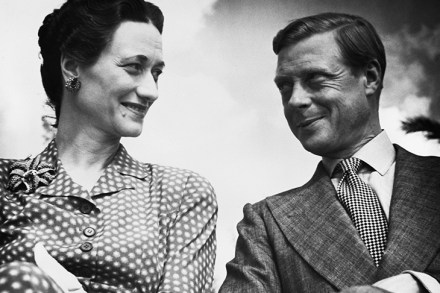
One would have thought this particular can of worms might, after nearly 80 years, be well past its sell-by date. But books about Mrs Simpson and her infatuated king appear with thudding frequency, each with some ever more far-fetched theory about this curious union. Now comes the leaden hand and leaden prose of Andrew Morton, with yet another: that Wallis was, all her life, in love with another man long before, during and after her experience of vitriolic abuse, first as the besotted prince’s obsession, then scapegoat for his abdication, and object of vilification during her years as his wife. This love (to borrow words from her step-great nephew, ‘whatever love is’) may well have been real. The man in question was Herman Rogers.

Littering castles all over the land

From our UK edition

I rashly discarded this book’s dustjacket when I received it, and thus saw only the unlettered cover, a faded photograph of three generations of an aristocratic family, somewhat camera-shy in their silken breeches. Oh I see, I thought, this is one of those books on the foibles of the aristocracy, always an entertaining subject. How wrong can one be? Instead, it’s a polemic against crats aristo, auto, mono or pluto; and the author apparently yearns for any crat of a different stripe — not just demo and bureau, but mobo, neo and probably ochlo to boot. Naturally I went immediately to the index, to look up my family.

Immaculate conceptions

From our UK edition

Some 30 summers ago we were staying at a famously beautiful villa outside Turin; our hostess was — indeed is — renowned for her superb taste and distilled perfection of every aspect of douceur de vivre. Each night we dined in a different sylvan setting — under inky trees, in flower-filled gardens and in 18th-century rococo salons, amid porcelain bouquets of those selfsame flowers. Another room, with candles lighting the chinoiserie panelling, is forever incised in my mind, not only for the decor but for the last course.

Spectator Books of the Year: A hundred years of British Vogue

From our UK edition

I don’t really care — as I’m sure you don’t either — whether Duchess Kate agrees to a photoshoot or whether Dolce and Gabbana will show up at the gala centenary dinner. But you will when you read Alexandra Shulman’s Inside Vogue: A Diary of My Hundredth Year (Penguin Fig Tree, £16.99). In a candid, introspective, generous and witty way, Vogue’s editor shows the slog, guts and diplomacy that are needed to produce the magazine — often to the detriment of family life. The eventual results of a year’s long-planned coups are page-turners.

Halloween hire

From our UK edition

To use a vulgar phrase, I can’t get my head around this exhibition. It seems anything but ‘vulgar’. Daintily laid out and dimly lit in the gloomier cloisters of Fortress Barbican is a series of dresses — the chaps hardly get a look-in, save for some of those white-knee-britched, jaboty, gold-laced-coat get-ups that people like Philip Green struggle into for their fancy-dress parties — some ancient, some modern, a lot very pretty, a few laughably ludicrous; anyone wanting a frightening clown costume for Halloween will find inspiration here. The clothes are, for the most part, exquisitely made. Many are elegant, and several supremely extravagant; however, the organisers of the exhibition seem to be trying to lump them all into the ‘vulgar’ basket.

He blew his mind out in a car

From our UK edition

There was a touch of Raymond Radiguet, the young literary sensation of 1920s Paris, about Tara Browne. In life poetically beautiful, poetry-imbued, tender and trusting, deliciously precocious and eerily presumptive, androgenous in looks but not desires, Tara died —‘without knowing it’, as Cocteau said of Radiguet — tragically, but given his penchant for very fast cars, unsurprisingly young. And, like Radiguet, having touched the lives of those who knew him with a kind of iridescence that remained with them more than half a century later.

Girl power | 2 June 2016

From our UK edition

Many years ago, working on a project in Tel Aviv, I had a meeting-free weekend. I know, I thought, I’ll call my friend Brigid Keenan — at that time en poste to Syria with her ambassadorial husband — and nip up to Damascus — so close, only that smidgen of Lebanon in the way. I dialled Brigid’s number. There were many odd whirrs and pings and beeps, and then, ‘Don’t ever call me’. Slam! It was an unexpected reaction from a voice I’m accustomed to hear burble merrily on about how last night their diplomatic reception was brouhaha’d because the dog puked on the First Lady of Baku’s shoes, or the joy of discovering a pink sandstone temple half buried in some hidden Kazakhstan valley, or tracking down Marmite in Outer Mongolia.

Vanity fair and foul | 10 December 2015

From our UK edition

People tend to use the term ‘fashion victim’ somewhat damningly — and maybe jealously — to describe someone obsessed by the latest look. I’m not sure I agree. There’s something endearing about anyone who wants to dress in the newest style, and anyway, isn’t being up-to-date the whole point of fashion? It’s no more reprehensible than wanting the newest car, or iPhone, or flattest TV. ‘Victims’ are surely those who get it wrong — the mutton and lamb syndrome. More like what my beloved friend Melissa Wyndham called ‘fashion casualties’. But now Alison Matthews David has brass-tackled the subject.

Madly Modern Mary overcomes childhood hardships to become the Queen of Shops

From our UK edition

In this autobiography, Mary Portas doesn’t dip into the fabled store of her talents by giving an account of her countrywide progress as monarch and oracle of retail, but conjures a nostalgic cornucopia of the mid- 20th-century brands and frankly cheesy TV personalities (she often dressed up as Jimmy Savile) that dazzled her youthful Hertfordshire eyes. These were rapturously set on future journeys, of which we get only one — her great leap forward from North Watford to Knightsbridge, where her undoubted brilliance as a window-dresser eventually blossomed at Harvey Nichols.

Nicky Haslam’s diary: Marie-Anna Berta Felicie Johanna Ghislaine Theodora Huberta Georgina Helene Genoveva and other big names

From our UK edition

I was once bundled into a police car in Palm Springs to explain why I didn’t have snow-tyres on my pick-up in the red-hot California desert. I don’t remember the outcome of the ‘arraignment’, but will never forget the lady cop’s name, L. Nevada Yonkers. Other weird names have stuck with me. Reading The Most of Nora Ephron, whom I met once and immediately fell in love with, I realised that when I was working on Vogue in New York in the 1960s, she had been on the staff of Newsweek. I used to be obsessed by the weird names of the girls on Newsweek’s masthead. I would reel them off like a litany.

Nicky Haslam on sharing a lover with Elsa Schiaparelli and the endearing punk of Vivienne Westwood

From our UK edition

A comet streaked into France in the 1930s, its fallout sending the staid echelons of haute couture into a tailspin. A mere 30 years later a rogue missile blasted into London, blowing dainty English clothes sense to smithereens. Both these thunderbolts shot the stuffing out of cloying conventionality, one with an arrow-narrow silhouette, the other by blitzing the luxe out of luxury, the ex out of exclusivity. It’s worth studying the photographs of those two alien invaders, the subjects of these lengthy works.

The genius of Cecil Beaton’s interiors

From our UK edition

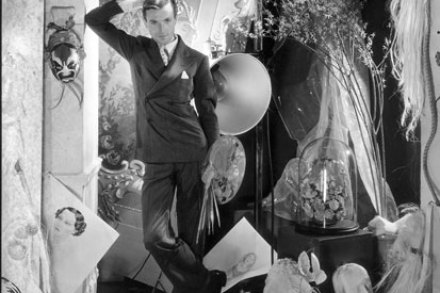
The odds were a hundred to one against him. Brought up in bourgeois Bayswater by genteel parents, Cecil Beaton was effete, pink-and-white pretty, theatrical and mother-adored, with a stodgy brother (but a couple of compliant sisters) —a cliché of post-Edwardian sniffiness, a leer through raised lorgnettes. A humdrum early education followed by Harrow might have formed him into a pliant carbon of his timber-merchant father, but Cecil escaped this. His personality, energy and burgeoning bravery led him far and wide, and often delightfully astray. It took just a few years for him to trample those early 20th-century taboos under his winged heel, and forge his curiosity-fuelled career.

Cecil Beaton, the bitch

From our UK edition

Beaton was the great inventor. Apart from inventing not only himself but his look, his voice, his persona and a glamorous family, he invented the a in photography, the Edwardian period for the stage and films, the most outré of costumes, the elaborate for his rooms, a cartoon-like simplicity for his drawings, and the dream of being a playwright and painter. What he didn’t need to invent was being a writer, at which, as his many books, and particularly this one prove, he was a natural. His lifelong observance of the world around him gave him the power to describe on paper, always acutely and often superbly, landscapes, cities, colours, nature. And of course people. He was a snob but not snobbish. Alice B.

A summer’s social whirl, from Bette Midler to Satan

From our UK edition

This summer brought highs and lows, sadness and laughter, some irritating, some exhilarating. I was fortunate to be uplifted by an encounter with Leslie Bonham Carter, a remarkable woman who seems quite British but is in fact American. She is the daughter of Condé Nast, who founded the company that bears his name. He was born 145 years ago, in 1869. Leslie witnessed the full glamour of 1930s America. When the first world war came, many British grandees packed their children off to America. Young Leslie had opposite plans. All she thought of was how to get to England, to be there in its darkest hour. Diplomatic strings pulled, she sailed, barely in her teens and without either parent, in a battleship across those sub-infested waters. At 8.

Tea with Greta Garbo’s decorator

From our UK edition

Many people write, or at least used to write, fan letters to their film favourites. Usually all they received in acknowledgement was a 10 x 8 glossy with a mimeographed signature. A little persistence sometimes resulted in another, with a brief ‘personal’ message written by the ladies toiling in the fan-club HQs. Not so for the two authors of this riveting book. The Mutti-Mewse twins, early on, became obsessed with all things Hollywood, firing off missives not just to the major stars but to every man Jill they saw or heard was connected to that once fabulous industry. They must have had a magic formula in their letters. Replies flowed back hand over fist.