John McEwen

In defence of John James Audubon 

From our UK edition

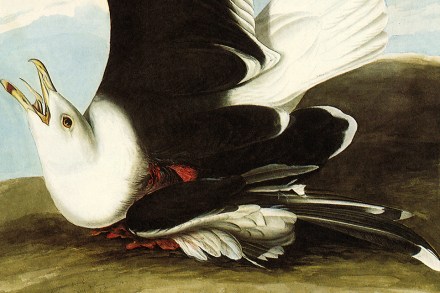
The text of this well illustrated book is mostly John James Audubon’s, from journals unpublished in his lifetime. Part I describes his 1826 voyage from America to England to set in motion the great task – which would take 11 years – of fundraising for the printing of his mighty double elephant folio book in four volumes, The Birds of America. Part III is devoted to his 1833 seabird searching expedition to Labrador. The well chosen excerpts are introduced and meticulously annotated.  Audubon’s innate love of birds grew into a grand ambition to observe, record and publish life-size images – never previously attempted anywhere – of all the birds of North America. He did this before photography proved his dramatic rendering of movement correct.
Invasion of the bread-snatchers

From our UK edition

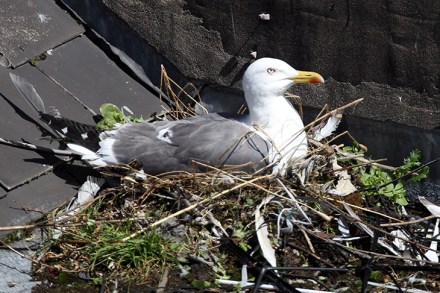
Little Toller Books, in Dorset, aims to publish old and new writing on nature by the very best writers and artists, in books of the highest quality at affordable prices. This offering, neat enough to fit an overcoat pocket, ticks every box. Its author, Tim Dee, co-editor of The Poetry of Birds, has been a BBC natural history radio producer, whose first job was in bird conservation. Born and bred in Bristol, notable for its gull population, he has been a dedicated birdwatcher from boyhood. He thus brings expertise as well as broad engagement to his subject. Accordingly, Landfill, like its principal subject, the gulls we see in Britain, ranges far and wide.

His muse and anchor

From our UK edition

Misery memoirs are in vogue. There is much misery in this harrowing account of married life with John Bellany (1942–2013) CBE, RA, Hon RSA — to 20th- century Scottish art what his hero and acquaintance Hugh MacDiarmid was to Scottish poetry — but its inspiring message is that love conquers all. Helen Bellany is not a ‘quitter’, and her story triumphantly confirms it. It is a long book but does not drag. The past is so alive to her it seems only natural when she lapses into the present tense. She is a highlander from Golspie in ‘timeless and silent’ Sutherland, and the poetry of her descriptions encourages a visit to that far-off county.

Bird of ill omen

With bird books the more personal the better. Joe Shute was once a crime correspondent and is today a Telegraph senior staff feature writer. It is his investigative journalism, a series of meetings with people who deal with ravens first-hand, which provides novelty. Historical, mythological and other diversions add ballast. In the prologue he writes: ‘I was born in 1984, making me the flag-bearer of a strange generation.’ Raised comfortably and lovingly in London, his future seemed serene. Then ‘came the financial crash of 2007; and with it the collapse of all the misplaced entitlement of my youth... Rather than better, it was going to get far worse’. At this juncture, he found solace in birds in the Yorkshire countryside.

Wise old birds

From our UK edition

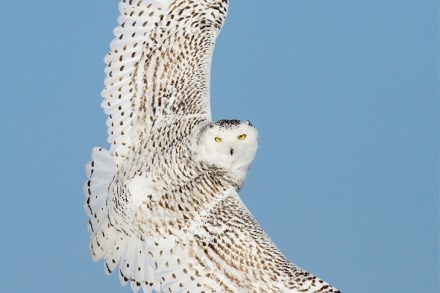
Owls, frontally eyed and nose beaked, look the most human of birds. Accordingly, they have for millennia been prominent in mythology and literature and their image continues to be commercialised beyond compare. They offer an author rich pickings, but in a competitive market a strong personal subtext is helpful. That improbable bestseller H is for Hawk told of a bird consoling and inspiring a daughter grieving for her father.Owl Sense has a mother finding a healing source in owls for herself and her worryingly ill son Benji. His Non-Epileptic Seizure Disorder (NEAD) took a disconcerting time to diagnose and is frighteningly unpredictable. Just how frightening is illustrated by his collapse on a bus as a 6ft, 16st student.

Home from the hill

From our UK edition

As well as being a leading architectural historian Mary Miers is an editor at Country Life. For her latest book she has mined the magazine’s unmatchable picture library and the photographs are by Country Life regulars Simon Jauncey, who lives in Highland Perthshire, and the late Paul Barker, who sadly died before publication. His memory is duly saluted. Crucially the author is a Highlander by birth and domicile. Every week she commutes between London and her Black Isle home and she summers on South Uist. She knows the Highlands and Islands, or the Gàidhealtachd, from top to bottom: from Balmoral and the Highland balls of the Northern Meeting to crofters’ kitchens and island ceilidhs.

An artist of the quickening world

From our UK edition

What is it about Yorkshire, particularly Leeds, that it has bred or trained such a succession of famous modern sculptors? Moore, Hepworth, Armitage and, although it stretches the point, Hirst. All attended Leeds art schools and Armitage was born there on 18 July 1916. Everyone knows Moore, Hepworth, Hirst. But Armitage? How many under 60 remember him? Conventional opinion confines his relevance to the 1950s. The Kenneth Armitage Foundation (of which I was a trustee) has marked his centenary with an overdue restoration. There have been two books — Kenneth Armitage Sculptor, edited by Ann Elliott, and The Sculpture of Kenneth Armitage by James Scott — and three exhibitions.

Raptor rapture

From our UK edition

The fewer birds there are, the more books about them, particularly of the literary kind. Helen MacDonald’s H is for Hawk swept all the prizes; and James Macdonald Lockhart has already won a £10,000 Royal Society of Literature Award for Non-Fiction to fund research for his debut. It is of the quest variety, recently popularised by William Fiennes, Horatio Clare, Mark Avery and others. J.A. Baker, who wrote the one-hit Sixties wonder The Peregrine, is modern father of the genre. Macdonald Lockhart describes his aim: Fifteen birds of prey, 15 different landscapes. A journey in search of raptors, a journey through the birds and into their worlds. That is how I envisaged it. Beginning in the far north, in Orkney, and winding my way down to a river in Devon.

To be astonished by nature, look no further than Claxton

From our UK edition

Mark Cocker is the naturalist writer of the moment, with birds his special subject. His previous book, Birds and People, was a tour de force, taking the birds of the entire world as its subject. Craig Brown described it as ‘the sort of masterpiece that comes along only once or twice a decade’. Expectations could not be higher. Claxton is a selection from his journalism for the Guardian and other publications, written since he moved to Claxton village, southeast of Norwich, 12 years ago. The 140 entries are arranged in 12 chronological chapters to form a naturalist’s journal of a Claxton year. Many have been radically revised so that of his eight books this ‘has taken the longest to write’.

What’s eating London’s songbirds?

From our UK edition

This book, with its absurdly uninformative photographs, dismal charts and smattering of charmless drawings, looks like a report. A pity, because it is a thorough and entertaining history; the first to cover the entire London area within a 20-mile radius of St Paul’s, from the earliest record, in Roman times, to the present. A chronology lists the date when the 369 species were first recorded, from the red kite in the 2nd century AD to Bonaparte’s gull and the buff-bellied pipit in 2012. The last named illustrate the recent rise in esoteric sightings following the postwar birth of the bearded-birder brigade, with their competitive box-ticking and ever more hi-tech equipment. There are many surprises.

No special pleading needed for this disabled Dutch master

From our UK edition

To discover an ‘unknown’ is the dream of anyone connected with the arts and in Johannes Thopas (c.1626-1688/95) we have just that. This book catalogues the exhibition now transfering from Aachen to the Rembrandt House Museum, Amsterdam (12 July–5 October). The curator is Rudi Ekkart, who discovered Thopas’s meticulous lead-pencil (plumbago) drawings on parchment as an art-history student in the early 1970s, when he had unlimited access to the University of Leiden’s famous drawing collection. After that he kept a record of everything to do with the artist, which now finds formal acknowledgment. Other recognised Dutch artists who were deaf and dumb have shown that a normal life could be profitably pursued.

How seriously should we take Ruskin as an artist?

From our UK edition

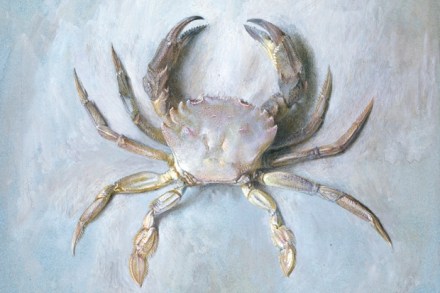
This stout and well-designed volume nicely complements Tim Hilton’s classic biography of John Ruskin. It is the catalogue for the exhibition at the National Gallery of Canada, Ottawa (till 11 May) and the Scottish National Portrait Gallery (4 July–28 September). A Scottish venue is especially appropriate. Ruskin (1819–1900) was a Londoner but proudly Scots by descent. He retained the slight Scottish accent of his father, a successful sherry merchant, who had been brought up in Edinburgh; and already at nine drew a highly competent map of Scotland, which is illustrated but regrettably not exhibited.

Toowit-towoo! At long last, a Collins book on owls

From our UK edition

Owls have more associations for us than perhaps any other family of birds, suggested Jeremy Mynott in Birdscapes, so it is puzzling that it has taken Collins 70 years to add this ‘Natural History of the British and Irish Species’ to its famous New Naturalist Series. It is of course primarily a zoological work, with statistics, charts and sentences such as: ‘A real breakthrough in resolving this problem has been the advent of affordable molecular and biochemical methods.’ But the science, if sometimes beyond the simple owl-lover, reveals plenty of fascinating facts. The five principal species found in Britain are tawny, barn, little, long-eared and short-eared. The tawny is easily the most abundant, at possibly 20,000 breeding pairs.

Birds & People, by Mark Cocker – review

From our UK edition

‘A world without birds would lay waste the human heart,’ writes Mark Cocker. Following his Birds Britannica and prize-winning Crow Country, in Birds & People he embraces the planet, with the help of the wildlife photographer, David Tipling, and the ‘650 contributors from 81 countries’ to whom the book is dedicated. He begins his cultural celebration of the earth’s 200 recognised bird families with one of ‘the most primitive’, the partridge-like tinamou from South America. Tinamou are loth to fly, not surprisingly since once airborne they tend fatally to crash into things, even houses. A near relative is the completely flightless common ostrich, the largest surviving bird.

Our most exotic bird

From our UK edition

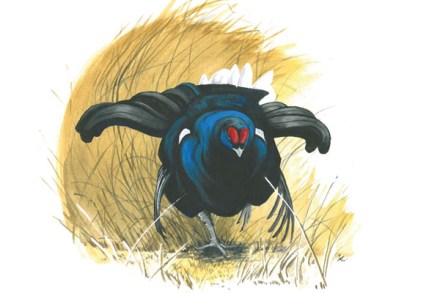
The Black Grouse (Merlin Unwin, £20) is Patrick Lurie’s first book and the first ever on the the subject. Lurie is a freelance journalist but his mission is to save tetrao tetrix britannicus (the britannicus added in 1913). He devotes much of his time protecting a black cock and a couple of  its grey hens on 1,600 upland acres in Galloway; and has written a diary combined with a history of the species, touching on the evolution of landscape and shooting, as well as conservation politics. Sterile tree farms (forest too good a word) now carpet a quarter of once nature-rich Dumfries and Galloway.

How do birds fly south?

From our UK edition

Did you know the external ‘shell’ of the ear is the pinna? That a woman’s oestrogen level alters the way she hears the male voice, making it richer, and thus may affect her choice of mate? That Pride and Prejudice was published the year (1813) that Europeans discovered the kiwil? That Leonardo da Vinci ‘was one of the first to comment on the extra-ordinary tongue of the woodpecker’? These are some indicators of the general interest of this book, subtitled ‘What It’s Like to Be a Bird’, which demonstrates humans are much more birdlike than previously thought. The principal reason is that, like them, we rely most on vision and hearing.

Bearing the brunt

From our UK edition

Ostensibly this small book is a jolly and true story (illustrated with some charming black-and-white snapshots) about the military experiences of Wojtek (pronounced Voycheck), the bear who, bought as a cub by Polish soldiers in Persia, earned name, rank and number as the mascot of the 22nd Company of the Artillery Supply Command, 2nd Polish Corps. But it proves a deeper and, especially for British readers, a much darker tale. Neal Ascherson, in a fine historical essay, explains how Wojtek spread hope and fostered humanity among soldiers, who ‘had lost most of what is supposed to make a war worth fighting and a life worth living’. The men of the 2nd Polish Corps had fought and lost to the Germans and Russians, and survived deportation to the Soviet Union.

Liberating Visions

From our UK edition

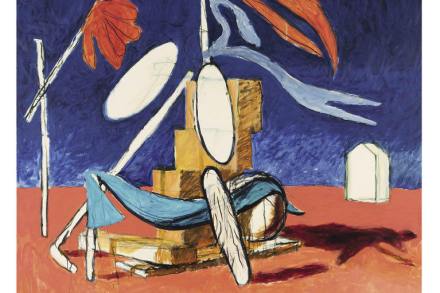
Victor Willing (1928–88) is perhaps the least classifiable of the brilliant early-1950s Slade generation, which includes his wife Paula Rego. Victor Willing (1928–88) is perhaps the least classifiable of the brilliant early-1950s Slade generation, which includes his wife Paula Rego. So it is uniquely appropriate that this first major posthumous exhibition should be at the beautiful museum built in her honour and opened last year. Willing’s career is dramatically divided. In his twenties he was briefly successful with portraits and still-lives.

Scottish clash

From our UK edition

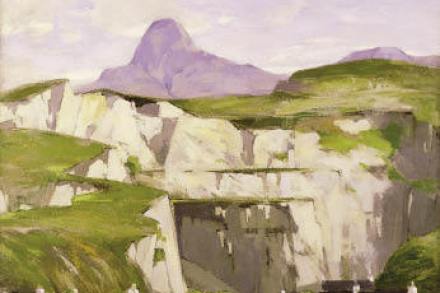
Highlands and Islands: Paintings and Poems Fleming Collection, 13 Berkeley Street, W1, until 5 June Pictures are usually exhibited with closed-shop segregation from the other arts, so it is a joy to find the bounds broken by this exuberant celebration of one of the oldest and most beautiful places on earth. The show announces the publication of Highlands and Islands (Eland, £8.99), a poetry anthology (mostly 20th-century, not all by Scots) from Beccan mac Luigdech of Rum (died 677) to the present, selected and annotated by Mary Miers, the architectural historian and authority on Highland and Island culture. Her family home is on South Uist, so she brings a native passion to her subject.

A towering talent

From our UK edition

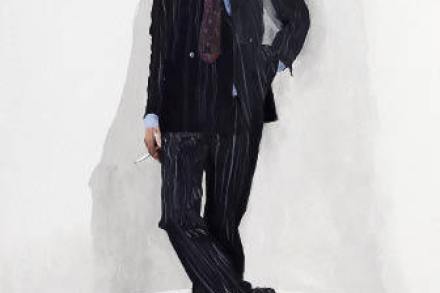
Ian Massey is a writer, artist and lecturer and this is his first book. There have been two previous books on Procktor: a ghosted autobiography and a slim volume to celebrate his 60th birthday. About the second, one reviewer wrote that what was next required was ‘a full retrospective to answer the critical question that has been asked repeatedly over the last 30 years, “Is there anybody there?” ’ This handsome, copiously illustrated, well-researched and sensitive appraisal of the art and artist fully meets that requirement. Massey did not know Procktor, but he shows there was much more to him than facility and a façade.