Richard Ryder

What most imperilled country houses in the 20th century was taxes and death duties, not requisition

From our UK edition

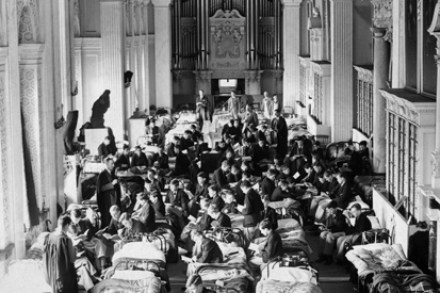
Servicemen used paintings as dartboards.   Schoolchildren dismantled banisters and paneling for firewood. Architects from the Ministry of Works acted like pocket Stalins. Sarcophagi were dumped in gardens beside beheaded statues. And overhead, Luftwaffe Dorniers droned with menace. Such hazards ravaged requisitioned country houses during the last war. Yet nothing imperilled them more, in the 20th century, than super-taxes and the rattle of death duties. When the country houses were handed back, the majority were defiled as well as decaying from leaking roofs and dry rot. Cash-poor owners, already penalised by towering taxation, could not afford to carry out major repairs to their caves of ice — to borrow from Coleridge and James Lees-Milne.

A Classless Society, by Alwyn W. Turner – review

From our UK edition

The title of Alwyn W. Turner’s book could deter readers. Even the Hollywood film The Secret Lives of Dentists promised more excitement. John Major sought the creation of a classless society in the 1990s. He confused this with equality of opportunity and social mobility. Efforts to engineer classlessness always end in tears. George Orwell was right: some animals are more equal than others — even in death. Orwell shares an Oxfordshire churchyard with Herbert Asquith. It was an insipid decade when managerialism triumphed over leadership. Ideas and intellectual rigour were kept in check, and institutions were repeatedly assaulted.

A way with clay

From our UK edition

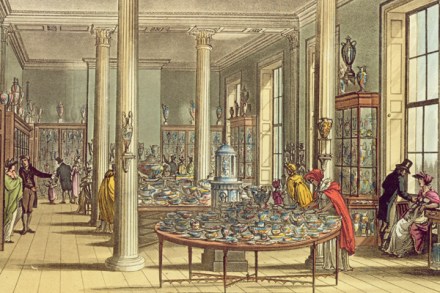
Most cultural tourists, apart from the Japanese, skirt the six towns of Stoke-on-Trent.  They are wrong. The bottle kilns have tumbled and the smoke-ridden skylines are no more. Yet museums teem with quality. And remaining pottery firms disclose glimpses of the design and craftsmanship admired throughout the city’s history. The founding father of Stoke’s global pre-eminence was Josiah Wedgwood, perhaps the most talented all-rounder among British industrial revolutionaries. His achievements are the subject of A.N. Wilson’s latest novel, The Potter’s Hand. It closes with Wedgwood’s death. Nearly 30 years ago Wilson completed a biography of Hilaire Belloc, an even more prolific writer than he himself.

Women on their mettle

From our UK edition

Edwardian Park Lane was lined with grand houses. The occupants, conspicuous consumers and domestic servants, acted out layers of deception. Gamblers ruined Victorian fortunes. Gaiety and social graces masked the insecurities of the new rich and their struggles for acceptance in London. Upstairs, married women, harnessed by corsets and discretion, embodied compliant game. Downstairs, actually in attics, rehearsals for the 1960s were in unbroken swing. Outside, Londoners endured soot and fog. This setting for Frances Osborne’s debut novel comes closer to John Galsworthy’s Forsyte Saga than the Marxist doctrine of social values found in Robert Tressell’s The Ragged-trousered Philanthropists.

Trading places | 3 December 2011

From our UK edition

Thirty years ago Sir Keith Joseph, portrayed by Sir Ian Gilmour, a fellow minister, as owning ‘a Rolls-Royce mind without a chauffeur’, sent a newly published book to every Cabinet colleague. Most groaned, some murmured oaths, and a lucky few skimmed it. The book was English Culture and the Decline of the Industrial Spirit (1850-1980) by Martin Weiner. The author, like Correlli Barnett before him, assailed Victorian and Edwardian entrepeneurs and inventors for ignoring family business. Scores and scores of tycoons yearned to be assimilated into the landed establishment by spurning their own mills and factories. They denied the infernos of noise and squalor the capital investment required for new technology.