Culture

Culture

The good, the bad and the ugly in books, exhibitions, cinema, TV, dance, music, podcasts and theatre.

In the empire stakes, the Anglo-Saxons were for long Spain’s inferiors

More from Books

‘Every schoolboy knows who imprisoned Montezuma and who strangled Atahualpa.’ Macaulay, anticipating Gove, was complaining that the schoolboys by contrast did not get enough about Clive and the British conquest of India. Hugh Thomas, in this and in the two previous volumes of his trilogy on the Spanish empire, presumes that we have all forgotten about Montezuma and Atahualpa, and argues that we do not appreciate Spain’s imperial achievements. He is probably right, and he sets one off to speculate why. Take Philip II himself. He was musical, owning ‘ten clavicords, thirteen vihuelas, and sixteen bagpipes’. He had a library of 14,000 books, which we would consider more to his credit than his 6,000 holy relics, and an eye for Titian and Bosch.

From slaves’ rectums to porn vids, there are few places people haven’t tried to conceal secret messages

More from Books

John Gerard, a Jesuit priest immured in the Tower of London in 1597, and tortured by being hung from manacles until he temporarily lost the use of his arms, was a resourceful as well as courageous fellow. Dependent on the kindness of his jailer, a warder named Bonner, for such intimacies as washing, dressing and shaving, Gerard also persuaded the turnkey to bring him a bag of oranges. Regaining the use of his hands, he employed the fruit for two purposes: to fashion crosses and rosaries from the discarded peel, and to make invisible ink from the juice.

The long and disgraceful life of Britain’s pre-eminent bounder

More from Books

In his time, Gerald Hamilton (1890–1970) was an almost legendary figure, but he is now remembered — if at all — as the model for the genial conman in Christopher Isherwood’s novel Mr Norris Changes Trains (1935). ‘There are some incidents in my career, as you doubtless know, which are very easily capable of misinterpretation,’ Arthur Norris tells the book’s narrator, and Hamilton affected to be deeply shocked by the assorted vices attributed to his fictional alter ego. He nevertheless exploited the connection throughout his long and disgraceful life. When Isherwood met him, Hamilton (né Souter) was employed in Berlin by the Times as its German sales representative.

This diary of a prime minister’s wife offers a front-row seat to the Great War

More from Books

When Margot Asquith’s name crops up these days, it is usually in a retelling of the story about her meeting Jean Harlow, sexy star of the silver screen, who repeatedly called her Margotte. Eventually, Margot became irritated. ‘No, my dear,’ she corrected. ‘The “t” is silent, as in Harlow.’ It’s a good story, but apocryphal and, I was always told by those who knew her (she was my great-grandfather’s second wife), quite untypical of her. No matter. She had plenty of good lines that were unquestionably her own, as this diary vividly attests. She was at her best when analysing friends and enemies, which were sometimes interchangeable categories.

Why movie musicals matter – to this author anyway

Lead book review

Do movie musicals matter? Most readers, even those who love them, will embark on Richard Barrios’s short history of the genre with the thought: not much. They’ll very likely, I’m afraid, finish it holding much the same opinion. But not mattering much doesn’t prevent the best film musicals from being captivating. This is a book by someone who is indeed captivated: a love letter for the best of musical cinema and a blown raspberry for the worst.

The Russian literary celebrity who begged Tolstoy to spare Prince Andrei

More from Books

Nadezhda Alexandrovna Lokhvitskaya was a literary celebrity in pre-revolutionary St Petersburg. She chose the pen-name ‘Teffi’ because it was androgynous, and because it was the kind of name a ‘lucky’ fool would have; in Russia, fools were held to tell truths, albeit obliquely. ‘Teffi’ wrote for newspapers, most notably the Russian Word. By 1911 she was writing more fiction than journalism; her short story collections achieved instant popularity. In 1919 the Russian Word was closed down. Teffi was evacuated, ending up, like so many ‘lesrusses’, in Paris. She never returned to Russia, except in her stories. Teffi’s fame evaporated almost immediately after her death in 1952.

Nadine Gordimer, 1923-2014

Spectator reviewers over the years have had a difficult time with Nadine Gordimer’s books. Gordimer (1923 - 2014), who won the Nobel Prize for literature and was one of the leading campaigners against apartheid, has died at the age of 90. Her books are passionately political and sometimes maddeningly abstract; some found them poetic, others were infuriated. Livingstone’s Companions in 1972 was a great book, Douglas Dunn wrote at the time. 'There is so much intelligence being brought to bear in her work that revulsion or criticism is never pious or direct but almost invisibly balanced by ironies, by the natural moral of fiction itself. Indignation is constantly being toned down by sympathy for the general human condition.

The mindlessness of mindfulness

I was at the Way with Words literary festival in Devon last week, reading from my new book. Afterwards I was led to the authors' tent to do signings. As I approached I was delighted to see a long queue snaking around the gardens, everyone clutching my book, eagerly waiting for me to sign them. As I bounded up to my assigned desk like an overexcited puppy, my face fell. The queue was for Linda Blair's The Key to Calm: Your Path to Mindfulness - and Beyond, the latest tome on the self-indulgence and narcissism that is ‘mindfulness'. Rudely ignoring the small group of dungaree-clad lesbians waiting for me to sign the paltry pile of books on my turf, I picked up a copy of The Key to Calm to see what all the fuss was about.

How to tell who’s really reading Thomas Piketty

No one owns a Kindle for very long without becoming obsessed by its social highlighting feature: unless you go into the preferences to turn it off, the glibbest and most epigrammatic sentences in any popular book begin to appear with dotted lines underneath them and the words '19 [or however many] people highlighted this'. Our own Mark Mason has written brilliantly and sympathetically  about the consequences. But it is now necessary to admit that he may have missed a trick. It turns out you may be able to use Kindle highlights to make a rough estimate of how many people are actually reading a book, as opposed to just buying it. The technique was described by Jordan Ellenburg in the Wall Street Journal; I saw it on the reliably interesting academic blog Crooked Timber.

Genghis Khan was tolerant, kind to women – and a record-breaking mass-murderer

More from Books

Genghis Khan, unlike most Mongols in history, is a household name, regularly misappropriated as a right-wing totem. If we recall the genocidal killing sprees of, say, Stalin and Mao, perhaps it would be more historically accurate to say ‘to the left of Genghis Khan’. In the popular imagination he is the despot’s despot, a one-man killing machine who led his army of mounted archers to triumph after triumph, terrorising and slaughtering by the million to carve out an empire that stretched from the Caspian to the Pacific. His martial conquests place him in the top trio of world conquerors, alongside Alexander the Great and Tamerlane.

A guide to marriage, moving and fatherhood – and also not a bad tool with which to beat your solicitor to death

More from Books

Over the past 12 months, I’ve proposed to my girlfriend, moved house, got married, and become a father. The most stressful of these tests, without a doubt, was moving house. Forget strappado (a torture whereby you’re strung up by your arms behind your back) or flagellation or sensory deprivation. Moving to Acton: that’s what’ll break you down. I really wish, back then, I’d had a copy of Tim Dowling’s How to be a Husband to hand. I might have used it, I think, if I’d gripped it at the maximal angle, to beat my solicitor to death. Sadly, this hybrid book — half-memoir, half-manual — is lacking in tips on how to inflict agony on lawyers (I would tentatively suggest strappado) but it’s solid on my other three recent rites of passage.

The nervous passenger who became one of our great travel writers

More from Books

Sybille Bedford all her life was a keen and courageous traveller. Restless, curious, intellectually alert, she was always ready to explore new territories, her experiences recounted in a sophisticated style that Jan Morris in her introduction refers to as ‘a kind of apotheosised reportage’. Bedford’s first book, A Visit to Don Otavio, describing an expedition to Mexico, was to become a classic of travel literature, and the essays in Pleasures and Landscapes show many of the same exceptional qualities. Over three decades, from 1948 to 1978, Bedford journeyed through Italy, Switzerland, France, Denmark, Portugal and Yugoslavia.

A gangster called Capitalism and its vanquisher The Common Good

More from Books

Once upon a time, a powerful unkillable beast menaced the nation. It had to be tamed. It could only be tamed by a robust ethos of the common good. This gradually emerged: a new democratic spirit was born! But soon critics popped up, complaining about aspects of the new order, calling it stifling, limiting, pompous and dated. They gained power: the fools uncaged the beast! For three decades it has trampled all over public life, declaring the profit motive to be the only realism; it has unbalanced industry, empowered reckless bankers, and forced public services to dance to its commercial tunes; it has utterly subverted the left, which dared not challenge it, but rather trusted that it would bring universal benefits.

A tribute to the King – or a compendium of journalistic bad habits?

More from Books

With Elvis has Left the Building, the longstanding editor of GQ has inexplicably written a book that could serve as a handy, if perhaps overly comprehensive, compendium of bad journalistic habits: from the over-arching flaw of failing to decide what you want to say to such specifics as the excessive use of the phrase ‘American dream’ and wildly random scene-setting. (In the lengthy section on 1977, the year of Presley’s death, we learn that ‘five days before Luciano Pavarotti made his first appearance on American television, the rings of Uranus were discovered’.

A paean to the British passion for our very own ‘castles’

More from Books

‘Phlogiston’ is an interesting, if obsolete, word. Of Greek origin, it referred to the ‘fire-making’ quality thought to be present in, among other things, the ashes gathered by London dustmen. In the mid-18th century these ashes were mixed with earth and even ‘excrements taken out of the necessary houses’ to create the vast numbers of bricks needed for the explosion of house-building taking place at the time in London and elsewhere. The dramatic rise in building is pivotal to this densely detailed observation of the British obsession with their ‘home’ and ‘comfort’ which, we’re told, Robert Southey describes as particularly English and untranslatable.

It’s not just Putin who misses the Soviet empire. President Bush did, too

Lead book review

Vladimir Putin calls it ‘the greatest geopolitical disaster of the 20th century’, a viewpoint which explains much of his recent behaviour. Few others anywhere in the world, particularly people who live around Russia’s borders, would agree that the collapse of the Soviet Union was anything to lament. From Riga to Tbilisi and from Kiev to Tashkent, Christmas Day 1991, when Mikhail Gorbachev resigned as leader of the USSR and the Red Flag was lowered from the Kremlin, remains a day to celebrate. With nearly a quarter of a century’s hindsight it still seems astonishing that a great superpower and, with it, an entirely different way of looking at the world — Soviet-style communism — disappeared almost overnight and with practically no bloodshed.

The soundtracked novel that won’t sit still

More from Books

The Emperor Waltz is long enough at 600 pages to be divided, in the old-fashioned way, into nine ‘books’. Each book has a date, sliding from 1922 to 1979 to next year to 203 ad to last month. This might suggest an overly systematic novel in the mode of David Mitchell’s Cloud Atlas or Eleanor Catton’s Booker Prize-winning breezeblock The Luminaries. But Hensher has always been a writer with a wandering, curious eye (on its most exhilarating display in 2011’s King of the Badgers), and The Emperor Waltz is a novel that, despite its superficial restraints, won’t sit still.

Caught between Marx and a monster

More from Books

‘Curious to see Mrs Aveling addressing the enormous crowd, curious to see the eyes of the women fixed upon her as she spoke of the miseries of the dockers’ homes, pleasant to see her point her black-gloved finger at the oppression, and pleasant to hear the hearty cheer with which her speech was given.’ So Labour MP Robert Cunninghame Graham described Karl Marx’s youngest daughter, Eleanor, giving a speech to 100,000 demonstrators in Hyde Park at the height of the 1889 dock strike. ‘Brilliant, devoted and beautiful,’ agreed the trade union leader Ben Tillett. ‘During our great strike she worked unceasingly — a vivid and vital personality, with great force of character, courage and ability.

The cruellest present you could give a hated old in-law

More from Books

It takes a special sort of talent to be able to make drawings of your own 97-year-old mother on her deathbed funny. The person with that gift is Roz Chast. Subscribers to the New Yorker will already be familiar with her marvellous cartoons, which often feature elderly and over-neurotic parents shouting dire imprecations to their rather dazed and mild-looking adult offspring. Their warnings tend to concern such mortal perils as crossing the road, running to answer the telephone or touching the handrail on public transport (the germs!). The subjects are from Brooklyn, but the appeal is universal: visiting a friend in Athens the other day, I saw a Chast cartoon stuck to the fridge door. Can’t We Talk About Something More Pleasant? is a graphic memoir of Chast’s own parents.

Lillian Hellman lied her way through life

More from Books

Lillian Hellman must be a maddening subject for a biographer. The author Mary McCarthy’s remark that ‘every word she writes is a lie, including “and” and “the”’ wasn’t far off. Navigating through the hall of mirrors that Hellman left behind, trying to sort fact from self-aggrandising fiction, seems to have worked Dorothy Gallagher into a fury. Perhaps this book is her revenge. One of America’s most successful playwrights, Hellman had her first Broadway hit before she was 30. She was a close friend of Dorothy Parker and her long-term lover was Dashiell Hammett. Ardently left-wing, she was summoned before Joseph McCarthy’s House Un-American Activities Committee to answer questions about her links with the Communist party.

From Edwardian idyll to meetings with Nehru: the life of Lady Ursula D’Asbo

More from Books

This is the Real Thing, an evocative account of English upper-class life throughout the 20th century. It begins amidst the Edwardian feudal splendours of Belvoir Castle, where Ursula d’Abo spent much of her childhood with her beloved grandfather ‘Appi’. At the coronation of George VI she was a maid of honour to the Queen. During the second world war she worked with 2,000 women making bullets. Postwar life was hardly less varied and amazing, with an other-worldly stay in princely India, and meetings with Nehru. Married life at West Wratting Park and Kensington Square, two beautiful Georgian houses she restored, was followed in her widowhood by five years with Paul Getty at Sutton Place.

What are the Chinese up to in Africa?

More from Books

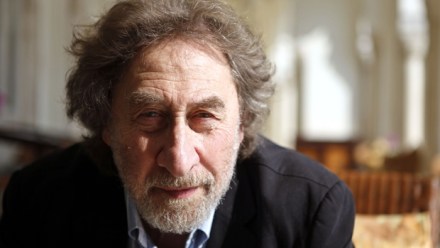
Few subjects generate as much angst, or puzzlement, among Western policymakers in Africa as China’s presence on the continent. In his new book, China’s Second Continent, the American journalist Howard French recalls meeting US officials in Mali to sound them out on the matter. Instead, he finds himself barraged by questions. ‘It would really be useful for us to know what the Chinese are up to,’ one American official tells him. ‘So far we’ve been limited to speaking with them through translators. We’ve got very little idea about any of this.’ Grasping the range and scale of China’s activities in Africa is indeed a tall order. Commercial deals are cloaked in secrecy. Immigration statistics from African countries are poor.

Doctor Zhivago’s long, dark shadow

Lead book review

For most Russians, Boris Pasternak is one of their four greatest poets of the last century. For most Anglophone readers, he is the man who won the Nobel Prize for Doctor Zhivago. The first four chapters of The Zhivago Affair give a full picture of Pasternak’s life and the Soviet literary world up until the early 1950s, when Zhivago was nearing completion. Pasternak was born in Moscow in 1890, into an assimilated and highly cultured Jewish family. His father was a painter, his mother a concert pianist; among the family’s friends were Leo Tolstoy, Sergey Rachmaninov and Rainer Maria Rilke. Pasternak wanted first to be a composer, then a philosopher — but by the age of 22 he understood that his vocation was poetry.

A novel for men who don’t read novels

Are you the sort of man - or is your man the sort of man - who’s always meaning to read more novels but never gets round to it? Proper novels, I mean, rather than your John Grisham/Andy McNab stuff. Well the book you’ve been waiting for is soon to be published: A Man Called Ove by the Swedish writer Fredrik Backman. Ove (pronounced ‘Oover’) was born on Backman’s blog, whose readers then demanded he write a novel about the character. Backman obliged, the result sold like hot smorgastartas in his native land and now it’s going to conquer the world. The reason it’s the perfect book for weaning men back onto literary fiction is that Ove is just like us. He’s a grumpy old pedant.

Summer sucks

Who could possibly choose hay fever, insect bites and heat rash over an open fire, cashmere blanket and hot chocolate laced with brandy? Although I love the bright early mornings and blue sky I can’t bear the heat and all that comes with it. Give me winter over summer any day. But to admit my dislike for the most popular season will bring forth accusations of total madness and misery. The images conjured up by a mention of summer are, for most people, cold beer, ice-cream, gentle boat trips, evenings in the garden twirling the stem of a frosty glass of bone-dry wine, dipping into an outdoor swimming pool and then drying off in the sunshine while reading a best seller. Except that you would be confusing the entire season with a summer holiday, as many of you obviously do.

The book that turned me into Rod Liddle

We all have what Andy Miller calls a 'List of Betterment': 50 or so books that, if read, would surely make us a better person - book clubs, gulp that Pino down, and discuss. Granted, it's tough being a bastard if your nose is always in a book. And from The Year of Reading Dangerously: How Fifty Great Books Saved My Life, a memoir of 12 months spent working through a List of Betterment, it’s difficult to picture Andy Miller ever being a bastard. He’s a thoroughly amiable sort. The reasons he decided to take drastic action with said list are simple. He explains: 'We have been working parents for three years. In that time I have read precisely one book.