Culture

Culture

The good, the bad and the ugly in books, exhibitions, cinema, TV, dance, music, podcasts and theatre.

Darius III: Alexander’s stooge

Lead book review

In 1891, George Nathaniel Curzon, ‘the very superior person’ of the mocking Balliol rhyme, and future viceroy of India, arrived at Persepolis. Torched in 330 BC by Alexander the Great, it had once been the nerve-centre of an empire that stretched from the Aegean to the Hindu Kush. For Curzon, whose tour of Iran had already taken him all over the country, the ruins of the great palace were a particular highlight. The Persia of the Achaemenids, the ruling dynasty of the ancient empire, was, so he declared, ‘immeasurably superior to medieval Persia in its attributes and even now more respectable in its ruins’. Coming from a man who was himself no slouch at imperial pomp, this was high praise indeed.

The greatest American Arctic disaster

More from Books

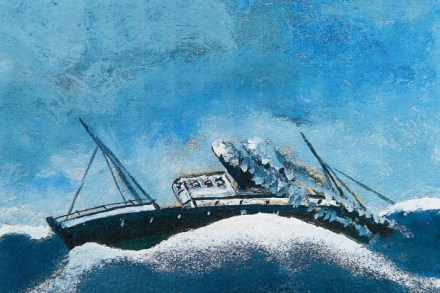
In the course of the 19th century, various flotillas of expeditions hastened to the polar regions in little wooden ships which sooner or later expired in the pincers of an ice floe while crewmen ate their shoes. These stories bear retelling for our own age, and Hampton Sides does well to identify the gruesome story of the USS Jeanette, which ended in the greatest American Arctic disaster ever. The idea began with James Gordon Bennett Jr, the proprietor of the New York Herald (the largest circulation daily in America) and a flamboyant character who enjoyed riding round Manhattan in the nude. He had already sponsored numerous expeditions and popularised the now standard technique of creating news, the more sensational the better. (The phrase ‘Gordon Bennett!’ was minted for him.

Good time girls: Italian women prefer sunglasses to babies, according to Nicholas Farrell

More from Books

Like so many Britons who chased the dream and woke up in Italy I have contemplated writing a book about the Italians. I even thought of what to call it: Those Italians.The title was prompted by what an Albanian port official told the media during some international crisis in response to the news that the entire cargo of an Italian aid ship had disappeared one night in the Albanian port of Durres. ‘Yes it is incredible,’ the official conceded, ‘but — my friends — there is always something funny going on with those Italians.’ An Albanian, of all people! But such books are a poisoned chalice. The theme demands that you capture the spirit of the place and its people and yet avoid stereotype and cliché.

Powers of persuasion: how Churchill brought America on side

More from Books

In time for the 50th anniversary of Churchill’s death comes this pacy novel about his attempts to persuade the Americans to join the war. It is January 1941; President Roosevelt’s special envoy Harry Hopkins arrives in Blitz-torn London and is subjected to Churchill’s charm offensive. Hopkins, a chain-smoking, hard-drinking man of principle with a dislike of hereditary privilege, finds himself guided down every corridor of power. It’s port and cigars at Downing Street, roast pheasant at Chequers, even champagne in the prime ministerial bathroom while the great man fires questions at him from the tub, ‘a pink, round, gleaming Michelin man’.

From classical to post-modern: a beginner’s guide

More from Books

My career at school and after was greatly enhanced by a series of books called The Bluffer’s Guide to....These gave mischievous advice, often on the reliable when-in-doubt-confuse-the-issue lines. A favourite of mine, still in use in emergencies, was: ‘I think Jack Kerouac was more a Franciscan Christian than Buddhist, don’t you?’ Martin Kemp’s Art in History is several clicks up the ratchet of sophistication, but, being a beginner’s guide, retains something of the character of a prop for the indolent. The curious title betrays a little uncertainty. It is one of the publisher’s ‘Ideas in Profile’ series which includes Shakespeare, Criticism and Politics. But why the preposition between ‘art’ and ‘history’?

From prince to pauper: a dramatic overview of Britain on 18 June 1815

More from Books

Of all the big battalions of books marking the bicentenary of the battle of Waterloo that have come my way, this has to be the best. David Crane has used the bloody campaign as a telescope, bringing into sharp focus not just the carnage along the Brussels road, but the state of Britain itself: a country on the cusp of vast, irreversible change. He achieves this within the compass of a single summer’s day — Sunday, 18 June 1815 — devoting a chapter to each hour and cutting cinematically between the three armies slaughtering each other in Belgium and the citizens at home. Some anxiously await news of triumph or disaster; others are utterly oblivious of what the cannonade rolling across the Channel, clearly heard by Kentish churchgoers, portends.

Cabinet of curiosity: we do not even know for sure the maker of the Sixtus Cabinet at Stourhead

More from Books

Italian cabinets and tables decorated with inlaid semi-precious stones known as ‘pietre dure’ were a ‘must-have’ for English milords returning from their Grand Tours. The finest example is perhaps the Sixtus V cabinet at Stourhead, in Wiltshire, which has just been written up in a thorough, scholarly way by Simon Swynfen Jervis and Dudley Dodd, two eminent furniture and architectural historians. As well as placing the Sixtus V cabinet within the contexts of Roman manufacture and English collecting, the book brings to life its Roman provenance and its subsequent residence at Stourhead after the banker Henry Hoare bought it in about 1740.

The low sculduggery of high Victorian finance

More from Books

The whole idea of capitalism, according to Enlightenment philosophers, was that it created a positive spiral of moral behaviour. ‘Concern for our own happiness recommends us to the virtue of prudence,’ wrote Adam Smith. ‘The profits of commerce,’ according to David Hume, carry us towards a state in which ‘the tempers of men, as well as their behaviour, refine apace.’ In the first chapter of Forging Capitalism, Ian Klaus encapsulates this theory as an 18th-century artist might have titled an allegorical painting of intertwined figures: ‘Commerce encouraging Virtue, and Virtue harnessing Commerce.’ But that’s not really the way it was, Klaus goes on to argue — and certainly not the way it is today, he implies.

Drink, drugs and dressing-up: behind the scenes of the fashion industry

Lead book review

It’s a curious subject, fashion, and those who write about it rarely want to jeopardise future access to it on the altar of clear-eyed analysis. The business must pretend that there is a single genius at work here, whose vision creates not just clothes but the things that actually make the money. The catwalk shows are all very well, but they haven’t been the main business for decades, and it came as rather a surprise to the industry when a great mob of new customers emerged from nowhere, the wives of Russian oligarchs and American hedgefund traders, willing to spend six-figure sums every season on a new wardrobe.

A modern-day lynching for BBC’s North America Editor Jon Sopel

The news that Harper Lee has her long-awaited second novel on the way (just a casual 55 years after her one hit wonder To Kill a Mockingbird) came as a surprise to those who did not realise she was still even alive. Once that news had settled in, it came as an even bigger shock to the BBC's North America Editor Jon Sopel that Lee was a woman:   Sopel swiftly becoming acquainted with the modern-day equivalent of a lynching: the fury of the Twitter mob. Sopel soon deleted the original tweet and seems to have recognised the error of his ways: good point everyone.... — Jon Sopel (@BBCJonSopel) February 3, 2015 Mr S presumes Sopel never saw the film Capote then...

Why James Elroy Flecker deserves our attention

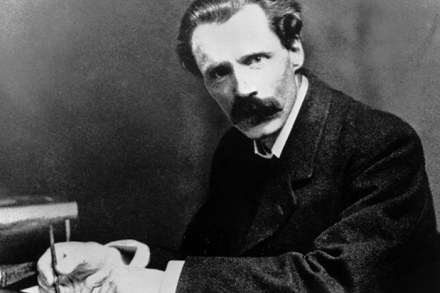
This month sees the Swiss alpine resort of Davos play host to the annual World Economic Forum summit, but it also marks the centenary of the death of one of England’s greatest Edwardian poets. The worship of Mammon and the ascent of Parnassus are traditionally not easy bedfellows, but the two are linked by the Swiss town. It was here that this now little known poet succumbed to tuberculosis at the age of thirty. James Elroy Flecker (1884-1915) deserves far greater acclaim and public recognition for his poetic accomplishments. A prodigious linguist, fluent in French, German, Italian, Spanish and modern Greek, he read Classics at Oxford and took a further degree in Modern Languages at Cambridge, all with a view to entering the diplomatic service.

The long ordeal of Mackintosh’s Glasgow School of Art

Notes on...

I was working on the final edit of my book — a fictionalised account of the year Charles Rennie Mackintosh spent in Suffolk — when news came in that his most famous architectural creation, The Glasgow School of Art, was on fire. My heart lurched. This was an unimaginable tragedy, not just for Glasgow, but for Britain. Students were weeping in the street. I struggled not to cry myself. Poor old Mac (as the Suffolk locals called him). He’d had enough bad luck already. Charles Rennie Mackintosh was a student at the Glasgow School of Art in 1895 when a competition to design a new art school was announced.

Process of elimination: the horrors of Ravensbrück revealed

More from Books

Concentration camps in Nazi Germany were originally set up in 1933 to terrorise Hitler’s political enemies; as war drew near, their function expanded to gratify his obsession (and that of Reichsführer Himmler, as head of the SS which administered them) with ‘purifying the race’ by getting rid of gypsies, Jews, ‘asocials’ — prostitutes, criminals, vagabonds — as well as the mentally ill and handicapped. An all-female camp at Ravensbrück, set up in 1938, soon afforded the prison doctors a steady supply of women — the ‘rabbits’, as these prisoners became known — for medical experiments .

A state of terror: Islamic State longs to be left alone to establish its blood-stained utopia

More from Books

The Sykes-Picot agreement will be 100 years old next year, but there will be no congratulatory telegrams winging their way to the Middle East from London, or from Paris on high alert. The Islamic State, the world’s most powerful jihadist group, has filmed its men bulldozing border posts between Syria and Iraq, dealing perhaps the final blow to those Anglo-French cartological ambitions of a century ago. The ‘Caliphate’ is inhabited by some six million people and is now larger than the United Kingdom. In the words of Patrick Cockburn, ‘a new and terrifying state has been born that will not easily disappear’. Yet far from appearing out of the blue in 2014, IS was fostered for years by those who profess to oppose it, as this book argues convincingly.

Muriel and Nellie: two radical Christians build Jerusalem in London’s East End

More from Books

This is the tale of Muriel Lester, once famous pacifist and social reformer, and Nellie Dowell, her invisible friend. Nellie Dowell is invisible in the sense that Claire Tomalin described Nelly Ternan in The Invisible Woman. While Ternan, the mistress of Charles Dickens, simply ‘vanished into thin air’, Nellie Dowell, who may or may not have been the mistress of Muriel, trod so lightly on the ground that she left barely a footprint behind her. Muriel Lester, the daughter of a Baptist shipbuilder with progressive ideas, has been the subject of several books already, including Vera Brittain’s The Rebel Passion: A Short History of Some Pioneer Peacemakers.

The Nightwatches of Bonaventura: a masterpiece of German Gothic

More from Books

In the early 19th century, the Romantic movement was in full swing across Europe. You could probably date its birth from the publication in 1775 of Goethe’s The Sorrows of Young Werther, the gloomy novel of unrequited love that led to a spate of suicides among young men in Germany. Coleridge and Wordsworth’s Lyrical Ballads appeared in 1798, with its Taoist argument for simplicity and the importance of contemplating nature. Kant’s Critique of Pure Reason was published in 1781, William Godwin’s Caleb Williams in 1794 and his daughter Mary Shelley’s extravagant Gothic novel Frankenstein in 1816. The Romantics attacked the new numbers-based utilitarian philosophy which underpinned the Industrial Revolution.

The King Kong of the thriller: the phenomenal output of Edgar Wallace, once the world’s most popular author

More from Books

At the time of his death in 1932 Edgar Wallace had published some 200 books, 25 plays, 45 collections of short stories, several volumes of verse, countless newspaper and magazine articles, movie scripts, radio plays and more. His work was dictated, transcribed and sent directly to the publisher. In one year alone (1929) he wrote a dozen books. People joked about getting ‘the weekly Wallace’. Despite their speed of creation, Wallace’s stories were, said The Spectator, written in plain, clear English and ‘read by everyone, from bishops to barmen’. His influence on the thriller genre was extensive, profound and continuous. He inspired a thousand imitators with The Four Just Men, Mr J.G. Reeder, Sanders of the River and Educated Evans.

Tom Eliot — a very practical cat. Did T.S. Eliot simply recycle every personal experience into poetry?

Lead book review

The musical Cats reopened in the West End in December, with a judge from The X Factor in the lead role. The music is by Andrew Lloyd Webber and the songs are, of course, by T.S. Eliot. Eliot died 50 years ago this year, and retains a curious kind of fame, which encompasses West End musicals and scholarly collections of his letters, lovingly published by Faber (most recently, Volume 5: 1930–1931. At 800 pages, this is for true Eliot-fanciers only). In 1948, a line from one of his poems was used in an ad for Esso petrol (‘Time future contained in time past’). In 1956, he gave a lecture on literary criticism in a baseball stadium in Minnesota, and 14,000 people turned up to listen. He was and remains a strange, paradoxical figure: a famous serious poet.

Robert Harris: BBC’s books coverage is a ‘disgrace’

Lord Hall will be glad that he didn't attend last night's Costa Book Awards. Robert Harris, who chaired this year's judges, took the opportunity to criticise the corporation's book coverage when announcing the winner. Harris says that it is 'an absolute disgrace' that there is 'no dedicated book programme' on television. The 57-year-old author urged Tony Hall to do more given that the BBC is a 'monetary funded organisation'. 'The Costa Prize attracts people into the trade and it has being doing that for 44 years ever since 1971 and one thing I would just like to say is that in the 1970s books had it a bit easier,' he told guests at the champagne bash at Quaglino's, Mayfair, which saw Helen Macdonald win the gong for H is for Hawk.

Page 3 was harmless. Here’s why I’ll miss it

More from life

‘I for one would be sorry to see them go,’ wrote George Orwell. ‘They are a sort of saturnalia, a harmless rebellion against virtue.’ He was writing about the seaside postcards of Donald McGill in 1941, but his defence of them and their ‘enthusiastic indecency’ could equally well apply to Page 3. Orwell’s argument was that McGill’s caricatures of women, ‘with breasts or buttocks grossly over-emphasised’, gave expression to ‘the Sancho Panza view of life’. There’s a fat little squire in all of us, he thought, although few of us are brave enough to admit it. ‘He is the unofficial self, the voice of the belly protesting against the soul,’ he wrote.

Sophia Duleep Singh: from socialite to socialist

More from Books

Princess Sophia Alexandrovna Duleep Singh (1876–1948) had a heritage as confusing as her name. Her father was a deposed Indian maharajah who had been exiled to England, her mother the Cairo-born illegitimate daughter of a German merchant and an Abyssinian slave. The young princess was brought up in considerable splendour on a vast Suffolk estate as a thoroughly anglicised aristocrat who would be presented at court and become an enthusiastic participant in the Season before unexpectedly joining the battle for women’s suffrage. Anita Anand traces what she calls the ‘roots of rebellion’ to Sophia’s father.

Refugees and resilience: a story of Africa

More from Books

I would love to sit in on a Jonny Steinberg interview. Over the years this South African writer has perfected a form of reverse ventriloquism, in which he becomes the mouthpiece for the Africans whose lives intrigue him. I’d like to know how he does it. The process must require relentless badgering, as interview is piled on interview, memory upon memory. One suspects his subjects occasionally come to regret agreeing to cooperate. As a reader, I can only thank them for their patience. For the results are true, relevant, modern narratives conveyed with such eloquence and poignancy they acquire almost Shakespearean gravitas. In his previous books, Steinberg told the stories of South African mobsters, beleaguered Afrikaner farmers, Aids sufferers and exiled Liberian refugees.

A ghost story without the scary bits

More from Books

Two men walk into an ice cream parlour in Austin, Texas, order the three teenage girls working there to undress, then tie them up and gag them with their own underwear, and set fire to the place. However, See How Small is not interested in the why or the who, but rather in the lives of a group of characters affected by the incident. We learn about these lives both before and after the murders, mostly after. This book is a kind of modern ghost story, without the frightening bits. Kate Ulrich is the mother of two of the girls. She is haunted by them. Jack Dewey is the firefighter who discovers their bodies. He too is haunted by them.

The best new crime novels (and a rule for enjoying them)

More from Books

I have a rule: to ignore the prologue of a crime novel, especially if it’s printed in italics and written in the present tense. Almost always it will be violent, unnecessary and will give far too much away about coming events. I like to be unsettled. I like a story to build at its own particular rate. So, ignoring its prologue, Peter May’s Runaway (Quercus, £18.99, Spectator Bookshop, £15.99) is a well-told tale about five youths who escape from Glasgow in 1965, heading for London and fame and fortune as a pop group. Instead, they fall into a world of drugs, radical doctors, lost love and death. Fifty years later the surviving members of the group return to London to uncover the truth about a long-ago murder.

Lurid & Cute is too true to its title

More from Books

One of the duties of a reviewer is to alert potential readers to the flavour and content of a book, particularly if it comes into the category of ‘not a suitable present for your great-aunt’. I always dislike this duty, since it spoils surprises, which are the essence of enjoyment in reading; but Adam Thirlwell’s first novel, Politics, did perhaps require a few alerts. The title gave no clue that it was about a sexual threesome, and would have introduced the putative great-aunt to rimming, undinism, and an exhausting range of esoteric practices. The flavour of Thirlwell’s third novel, however, Lurid & Cute, is blazoned on the cover. You can’t fault this one on the Trade Descriptions Act.

Life doesn’t care if your misery has a plot – but readers do

More from Books

Sometimes writers have to get a memoir out of their system before they can start on their great novel. Will Boast spent years trying to turn his life story into fiction, but eventually gave up and wrote an autobiography. In Epilogue, he describes how his mother died of brain cancer when he was in his first year of college; two years later, his younger brother Rory was killed in a car crash, then his father set about drinking himself to death. Later, he discovered that his father had had two sons from a secret previous marriage, so he tracked them down and made friends. Boast certainly has plenty of material to work with, but this book feels like it’s been written more for himself than for his readers.