Ismene Brown

Capturing a moment | 11 April 2019

From our UK edition

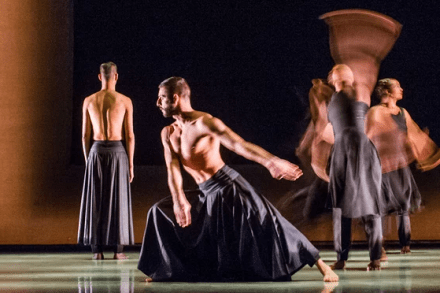
On Tuesday, thousands of miles apart, in three great cities, London, New York and Los Angeles, 75 dancers will dance 100 solos in each venue in honour of the late iconoclastic choreographer Merce Cunningham, who would have turned 100 that day. It is a spectacularly ambitious wake for the choreographer who for 70 years denied dance a dramatic or expressive face, and threw all norms of beginnings, middles and ends, of meaningful sequence or physical logic, into a bonfire of expectations. This fabulous celebration, involving dancers of the whole spectrum from contemporary to the Royal Ballet, is a declaration of intent for posterity by the Cunningham Trust, established since his 2009 death to ensure digital preservation of 86 of his dances for future performance and study.

Seeing the light | 19 October 2017

From our UK edition

Dance is an ephemeral art. It keeps few proper records of its products. Reputations are written in rumours and reviews. And by reputation, Kenneth MacMillan was the dark genius of British ballet — its destroyer, if you listen to some. They think this country’s classical ballet reached its pinnacle under the Apollonian hand of Frederick Ashton, before MacMillan stomped in with his working-class neuroses and rape simulations and took ballet down to the psychological underworld. It’s an absurd reduction, since Ashton was quite as screwed up as MacMillan, but the notion persists of the two of them embodying opposite sides of the British ballet coin, order and chaos. Both giants left the Royal Ballet dozens and dozens of ballets, which critics recorded were amazing things.

The bitchy world of ballet

From our UK edition

Memoirs of old men, baldly, tend to be tricky. Sir Peter Wright, one of the founding pillars of the British ballet establishment, is now 90, and a charmingly chatty man; but I’ve personally never found him reluctant to get to the point when asked. As inaugural director of Birmingham Royal Ballet, director of Sadler’s Wells Ballet and associate director of the Royal Ballet, he has spent more than half a century inside the amazing British ballet story. I had high expectations of these copious memoirs. So it’s a great pity that his amanuensis, Paul Arrowsmith, has essentially switched on the tape recorder and let memories pour, failing to check or marshal the mass of detail into narrative significance and a coherent reading experience.

Young at heart

From our UK edition

The second half of the Bolshoi tour brought much fresher fare than the first: following the ubiquitous warhorses Don Quixote and Swan Lake, we got three jolly nights of Moscow speciality: an iffy Shakespeare comedy nailed by superb performing, a giddy rewrite of Stalin’s favourite ballet and a breathtakingly fruity restoration of a 19th-century ballet entertainment, with pirate ships, dancing gardens and a vision of the hedonistic life of abducted women somewhat at odds with Boko Haram’s. The sexual politics of Shakespeare’s The Taming of the Shrew are potentially tricky for ballet since the woman is physically dependent on the man.

Remembering Rosemary Butcher – the choreographer who changed the way I see dance

From our UK edition

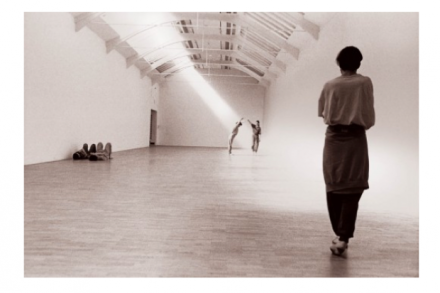
My ancient Liddell and Scott Greek dictionary of 1849 defines choreia as ‘a dancing, especially with joy’. The word choros has a more technical definition: a round dance, or a dance accompanied with song (hence the word chorus). From whichever word ‘choreographer’ is declared to derive, the British dancemaker Rosemary Butcher, who died last month at 69 after a career barely visible to the public, embodied the first idea in a way that I see with hindsight changed my eyes emphatically in realising the marvellous range of ways to enjoy dance-going. Choreia: ‘a dancing’ – an act of dancing, a piece of activity, rather than the choros, a dance creation.

Poetry in motion | 4 August 2016

From our UK edition

For almost 60 years, whatever the political weather, Russia and Britain have maintained mutually assured respect as far as ballet is concerned. In October 1956, the Soviet Union finally allowed its Bolshoi troupe to appear in the west, in London, a state cultural exchange that should have entailed the debut of the comparatively green Sadler’s Wells Ballet in Russia within weeks. Owing to the inconvenient appearance of Soviet tanks in rebellious Hungary, it wasn’t until 1961 that the renamed Royal Ballet turned up in Moscow. (Khrushchev gushed admiringly, ‘Look at those girls — they might be Russian!’) I looked up The Spectator’s October 1956 review of that Bolshoi debut: some things really haven’t changed. A.V.

All in the mind | 21 July 2016

From our UK edition

Mark Morris, the most musically communicative and naturally lyrical of choreographers of the past 30 years (and an absentee from London theatres for too long), made L’Allegro, il Penseroso ed il Moderato, a dance masterpiece of a Handel oratorio using John Milton’s words. It was a miracle of pastoral sweetness, in rustic, human, amorous dancing, bodies singing the words and all the orchestral folderols too. It came unhelpfully to mind as I watched Mark Baldwin’s new creation for Rambert to Haydn’s oratorio using Milton’s words, The Creation. I have a lot of time for Baldwin.

Double trouble | 7 July 2016

From our UK edition

The Bolshoi Ballet’s wunderkind ballerina Natalia Osipova defied received wisdom when, in 2012, she cast off from the great Moscow company with her equally prodigious then boyfriend and partner Ivan Vasiliev to go freelance. Without the Bolshoi’s unmatched support system, its coaching and opportunities, its reputation behind her, protested the Russian media, how could she thrive? Much the same was said over here the following year when the Royal Ballet’s precocious young star, the matchlessly graceful, imperiously aquiline Sergei Polunin thumbed his nose at a cornucopia of Covent Garden leading roles and skipped off to an uncertain future trailing behind him incoherent tweets about wanting to run a tattoo parlour.

Moor four

From our UK edition

Paradoxically, some ballet masterworks absolutely depend on tiptop performing to demonstrate how great they are. If they don’t get it, they can look like the dodgiest of curiosities — did people in those days really rate this stuff? A whole genre of fiercely zipped tragedies of feeling emerged in Britain and the US in the 1930s and 1940s, fed by Antony Tudor, Frederick Ashton and Robert Helpmann over here, and Martha Graham and José Limón over there; works that, unlike classical dance, require acting skills of rare force and perfect pitch. And this genre can be difficult to restage these days, when we tend to react ruthlessly to work that might look like all sobs and no steps.

Swan upping

From our UK edition

Was Tamara Rojo, when she danced Swan Lake last Saturday at the Albert Hall, thinking as she shaped each phrase, ‘This will be the last time I dance this ...and this ...and this’? I wonder. She told me a few years back that she had a five-year diary to cover the rest of her dancing career, a diary ending in 2016. Akram Khan’s modern Giselle this autumn will be a Rojo role, but if at 42 she was privately saying farewell to her classical career on Saturday, she did it with the spectacular and refined artistry the public has come to expect. A woman sitting next to me complained that the 5ft 2in Rojo is too short for this ballet.

The Royal Ballet and Sadler’s Wells explain how Brexit will hurt dance

From our UK edition

What would Brexit mean to dance? Many big hitters in dance were among the 300-plus arts people who signed last month’s public letter urging the UK to remain in the EU: the Royal Ballet’s director Kevin O’Hare, choreographer Akram Khan, Sadler’s Wells chief Alistair Spalding and Sir Matthew Bourne among them. I’ve asked some of them to spell out exactly would be altered by a Brexit. First, dance structurally depends on maintaining large numbers of permanent employees, whose skills require long-running and continuing group schooling. Both of these givens imply structural costs far beyond those entailed by opera or theatre.

Emotional intelligence

From our UK edition

The difference between a poor ballet of the book (see the Royal Ballet’s Frankenstein) and a good one — indeed two — was cheeringly pointed up by Northern Ballet last week, when it unveiled an intensely imagined new Jane Eyre in Doncaster and gave the London première of the efficiently menacing 1984 that I reviewed last autumn. It wasn’t really a surprise that Cathy Marston had a triumph with the Brontë —Royal Ballet-raised but Europe-bred, the choreographer has gradually developed a knack for character empathy and, crucially, a gift for externalising inner feelings in a vividly legible way.

Losing the plot | 19 May 2016

From our UK edition

If a football manager produces a string of losses, the writing is on the wall and out he goes. He’s accountable — to shareholders, to the fans. The director of the Royal Ballet is not a football manager. Nor is it easy to see to whom he would account for his plans and outcomes. The Royal Ballet governors are not like MotD panels unleashing Gary Nevilles and Alan Shearers on the play, or select committees foaming with Tom Watsons and John Whittingdales demanding explanations for the cultural strategy. They are a group of veteran ballet chums, and it appears to be inconceivable that it is their business to turn round and see if the latest Royal Ballet production scored or not. Let alone to sack the manager.

Height, weight, hair colour, race, bum size: critics must be allowed to discuss how performers look

From our UK edition

'Dancer sees red at critic’s ginger jibes' was the Times headline on Tuesday. You can call the Royal Ballet dancer Ed Watson many things, apparently, including awkward, freakishly flexible, melodramatic, but just don’t call him ginger. Watson, who has brightened Covent Garden for 20 years in psychologically contorted acting roles and double-jointed dancing ones, is a favourite performer for many critics in many aspects (including me, quite often), but not at all to Alastair Macaulay, a distinguished figure who sharpened his teeth on the Financial Times before moving to the New York Times.

Fade to grey

From our UK edition

Every ballet company wants a box-office earner. But why Scottish Ballet’s leader Christopher Hampson kept on at David Dawson until he agreed to do a new Swan Lake is difficult to understand given the meh results. Dawson is a polite, undemonstrative choreographer, and his lack of enthusiasm has rather predictably produced an asthenic result. Obviously, abandon thoughts of white swans, or royalty, or Matthew Bourne’s brilliant, vaudevillian 1995 rewrite. This is, literally, a grey production in every way — or rather greyed-out, as if it were the ghost of something that was functional but is now impotent.

The female gaze

From our UK edition

Tamara Rojo programmed three female choreographers for her English National Ballet spring bill because, she said, she had never danced a ballet by a woman, and wanted to see what women would produce. Just the two begged questions here. First, that female choreographers are being stifled by institutionalised sexism in the ballet establishment. Second, that female choreographers, if allowed to see the light of day, would offer a differently thought, differently imagined argument from the general tenor of those pesky male choreographers who dominate the stage.

An American in Paris

From our UK edition

Paris Opera Ballet plays hard to get. It doesn’t deign to travel all the way over here, thanks to a combination of exorbitant expense and a languid disdain for the little Britons with their Johnny-come-lately ballet tradition (not even one century old, let alone three and a half). So if the mountain won’t come to Mahomet, it behoves Mahomet to go to the mountain. And now is the time to do it, with the ructions brought on by the arrival last year and the departure this of Natalie Portman’s husband as ballet artistic director. Benjamin Millepied is French but spent his career as a leading dancer in New York City Ballet, whose values are broadly the antithesis of the institutionalised, hierarchical Paris Opera Ballet.

Giselle v Superman

From our UK edition

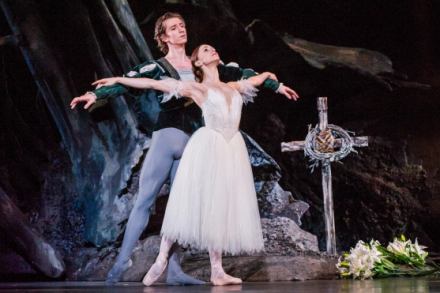
I’ve turned up at my local cinemas for quite a few of the live ballet relays that now represent a major arm of outreach to the masses by the Royal Ballet and other world companies. Wending my way through the blockbuster queues at Odeons and Empires, I’ve alarmingly often found myself among only 15 or 20 people speckling the black auditoria drinking in a rare chance to see great ballet. Tomorrow it’s the Royal Ballet’s Giselle that will beam out live to the nation with a transcendent cast in a hauntingly pretty production of the masterpiece of romantic ballet with a fantastic cast. The story is much more sophisticated and real than the average classical ballet (and shorter too).

Black magic

From our UK edition

Ballet’s romantic mantra could be summed up by John Keats’s ballad ‘La Belle Dame sans Merci’, in which a young man remembers his terrible encounter with a supernatural ‘fairy’s child’. Beguiled to sleep with this ravishing fantasy creature, he dreams of a ghostly corps of other chaps similarly beguiled, who warn him that she was a witch who would leave him forever haunted, sick and bereft. You can remodel this fantasy this way and that, switch the genders, reconfigure death, sleep and hallucination, and come up with Giselle, La Sylphide, Swan Lake, La Bayadère in the 19th century, and then find Fokine, Balanchine and Ashton developing it into the 20th in Les Sylphides, Symphony in C and Ondine.

Second thoughts | 17 March 2016

From our UK edition

You revisit an old love with wariness. Time’s passed for both of you — sharp edges have been smoothed, and reputations built. But seeing Kaash again last week, Akram Khan’s tremendous debut ensemble work, made when he was 26, revived at Sadler’s Wells now that he is 41 and a world name, I felt the earth move just as before. Like Athene, born fully armed from Zeus’s head, Kaash leapt astonishingly out of the modest, watchful mind of Khan, then a superb classical Indian soloist embarking on his first choreography for other dancers. One of the great pleasures of this past fortnight for a veteran dancegoer has been seeing his dazzling piece again days before the latest creation of his former mentor, Belgian choreographer Anne Teresa De Keersmaeker, now 55.