Culture

Culture

The good, the bad and the ugly in books, exhibitions, cinema, TV, dance, music, podcasts and theatre.

James Ellroy’s latest attempt to unseat the Great American Novel

More from Books

Aficionados of detective fiction have long known that the differences between the soft- and hard-boiled school are so profound that, as P.D. James observed, it seems stretching a definition to place both groups in the same category. Over here we have, or used to have, a comforting story concerned with restoring order to the mythical

Narrative history at its best – and bloodiest

More from Books

Anyone thinking of bringing out a book on Waterloo at the moment must be very confident, very brave or just plain daft. Over the last month there have been at least five new books on the battle, and so unless a writer is in a position to bring the equivalent of whole divisions of loyal

A jaunty romp of rape and pillage through the 16th century

More from Books

The Brethren, by Robert Merle, who died at the age of 95 ten years ago, was originally published in 1977, the first in a sequence of historical novels that sold millions in their native France but have gone untranslated until now. Set in a plague-ridden, conflict-ravaged 16th century, rife with beheadings, hangings, abductions and rape,

Flawed, unproductive and heroic: the real Ernest Shackleton

More from Books

Polar explorers are often cast as mavericks, and this is hardly surprising. The profession requires a disdain for pseudo-orthodoxies and, besides, the urge to dwell on a frozen ocean or forbidding glacier is maverick in itself. In the so-called Heroic Age (the late 19th and early 20th centuries) both Poles remained ‘unconquered’ and the margin

To be astonished by nature, look no further than Claxton

More from Books

Mark Cocker is the naturalist writer of the moment, with birds his special subject. His previous book, Birds and People, was a tour de force, taking the birds of the entire world as its subject. Craig Brown described it as ‘the sort of masterpiece that comes along only once or twice a decade’. Expectations could

An epic performance that brings a lost novelist back to life

More from Books

Hugh Walpole, now almost forgotten, was a literary giant. Descended from the younger brother of the 18th-century prime minister Robert Walpole, he was a prodigiously fast writer who seldom revised his work, producing at least a book a year between 1909 and his death in 1941. But who reads him these days? His books sold

How Hitler’s dreams came true in 1946

Lead book review

I should begin this review, in the spirit of full disclosure, by admitting that I know the author very slightly. Something close to 14 years ago, we were on the same press freebie: a slap-up lunch in Paris courtesy of — was it? — LBC radio. Who knows? The ignominious occasion of our acquaintance isn’t

Will Self is wrong (again): online reading isn’t negligent reading

Dim the lights, half-muffle the bells, replace your Hatchard’s bookmark with a strip of black crepe: the novel is dead. Again. Will Self broke the news in last Saturday’s Guardian, proclaiming in characteristically sepulchral tones that ‘our literary culture is sealed’. He has form in this regard: this latest article follows another Guardian piece in

David Nicholls’ Us: Alan Partridge’s Grand Tour

More from Books

Us, David Nicholls’s first novel since the hugely successful One Day, is about a couple who have been married for 20 years. Douglas Petersen, the anally retentive middle-aged narrator, never feels like an equal to Connie, his attractive and witty wife. On the opening page, Connie tells him that she thinks she wants to leave

Picasso’s dealer

More from Books

When she was four, Anne Sinclair had her portrait painted by Marie Laurencin. It is a charming picture, a little dark-brown-haired girl with a white bow, very blue eyes and a white and pink striped blouse, and it was commissioned by Sinclair’s grandfather, Paul Rosenberg, one of the handful of most influential Parisian art dealers

Jessica Mitford and Esmond Romilly – crusaders, chancers, spongers

More from Books

Even ardent Mitfordians must quake at the sight of yet another biography of the sisterhood. There have been more forests felled in the name of Nancy, Pamela, Diana, Unity, Jessica and Deborah Freeman-Mitford than the Brontë sisters. Jessica alone produced two volumes of memoirs, Hons and Rebels (1960) and A Fine Old Conflict (1977); her

Why Jonathan Powell thinks we’ll have to negotiate with al-Qa’eda

More from Books

Jonathan Powell is best known as Tony Blair’s fixer. He was intimately involved with the Northern Ireland peace process, about which he has written authoritatively, and since leaving office has set up his own NGO which advises on negotiations with terrorists worldwide. This book, subtitled ‘How to End Armed Conflicts’, is offered as a guide

The hell of being Michael Palin

More from Books

In these diaries, which I found excellent in a very specific way, Michael Palin tells us about his life between the late 1980s and the late 1990s. At the start of this period, he was about to become a hugely successful presenter of travel programmes. Ten years later, he was wondering if this was, in

First ash dieback, then the world’s scariest beetle

More from Books

The ash tree may lack the solidity of oak, the magnificence of beech or the ancient mystique of yew. In terms of habitat it may support fewer species of fauna, insect and fungus than other trees. It may, in this country at least, occupy a smaller cultural space than many of its woodland neighbours: according

An unorthodox detective novel about Waitrose-country paedos

More from Books

W.H. Auden was addicted to detective fiction. In his 1948 essay ‘The Guilty Vicarage’, he analysed the craving, which he claimed was similar to an addiction to tobacco or alcohol. He suggested among other things that the genre allows the addict to indulge in a fantasy in which our guilt is purged, and we are

From Trot to Thatcher: the life of Kika Markham

More from Books

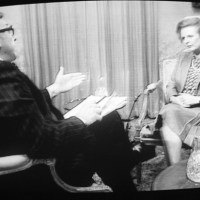
In a varied career, the actress Kika Markham has regularly played real-life charcters, including, on television, Mrs Thatcher — piquant casting for a lifelong anti-capitalist — and memorably on the stage, in David Hare’s The Permanent Way. the novelist Nina Bawden, survivor of the Potters Bar rail crash in which her husband, Austen Kark died.

More derring dos and don’ts from Paddy Leigh Fermor

More from Books

Recent years have seen the slim but splendid Patrick Leigh Fermor oeuvre swell considerably. In 2008 came In Tearing Haste, an entertaining collection of letters to and from Deborah Devonshire, followed last year by The Broken Road, the posthumously sparkling and long-awaited completion of the ‘Great Trudge’ trilogy, which finally delivered the 18-year-old Paddy from

If you want to admire Napoleon, it helps not to have met Gaddafi

Lead book review

Forty-odd years ago, in the early phase of the Gaddafi regime, I had the slightly mixed fortune to attend the new Benghazi University’s first degree ceremony. The university had actually been closed for months and there were no degrees to award, but that did not stop them kitting out their foreigners in a job lot

Why I love this feminist who hit nuns and shot Andy Warhol

Just as I was feeling frustrated about the lack of robust books on feminism I spot a real corker: Valerie Solanas: The Defiant Life of the Woman Who Wrote SCUM (and Shot Andy Warhol). Solanas, for those of you who have never had the para-sexual pleasure of reading her work, was not your fun feminist.

Hilary Mantel’s fantasy about killing Thatcher is funny. Honest

More from Books

Heaven knows what the millions of purchasers of the Man Booker-winning Wolf Hall and Bring Up the Bodies will make of the ten stories collected here, for they return us to the landscape occupied by Hilary Mantel’s last great contemporary novel, Beyond Black (2005). This, for those of you unfamiliar with her pre- (or rather