Matthew Walther

Matthew Walther is editor of The Lamp magazine.

Reports of the death of freedom have been greatly exaggerated

Not long ago, I accepted an invitation to attend a gala dinner in Washington, DC, celebrating what Caketoppers.co.uk informs me is the “emerald” anniversary of AnOther magazine. Ten years ago, as an unpaid intern with the same publication, I used to sign up for these things indiscriminately: House Freedom Caucus luncheons “catered” by Chick-fil-A, panels at the Brookings Institution on the debt-to-something-or-other ratio, symposia on the threats to cybersecurity faced by entrepreneurs in suburban Uzbekistan. As long as you showed up and at least pretended to listen (which meant, in practice, taking no more than two cigarette breaks per speaker), you got a free meal and an evening’s worth of drinks in one of the most expensive cities in the country.
freedom

Why the new right is like the old left

F.H. Bradley, perhaps the most self-aware philosopher who ever lived, once dismissed metaphysics as “the finding of bad reasons for what we believe upon instinct.” Bradley (whose favorite pastime was using pictures of Gladstone for target practice with his revolver in his rooms at Merton College, Oxford) qualified his negative assessment of the intellectual life by pointing out that philosophy was itself one of those irrepressible instincts — a nicely circular way of putting it. This is more or less how I feel about journalism. I don’t expect anything from readers except the occasional quiet chuckle and a general sense of not having wasted their time. I am certainly not in the business of changing hearts and minds.

right

Joe Biden is everything Trump wanted to be

From our UK edition

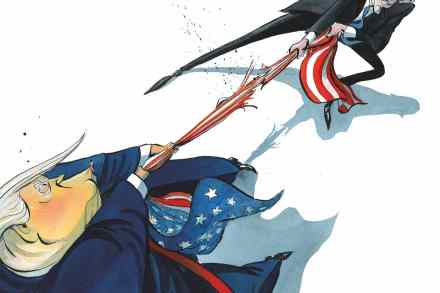
Do you remember the president who gave Vladimir Putin everything he wanted in Europe? The president who consistently ignored the advice of military experts, hoarded Covid vaccines, peddled nativist rhetoric about American manufacturing, turned Washington, DC into an 80s sci-fi dystopia during his inauguration, expressed his astonishment at the number of interracial couples on television, and planned a mass deportation of Haitian refugees fleeing an earthquake, a hurricane, and a coup? Readers of The Spectator are clever enough to know that I am talking not about Donald Trump but Joe Biden. For months now I feel like I’ve been screaming into the void: Biden is everything Trump wanted to be. The main difference between the two is their respective bases of support.

Why I’m falling in love with Sean Spicer

From our UK edition

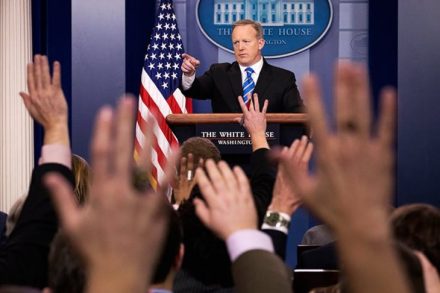
Washington, DC I hate to admit it, but I think I’m falling in love with Sean Spicer. No doubt Donald Trump’s stocky, gum-chewing, sartorially challenged press secretary will strike many readers as an unlikely object of passion. But it’s hard not to get red-hot for a man capable of inspiring so much outrage among the most boring, self-important people in America. As press secretary, Spicer’s only real job is to run the President’s daily press briefing, one of those bizarre, quasi-official American institutions — like the State of the Union address or the Easter Egg Roll on the White House lawn — whose utility no one ever seems to question.

John Maynard Keynes: transforming global economy while reading Virginia Woolf

From our UK edition

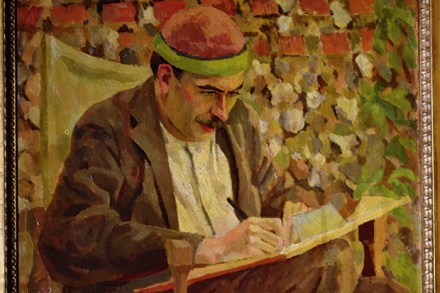
To the 21st-century right, especially in the United States, John Maynard Keynes has become a much-hated figure whose name is synonymous with bogus spending on public works, insouciance in the face of mounting debt and, of course, homosexual promiscuity. It’s a virtue of Richard Davenport-Hines’s new biography that it makes clear how much this under-reads him. So far from being the flippant old queer calumniated by Niall Ferguson, Keynes worried himself sick about inflation and was far more alarmed by budget deficits than George Osborne seems to be. He was essentially a Nonconformist Liberal for whom faith was impossible, and who saw liberalism as something needing saving from itself.

Pressing back

From our UK edition

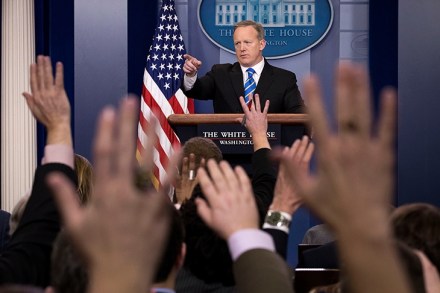
  Washington, DC I hate to admit it, but I think I’m falling in love with Sean Spicer. No doubt Donald Trump’s stocky, gum-chewing, sartorially challenged press secretary will strike many readers as an unlikely object of passion. But it’s hard not to get red-hot for a man capable of inspiring so much outrage among the most boring, self-important people in America. As press secretary, Spicer’s only real job is to run the President’s daily press briefing, one of those bizarre, quasi-official American institutions — like the State of the Union address or the Easter Egg Roll on the White House lawn — whose utility no one ever seems to question.

One dead in Ohio

From our UK edition

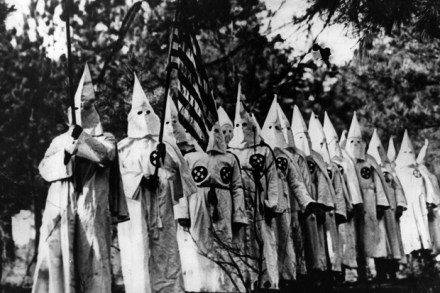
For the first time in living memory, a presidential candidate for a major party has received the enthusiastic endorsement of the Ku Klux Klan; one prominent former member of that fraternity — a Grand Wizard, I think: or was it a Grand Dragon? — is running for the US Senate. Members of the Black Lives Matter movement did not riot in Cleveland, but that is only because they were nearly always surrounded by troops of mounted policemen. It shouldn’t be surprising that some of us are looking back with hope and trepidation at the American Civil Rights movement of the 1960s. One of the most remarkable books the movement produced is this 1973 family memoir, newly reissued with an afterword by the author.

The best thing about Harry G. Frankfurt’s On Inequality is the paper it’s printed on

From our UK edition

Ten years ago, a philosophy professor at Princeton wrote a book with a provocative, slightly indecent title. It was a surprise bestseller, reaching number one on the New York Times’s list, and university book shops in America still do a roaring trade in copies of Harry Frankfurt’s On Bullshit, along with the usual Vonnegut and Sartre. In 2014, something similar happened when Thomas Piketty’s Capital in the 21st Century sold 1.5 million copies in English, French, German, Mandarin, Urdu, Norwegian, Choctaw and so on. Not to be outdone, Princeton University Press has enlisted Frankfurt to produce a response to Piketty.

Advice for speechwriters: say nothing, very well

From our UK edition

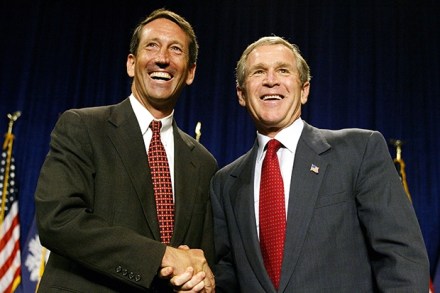
In June 2009, the good people of South Carolina lost Mark Sanford, their governor. Per his instructions, his staff told the press that he was ‘hiking the Appalachian trail’. When he turned up six days later at an airport in Atlanta, Georgia, he said that he had scratched the hike in favour of something more ‘exotic’. When it became clear that ‘exotic’ meant visiting his 43-year-old polyglot divorcée mistress in Argentina, things got bad. ‘I will be able to die knowing that I found my soulmate,’ he told the Associated Press, sobbing. Barton Swaim has written a memoir of his three years working as a speechwriter for Sanford, who is now a congressman.

Saying nothing, very well

From our UK edition

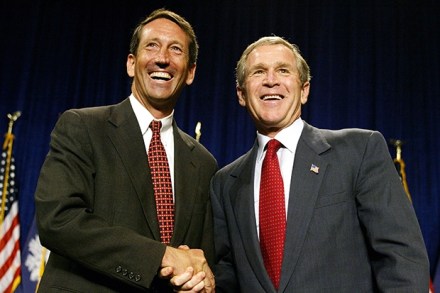
In June 2009, the good people of South Carolina lost Mark Sanford, their governor. Per his instructions, his staff told the press that he was ‘hiking the Appalachian trail’. When he turned up six days later at an airport in Atlanta, Georgia, he said that he had scratched the hike in favour of something more ‘exotic’. When it became clear that ‘exotic’ meant visiting his 43-year-old polyglot divorcée mistress in Argentina, things got bad. ‘I will be able to die knowing that I found my soulmate,’ he told the Associated Press, sobbing. Barton Swaim has written a memoir of his three years working as a speechwriter for Sanford, who is now a congressman.

What makes mankind behave so atrociously? Ian Buruma and Joanna Bourke investigate

From our UK edition

The first interaction between two men recorded in the Bible involves a murder. In the earliest classic of English literature, one of the murderer’s descendants has his arm ripped from its socket by a young warrior who celebrates his gruesome victory by drinking himself blotto; the next day, our hero wakes up (not hungover, apparently) and kills his opponent’s mother. Not my cup of tea, Beowulf, or, perhaps, yours. But this is what literature was like until the 18th century or so, when the stakes were lowered and people began writing about inheritances, bishoprics and low-key adultery.

Secretive, arrogant and reckless: the young T.E. Lawrence began life as he meant to go on

From our UK edition

The Lawrence books are piling up, aren’t they? I don’t mean the author of The Rainbow, though as I write this the eremites at Cambridge are plugging away at a definitive edition of his works. (Their most recent yield, the Poems in two volumes, runs to over 1,400 pages and costs £130.) The English leader of the Arab Revolt, who also went professionally by his initials and shared the other Lawrence’s penchant for travel, has fewer admirers in the academy but an uncanny ability to move copies. A few years ago there was a hulking 800-plus-page biography, and since then everything from a brilliant study of Lawrence’s relationship with the intelligence community to an unwieldy life of Faisal — who, alas, didn’t look much like Alec Guinness — have crossed reviewers’ desk.

Keep the Man Booker Prize British

From our UK edition

I am nothing if not patriotic. Like most Americans, I am convinced that mine is the freest, most beautiful country on earth. But I cannot pretend to be happy that two of us have been shortlisted for the Booker Prize. When it was announced earlier this year that novels written by Americans — in fact, all novels written in English and published in Britain — would now be eligible for the award, I dismissed the news as a harmless gimmick. Now I am not so sure. Behind the fair-play, hands-across-the-border niceness of the committee’s gesture, I sense something else: masochism. The best evidence of this is a piece that ran last week in — where else? — the Guardian in which a panel named 15 American novels that ought to have won the Booker in their respective years of publication.

Hillary Clinton’s autobiography seems destined to join her husband’s – in a bin marked ‘Free’

From our UK edition

Last year a Washington-based journalist called Mark Leibovich wrote This Town, a book whose thesis was, roughly, that Washington-based journalists are terrible people. Leibovich’s book exemplified a trend among self-described Beltway insiders who decry as venial and insipid the trivialities they spend their lives reporting. Sounds a bit precious, I know, not to mention suicidal. But it’s supposed to be waggish and endearing and ironical. The latest victim of this coprophagic tendency is Hard Choices, Hillary Clinton’s third book. Barely a week after its publication, with over a million copies in print, it has already been written off by the hacks who spent months doing potted F.R.

The American who dreamed of peace for the Arabs – but was murdered in their midst

From our UK edition

‘Arabist’ is fast becoming an archaism. Perhaps it is already one. These days the word conjures up enchanting visions of racy manuscripts examined over sharbat in the great domed residences of sympathetic chargés d’affaires and lone camels bumping along like single-masted cutters on a sand-dune ocean. At the age of six I dreamed of becoming one after watching David Lean’s great film for the first time. (A few weeks later I saw Jurassic Park on video and decided that I fancied palaeontology instead.) It is tempting, even for those of us who take an Israeli line, to think that had the creation of a massive pan-Arab state followed the Paris Peace Conference, the last 100 or so years would have been much the better for it.

P.J. O’Rourke interview: ‘Telling jokes and lying about politicians – what’s the difference?’

From our UK edition

P.J. O'Rourke’s chickens are giving him trouble. ‘Two of them aren’t laying eggs right now,' he explains. But he doesn’t know which ones. ‘I’m not sure who’s the guilty party.' We’re driving to the field where his trees are harvested for timber and where he and his father-in-law have built a one-hole golf course. ‘How to Drive Fast on Drugs While Getting Your Wing-Wang Squeezed and Not Spill Your Drink’ this isn’t.

I used to like George Kennan. Then I read his diaries

From our UK edition

George Kennan, the career diplomat and historian best known for his sensible suggestion that the United States try to resist the Soviet Union ‘without recourse to any general military conflict’, is much in vogue these days, at least in Washington, where Senator Rand Paul is presenting Kennan’s theory of ‘containment’ as an alternative to George W. Bush’s disastrous, and disastrously expensive, ‘war on terror’. Now, after two recent biographies and a volume of correspondence, comes a selection of Kennan’s diaries: 684 pages (not including notes) out of some 8,000 extant, covering a span of 87 years — the longest chronological period of any published diary of which I am aware.

Angel, by Elizabeth Taylor – review

From our UK edition

‘She wrote fiction?’ Even today, with the admirable ladies at Virago nearly finished reissuing her dozen novels, Elizabeth Taylor remains mostly unknown except to fellow novelists, literary journalists, worthier publishing types, and a handful of dedicated readers. Even Nicola Beauman felt obliged to call her wonderful 2009 biography The Other Elizabeth Taylor so as to avoid confusion with the overrated actress whose debut film, National Velvet, was released only a few months prior to the publication of Taylor’s first novel. It cannot help her reputation that she had a majority of her papers burned, produced no journalism and kept her distance from literary London, writing only to friends such as Ivy Compton-Burnett and Barbara Pym, kindred spirits of sorts.