Culture

Culture

The good, the bad and the ugly in books, exhibitions, cinema, TV, dance, music, podcasts and theatre.

Carrying on regardless | 25 June 2015

More from Books

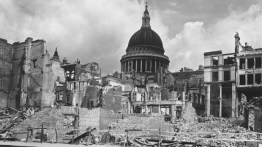
This big, bristling, deeply-furrowed book kicks off with a picture of the British countryside just before the second world war. Apparently we then grew only 30 per cent of our food, horses did most of the work and a lot of the land, criss-crossed by empty roads featuring the occasional pony trap, had been abandoned to weeds and brambles. Move on a year or two and millions of acres had been brought under the plough. Tennis courts, golf courses, railway embankments, school playing fields and even the lawns of large houses had been turned into vegetable plots or corn fields. Barbed wire blocked the beaches, church bells only rang to warn of imminent invasion and ornamental church gates had been carted off to be turned into tanks.

Social climbing through the basement

More from Books

This book has brought out my inner Miliband. A punitive mansion tax on all properties with garden squares in Notting Hill? Hell, yes! Friends, I’d go further: flight taxes on trips to Mustique; VAT at 27.5 per cent on Stella McCartney running shoes, Daylesford groceries, Yogalates classes, Vita Coco coconut water, almond milk and chia seeds. All prep schools which attract paparazzi shooting supermodels dropping off their children to be abolished, and little Fox and Memphis sent to the nearest inner-city comp not yet turned into an academy. As for iceberg basements: a direct payment of £1.5 million to the treasury for one storey, £2.5 million for two, £4.15 million for three. Call it the Tax Titannica.

Sex, violence and lettuces

More from Books

There is something cruelly beautiful, delightfully frustrating and filthily gorgeous about a Scarlett Thomas novel. Two family trees open and close this book: one shows what the characters think they are and how they are related, the other what they are revealed to be. How the couplings shift is less important than the chains of desire that cannot be mapped or taxonomised. The Gardener family is reeling from and sneakily plotting about the death of great-aunt Oleander, owner of Namaste House, a retreat for whack jobs and slebby failures. But her will leaves them confounded. This family of botanists are each given a seed which might flourish into death or enlightenment. It might explain their genealogy, and the deaths of four of their forebears.

Licence to kill

More from Books

One morning in March 1921 a large man in an overcoat left his house in Charlottenburg, Berlin, to take a walk in the Tiergarten. A young man crossed his path, drew a pistol and shot him in the neck. Emitting a groan ‘like a branch falling off a tree’, he fell dead. The assassin ran, but was arrested by the crowd. ‘What do you want?’ he asked. ‘I am Armenian, he is Turkish. What is it to you?’ The victim was Talat Pasha, erstwhile interior minister of the Ottoman empire and convicted war criminal. His nemesis was Soghoman Tehlirian, engineering student and agent of the Armenian Revolutionary Federation. Talat topped the ARF’s list of targets: revenge for the genocide of some 1.5 million Armenians between 1915 and 1917.

Into the blue

More from Books

Jenny Balfour Paul is an indigo dye expert. She has written two books on the subject, and lectures around the world. A librarian alerted her to the mention of the colour, and the plant it comes from, in the journals of a long-forgotten sailor and indigo hand. That day a ten-year love affair began. Thomas Machell was born near York in 1824, a son of the manse. At the age of 16 he went to sea, scrubbing the decks of a merchant ship. After numerous adventures he settled in India, initially working for the Bengal Indigo Company, then transferring to plant and harvest coffee in Kerala. He was a curious, observant man who became fluent in both Arabic and Hindi, and, unlike many servants of the Raj, travelled widely off the beaten track.

‘It’s always wrong to starve’

More from Books

‘My mother and father named me Aron, but my father said they should have named me What Have You Done, and my uncle told everyone they should have called me What Were You Thinking.’ So begins, with bitter Jewish humour, this involving book set largely in the Warsaw ghetto. There is a hint of unnerving pastiche in this, but it is a sentence that finds an echo in the compassionate words of Jim Shepard’s hero, Janusz Korczak, in the final sentence of the book. Korczak was a real figure, a paediatrician who ran an orphanage in Warsaw, moved with it into the ghetto and, despite being offered several chances of escape, stayed with his charges when transported to the extermination camp at Treblinka.

The hardest man of all

More from Books

From the unpromising and desperately unforgiving background that forged his iron will and boundless ambition, Temujin (as Genghis Khan was named at birth) rose to build an empire that was to range from Korea and China, through Afghanistan, Persia and Iraq and eventually to Hungary and Russia, constituting the largest contiguous land imperium in history. His was an extraordinary, epic story and Frank McLynn does it full justice in a vivid, page-turning biography. The author portrays well the extreme hardship of the nomadic life for Genghis as boy and man on the arid Mongolian steppe, where temperatures range between 100 degrees Fahrenheit and minus 43, and where ‘one can be hit simultaneously by winds from the Siberian tundra and desert storms from the Gobi’.

The devils’ advocate | 25 June 2015

More from Books

Jeremy Hutchinson was the doyen of the criminal bar in the 1960s and 1970s. No Old Bailey hack or parvenu Rumpole, he was the son of Jack, a distinguished practitioner in the same field, and Mary, a Bloomsbury Strachey. An Oxford undergraduate who acquired a criminal record along with a PPE degree (he accidentally shot a policeman with an air pistol), married first to Peggy Ashcroft, he moved throughout his life in the upper echelons of English liberal intellectual society, and was elevated, while still in practice, to the House of Lords. The brief biographical sketch at the outset of this book, littered with names of those whose paths he crossed, including T.S.

Filling in the Bloomsbury puzzle

Lead book review

In March 1923 a large birthday party was held in a studio in Bloomsbury. It is often assumed that the eponymous Group was habitually glum or intense; but there were a lot of parties. The artists were Vanessa Bell and Duncan Grant, and the birthday was David Garnett’s 31st. David (known as Bunny) was a handsome, fair-haired fellow of bisexual charm, beloved by Grant, among others. His second novel, Lady into Fox, inspired and illustrated by his wife, Ray, had been a literary sensation the year before. There was much energetic dancing, and a floorshow was provided by the Russian ballerina Lydia Lopokova, Maynard Keynes’s wife, and by Harriet Bingham, a new friend of Bunny’s, a recent arrival from a very different world.

Dick Whittington for the 21st century

More from Books

Novels of such scope and invention are all too rare; unusual, too, are those of real heart, whose characters you grow to love and truly care for. The Year of the Runaways has it all. The action spans continents, taking in a vast sweep of politics, religion and immigration; it also examines with tenderness and delicacy the ties that bind us, whether to family, friends or fellow travellers. Judges of forthcoming literary prizes need look no further. Rose Tremain’s The Road Home described the experience of an Eastern European immigrant arriving to look for work in England. The book (which is among Tremain’s finest) was a powerful corrective to the notion that such migrants have an easy time of things.

In the footsteps of Marco Polo: the journey that changed William Dalrymple’s life

This is the introduction to the 25th anniversary edition of William Dalrymple's first book, In Xanadu: A Quest At the end of the windy, rainy April of 1986, towards the end of my second year at university, I was on my way back to my room one evening, when I happened to trudge past my college notice board. There my eyes fell on a bright yellow sheet of A4, headlined in capital letters THE GAILLARD LAPSLEY TRAVEL SCHOLARSHIP. It hadn’t been a good week. I was 21: broke, tired of revision for exams and already longing for the holidays.

Awfully arrayed

More from Books

John Keegan, perhaps the greatest British military historian of recent years, felt that the most important book (because of its vast scope) that remained unwritten was a history of the Austrian army. Richard Bassett has now successfully filled the gap, and few could be better qualified to do so. During many years as the Times’s correspondent in Vienna, Rome and Warsaw, he made friends with most of the leading local experts, as his acknowledgements testify.

The new rules of dating

More from Books

An American stand-up comedian Aziz Ansari, who usually performs in Los Angeles and New York, has found time to conduct an international investigation of the mating habits of the young in the digital age. Like most other stand-up comedians, male and female, Ansari evidently bases his act on nationalistic, ethnic and sexual misanthropy, expressed with facetious cynicism. The first words of his introduction are ‘OH, SHIT!’, which seem to promise streetwise modernity but nothing romantic. Is the book only some kind of wise-guy scam? No, it’s not that simple. Born 32 years ago in Bennettsville, a small town in South Carolina, Ansari apparently felt restricted by what he calls his ‘brown skin tone’ until he moved up to the less racist north.

One vast, blaring cultural circus

More from Books

In the late 1980s Peter Ackroyd invited me to meet Iain Sinclair, whose first novel, White Chappell, Scarlet Tracings, I had greatly admired. Ackroyd initially knew Sinclair as a poet, author of Lud Heat, an influence on his own wonderful novel Hawksmoor. Passionately interested in London, the three of us began to meet regularly. Sinclair was an admirer of the French situationist Guy Debord (The Society of the Spectacle) and popularised psychogeography in Britain. In his blending of myth, literature and close social observation, I felt he combined the virtues of Orwell and Pound.

Style over substance

More from Books

We begin in Paris with an introduction to five insignificant friends. One (Ramon) is walking past the new Chagall exhibition, but decides against visiting — not for the first time, nor the last — because of the queues. Another (D’Ardelo) is returning from the doctor’s, where he has learned that he does not have cancer — though he tells Ramon he does. Ramon’s friend Charles is a party organiser, who will soon be catering D’Ardelo’s birthday party. He does this with his friend Caliban, an actor without an acting career, who while on duty tries to make himself more interesting than he actually is by pretending to be an immigrant speaking only a meaningless gobbledegook he calls ‘Pakistani’. (It doesn’t work.

Swords of honour

More from Books

Earlier this century I was a guest at a fine dinner, held in a citadel of aristocratic Catholicism, for youngish members of German student duelling societies. My hosts were splendidly courteous, some of them held deadly straight rapiers or lethal curved blades, there were brightly coloured and golden braided costumes that made King Rudolf of Ruritania’s coronation robes seem dowdy, and we sung a rousing anthem about Prince Eugene of Savoy smiting the fearful Turk at the battle of Zenta in 1697. It was a high-testosterone evening. A few of my young hosts had duelling scars, discreetly placed so as to be imperceptible when they were in office suits, for some of them worked in Canary Wharf or the City as bankers, lawyers and accountants.

Broken dreams

More from Books

As Masha Gessen herself admits — and as friends and journalist colleagues repeatedly told her — it was a strange choice to write this book. But you only have to get a few pages in to realise that Gessen, the author of a bestselling analysis of Putin, is ideally placed to take on the story behind the Boston marathon bombers. And she is the perfect person to situate it in the wider context of ‘the war on terror’ in a way that illuminates and inspires. This is quite simply a remarkable piece of old-school journalism. On 15 April 2013 two homemade bombs exploded near the finish line of the Boston marathon, killing three people and wounding 264 others.

Guardians of an ideal

Lead book review

Sudhir Hazareesingh’s bold new book is built on the assumption that ‘it is possible to make meaningful generalisations about the shared intellectual habits of a people as diverse and fragmented as the French’. France, as General de Gaulle pointed out, has such a fetish for singularity that it produces 246 varieties of cheese. Can France be any more a nation of thinkers than England is of shopkeepers? Hazareesingh, an Oxford don, brings specific strengths to this daunting task.

If Cameron is deleting all No. 10 emails, who will write his history?

This is an extract from Charles Moore's Notes in this week's Spectator, out tomorrow. Subscribe from just £1. In a few weeks, I shall have finished the second volume of my threepart biography of Margaret Thatcher. I am now at the checking and revising stage — 3,000 endnotes to be made shipshape, 2,000 quotations to be cleared with interviewees, 300,000 words to be re-imagined as if read fresh. This involves the exchange of scores of emails every day. The question arises, ‘How did enterprises of this kind ever happen before computers?’ The answer, I think, is that the sources used were much narrower than they are today. Authors were extremely dependent on where archives physically were. Interviews were a rarity.

The Spectator at war: Men of letters

From ‘Literature and Soliders’, The Spectator, 19 June 1915: In this war some of the most moving poetry has been written by young soldiers. The most vivid accounts of fighting have been extracted from soldiers' letters. These were certainly not written with- out a close companionship with letters. We wonder how many torn and thumbed copies of Shakespeare, Milton, Homer, or Virgil are in trenches and dug-outs at this moment. We wonder how many officers have added an entirely non-military zest to their movements by studying domestic Gothic architecture, or the buildings bearing the more grandiose imprint of Louis XIV's days, as they passed through the interesting towns of Flanders.

The Spectator’s notes | 11 June 2015

The Spectator's Notes

Two beautiful volumes in a cloth-bound case reach me. They are Speeches and Articles by HRH The Prince of Wales 1968-2012, published by University of Wales Press. The explanatory list of abbreviations and acronyms alone gives a charming sense of the range of subjects covered — ‘Foot and Mouth Disease, Foreign Press Association, Forest Stewardship Council … Myalgic Encephalopathy, Member of Parliament … Non-Commissioned Officer … Not In My Back Yard! … Roundtable for Sustainable Palm Oil’. Among the many speeches on the environment, however, I cannot find his speech in Rio de Janeiro in March 2009, entitled ‘Less Than 100 Months To Act’.

Only the lonely

More from Books

This book starts with a Chinese boy so privileged and pampered that, at 21, he can’t open his own suitcase, let alone unpack it. It closes at the opposite end of the social scale with a small girl squatting on a plank over a village cesspit, watching the maggots seething and squirming far below as they struggle to climb the sides of the pit towards the light. The cesspit was the only place where a child of five could find refuge from back-breaking labour in the fields. ‘Granny said girls who don’t work get no food,’ she tells Xinran, who meets her two decades later as a student working for her doctorate in Europe.

Some animals are more equal than others

More from Books

Here are two parallel books, both by Americans, both 260 pages (excluding indexes) long, both using ‘likely’ as an adverb. One looks at the history of the world through the story of the chicken; the other does the same through the story of the pig. Which would you prefer? I found the chicken one harder going — like ploughing through one of those brilliant but exhausting New Yorker articles that never seem to end, for which the journalist with too generous a budget has spent years interviewing hyper-specialist scientists in labs and ‘facilities’ across the USA — but I found the pig one sadder.

Confessions of a Fedhead

More from Books

Good writing about sport is rare — and good writing about tennis is that much rarer — so it’s conspicuous that we’ve had so much of it about Roger Federer. The gold standard was set in 2006 with David Foster Wallace’s remarkable essay ‘Federer as Religious Experience’, in which the great novelist provided a dazzling analysis of the great player’s game. Then came Jon Wertheim’s Strokes of Genius (2010), an elegant account of the 2008 Wimbledon final between Federer and Nadal. In a letter published in Here and Now (2013), the correspondence between Paul Auster and J. M. Coetzee, the latter contributed an uncharacteristically lyrical bit of praise for the Swiss.

Sub-Aga saga

More from Books

Lovely, gentle Isabel, just 40, makes masks. Her husband Dan, erstwhile ‘student of the Classics’ and playwright manqué, is ‘bored by the import-export business’. Enter long lost, lonely Bert, who ‘left soldiering, a distinguished colonel, and went to work for an oil company in New York’, plus Isabel’s unlikely friend and marriage-predator, thirtysomething Carlotta, who boasts a red dress, Mercedes coupé, unspecified high-powered job and ‘amazing (yes, amazing, I know) breasts’.

Robin Hood v. the toffs

More from Books

The publicity blurb about the two unpleasant criminals whom this dismal book romanticises says that they are ‘continuing their ancestors’ traditions, reluctant to surrender the old ways of sourcing food from nature’. Imagine a book about two men who were being celebrated for ‘continuing their ancestors’ tradition of beating their wives, raping them when necessary, treating them as their private property and forcing them into a life of drudgery and subjection’. Morally, this one is just as bad, and as a work of literature it is a joke. Bob Tovey and his son Brian have shared their way of life with a writer called John F. McDonald, who in a lachrymose afterword noting the death of Tovey senior describes him as ‘a legend’.