Carey Schofield

A class act | 2 May 2019

From our UK edition

Kate Clanchy is an extraordinary person. She is a veteran of 30 years’ teaching in difficult state schools, as well as an acclaimed poet (awarded an MBE in 2018 for services to literature) who has nurtured a generation of successful young migrant writers. In 2006 she was one of the judges for the Foyle young poets of the year award. Seven years later, seeing how the winners were scything through Oxbridge and networking ‘like an artsy version of the Bullingdon Club’, she wanted the same opportunities for her own pupils, ‘not just the poetry, but the sense of entitlement’.  She was teaching at a comprehensive in east Oxford, a generally unloved institution, ‘record-breakingly under-subscribed’, where more than 50 languages were spoken.
… and an awesome beak

From our UK edition

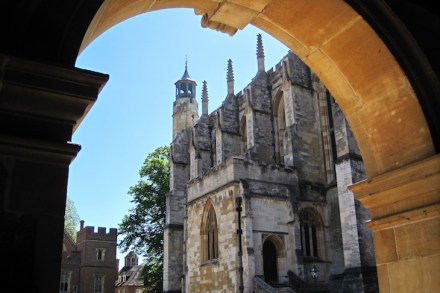
The Enigma of Kidson is a quintessentially Etonian book: narcissistic, complacent, a bit silly and ultimately beguiling. It is the story of Michael George MacDonald Kidson (MGMK, as he was known), who taught history at Eton from 1965 to 1994 and was an influential tutor to hundreds of boys, often the wayward and the damaged. Jamie Blackett, who was taught by him there, has collected Kidsoniana from former pupils, colleagues, friends and acquaintances. What emerges is a portrait of a colourful maverick who bullied and consoled generations of schoolboys into success and happiness.

Common sense, moral vision — and the magic touch

From our UK edition

An Intelligent Person’s Guide to Education is Tony Little’s valedictory meditation on his profession, published on his retirement as headmaster of Eton. In a series of loosely connected essays, erudite and eccentric, he contemplates issues of fundamental concern to us all. What are schools for? How should teachers be educated? How do good schools work? The book is rather oddly larded with insights from The Schoolmaster (1902) by A.C. Benson (brother of E.F. and Robert Hugh) who was, like Little, an Old Etonian who went back to teach at the school. Benson’s commentary on his own teaching experience is used as a touchstone, generally reinforcing Little’s civilising, rational approach to education. These essays reveal Little’s vigorous moral vision.

Pakistan: A Personal History by Imran Khan

From our UK edition

Imran Khan’s Pakistan: A Personal History describes his journey from playboy cricketer through believer and charity worker to politician. His story is interwoven with highlights from Pakistan’s history. At times he seems to conflate his own destiny with that of Pakistan, and at others to be writing a beguilingly honest personal account. Khan describes how youthful hedonism eventually gave way to faith. His cricketing life led him to realise that talent and dedication were no guarantee of success. In the end, he says, it comes down to luck. ‘Over the years I began to ask myself the question — could what we call luck actually be the will of God?’ Khan’s religious awakening was further stimulated by physical vulnerability.

Clashing by night

From our UK edition

Cables from Kabul is Sir Sherard Cowper-Coles’s valedictory account of his years as ambassador to Kabul (2007-9) and as this country’s Special Representative for Afghanistan and Pakistan (2009-10). Cables from Kabul is Sir Sherard Cowper-Coles’s valedictory account of his years as ambassador to Kabul (2007-9) and as this country’s Special Representative for Afghanistan and Pakistan (2009-10). A long telegram reporting on the ramp ceremony for a fallen soldier, Corporal Damian Stephen Lawrence of the 2nd Battalion, the Yorkshire Regiment, opens the book. It is a beautiful piece, describing the service — ‘in the best traditions of lapidary Anglicanism. Plenty of dignity but not too much religion’ — and the military ritual of the event.

Imperfect working order

From our UK edition

The publication of Pakistan: A Hard Country could not be more timely. International attention has been focused on Pakistan since the Americans killed Osama bin Laden in Abbottabad. Being in the spotlight generally means trouble for this country that has been bedevilled by war and political drama for over three decades. Foreigners announce goodwill and arrive with generous aid, but Pakistanis are frequently left feeling bruised, as the outsiders become ever more bewildered by the workings of this beguiling and maddening place. Anatol Lieven originally planned to call his book ‘How Pakistan Works’. It would have been a good title, since this is exactly what he tries to explain.

You can go home again

From our UK edition

Stranger to History: A Son’s Journey Through Islamic Lands, by Aatish Taseer The publication of Stranger to History is likely to be turned into a fiery political event in Pakistan. The author is the half-Indian son of Salman Taseer, the glamorous and controversial Governor of the Punjab and one of Pakistan’s most important newspaper proprietors.The work is a heartfelt cry for attention from the old mogul, and with its talk of alcohol and of illicit liaisons it provides plenty of fuel for the Governor’s enemies. But it will be a pity if Aatish’s first book — part family memoir, part an account of his journey through the heart of the radical Islamic world — is exploited by his father’s foes.

Division and misrule

From our UK edition

‘The 20th century was not kind to Pakistan’, Tariq Ali says in the first sentence of his latest book on his native land. ‘The 20th century was not kind to Pakistan’, Tariq Ali says in the first sentence of his latest book on his native land. The glib opener is a taste of what’s to come. It is both annoying and accurate. The 20th century created Pakistan, after all, and — apart from eight most difficult years since the turn of the millennium — the country has known no other.

Getting to know the General | 5 July 2008

From our UK edition

On 29 May 1989 Brigadier Tariq Mehmood, formerly head of Pakistan’s Special Forces, was taking part in a freefall demonstration in Gujranwala. His parachute failed and he crashed to his death in front of a large crowd that included his wife. TM (as he was always known) was the arche- typal Special Forces officer, almost recklessly courageous, colourful, bound very closely to his men, whatever their rank. The tragedy shook the Pakistan army. This grim event is wantonly exploited by Mohammed Hanif in his comedy, A Case of Exploding Mangoes. The author has clearly had fun walking famous people — presidents, politicians, operators — through this re-imagining of events leading to the death of General Zia ul-Haq in August 1988.