Adam Nicolson

The healing power of Grasmere

From our UK edition

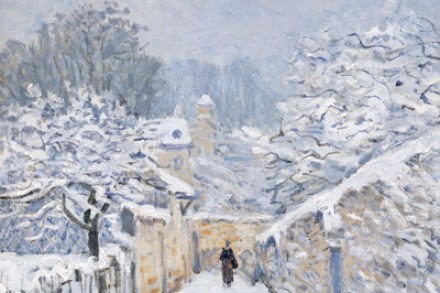
William Wordsworth’s life is the foundational version of the nature cure. After a disrupted, troubled childhood, sent to live with unsympathetic relations after his mother’s death, a chaotically disaffected time at Cambridge and a muddled youth, fathering a child on a woman he loved but scarcely knew in France, Wordsworth refused all his family’s urgings to a nice career in the church or the law. Instead, he stumbled towards the kind of poetry he wanted to write and looked, with his sister Dorothy, for a sense of home in Dorset and Somerset. Finally, he returned to the Lake District, and in December 1799 came to Dove Cottage and Grasmere, where nature felt like the parent he longed for and, surrounded by his coterie of women supporters, the years of agony could be over.

The world has become a toxic prison – and a volcanic winter lurks on the horizon

From our UK edition

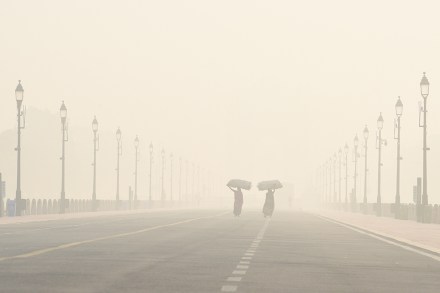
Civilisation pollutes. Every improvement will bring poison and entropy in its wake. Apparently infinite resources are always finite. Immediate gain is inevitable loss. Lip service to ideals of balance and moderation is as old as humanity and has never been enough. Peter Frankopan’s story of our relationship to the world across all planetary space and human time is necessarily vast – 660 pages of text, with footnotes relegated to 212 pages online – in which the grand cycle is enacted again and again.

In the footsteps of the Romantic poets

From our UK edition

Shelley, walking as a boy through his ‘starlight wood’, looking for ghosts and filled with ‘hopes of high talk with the departed dead’, found nothing in reply. Nothing reverberated. The ghosts were silent. But he felt something else non-human: the springtime breezes bringing a sense of the marvellousness of life itself. And so in that instant (or so he says) his mind changed. No more seeking after gothic horrors or pining for the worst; no more listening to the dead. Instead, ‘the spirit of beauty’ descended on him, illuminated him, shaping his life, becoming his goddess, the only force he could imagine that ‘could free/ This world from its dark slavery’.

Geology’s dry, rocky road

From our UK edition

There has been an argument recently on Twitter about how to do nature-writing. Should it involve the self? Should it be poeticised? Has the oh-my-oh-me-ism of recent nature books got out of hand? Can one not see a blackbird now without considering the nature of consciousness and the tragedy of existence? In short, shouldn’t the nature writers calm down a bit and become ‘more honest’, as one contributor to this row put it? Egregious sentences were quoted out of context. Angry and hate-filled expressions were used. The tone seemed wildly out of whack with the slightly technical question at hand — how to describe plants, places and animals — but was perhaps fuelled by something larger and more anxious.

Dispatches from the underworld

From our UK edition

Edmund Burke, as a young Irish lawyer in 1756, first made the distinction between beauty and sublimity. Beauty for Burke was about continuity and connectedness. ‘Vegetables,’ he says, in one of the great pre-Romantic sentences, ‘are not sublime.’ Vegetables are beautiful because they are constant and continuous, and because beauty is the quality of perfect continuity: ‘The sense of being swiftly drawn in an easy coach on a smooth turf with gradual ascents and declivities is a better idea of the beautiful than anything.’ The sublime is the opposite, needing deep distances, withdrawals and chasms —the Abgrund, in the resonantly expressive German word for ‘an abyss’.

The land beneath the sea

From our UK edition

Somewhere deep in the water-thick layers of Time Song, Julia Blackburn says, funnily, that in Danish, ‘the word for book is bog’.And Time Song itself is a kind of beautiful bog, a memoir-cum-meditation focusing on the stretch of land that once connected Britain to the Continent but was drowned by the rising waters at the end of the Ice Age. It is a subject for now — where for God’s sake would Brexit be if Essex and Yorkshire were still parts of the lower Rhineland? — but Blackburn’s thoughts run deeper than that, to the long and subtle conversation between the present and past, to the preservations of time and its erosions.

Spirits from the vasty deep…

From our UK edition

‘The sea defines us, connects us, separates us,’ Philip Hoare has written. His prize-winning Leviathan, then a collection of essays called The Sea Inside and now RISINGTIDEFALLINGSTAR together make a loose, meditative trilogy on people, the ocean, its inhabitants, its threats and delights, the comings and goings, the whole tidal business, its excitements and its ever-present grip on our minds and imaginations. The sea ‘deals life and death for innocent and guilty alike’, he says, and that all-pervasiveness is both his subject and his method. The rather exciting slidtogether words of this title (and of all his chapter titles) give a hint of what the book is about. This is not the sea in any historical, scientific or practical sense.

Perils of the Pacific

From our UK edition

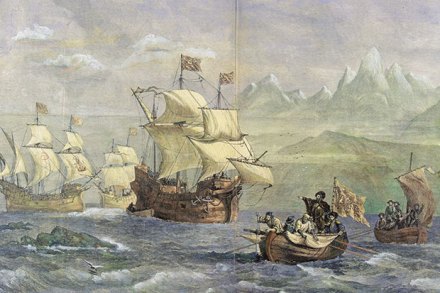
In the great Iberian empires of the 16th and 17th centuries, a career was already avail-able in global administration not very different from the lives of the bankers or lawyers who globe-trot today. In 1509, as one example among hundreds, Duarte Coelho Pereira, a soldier for the Portuguese crown in Morocco and West Africa, went to India, where he spent the next 20 years accompanying missions to China, Vietnam and Siam. Back in Portugal, he became ambassador to the French court and then commander of a patrol on the Malaga coast before taking up the captaincy of Pernambuco in northeast Brazil, a plum royal job, where he made his fortune and founded a dynasty.

A Mile Down: David Vann’s memoir of a disastrous career at sea

From our UK edition

When the novelist David Vann was 13, his father — a difficult, unhappy dreamer in his thirties, constantly in dread, as Vann puts it, ‘of becoming something other than what he had always imagined himself to be’, and who had failed first as a dentist and then as a commercial fisherman in Alaska — blew his head off while talking on the phone to his second wife. ‘She heard parts of his head dripping from the ceiling,’ Vann told the New York Times not long ago. ‘She still can’t use the phone with that ear.’ That history of grief, violence and trouble haunts every page of this memoir. When it begins, 30-year-old Vann, with his cool and beautiful Nancy by his side, has already had some sea-adventures and disasters.

Poetic injustice

From our UK edition

‘Why do another translation of Homer?’ Richmond Lattimore asked in the foreword to his own great translation of the Iliad first published in 1951. It was a doubt he was grateful his friends and family had refrained from expressing in the long labour of translating the Greek. But he had a response for any who dared: it was ‘a question which has no answer for those who do not know the answer already’. Homer exists to be translated, largely for what Peter Green has called ‘its uncanny universalist insight into the wellsprings of human nature’. Homer is one of the sources of truth; it demands to be known.

Fizmer, feetings, flosh, blinter – enjoy these words and forget them immediately, advises Adam Nicolson

From our UK edition

Wolfsnow is a dangerous blizzard at sea; slogger the sucking sound made by waves against a ship’s sides; ammil the sparkle of morning sunlight through hoar-frost; af’rug the reflection of a wave after it has struck the shore; blinter is a cold dazzle; sutering the cranky action of a rising heron; èit, a Gaelic word, is a piece of quartz placed in a moorland stream so that it glimmers in the moonlight and in that way attracts salmon in late summer and autumn; summer geese is steam that rises from the moor when rain is followed by hot sunshine; fizmer the noise of wind rustling in long grass; may-blobs are kingcups; zwer is the whizzing of partridges as they break cover; feetings are footprints of creatures as they appear in the snow; twindle is stream foam; an after-drop.

The Edge of the World: deep subject, shallow history

From our UK edition

The Mediterranean glows in our conception of the Continent, the warm source of everything that is best in us, the seat of civilisation, from which one delicious wave after another has washed up on our shores. But what about the Mediterranean’s twin, the other great lobe of the Atlantic which defines the northern edge of the European peninsula, a sea of enormous fertility, its edges laced with islands, fed into by the richest of rivers, with, in the Baltic, its own inner chamber, giving access to the giant hinterlands of Russia. Surely the North Sea deserves its human history too? That is Michael Pye’s question: do the North Sea and the connections across it constitute the missing half of the European story? How have its dynamics shaped our history?

Bleak beauty

From our UK edition

Adam Gopnik’s dazzlingly knowledgeable and beautifully told essays on winter began life as the Massey Lecture Series on Canadian National Radio, the Canadian Reith lectures. But dismiss from your mind any of the rather stodged up seriousness that always seems to hang around Important Radio Talks on the BBC. Gopnik is serious, and believes and cares passionately about things, but he understands exactly what an essay is, or should be: an attempt to get at something, a stroll into the not-yet-known or only-just-thought-about. He says in a foreword that his chapters are in fact edited transcripts of trial runs for those talks, given to a few friends, at home, in front of the fire, with the winter outside.

A chronicle of brutality

From our UK edition

In the 1820s and 30s, London used about 20 million goose quills a year. The government’s Stationery Office on its own was still getting through half a million a year in the 1890s, roughly a quill a clerk a day. The administration of Victorian Britain and its global empire rested on a vast flock of geese. So fierce was the demand for quills that many were pulled from living birds, a process that was agonising and sometimes fatal. Travellers in rural England occasionally found denuded goose bodies lying quill-less at the side of the road where the quill robbers had left them shocked to death. Only the invention of the type-writer released the goose population of Britain from centuries of pain.

Enchanting waters

From our UK edition

This is a book which is sometimes so private that reading it seems very nearly like an act of invasiveness. There is nothing salacious or rude in it, but its tone of voice is whispered, intimate, as though the reader were an interloper, a clumsy stumbler into the most secret thoughts of the author. Its occasion is a walk down the River Ouse in Sussex, from its source in the High Weald to the sea at Newhaven, but its substance is only marginally to do with that simple and very ordinary bit of geography. The river becomes the thinnest of wire coat-hangers on which almost anything can be hung. The result is a meditation, a drifting sequence of thoughts on time and change, on loss, love and meaning, on hell and happiness, geology and evolution, science and poetry.

Beyond pretty

From our UK edition

For the last 30 years John Lister-Kaye has lived at Aigas, in the valley of the River Beauly, seven or eight miles from the sea and half an hour west of Inverness. For the last 30 years John Lister-Kaye has lived at Aigas, in the valley of the River Beauly, seven or eight miles from the sea and half an hour west of Inverness. This is not Mongolia or Greenland and the personal quest for wildness which this book records is no tale of courage in the distant wastes. It is written at home, the gleanings from a daily stroll around his own heart-shaped loch, eight acres of water caught in the glen just above his house (and the nature centre he runs there).

Behind the wit

From our UK edition

Home to Roost and Other Peckings by Deborah Devonshire, edited by Charlotte Mosley As Alan Bennett says in his introduction, ‘Deborah Devonshire is not someone to whom one can say “Joking apart . . .” Jok- ing never is apart: with her it’s of the essence, even at the most serious and indeed saddest moments.’ And so, of course, this book is full of jokes: the Chatsworth gamekeeper who used to refer to the Duke of Portland as ‘His Other Grace’; the agent at Bolton Abbey who every year used to put a final item on their bill for the unconscionably expensive August grouse shooting: ‘Mousetraps — 9d’; the ladies gathered at pre-war balls: ‘Some of the young women were fairylike in their beauty. The old and fat were not.

Out of his shell

From our UK edition

Notes from Walnut Tree Farm, by Roger Deakin, edited by Alison Hastie and Terence Blacker The writer, Robert Macfarlane, said of his friend, Roger Deakin, that everything Deakin had ever said tended ‘towards diffidence, an abrogation of the self’. It was a fierce verdict. Not a denial of the self or even a suppression of it but an abrogation, an annulment or cancellation of who he was. Macfarlane meant it as no criticism. He loved and even revered Deakin and Deakin, by his own account, replied, quoting Keats that ‘We should rather be the flower than the bee’, that the recipient, the quietist, whose governing quality was an alert passivity, was the man of virtue.