Culture

Culture

The good, the bad and the ugly in books, exhibitions, cinema, TV, dance, music, podcasts and theatre.

Revolution now and then

More from Books

Maxim Gorky was trumpeted as ‘the great proletarian writer’ by Soviet critics, who considered his novel The Mother one of the most significant books of the 20th century. Completed in 1906, after Gorky had already been recognised internationally, it is based on the events of 1902, when the workers of Sormovo, a factory settlement near Gorky’s native city of Nizhny Novgorod, held what we’d now call a ‘mass anti-capitalist protest’. The demonstration was brutally dispersed and, after a trial that stirred Russia, six of its organisers were sentenced to life in exile. The October Revolution was still 15 years away. The book starts with a description of the settlement’s bleak life, filled with hard work and hard drinking.

A pitiful wreck

More from Books

When I look at the black-and-white photograph of Julian Barnes on the flap of his latest book, the voice of Kenneth Clark floats up from memories of the black-and-white television of my childhood: ‘He is smiling — the smile of reason.’ Supremely ‘civilised’, thin-lipped, faintly superior, temperamentally given to aphorism, it is no surprise to discover that Julian Barnes is a Chevalier de l’Ordre des Arts et des Lettres. Yet Barnes in his fiction is unlike the simplified Voltaire of Clark’s Civilisation. His novels never proclaim the triumph of reason: instead, they explore the dark and disruptive, uncivilised emotions on the edge of words — love, certainly, but also jealousy, paranoia, inconsolable grief and the fear of dying.

Charlemagne’s legacy

Lead book review

Last month in the Financial Times, Tony Barber closed a gloomy summary of the European Union’s future with this comparison: Like the Holy Roman Empire which lasted for 1,000 years before Napoleon put it out of its misery in 1806, the EU may not disintegrate but slip into a glacial decline, its political and bureaucratic elites continuing faithfully to observe the rites of a confederacy bereft of power and relevance. This vivid comparison has much to commend it. Both institutions defy definition. As Voltaire sneered in 1756, ‘it’s not holy, not Roman and not an empire’.

George Weidenfeld, 1919- 2016: the brilliant publisher who fought a duel with a Nazi

My last contact with George Weidenfeld was when I asked him to review a book for The Spectator: a life of Stefan Zweig, who has been enjoying a bit of a moment lately. George didn’t fancy it, but I received – very courteous and friendly, as his communications always were – a postcard declining. You could see why I asked, though: George was the one of the last people alive who actually lived in Zweig’s world – that cultured and cosmopolitan Mitteleuropean moment at the tail end of the Habsburg Empire, smashed up irrevocably by the Nazis. I first met him a couple of years ago when I was sent to interview him by Tatler. I’ve seldom been so in awe of an interviewee. He arrived in London with a postal order for sixteen shillings and sixpence.

Why English writers accept being treated like dirt

A few months ago, one of the organisers of the Oxford Literary Festival contacted me. Hi Nick I may be putting on a free speech event at Oxford Lit Festival 2-10 April 2016  and wondered if you'd be willing to take part?  It's the usual festival deal. As I have written a book on free speech, and banged on about it to the point of tedium (and beyond) in these pages, I was happy to go to Oxford and bang on some more.  I had one small query. Should be able to. Does the 'usual deal' involve anything so vulgar as a fee? Of course not. The very thought. Like the Huffington Post and newspapers hiring interns, the Oxford Literary Festival expects authors to work for nothing.

Spectator competition winners: macaronic poetry

The latest challenge was to compose up to 16 lines of macaronic verse. A dictionary of poetic terms will tell you that macaronic is a verse form popularised by Teofilo Folengo, a Mantuan monk, which uses a mixture of languages, normally with a comic or satirical intent. I prefer E.O. Parrott’s elegant definition: ‘a school of poetry which originated in the polyglot eating houses of Trieste’. French was the most popular second language; Latin and German followed closely behind. Polish, Greek, Russian and Swahili also made fleeting appearances (hallelujah for Google Translate). It was a smallish field but there was much to admire.

Laughter and tears

More from Books

The Yacoubian Building, the first novel of the Egyptian writer Alaa Al Aswany, sold well over a million copies in 35 languages, was made into a film, and turned him overnight into one of the most listened to voices in the Arab world. What followed — Chicago, set in the city in which Al Aswany did his masters degree in dentistry, and some short stories — did not have quite the charm of his sprawling houseful of driven, troubled, passionate characters trying to survive in a country of extreme social ills. The Automobile Club of Egypt is a second Yacoubian, a saga built around an institution, rich in absurdity and colour and at the same time an important social satire and a harsh criticism of modern Egypt.

Anatomy of a bestseller

More from Books

Every four seconds, somewhere in the world, a Lee Child book is sold. This phenomenal statistic places Child alongside Stephen King, James Patterson and J.K. Rowling as one of the world’s bestselling novelists. But what makes the Jack Reacher books so successful? This is one of the questions Andy Martin, a lecturer in French and Philosophy at Cambridge, sets out to answer in this intriguing and uniquely unclassifiable book. Reacher Said Nothing, however, isn’t a work of literary criticism or a how-to guide. Martin contacted Child and asked whether he could observe the entire writing process for the 20th Reacher novel, Make Me. Amazingly, Child said yes. ‘So far I have no title, no real plot....

Of hearts and heads

More from Books

Like most trade unionists in the 1970s and 80s I worked with a fair few communists. Men like Dickie Lawlor, Jock Cowan and Maurice Styles, postal workers for whom all events were viewed through the prism of ‘scientific socialism’. Communism gave them a philosophy by which to live their lives, and they were respected as men of principle even by those who abhorred their politics. Marx may have disparaged religion as the opiate of the people (and, in an even more memorable phrase, the sigh of the oppressed), but it was difficult to avoid the term ‘religious zeal’ when describing the way men like Dickie, Jock and Maurice approached their union work. By the time I knew them they’d long passed the stage of seeking converts.

Altar, font and arch and pew

More from Books

John Betjeman, the patron saint of English parish churches, once warned against praising British buildings too much. Be careful before you call Weymouth the Naples of Dorset, he said. How many Italians call Naples the Weymouth of Campania? Saint John was spot on, of course. When it comes to the pure ideals of church architecture, London isn’t a patch on Rome or Florence. The Holy Redeemer Church in Exmouth Market, Islington, may be inspired by Santo Spirito in Florence, but it doesn’t match, let alone surpass, its beauties. Still, as Michael Hodges’s scatty book shows, my God, there’s an awful lot of beauty, and intrigue wrapped up in London’s 1,200 Anglican and Catholic churches. Even this hefty volume can only squeeze in 420 of them.

The painter as poser

More from Books

Bernard Buffet was no one’s idea of a great painter. Except, that is, Pierre Bergé and Nick Foulkes. Bergé was Buffet’s original backer and boyfriend, later performing identical roles for Yves Saint-Laurent, turning the sensitive designer into a global ‘luxury brand’ and turning himself into one of France’s richest men with pistonnage to spare. Foulkes is the accomplished writer on style who, in this new book, aims to rehabilitate an artistic reputation which he feels has been dissed by the narrow prejudices of the art-historical establishment. To a degree, this is true.

The other glorious revolution

More from Books

There was no science before 1572, the year that Tycho Brahe saw a new star in the night sky above him. To be sure, the Greeks had made efforts to present their knowledge of nature in a systematic fashion, but they lacked the tools — more specifically they lacked the ways of thinking — that have allowed investigators over the past 300 years to question the traditions that have preceded them, to probe the inner workings of nature, and in so doing to build increasingly informative accounts of the world that surrounds us. These ways of thinking were invented over the course of the 17th century: a period whose momentous significance for all that would come after amply justify naming it ‘the scientific revolution’.

Staying put

More from Books

Publishing a ‘New York’ novel in the months after 11 September 2001 is a surefire, if accidental, way to make it immediately out of date. Especially one about parking. There’s certainly a parking novel to be written in the age of global terror and suicide attackers, but it will have a more security-conscious bent than the amusing small novel Calvin Trillin achieved that dreadful autumn, about a diffident late-middle-aged New Yorker looking for a spot to park from which, as the title suggests, Tepper Isn’t Going Out. Bollards and concrete impediments, armed assault teams, helicopters overhead and a discarded parking ticket or Syrian passport in the glove compartment: those are the sorts of details the novel for the new age will bear.

Carrots — and no stick

More from Books

Never mind teaching children to cook: they need to be taught to eat. Obvious? Totally, but this is the choosing part of eating, not the chomping and swallowing we are born to do. Yet, terrific survivors that omnivores have proven to be, they do not know poison from medicine unless told so. So, if you were a cave baby all those eons ago, your cave parents would have pointed out the poisonous berries from the nutritious ones, and later on taught you which animals to hunt. Today’s infants face rather more complicated food lessons, and their parents a horrendous task if they are to bring up a brood with good eating habits and perhaps more importantly a relationship with food that is just as healthy.

One for all

Lead book review

Mei Fong tells the routine story of a girl who managed to conceal an illegal pregnancy until the baby was almost due, when family planning officials surrounded her hiding place at night. ‘She ran and ran and ran until she came to a pond. Then she ran in, until the water was at her neck. She stood there and began to cry.’ Through her tears she explained that she needed the baby to stop her husband and his parents abusing her for not producing a son. This was the mid 1990s, but the same thing could have happened in rural China at any point in the past 1,000 years, except for the dénouement. Officials dragged the girl from the water, and hauled her off to hospital where the baby was killed.

Dancing like a demon

More from Books

‘Anything becomes interesting if you look at it long enough,’ said Gustave Flaubert. He might have been talking about this slim volume, which takes a slimmer subject and inflates it to an epic of noble proportions. The subject is unpromising. ‘This is the story of a man who took part in a dance contest,’ runs the opening line. It’s hardly one to set many hearts racing, especially since the event in question is no glitzy Strictly Come Dancing, screened on television for millions. Instead, Leila Guerriero’s focus is the world championships in malambo, an obscure Argentinian dance, whose annual apogee takes place in Laborde, a town of 6,000 inhabitants in the middle of the flat, fertile pampas.

A separation of powers

More from Books

In 2014, Beijing and Moscow signed a US$400 billion deal to deliver Russian gas to Chinese consumers. Construction of the Power of Siberia pipeline began last summer on the banks of the Amur river, known in Chinese as the Black Dragon river. It marks a rapprochement between two powers who have warily eyed each other across the frigid water of the Amur, which forms the border, for more than three centuries. According to Beijing’s man in Moscow, ‘China and Russia are together now like lips and teeth.’ In Black Dragon River, Dominic Ziegler attempts to explain how they got there.

A posh Del Boy

More from Books

The Art of Smuggling comes garlanded with fraternal encomia from Howard ‘Mr Nice’ Marks, Phil Sparrowhawk (author of Grass) and Maurice O’Connor (author of The Dealer), but it seems the author was hardly a master of his chosen art. As Eddie the Eagle was to skiing, so was Francis Morland to drug trafficking. Spectacularly unsuccessful but heroically persistent, he was busted six times and spent more than 15 years in jail. A better title might have been How Not to Smuggle. I was more than once reminded of an Only Fools and Horses Christmas special, featuring a tall Del Boy with a posh accent.

More terrible beauty

More from Books

At some point during your reading of this book the realisation might dawn, if you didn’t already know about his creative double life, that Richard Skelton demonstrates an unusual sensitivity to sound. Barbed wire unfolds over a dry-stone wall, an image which he reimagines as a mutant stringed instrument. ‘What harmonies would result if all were sounded in unison?’, Skelton asks — a question which he is uniquely placed to answer. Beyond the Fell Wall is a graceful meditation upon the relationship between landscape, language and sound, written by the most strikingly original composer of electronic music currently working in the UK — a man who spends his days exploring and gathering in the sounds of the fell land that borders his Cumbrian home.

The great inscape

More from Books

‘I am 12 miles from a lemon,’ lamented that bon vivant clergyman Sydney Smith on reaching one country posting. He was related to Gerard Manley Hopkins, a priest who, in the popular imagination, would quite possibly balk at the offer of a lemon. After all, 30 years before Prufrock, Hopkins did not dare to eat a peach, fearful of its delicious savour when offered one by Robert Bridges in a Roehampton garden. Hopkins was a complex man who delighted in simple things. Our sense of his view of the world has been complicated by the circumstances of his publication. Forbidden to publish his great ‘The Wreck of the Deutschland’, he largely squirrelled away, or burnt, his work.

Between the woods and the water

Lead book review

At the beginning of the historical record, the lands that we now call Ukraine were a reservoir of fantasy. Achilles probably did not sail from a Greek port on the north of the Black Sea up the rapids of the Dnipro River to find his final resting place, as some Greeks once believed. Nor is it likely that Ukraine, or the Pontic steppe as the Greeks had it, was the homeland of the Amazons. That said, it was Herodotus who supplied the south-to-north physical geography that Serhii Plokhy wisely follows: the ports of Crimea and the coast, the rich steppe heartland, and the forests. For Plokhy, the formation of Ukraine is the establishment of a unity among these three zones, and his themes are ‘geography, ecology and culture’.

The wandering Jew

More from Books

It’s been a long time coming for György Spiró. However much Hungarian writers complain about the isolation forced upon them by their non-Indo-European agglutinative language, the big names have always got through, maybe to a global shrug from the reading public, but they have made it out. And in fact, recently, the Magyar dead have done particularly well: Bánffy, Szabó, Szerb, Márai and Karinthy have found many British fans. Though he’s better known as a dramatist in Hungary, Spiró’s massive novel Captivity was published there in 2005 to great acclaim.

The best things in the world spring up by accident

Columns

Since no one has bothered to ask what my must-read book of last year was I’m going to tell you here: it’s Matt Ridley’s Evolution of Everything. I don’t think it has appeared on nearly so many recommended lists as his previous bestsellers Genome and The Rational Optimist, nor has it been so widely reviewed. And I have a strong inkling as to why: its message is so revolutionary as to alienate pretty much everyone across the spectrum, from Christians and Muslims to corporate bosses, historians, feminists, educationalists and conspiracy theorists, from Greens and socialists all the way across (if there’s a difference) to Conservatives like George Osborne and David Cameron.

Agony and ecstasy in the garden

More from Books

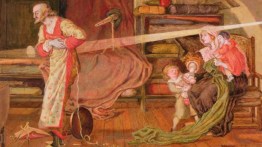
I usually throw away dust jackets but Robin Lane Fox chose his for a reason. He originally encountered Augustine of Hippo in the spring of 1966, after lunch and his first taste of brandy, in frescoes by Benozzo Gozzoli at San Gimigniano. The quattrocento painter showed a figure with an academic air, in a gown and cake-tin-shaped hat, sitting beneath a tall, smooth-barked fig tree in the garden of a villa, his head in one hand and the fingers of the other on some lines of script in an open book on his knee. Beside him stands a man gesturing towards him. This scene is the heart of an intense (if extensive) study by the ancient historian and garden master of New College of a man ‘educated to write like a marvel’.

A step too far

More from Books

Captain Robert Nairac was a Grenadier Guards officer serving in Northern Ireland when on 14 May 1977 he was abducted and murdered by the Provisional IRA. Mystery surrounding the circumstances of his abduction and the fact that his body has never been found have provoked a minor literary industry. This must be the most comprehensive account yet. Nairac was serving in South Armagh as a liaison officer between the army, the SAS and police Special Branch. He was not a member of the SAS but had vastly more freedom of action than most soldiers, able to travel where and when he chose in civilian clothes with a pistol under his left armpit.

Telling tales | 31 December 2015

More from Books

Medea says ‘hiiiiiiii’ on the first page of Mallory Ortberg’s hilarious book, which puts smartphones in the hands of literary heroes, heroines and their writers; ‘it’s Glauce right??’, Medea continues, squealing ‘when is the WEDDING/ I hope you guys have the Argonauts as groomsmen/ and they do the sword thing/ you know where they make the little roof with their swords/ and you run down underneath it’. From this startling opening, Ortberg romps through the canon. Hamlet has teenage tantrums about the sandwiches his mother brings up on a tray. Keats gushes about ‘THIS URN’ and Mrs Danvers upbraids Rebecca for bringing in ‘BAGGED tea?