Peter Robins

All things to all men | 25 February 2016

From our UK edition

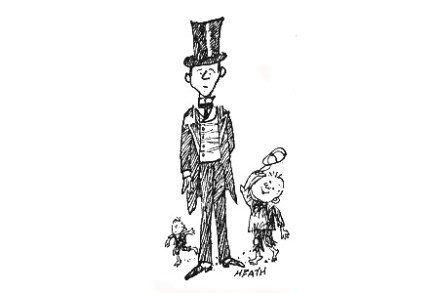
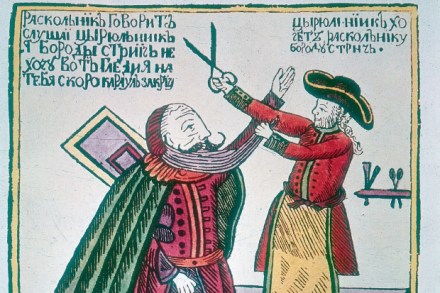
The ocean that Christopher Oldstone-Moore has set out to chart is as broad as it is shallow: what it has meant to be bearded or shaven in the western world, from before Alexander the Great until the present day. Practicalities — shaving technology and the like — are mentioned from time to time, but only so that their importance can be minimised. His thing is the semiotics of beards. And the range of signals that a beard could send out, over so many years, is bewildering. To be clean-shaven is to be a god, a priest, Louis XIV, a French conservative of the early 19th century or a 20th-century organisation man. To be bearded is to be a philosopher, a warrior, a Renaissance prince, an extreme French radical of the early 19th century or a respectable Victorian paterfamilias.
New word order | 3 December 2015

From our UK edition

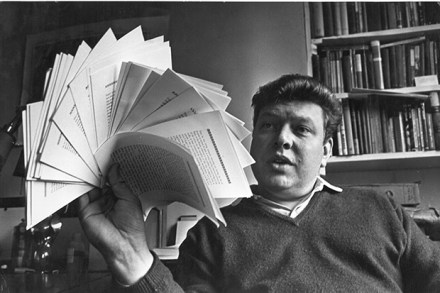
In the basement of a busy café in Hockley, Nottingham, which may not have known exactly what it was letting itself in for, a young woman is loudly dissecting an unsatisfactory lunch: ‘Deep in my heart I know I love chips.’ In another basement a few hundred yards away, lit by a single floor lamp, another woman is detailing the process of a man’s decline with tear-jerking, understated tenderness. For today only, both women are going by the name Bryan. They are among 60 volunteer performers in But I Know This City!, a unique adaptation of B.S. Johnson’s strange and sometimes wonderful 1969 novel The Unfortunates.

Sharpen your pencil

From our UK edition

‘I had had a fantasy for years about owning a dairy farm,’ says Mary Norris, as she considers her career options in the first section of this odd but charming cross between a memoir and a usage guide. ‘I liked cows: they led a placid yet productive life.’ Instead, she found a productive life — if not always as placid as she might have liked — as a copy editor on the New Yorker magazine. In Between You and Me, she presents the accumulated wisdom and winsome anecdotes of several decades of proof-reading, editorial queries and office arguments, ‘for all of you who want to feel better about your grammar’.

Where did Ed Miliband get ‘Happy Warrior’ from? (Clue: not Wordsworth)

From our UK edition

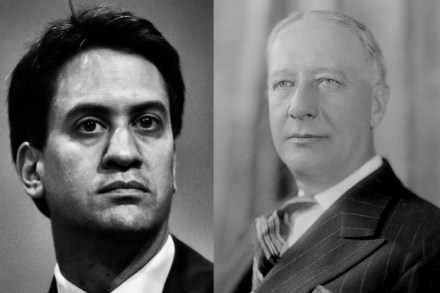
William Wordsworth, sad to say, may not after all have a significant role in the 2015 election campaign. His name was taken in vain repeatedly this weekend, after someone passed the Sun Ed Miliband's preparatory notes for the seven-way election debate. Prominent in these were the words 'Happy Warrior', which every news source gleefully traced back to Wordsworth's 1806 poem Character of the Happy Warrior: Who is the happy Warrior? Who is he That every man in arms should wish to be? —It is the generous Spirit, who, when brought Among the tasks of real life, hath wrought Upon the plan that pleased his boyish thought: Whose high endeavours are an inward light That makes the path before him always bright …and so on.

The pleasures and perils of podcast listening

From our UK edition

No phrase is better calculated to tense the neck muscles of a regular podcast listener than ‘We have something special for you now.’ Having your radio shows downloaded to your phone, music player or computer, rather than plucked out of the air the old-fashioned way, immediately grants the listener a great deal of extra freedom: you choose the feeds to which you subscribe, you decide which episodes to hear and in which order. But it also demands from the listener a measure of extra trust, or at least a ruthless readiness to skip, because what a producer puts on a feed can vary much more than in the scheduled-to-the-second world of broadcast radio.

The most expensive typing error ever?

From our UK edition

In Paul Gallico’s 1939 novel The Adventures of Hiram Holliday, the hero’s journey is set in motion by a comma. Hiram is a copy-reader on a New York morning paper, and the comma — ‘eventually known as the $500,000 comma’ — is one he inserts into a contentious article that saves his employer in a libel case. The publisher rewards him with a $1,000 bonus and a month’s paid vacation, and he sails for Europe, where he fights Nazis and rescues a princess. In real life, sadly, publicity comes not to the Hirams of the world but to the anti-Hirams. Another one had his day in the stocks last week, when the High Court gave its judgment on what may eventually be known as the £8.8 million ‘s’.

A middle-class show-off’s guide to craft beer

From our UK edition

Looking back, it seems astonish-ing that the metropolitan middle classes took so long to embrace beer snobbery. The craft beer habit combines the characteristics of three long-established sources of small-scale social distinction: the farmer’s market, the tasting, and the sweet little café one knows. Take the farmer’s-market side first. Even in the age of climate change, and after all those competitions in which some unlabelled bottle from Sussex defeats the best of Champagne, very few places in Britain can claim a local wine. But if you live in a city, or even a large town, you are by now guaranteed to have several local microbreweries.

Calorie-counting six sweets at a time

From our UK edition

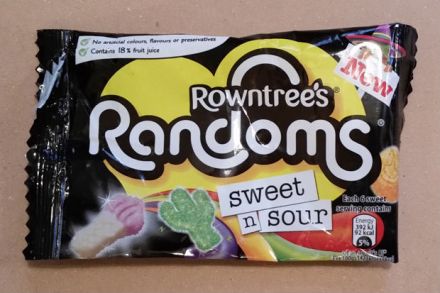
Anyone who is trying vaguely to control their weight and still eats tasty, nasty processed foods — me, for instance — gets used to playing the game of 'guess how many calories there are in the packet'. Today I bought the bag of sweets pictured above, and discovered a new difficulty level. The rules of the guessing game go like this: Manufacturers print two calorie counts on the front of a typical packet - one for 100g, in small type, and one for 'one typical serving', in bigger type. The typical serving size, as far as I can tell, is determined by how large a fraction of the packet you can consume before passing some psychologically significant number of calories.

How to tell who’s really reading Thomas Piketty

From our UK edition

No one owns a Kindle for very long without becoming obsessed by its social highlighting feature: unless you go into the preferences to turn it off, the glibbest and most epigrammatic sentences in any popular book begin to appear with dotted lines underneath them and the words '19 [or however many] people highlighted this'. Our own Mark Mason has written brilliantly and sympathetically  about the consequences. But it is now necessary to admit that he may have missed a trick. It turns out you may be able to use Kindle highlights to make a rough estimate of how many people are actually reading a book, as opposed to just buying it. The technique was described by Jordan Ellenburg in the Wall Street Journal; I saw it on the reliably interesting academic blog Crooked Timber.

Clement Attlee’s conversion

From our UK edition

In the early 1960s, The Spectator ran a series called 'John Bull's first job' – reminiscences by various prominenti about how they started out. One of the most startling, published in the 13 December 1963 issue, was by the former Labour prime minister Clement Attlee, respectfully bylined 'Lord Attlee', on his time as a young barrister. His verdict on himself was characteristically terse and frank, and gives a vivid impression of a turning point in his life: 'I got very few briefs and occasionally devilled for someone else, but made very little headway. I was at the time ridiculously shy. I was not really much interested in law and had no ambition to succeed.   'Furthermore by 1906 my interests had changed.

The pleasures of voting

From our UK edition

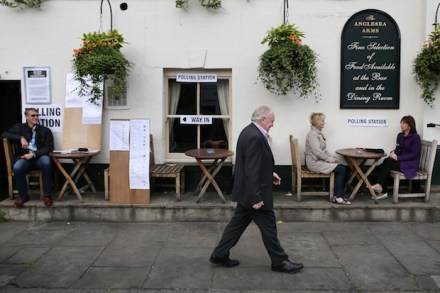
The rhetoric with which we are exhorted to vote is grand and sententious: do your civic duty; people died so that you could etc. etc. The rhetoric with which we're exhorted not to vote is grander and more pretentious still. All of it makes voting sound like something between a chore and a possibly pointless low-level military mission, a matter of long queues and secrecy and mild, pervasive paranoia. In fact, for me at least, voting is a small but reliable pleasure. The thing I miss most about my old flat in the middle of Peckham is the polling station that came with it.

Notes on … Christmas markets

From our UK edition

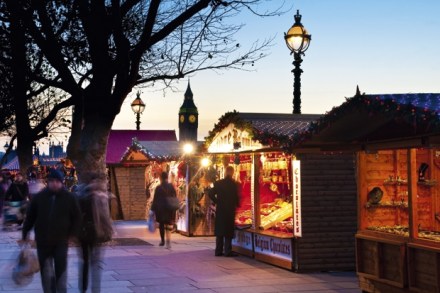
Question: what do you call several dozen pop-up shops, all freshly popped up together at the one time of year when they might actually be useful? Answer: a Christmas market. Once upon a time Christmas markets, like many English Christmas traditions, were something we borrowed from Germany but did a little less well. And if you enjoy Glühwein and sugared pretzels, there are plenty of those ones still around, often run by borrowed Germans. (I have fond memories of the one in Old Market Square, Nottingham, and there’s a nice London specimen on the South Bank by the Royal Festival Hall.) If you’re in search of imaginative gifts, however, there’s a new breed of market that may prove rather more helpful.

BFI has got carried away with its live broadcasts

From our UK edition

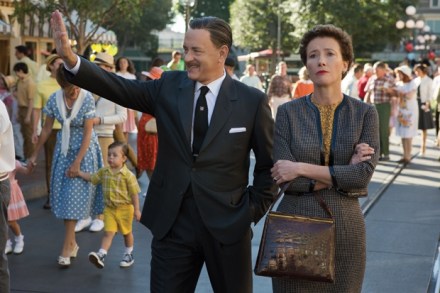
Live broadcasts into cinemas have become something of a commonplace, and a welcome one: operas, theatre performances, even radio programmes. But a live broadcast into cinemas of the audience entering another cinema is a new one on me. The idea is part of this year’s BFI London Film Festival, not as an avant-garde experiment but as a way of adding lustre to the closing-night gala: Saving Mr Banks, a sort of biopic of the film Mary Poppins with Emma Thompson as author P.L. Travers and Tom Hanks as Walt Disney (see image).

Man Booker prize shortlist 2013 – how was our tipping?

From our UK edition

One of Philip Hensher's many qualities as a critic is that he doesn't take prisoners. So his entertaining and judicious guide to the Man Booker longlist ended like this: 'The shortlist should comprise McCann, Tóibín, Mendelson, Crace, House and Catton. House’s novel is the one you ought to read, and Mendelson’s the one that everyone will read and love. The prize will go to Crace.' We now know whether the judges have followed his advice. Answer: they went halfway with him. They have Jim Crace's Harvest – so his tip for the winner is still on – Colm Tóibín's The Testament of Mary and Eleanor Catton's The Luminaries.

Foresworn: Jonathan Lethem, Kenneth Tynan, and the unpredictable progress of swearing

From our UK edition

For a few days last week, it seemed that Jonathan Lethem had achieved something unique: he had become the first person to use a particular four-letter word - the one beginning with F - in the New York Times. (Sensitive readers should be warned that I will stop using euphemisms after this sentence.) 'I’m delighted,' he told Salon's Laura Miller, who spotted the transgression in an editor's note to the paper's glossy style magazine. 'If I’d had the foresight to make it one of my life’s aspirations, I’d have done so. Instead it lands as dumb luck. My UK friend Dan Fox pointed out that it puts me with John Cleese, the first person to say "shit" on the BBC.' Almost.

On borrowing Elmore Leonard

From our UK edition

When you walk into a new branch library, or stumble across an unfamiliar secondhand bookshop, which writer do you look for? They can't be too obscure; the idea is to find something. They must be prolific; you're looking for something that's new to you. And they must be reliable: you want to be sure that your discovery will be worth your time. The classic answer is PG Wodehouse. Mine has always been Elmore Leonard. Leonard, whose death was announced today, was a consummate professional pleasure-giver. More than 40 novels over more than 50 years: first westerns, then crime, standard consistently high.

A.D. Harvey in The Spectator – a little tribute to Eric Naiman’s ‘When Dickens met Dostoevsky’

From our UK edition

Beginning with what he finds to be a rather implausible account of a meeting between Dickens and Dostoevsky, Eric Naiman's recent essay for the Times Literary Supplement spins out an astonishing story of suspect scholarship. I very much recommend reading it if you haven't already. At the centre of the mystery is an independent historian named A.D. Harvey, and a bewildering variety of other names from letters pages and scholarly journals - Stephanie Harvey, John Schellenberger, Trevor McGovern, Leo Bellingham - that may or may not belong to him. The piece raises all sorts of questions. If you work for a magazine, however, it raises one question with particular urgency: did any of these people write to us?

Historical directories: Street View for time-travellers – Spectator Blogs

From our UK edition

Fancy a walk into London's past? How about a stroll down Fleet Street in 1895? Or Oxford Street in 1899? It can be done. I can't promise pictures, but I can offer more detail on the residents of each building than Google would risk publishing today. The secret: from the mid-1830s, a man named Frederic Kelly employed agents to call at every address in London and to record the people or businesses within. Kelly was a postal official, and his agents, at least to begin with, were postmen. There was some scandal about that. Because this wasn't an official census, conducted every ten years and then locked away for a century; this was a commercial operation, conducted annually and sold in a big fat book, the Post Office London Directory.

Early edition

From our UK edition

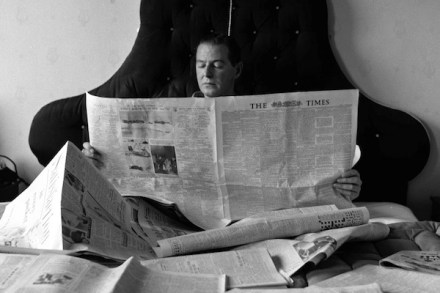
If you were to ask the editor of one of our quality newspapers whether he had thought about how to adapt to the internet, he would look at you as if you had been locked in a basement for 20 years, and then tell you that he thinks of little else. And it would be true, sort of. The Kindle, the iPad, new business models for the website: that’s where the clever ideas are. But the printed paper is also affected by the web, and in that realm the conventional wisdom is curiously out of date. You can learn more about the unique advantages of print in the age of the internet from one page of a 1950s newspaper than from a whole edition of one of today’s broadsheets. As it happens, I have a specific page in mind: page six of the Times for 2 June 1953.

Also not found in Essex: the worst lion headline ever – Spectator blogs

From our UK edition

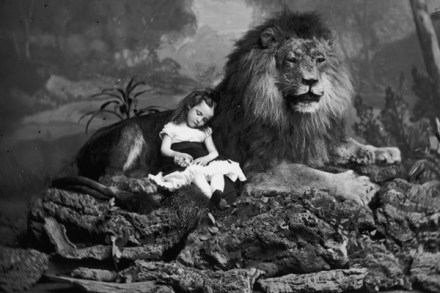
In honour of the Essex lion, which seems now to have passed into legend, here is another urban myth. This one is subeditorial. It concerns what was said to be the worst headline ever published in one of the regional newspapers where I was a trainee. Since I'm presenting it in its pure mythic form, as passed from subeditor to subeditor without contamination by fact-checking or archive searches, I am not going to name the newspaper in question. I was told the story in the early 2000s. It happened in the 1970s - recently enough that some of the paper's subs could claim to have been there (though no one ever claimed responsibility), but long enough ago for the anecdote to have been worn smooth in the telling. And it was a story about a lion.