Matthew Adams

Young Hamlet

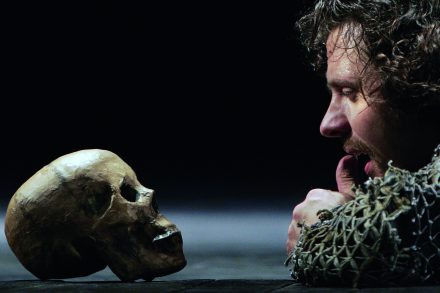
Maggie O’Farrell is much possessed by death. Her first novel, After You’d Gone (2000), chronicled the inner life of a young woman who finds herself comatose following a near-fatal car accident. And a recent piece of non-fiction, I Am, I Am, I Am (2017), gave an account of O’Farrell’s own numerous brushes with mortality. Her latest novel returns to this preoccupation with the ‘undiscovered country. from whose bourn/ No traveler returns’. In it she sets out to tell the imagined story of the life and death of Shakespeare’s only son, Hamnet, who perished at the age of 11, four years before his father wrote the play that would share his dead son’s name — in Elizabethan England, the spellings Hamnet and Hamlet were interchangeable.
hamnet

A Chaucerian tale: Pilgrims, by Matthew Kneale, reviewed

From our UK edition

Matthew Kneale is much drawn to people of the past. In his award-winning English Passengers, he captured the sensibilities of a group of 19th-century seafarers bound for Tasmania in search of the Garden of Eden by chronicling their voyage in 21 singular, vibrant voices, and by weaving into their journey a heavy thread of racist and colonial endeavour. In his latest book, he returns to these themes of voyage and discovery, adventure and prejudice with his band of 13th-century pilgrims who have assembled in England as a ‘proper party’ in order to travel to Rome — without, they hope, being ‘stabbed or robbed or cudgelled to death along the road’.

Curious shades of Browne

From our UK edition

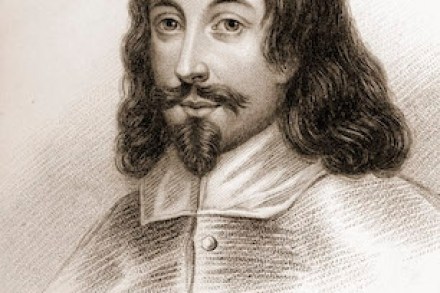
On the evening of 10 March 1804, Samuel Taylor Coleridge settled at a desk in an effort to articulate what he found so appealing about the 17th-century English polymath Sir Thomas Browne, the man he numbered among his ‘first favourites’ of English prose. He mentions Browne’s formal qualities, of course: he is ‘great and magnificent in his style and diction’; his Urne-Buriall ‘redolent of graves and sepulchres’ in every line. Yet most of his praise is reserved for Browne’s sensibility, for a man who is ‘fond of the curious, and a hunter of oddities and strangeness’; who ‘loved to contemplate and discuss his own thoughts and feelings, because he found by comparison with other men’s, that they too were curious’.

Northern noir: The Mating Habits of Stags, by Ray Robinson, reviewed

From our UK edition

It is winter in north Yorkshire. On the brink of New Year, Jake, a laconic, isolated former farmhand in his seventies, stands alone on the moors with no idea where to go or what to do. Traumatised by the death of his wife and consumed by thoughts of a child he knows cannot be his, he is a beleaguered man. He is also in flight from the law, following the murder of an elderly resident in a local care home. With nowhere to turn, he falls back on an old friend, Sheila, for sanctuary and solace.

Sadness and scandal: Hinton, by Mark Blacklock, reviewed

From our UK edition

In 1886 the British mathematician and schoolmaster Charles Howard Hinton presented himself to the police at Bow Street, London to confess to bigamy. A theorist of the fourth dimension, he had looked destined to forge a career that would align him with the most renowned academic figures of the age. Now, with a conviction, a brief imprisonment, and ‘illegitimate’ twin sons attached to his name, his reputation was ruined. Unable to find employment, he fled with his first family to Japan. Mark Blacklock’s novel tells us what happened next. We initially encounter Hinton at Yokohama harbour where, with his four sons and his first wife, Mary, he is about to board ship to America.

His son’s death may have inspired some of Shakespeare’s greatest lines, but he never recovered from the loss

From our UK edition

Maggie O’Farrell is much possessed by death. Her first novel, After You’d Gone (2000), chronicled the inner life of a young woman who finds herself comatose following a near-fatal car accident. And a recent piece of non-fiction, I Am, I Am, I Am (2017), gave an account of O’Farrell’s own numerous brushes with mortality.Her latest novel returns to this pre-occupation with the undiscovered country. In it she sets out to tell the imagined story of the life and death of Shakespeare’s only son, Hamnet, who perished at the age of 11, four years before his father wrote the play that would share his dead son’s name — in Elizabethan England, the spellings Hamnet and Hamlet were interchangeable.
Anything but a quiet life

From our UK edition

Meet Deen Datta, a nervous, practical and cautious man, born and brought up in Calcutta, who now lives in Brooklyn, where he works as a dealer in rare books. Recently and unceremoniously ditched by a woman with whom he had been in a once promising relationship, and with his sixties ‘looming in the not-too-distant-future’, he spends his days in a state of relentless desolation: humiliated, lovelorn and ‘more alone than ever’. Emotional turbulence must be dispensed with. What’s called for, Deen resolves, is ‘a quiet, understated, uneventful life’. His resolve is not signally robust. When we encounter him in the early pages of Gun Island (Amitav Ghosh’s tenth novel), he is already casting about for another romantic entanglement.

In Woolf’s clothing

From our UK edition

Martin Amis once said that the writer’s life is half ambition and half anxiety. While one part of your brain is jabbering away to the effect that, with proper application, you might be the next Jane Austen, George Eliot, Virginia Woolf, a larger part — almost always more tenacious and assertive — is busy insisting that you don’t have it in you to pick up a pen. In Fiona Melrose’s second novel, which follows the subtle and reflective Midwinter of 2016, this confluence of aspiration and unease can be felt with unusual force. The book takes place over the course of a single day — 6 December 2013 — in Johannesburg, the city in which Melrose was born and in which she still spends much of her time.

Three’s a crowd | 16 February 2017

From our UK edition

James Lasdun’s latest novel, billed as a psychological thriller, opens in Brooklyn in the summer of 2012. Charlie and his cousin Matthew are about to leave New York to spend the season in Charlie’s mountain-top residence in the Catskills, where they are to unite with Charlie’s wife, Chloe. The relationship between Charlie and Matthew is ostensibly unequal: Charlie is a wealthy former banker who feels uneasy about the morality of his sometime profession; Matthew is comparatively poor, has drifted in and out of the food industry, is haunted by the absence of his father (who disappeared when Matthew was a boy), and is creepily enraptured by Charlie’s wife.

Bewitching stuff

From our UK edition

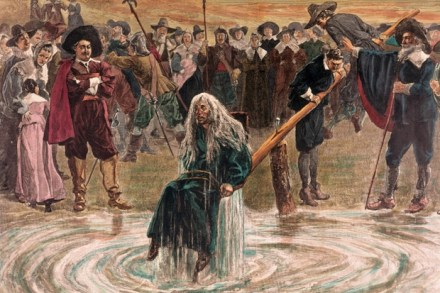
Richard Francis’s new novel covers ostensibly familiar ground. Set in and around Boston in the 1690s, it tells the story of the Salem trials, which resulted in the execution of 20 people (14 of them women), and which are sometimes regarded as a hinge event in the evolution of American secularism. As the historian George Lincoln Burr put it in 1914: ‘Salem witchcraft was the rock on which the theocracy shattered.’ This seismic moment was last visited by Francis in his 2005 biography of Samuel Sewall, the judge who presided over the trials. And it is to Sewall’s life that Francis returns in Crane Pond. He opens his story in January 1690, at which time Sewall is engaged in trying a handful of men for piracy.

The age of accusation

From our UK edition

Mark Lawson’s latest novel, set in Britain in the recent past, presents us with a nation in the grip of ‘moral fever’. Here, the ‘giving offence to anyone at all over anything’ is considered ‘a capital crime’; the ‘post-Savile sexual witch hunt’ has trained people to ‘reinterpret heartbreak as violation’; and retribution comes not just in the form of established legal proceedings, but also of the ‘modern madness of amateur arraignment’. Lawson wants to show how pernicious this culture can be. To do so, he presents us with two characters, both academics, who are out of step with it.

Two men in a boat | 25 February 2016

From our UK edition

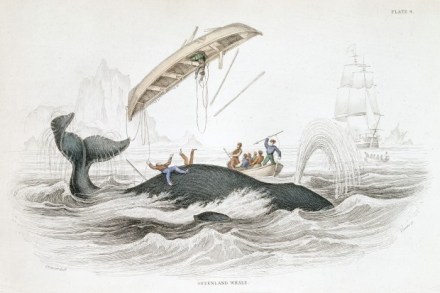
Ian McGuire’s second novel is an exercise in extremes: extremes of suffering, violence, environment, language and character. It tells the story of Henry Drax and Patrick Sumner, who we first encounter on the streets of Hull in March 1859. The two men have joined the crew of a whaling vessel, the Volunteer, about to set sail for the Arctic captained by one Arthur Brownlee. Brownlee, renowned for his misfortune at sea, has undertaken the expedition with the largely private intention of wrecking the ship in the waters of the north (motivation: insurance money). Drax is party to his secret plan. Sumner, along with most of the rest of the crew, is not. The two men, Drax and Sumner, have what look like very different sensibilities.

Larkin’s misty parks and moors — in all their lacerating beauty

From our UK edition

When Philip Larkin went up to St John’s College, Oxford, in the early 1940s, he found himself in a world of deprivation and departures. The arrival of war had ruined any hope he might have had of living the sybaritic student life mythologised by Evelyn Waugh; the majority of the younger dons had departed to serve in the forces or the ministries; the few undergraduates at the college who hadn’t already followed suit could expect to be called up soon. And most were. But Larkin was not. Deemed unfit for active service because of his poor eyesight, he remained at Oxford for the full three years of his degree, while friend after friend was carried away to combat. It was in this environment that he began to think seriously about photography.

‘If I can barely speak, then I shall surely sing’

From our UK edition

A few weeks ago, I was wandering with a friend around West London when our conversation turned to the reliable and inexhaustible topic of Morrissey. We were discussing his gestures, in particular when he augments the percussive spondee that opens ‘Sheila Take a Bow’ with two magnificent jabs of his right elbow. So back we went to my friend’s flat to study it again. In goes the DVD; bang go the drums; jab goes the elbow, and my dear friend gives a small cheer of delight, dancing his dance of Rumpelstiltskin glee. ‘Genius!,’ he declares. And he is right. It is a small moment, one of those preposterously arcane details beloved of a devotee of the Smiths, but it somehow seems to say everything about our artistic hero.

The greatest puzzle of all | 17 January 2013

From our UK edition

A few months before he passed away, responding to a question about his doubts and beliefs, Jorge Luis Borges offered a rapt and potted account of the many cultural and religious registers in which human beings have for centuries been telling themselves stories about their own deaths. He then posed the following question: ‘Where does this tendency of man come from, to try to imagine and describe something that he cannot possibly know?’ Though Borges’s words do not feature in The Undiscovered Country, the force of his question can be felt on almost every page. For what Carl Watkins offers is an account of how ‘ordinary people’, from the Middle Ages to the aftermath of the Great War, have imagined, limned, mourned and memorialised the dead.

Nabokov’s true love

From our UK edition

When Vladimir Nabokov’s unfinished book (not quite a novel, not quite a novella) The Original of Laura was posthumously released in 2009, consternation over whether it was right to publish the work at all — Nabokov had instructed that it be destroyed after his death — swiftly gave way to consternation over what the work contained. And what the work contained was yet more evidence that Nabokov’s interest in very young girls was, well, something rather more than an interest.   Here was a figure who was not so much possessed of the ability to send planets spinning (Nabokov’s definition of the real writer) as he was the ability to elicit from the literary world not very much more than a collective shake of the head.

The Hitch comes home

From our UK edition

I met up with Christopher Hitchens in the smaller hours of a warm morning in May, at Heathrow airport. (This was Christopher’s idea. ‘See you at Heathrow,’ he had told me.) From Heathrow we were to drive together to Bath, where he had a speaking engagement that evening to promote his new (and great) memoir, Hitch-22. When Christopher trudged into view he looked as I knew he would look: the Hitchens-style suit; that dolphin-like face; that dirty-grey fringe. And as he stood alone in the queasy light of Arrivals he gave the impression of a raffish (and impressively bibulous) don. Christopher? ‘Ah, my dear chap. How good of you to come. Now, I must have some tea. Do you know somewhere?’ We made our way to the on-site pub. I ordered a gin and tonic.