Louis Amis

The surrealism of war against Isis

From our UK edition

The campaign against Isis was pretty big news for most of 2016. But by the time the final showdown got under way in Mosul, it was late October. Western journalism was already departing on a bold new chapter, with great new villains much closer to home. For news consumers, one tableau of confusion and anxiety cross-dissolved into the next. Fortunately, James Verini, a reporter for the New York Times magazine, was on the ground in Mosul, still working to bring closure to the previous nightmare. But that’s no easy task when ‘you’re usually sitting in some house or truck, or squatting behind some berm, listening to the destruction’, as he confides early on in They Will Have to Die Now. ‘Experientially, war is mainly sound.


To hell in a handcart

From our UK edition

An immortal faery queen from a magical gynocratic island arrives in Los Angeles to track down her missing daughter. This is actually the entire plot of a novel entitled Only Americans Burn in Hell. Of course, as in Jarett Kobek’s previous book, I Hate the Internet, the fictional element is a foil, with most of the pages devoted to sociopolitical diatribe laced with various kinds of life writing. It’s also basically the same diatribe in both books, against a global society in which ‘everyone’s life is still dominated by the whims of the very rich and the social mores of the slightly rich’.

Will Jon Tester win in Montana?

The Democratic Party appears to see its red-state Senate races as sticky short-term exercises in triangulation and coalition-building, best conducted as far from the national spotlight as possible. It has neglected the opportunity of grouping this handful of candidates behind an assertive vision of its own future leadership in rural and small-town America. Take the Democratic senator Jon Tester, the only working farmer in the United States Senate. ‘Jon? He’s just real,’ said Martha Small, a member of the Northern Cheyenne tribe I spoke to. ‘He’s a real person. My concerns are his concerns. Public lands, Native American issues – suicide among our 18-24 youths being the number one.

jon tester montana

The writer who showed the West there was more to South America than magic realism

From our UK edition

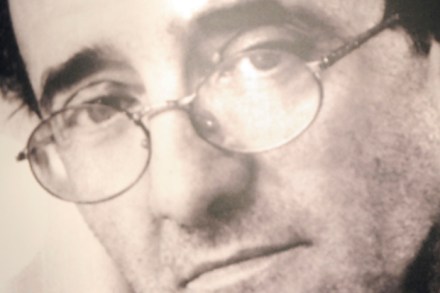
Early on in this ‘Biography in Conversations’ we’re told that the Chilean novelist Roberto Bolaño ‘continued to see himself throughout his life as a literary character, a fictional person.’ It’s a dubious claim: we might believe that about any number of Hollywood actors, pop stars, or historical monsters, but not of the author of books that, as one editor interviewed here, Ignacio Echevarría, notes, ‘would lead to the recanonisation of Latin American literature.’ But it’s easy to see why the idea tempted Mónica Maristain, an Argentinian journalist whose lighthearted interview with Bolaño for Playboy Mexico happened to be the last before his early death and posthumous mythologisation from outside.

Manic creations

From our UK edition

American mass-incarceration is the most overt object of the ‘protest’ of this novel’s subtitle. The author, Sergio De La Pava, works as a public defender in New York City, and calls on an intimate secondhand knowledge of the many different sorrows to be found in the ripples of a single criminal case. But Lost Empress is also about other kinds of losses and limitations to human freedom. One minor character, a Colombian immigrant striving on behalf of his children, endures labour that ‘felt like a prison sentence’ or an ‘abyss’, opened up by ‘the desaturation of meaning’. He is killed in an accident early on; for his son, the grief is ‘a form of imprisonment’.

Only connect | 30 November 2017

This newly translated novel by the Spanish writer Antonio Muñoz Molina is really two books, spliced together in alternating chapters. One is a deeply researched account of the squalid peregrinations of James Earl Ray, who spent two months on the run after murdering Martin Luther King, Jr., in 1968. The other is a memoir charting the gradual attainment of personal and professional happiness on the part of the author himself. The reader feels confident that both protagonists will eventually arrive at their historically appointed destinies: handcuffs at Heathrow airport for Ray; a career as a celebrated author for Muñoz Molina. But considerable suspense surrounds the question of what on earth these two stories will have to do with each other.

A unique literary phenomenon

From our UK edition

The Argentinian writer César Aira is a prodigy: at the age of 68 he has published, according to a ‘partial bibliography’ on Wikipedia, 67 novels (plus non-fiction, plays and translations into Spanish from four languages). It’s a record made only slightly more believable by the fact that the novels are mostly around 100 pages long. ‘Automatic writing’ is often mentioned in the books themselves (Aira supposedly doesn’t revise much, or at all). In 1992, for example, he published five novels — a personal best which he nonchalantly repeated in 2011. Certainly, he glides through — or over —his stories, with the light irony and digressive versatility of Ovid, poet of the Metamorphoses.

Do you know who I am?

From our UK edition

Anyone looking for a groundbreaking ethnography of the global political elite —the elusive social grouping that western electorates are currently lining up to slap in the face — is likely to be disappointed by this book. In the course of these ‘Misadventures’ it is often stated that, for example, ‘At the UN, the bullshit meter is off the charts,’ or ‘the State Department is… full of self-importance and hot air… with very little tangible output.

When in Rome…

From our UK edition

‘Now I am a mother and a married woman, but not long ago I led a life of crime,’ begins this really very short book (assisted here, in its lumpen-ness, by the ingenious placement of two or three blank pages in between each of its 16 very short chapters). But it is not something scratched together posthumously from Roberto Bolaño’s papers, or resurrected out of early-career obscurity (as valuable as those kinds of books, appearing in English in recent years, have also been). Written near the end of his life, this was the last of his books that Bolaño saw into print — it bears, in this free-standing form, however tiny, the author’s definitive executive seal.

New York primary: Bernie Sanders must regret ignoring black voters

From our UK edition

The crowd at the Bernie Sanders rally in Washington Square Park last week was white, for New York. Not very white, but white for New York – even perhaps for those particular streets, where the purple flags and drapes of NYU ripple in the breeze. This reflected Bernie’s big problem: he hasn’t excited the non-white portion (almost half, nationwide) of the Democratic electorate – particularly, he has failed to impress black voters. Whether or not he could change this was the key to last night's primary, and probably, therefore, to the Democratic race in general.

One man’s war through 45 objects

From our UK edition

Attempts by soldiers themselves to describe to us our 21st-century wars have come, so far, in a few recognisable varieties: the movie-ready tactical accounts narrated by infallible tough guys, grading into versions of what one Iraq war veteran-writer, Roy Scranton, has termed the ‘myth of the trauma hero’: those dramas of personal suffering that ignore, or even presumptively redeem, a war’s wider consequences. Certain more or less lachrymose recent Navy Seal memoirs, for example, have synthesised these two modes; more gifted introspections like Kevin Powers’s The Yellow Birds, with its callowly incontinent lyricism (‘fires on the hillsides… like a tattered quilt of fallen stars’), take the second as far as it can go.

Read our verdict on the Man Booker Prize winner: A Brief History of Seven Killings, by Marlon James

From our UK edition

A Brief History of Seven Killings Marlon James One World, pp.686, £18.99, ISBN: 9781780745879 There are many more than seven killings in this ironically titled novel — in fact very long — that starts off set in the Kingston, Jamaica, of the 1970s, amid an efflorescence of political violence. The two major parties, the right-wing Jamaica Labour Party and the left-wing People’s National Party, were pouring guns into West Kingston’s slums to create loyal voting ‘garrisons’, controlled by neighbourhood dons — because ‘who-ever win Kingston win Jamaica and whoever win West Kingston win Kingston’, as one of Marlon James’s characters explains.

A Father’s Day tragedy: what exactly happened when a car plunged into a reservoir in Australia in 2005?

From our UK edition

When Helen Garner, an award-winning Australian author, first saw the TV news images of the car being dragged out of the water, she uttered a prayer: ‘Oh Lord, let this be an accident.’ A strange, pessimistic, almost paranoid prayer. A car had swerved off a dark highway outside her hometown of Geelong, Australia, and plunged into a reservoir.Why wouldn’t that be an accident? But Garner seems to have had a premonition. This House of Grief is her account of the murder trial, and ultimate conviction, of the car’s driver, Robert Farquharson, who had escaped and swum ashore while his three young sons drowned.

A Jamaican civil war, with cameos from Bob Marley

From our UK edition

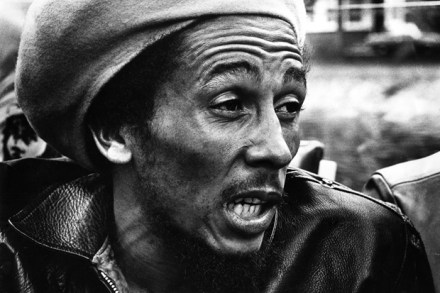
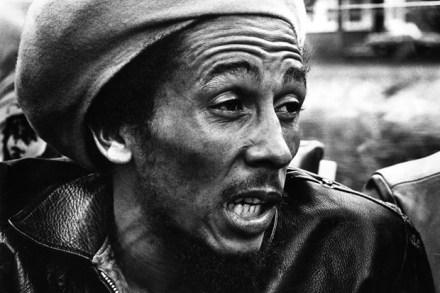
There are many more than seven killings in this ironically titled novel — in fact very long — that starts off set in the Kingston, Jamaica, of the 1970s, amid an efflorescence of political violence. The two major parties, the right-wing Jamaica Labour Party and the left-wing People’s National Party, were pouring guns into West Kingston’s slums to create loyal voting ‘garrisons’, controlled by neighbourhood dons — because ‘who-ever win Kingston win Jamaica and whoever win West Kingston win Kingston’, as one of Marlon James’s characters explains. The CIA was siding with the JLP, or, as another character puts it, ‘squatting on the city, its lumpy ass leaving the sweat print of the Cold War’.