Culture

Culture

The good, the bad and the ugly in books, exhibitions, cinema, TV, dance, music, podcasts and theatre.

Marvellous, murderous city

More from Books

When Stefan Zweig first arrived in Rio de Janeiro in 1936, he was overwhelmed not only by the city’s magnificent landscape but also by its ordered architecture and city planning. This encounter he would later describe as being ‘one of the most powerful impressions of my whole life’. In his Brazil: Land of the Future,

When the boys come home

More from Books

Matthew Green, former Financial Times and Reuters correspondent, remains unimpressed by officialdom’s response to casualties who aren’t actually bleeding: Ever since October 1914, when ‘Case One’ arrived in Myers’s care, the system for tending to the mental wellbeing of soldiers has grown up in a piecemeal and ad-hoc fashion, overshadowed by the Army’s stubborn ambivalence

A hero of our time

More from Books

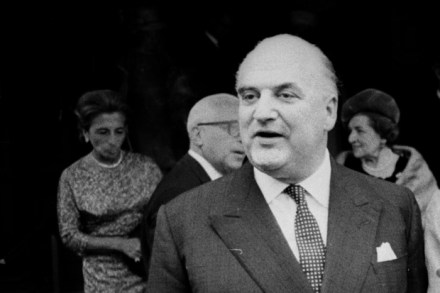
I have met Dr Kissinger, properly, only three times. First, in Cairo, in 1980, when, as a junior diplomat escorting Edward Heath, I had to secure for an almost desperate former British prime minister a meeting with the former US secretary of state, also in town. Once with Kissinger, Heath promptly subsided into a deep

For better, for worse | 17 September 2015

More from Books

Before I read this book, I wasn’t aware that I was a creationist. But Matt Ridley tells me I am, in his broad sense of someone who foolishly believes that any good can come of ‘human intentionality, design and planning’. With no little intellectual chutzpah, he offers to treat us to a ‘general theory of

Remembering P.J. Kavanagh

More from Books

‘Elms at the end of twilight are very interesting,’ wrote Gerard Manley Hopkins in his journal: ‘Against the sky they make crisp scattered pinches of soot.’ P.J. Kavanagh, who has died aged 84, plucked out this observation for one of the columns that he wrote for The Spectator between 1983 and 1996. He was right

A terrible beauty

Lead book review

Good pottery appears to be cool and silent — something vulnerable that, with luck, can outlast many human generations. A white porcelain dish seems calm and decorous; one knows that skill went into its evenness, into the exact whiteness, into its lightness. But when I began to think about pots I had no idea of

Lessons in dyslexia

Miscellaneous

The term ‘dyslexia’ has always been emotive, and it remains so. Julian Elliott and Elena Grigorenko’s book The Dyslexia Debate (2014) has done nothing to dispel the controversy. In a recent paper, ‘Why Children Fail To Read’, Sir Jim Rose, an apologist for dyslexia, said, ‘Dyslexia continues to come under fire as a myth. At

Waiting for Utopia

More from Books

The Soviet Union was a nation of bus stops. Cars were hard to come by, so a vast public transport network took up the slack. Buses not only bore workers to their labours, but also breathed life into the ‘union’ itself by taking travellers from town to taiga to desert to seaside. In remoter parts

The brutal mask of anarchy

More from Books

In September 1939 Britain went to war against Germany, ostensibly in defence of Poland. One big secret that the British government didn’t know at the time — and not until much later — was that while the Anglo-Polish alliance treaty was being negotiated during the previous months, the Poles had been actively training and arming

Humour and horror for children

More from Books

In the Californian town of San Bernadino, children are going missing; smiling faces grace a gallery of milk cartons. One September evening in 1969, Jim Sturges’s brother Jack rides under a bridge and never comes out. All that’s left is his Sportcrest bike, its front wheel spinning. Forty-five years later, 15-year-old Jim Junior lives in

The powers that were

More from Books

Ivan Maisky was the Russian ambassador in London from 1932 to 1943, and his knowledge of London, and affection for it, went back to his time there as a political exile from 1912 to 1917. Even after the multitude of books published on the subject, these diaries throw new light from a fresh angle on

Foaming with much blood

More from Books

According to Francis Bacon, the House of York was ‘a race often dipped in its own blood’. That being so, one wonders what Bacon made of Rome’s Julio-Claudian dynasty, the gore-spattered family that gave the empire its first five rulers, and the subject of Tom Holland’s latest popular history of the ancient world. Recounting one

Things left undead

More from Books

In the afterword to this sixth book, Aleksandar Hemon dedicates a word of thanks to his agent for keeping a straight face ‘when I told her I’d written a book she’d known nothing about’. I doubt she kept it for long, because one of the many ways in which The Making of Zombie Wars differs

A karaoke version of Kafka

More from Books

The Blue Guitar is John Banville’s 16th novel. Our narrator-protagonist is a painter called Oliver Orme. We are in Ireland, but it’s hard to say exactly where, or exactly when. There are telephones and cars, but the dress code is antiquated: hats, canes, pocket watches. This is ‘the new-old world that Godley’s Theorem wrought’: people

Time out of mind

More from Books

There can hardly be two novelists less alike than Sebastian Faulks and Will Self, in style and in content. Faulks writes in the grand tradition of realist fiction: a list of his themes might include the brutality and waste of war, France and, of course, romantic love. Self, meanwhile, has created dystopias in which to

The trip of a lifetime

More from Books

Aldous Huxley reported his first psychedelic experience in The Doors of Perception (1954), a bewitching little volume that soon became the Newest Testament among the happening people. One spring morning in 1953 the 58-year-old Englishman ingested four-tenths of a gram of mescalin in his Hollywood garden and waited for the visionary moment. When he opened

Hero or collaborator?

Lead book review

Steve Silberman’s stunning new book looks across history, back to Henry Cavendish, the 18th-century natural scientist who discovered hydrogen, Hugo Gernsbach, the early-20th-century inventor and pioneer of amateur ‘wireless’ radio, and countless other technically brilliant but socially awkward, eccentric non-conformists, members of the ‘neurotribe’ we now call the autism spectrum. He argues passionately for the

Battle ready

More from Books

For most of history, religion and war have been the most powerful social instincts of mankind and its chief collective activities. In the crusades, they combined to create a movement of great emotional power, which convulsed Europe in the 12th century and retained its appeal to the military classes until the end of the Middle

Quiet desperation

More from Books

Andrew Miller’s seventh novel, and the first since Pure, which won the Costa Book of the Year award, is an intensely curious affair; thick with material detail from the outset, it announces itself as a novel of closely observed and relished realism. But before too long, one begins to suspect that its specificity — much

On the way to the Forum

More from Books

It’s strange that tourists rarely visit the most famous site in Roman history. The spot in Pompey’s assembly hall where Julius Caesar was murdered on the Ides of March, 44 bc, is right in the middle of Rome, in Largo di Torre Argentina. When I was there, the tourists were only interested in the feral

Universal appeal

More from Books

As a novelist, Iain Pears doesn’t repeat himself, and he gives with a generous hand. In Arcadia, he provides a dystopian vision of the 23rd century, scholarly espionage set in Cold War Oxford, and an Arts-and-Crafts pastoral called Anterwold, which involves swords and scholars and may or may not be the product of the imagination

The history man

More from Books

History for Gore Vidal was a vehicle to be ridden in triumph, perhaps as in an out-take from Ben-Hur, which he worked on during one of his stints as a Hollywood hack, camping up the script to annoy Charlton Heston. Not only did he ride the Vehicle of History, but as its amanuensis and avatar,

Action this day

Lead book review

‘July 1st 1916 was the most interesting day of my life,’ Philip Howe recalled, with characteristic English dryness, half a century after taking part in the most catastrophic 24 hours in the history of the British army. Howe had been a lieutenant in the 10th West Yorkshires, which had the grim distinction of losing more

First-rate firsts

More from Books

It has become something of a truism among writers’ groups and in articles offering advice on how best to secure the services of an agent or publisher that the opening of a novel is everything — the ne plus ultra of the writer’s armoury. If one can knock the reader’s socks off with the first

The day of reckoning is nigh

More from Books

I think this should begin with a truth-in-journalism disclosure: I know R.W. Johnson well enough to call him Bill. Since this opens me to charges of bias, let me start by acknowledging that Professor Johnson (a former leader of the ‘Magdalen Mafia’ at Oxford and author of a witty book on the subject) is unpopular