Culture

Culture

The good, the bad and the ugly in books, exhibitions, cinema, TV, dance, music, podcasts and theatre.

The pilgrims’ ways

More from Books

Liza Picard, an chronicler of London society across the centuries, now weaves an infinity of small details into an arresting tapestry of life in 14th-century England. Her technique — pursued with the verve and spirit for which she is already justly admired — is to celebrate Chaucer’s pilgrim portraits by resituating them within an enlarged field of medieval practices and assumptions. Geoffrey Chaucer’s own trick, in enlivening the portraits with which he launches his Canterbury Tales, is the epitomising detail, the apparently random observation — in current poker language, the ‘tell’ — that gives the pilgrim’s game away.

Broken dreams | 19 October 2017

Lead book review

In the expensive realm of musical comedy, it’s impossible to predict what will take off and what will crash and burn. Oliver! ran for 2,618 performances, but no other Dickens adaptation has succeeded— and Oliver! had to overcome a reluctant producer who’d suggested it could be much improved with an ‘all-black cast’. And would Lionel Bart’s plan to cast Elizabeth Taylor as Nancy, Richard Burton as Bill Sikes, and Spike Milligan as Fagin have helped or hindered the longevity of his show?

Books Podcast: Alan Hollinghurst

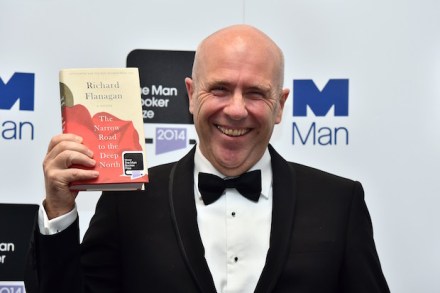
In this week's Books podcast I'm joined by Alan Hollinghurst, the Man Booker prizewinning author of The Line of Beauty and The Stranger's Child. His remarkable new novel, The Sparsholt Affair, tells a story of three generations of a family from the Second World War to the present day. We talk about agonising over prose, whether there's any such thing as literary fiction, and why nearly everyone in his books seems to be gay. You can listen here: And if you enjoyed that, do subscribe on iTunes for a new episode every Thursday.

Truth in fiction

Features

The Sunday Times’s literary editor Andrew Holgate recently tweeted the news that Robert Harris’s latest thriller had entered the bestseller list at No. 2: ‘Pipped to the post by Ken Follett.’ Harris retweeted it: ‘Well done Ken. You bastard.’ Pipped to the post only by Follett. That’s the level Harris is at now. Even before it hit the shops, his novel was being chased for film rights by two studios. Harris is one of that small and enviable group of journalists who became novelists — and made it big instantly. His first book, the alternative history story Fatherland, set in a Germany in which Hitler won the war, was bought on the basis of the idea alone and became a name-establishing bestseller.

Recent crime fiction | 12 October 2017

More from Books

Gabriel Tallent’s My Absolute Darling (4th Estate, £12.99) has the word masterpiece emblazoned on the cover, alongside quotes from several famous authors telling us how brilliant it is. It can be difficult to see through this hype and find the true novel, but let’s try. Fourteen-year-old Turtle Alveston lives with her father, Martin, a survivalist type who’s taught her how to fire a gun and use a hunting knife from an early age. He abuses his daughter, trapping her in a circle of love and pain. When Martin brings home another young girl, Turtle at last finds the courage to confront the man who has so dominated and controlled her life. This is a bloodstained book, etched with violence, with unflinching depictions of abusive sex and desperate love.

Navigating a new world

More from Books

In the 1890s, when British-owned ships carried 70 per cent of all seaborne trade, legislators worried about the proportion of foreigners who served in their crews; which could top 40 per cent. Their worry is not surprising, given the verdicts gathered from British consulates in port cities on the native seaman: ‘drunk, illiterate, weak, syphilitic, drunk, dishonest, drunk…’ In 1894, a parliamentary committee interrogated officers about manning and skills in the merchant marine. One informant was a British-naturalised master ‘with 16 years’ experience’. The MPs, who didn’t presume to ask this expert witness specifically about foreign crews, recorded his name as ‘Mr J. Conrad Korzeniowski’.

Putting the boot into Italy

More from Books

A young woman, naked and covered in blood, totters numbly down a night road. A driver spots her in his headlights and swerves. Was he the last to see Clara alive? Did she jump to her death from a parking structure, as stated in the report? Are her rich family trying to hide more than their property deals? What was the preternatural bond that tied together Clara and her brother? Why did she let various older men seduce her? Who is running a Twitter account in her name, having begun with ‘I didn’t kill myself’? These questions will keep haunting you even after you’ve turned the last page of Ferocity.

Gleaming pictures of the past

More from Books

If you think you know what to expect from an Alan Hollinghurst novel, then when it comes to The Sparsholt Affair, you’ll almost certainly be right. Once again, Hollinghurst explores British gay history by plunging us into haute bohemia over several decades of the 20th century. (A few years ago he told an interviewer that the main characters in his next book ‘will all be more or less heterosexual’: a plan that sounded pretty unlikely at the time and, seeing as this is his next book, was evidently abandoned.) Once again, he combines his broad sweep with plenty of equally impressive close-up analysis — and all in prose that manages to be both utterly sumptuous and utterly precise.

The great betrayal

More from Books

They were at sea for more than two months in desperately cramped conditions. The battered ship, barely seaworthy, pitched violently in storms where the swell rose to 100 feet. One of the beams cracked and there was talk of returning to England before it was temporarily repaired with a house jack. With spray in their faces so fierce that they could barely see, the small band of pilgrims invoked the words of Psalm 107, that God would make the storm calm and the waves still. Finally, on 11 November 1620, the Mayflower made landfall at Cape Cod, and some weeks later the settlers decided on the site of present-day Plymouth, Massachusetts, for their colony.

Highly charged territory

More from Books

I first heard of this tragicomic spy romp around Israel and Palestine when Julian Barnes sang its praises in the Guardian a few months ago, having been ‘lucky to see an advance proof’. Lucky? Well, he and Nathan Englander do share an agent, who perhaps noticed that Dinner at the Centre of the Earth just happens to take its epigraph from a novel by, er, Julian Barnes. That’s showbiz, I guess; and in any case, a spot of sly boosterism rather suits this mixed-up tale of cloaked allegiances, which never quite supplies the facts you need to grasp what’s going on — at least not during the globe-trotting, time-toggling fug of the novel’s opening half.

Princess Uppity

More from Books

Princess Margaret was everywhere on the bohemian scene of the 1960s and 1970s. She hung out with all the famous rock stars, actors and other arty types of the day. Marlon Brando was struck dumb; Picasso wanted to marry her. As Craig Brown puts it artfully: ‘Everyone seems to have met her at least once or twice, even those who did their best to avoid her.’ And so, having noticed her ubiquity in the indices of other books, the satirist has written a hugely entertaining sort-of-biography. Why would anyone do their best to avoid the princess? Well, she had a Prince Philip-ish way with the rude put down. (On being presented with a dish of Coronation Chicken: ‘This looks like sick.

How pleasant to know Mr Lear

Lead book review

Edward Lear liked to tell the story of how he was once sitting in a railway carriage with two women who were reading aloud to children from his Book of Nonsense. When a male passenger confidently asserted that ‘There is no such person as Edward Lear’, the writer was obliged to prove his own existence as ‘the painter & author’ (in that order) by showing the passengers his name on his hat, handkerchief and visiting card. In an extraordinary drawing of this event, Lear depicted himself and the two women realistically, but the doubting man is a cartoonish figure straight out of one of his limericks. Lear’s two worlds of ‘art and nonsense’ wonderfully collide in this anecdote and its illustration.

Spectator competition winners: The Little Books of Flogge, Brygge, Chugge and Slugge

The latest competition invited you to take your lead from Meik Wiking — CEO at the Happiness Research Institute and author of The Little Book of Hygge and The Little Book of Lykke — and provide an extract from your own Little Book of.... When I set this challenge, I had in mind the words of the Austrian psychiatrist and neurologist Viktor Frankl (he was speaking of American culture): ‘…again and again, one is commanded and ordered to “be happy.” But happiness cannot be pursued; it must ensue.’ You probably don’t need to tell that to Svend Brinkmann, whose book Stand Firm: Resisting the Self-Improvement Craze is a robust response to our relentless, self-help-manual-fuelled quest to create a better, happier self.

A poet in prose

More from Books

Literary reputation can be a fickle old business. Those garlanded during their lifetimes are often quickly forgotten once dead. Yet there is a daily procession of visitors to Keats’s grave in the English cemetery in Rome, where the headstone reads, ‘Here Lies One Whose Name Was Writ in Water’, so sure was the poet that the neglect he had suffered up to his death would continue ever after. By any standards, C. Day-Lewis — he disliked Cecil, the name given to him by his Church of Ireland vicar father — was among the most glittering figures on the 20th-century British literary scene, celebrated, well-connected, a bestseller and Poet Laureate for the four years up to his death in 1972.

The keys to Chinese

More from Books

The history of industry is the story of the reduction of complexity to easily manageable, replicable components or actions. But what if some things appear to remain irreducible, complex and laborious? The Chinese writing system is one such case. For early information technologists, it presented what appeared like insoluble problems. Unlike an alphabet of 26 (English) or even 84 (Siamese) letters, the huge number of Chinese ideographic characters could not easily be reduced to a typeable common corpus. (Three 20th-century compilations totalled between nearly 50,000 and over 80,000 separate characters).

Wandering Jews

Lead book review

Simon Schama is an international treasure. Whether on screen or in print, he is all energy, enthusiasm, dramatic gestures, emotional intensity. He clutches his readers in a tiger-like grip, then chews them up with relish until they are almost helpless with mirth or emotional exhaustion. If the first volume of his trilogy on the history of the Jews had something of the quality of Cecil B. DeMille’s The Ten Commandments, this second, carrying the saga forward from 1492 to 1900, is no less of a Technicolor blockbuster. Here too we have a cast of zillions with all kinds of special effects. Composed of a dazzling succession of tableaux with linking intermezzi, this book resembles a medieval pageant.

Books Podcast: The age of decadence

In this week’s Books podcast, my guest is the journalist and historian Simon Heffer, author of the magisterial new The Age of Decadence: Britain 1880-1914. The second part in his trilogy of books about the Victorian and Edwardian ages, it works to explode the myth that the pre-war years were an endless Merchant Ivory Summer's afternoon. Join us as we talk about imperial decline, savage industrial unrest and aristocratic complacency… and how one writes a history of the years before 1914 without talking about the roots of the First World War. You can listen to our conversation below and do subscribe on iTunes for a new episode every Thursday.

Tales out of school | 5 October 2017

More from Books

In 1952, the five-year-old Michael Rosen and his brother were taken on holiday along the Thames by their communist parents. The coronation was approaching, and the trip was an effort to ‘ignore it away’. All went well until they reached Wallingford, where Rosen’s father and a friend visited a pub, not knowing it had a TV set. They entered ‘at the very moment the Archbishop was putting the crown on the Queen’s head. The whole purpose of the punting holiday was ruined.’ His family’s political convictions are a recurring theme in Rosen’s account of his childhood and university years.

Who is Sylvia – what is she?

More from Books

In May 1956, three months after meeting Ted Hughes, one before they will marry, Sylvia Plath writes to her mother Aurelia about the talented man she has fallen in love with: ‘He will start some portraits of me! A combination of both witch and ghost, perhaps.’ Because of Hughes’s editing and writing of her work, a combination of witch and ghost is precisely how we know her, and he strongly encouraged the idea that the version of Plath he offered was the ‘real one’, a core of personality born in an inevitably fatal struggle narrated through the Ariel poems. Ariel, in his view, was her only true work.

Band of bickering brothers

More from Books

There aren’t many downsides to being a film critic, but one of them is being asked to name your favourite movie. You bluster and bluff, and then cop out by saying the answer changes from year to year and sometimes from day to day. Then you read David Thomson’s new book and realise that from now on you’re going to say that while you’ll probably never have a definitive favourite film, you do have a favourite film factory. Any movie that starts with kettledrums and a blare of brass, and a black and white escutcheon (in later years, gold and blue) emblazoned with the initials WB is likely to be a cut above: intelligent, liberal and seriously amusing.

Lost in the metropolis

More from Books

Richard Rogers is to architecture what Jamie Oliver is to cookery. It is not enough for either of them just to be very good at what they do and to bank the proceeds: they want so much more. They want to use their skills and money to improve society more broadly. They are old-school campaigning idealists (and Oliver trained in the kitchen at the River Café, run by Rogers’s equally committed wife, Ruthie). The downside of being a do-gooder in the UK, of course, is that people can find you irritating.

The worst things happen at sea

More from Books

This horrifying and engrossing book could scarcely be improved upon. In this age of HRHs Harry, William and Kate-led openness about our mental health, I declare an interest: diagnosed as cyclothymic, and having known more than two attacks of depression and hypomania in the past 30 years, I would have been disqualified from passage as an emigrant to New York by the 1907 US Immigration Act, which prohibited ‘All idiots, imbeciles, feeble-minded persons, epileptics, insane persons and persons who have been insane within five years previous....

Octopus beaks and snake soup

More from Books

Driving across Japan’s Shikuko island, the food and travel writer Michael Booth pulls into a filling station to find, alongside the fizzy drinks and chewing gum, ‘vacuum-packed octopus beaks’. Who could resist? Not Booth. ‘Very crunchy,’ he reports. ‘And not in a good way.’ Booth is drawn to the offbeat, and The Meaning of Rice gives us a banquet of the unfamiliar: seaweed caviar, live squid sashimi, sea-urchin tongues, snake soup, bonito guts, silkworm pupae, and more, with all their smells, flavours and textures. I recall my disconcerting first meal in a traditional ryokan: pink wafers of raw horsemeat, boiled firefly squid and dark, gleaming eel. It was delicious; Booth would have approved.

August Auguste

More from Books

In 1959 the formidable interviewer John Freeman took the Face to Face crew to the 81-year-old Augustus John’s studio. The beetling brow, piercing eye and a succession of roll-ups stuck to his lower lip offer almost a caricature of the undimmed rascality of the old devil. Like all the films in that remarkable series, it offers a glimpse into a world that we thought television was invented too late to record. But how much more extraordinary it is to watch, in a three-minute film made in 1915, another elderly artist — the 74-year-old Pierre-Auguste Renoir, crippled with arthritis, working at his easel.

That’s no lady

More from Books

Did I enjoy this novel? Yes! Nevertheless, it dismayed me. How could John Banville, whom I’ve admired so much ever since he published his first short stories, whose great novel The Sea deservedly won the Booker and whose thrillers, written under the pseudonym Benjamin Black, so hauntingly evoke 1950s Dublin, have wasted however long it took to write it? The answer, perhaps, was given some years ago, in an interview with a journalist, when he confessed: ‘The guiding light has always been Henry James.’ Probably all serious novelists in our language revere James beyond idolatry. He calls us to raise the craft of fiction to the level of art. And the trouble is that anyone with an ear soaked in the Jamesian music falls into the danger of parody.

Brotherly love | 28 September 2017

More from Books

Jane Harris’s novels often focus on the disenfranchised: a maid in The Observations, a woman reduced by spinsterhood in the Victorian era in Gillespie and I, and now, a young slave in this third novel. Disenfranchised they may be, but her protagonists don’t lack agency. The narrator of Sugar Money is Lucien, a slave who is barely in his teens and whose voice is startlingly optimistic. In Martinique in 1765, Lucien and his older brother, Emile, are tasked by their French master with returning to Grenada — where they once lived — and smuggling back 42 slaves who are living under the rule of English invaders at a hospital plantation in Fort Royal. Emile is realistic about the scale of the challenge, but Lucien views it as a great adventure.

Portraits of Pakistan

More from Books

By his own admission, Isambard Wilkinson’s memoir of his experiences in Pakistan a decade ago as a foreign correspondent has taken ‘criminally’ long to write. A litany of thanks to assorted individuals in his acknowledgements is testimony to the book’s painful gestation. Perhaps the most surprising is to his brother, Chev, ‘who is missing a vital organ on my account’. Reading Wilkinson’s narrative, which is both humorous and poig-nant, the reason is clear. From an early age he suffered kidney failure requiring a kidney transplant; but dire predictions of the disease, which might leave him bound for life to a dialysis machine, did not prevent him from being ‘internationally curious’.