Andrew Lambirth

Douglas Cooper – a complex character with a passion for Cubism

From our UK edition

The collector, art historian and critic Douglas Cooper (1911-84) relished conflict. He was a formidable man, loud in speech and dress, with forceful views and a taste for ridicule. He could also be very funny. John Richardson, Picasso’s biographer, who knew Cooper better than most, said it was as though an angel and a demon child were perpetually fighting for control of his personality. Physically robust, Cooper survived being stabbed in the stomach when he was 50 after unwisely propositioning a French soldier. He is remembered today, if at all, for his legendary collection of Cubist art, focusing on the four greats of the movement: Picasso, Braque, Léger and Gris.

The otherworldly artist who made his name at The Spectator

From our UK edition

There is something otherworldly about Rory McEwen’s paintings of plants, leaves and fruit. They are indisputably beautiful, often breathtakingly so, but they are almost eerie in their self-possession. They are like planets vibrating to the music of the spheres – quivering with arrested energy. These images are super-real (rather than surreal) but they sometimes have a surreal edge that can be disturbing. ‘I paint flowers as a way of getting as close as possible to what I perceive as the truth’ Although best known for painting these botanical watercolours on vellum, Mc-Ewen (1932–82) was a man of many parts: an extraordinarily talented figure, a poet and broadcaster, a folk and blues musician as well as, for many, the greatest botanical painter of the past hundred years.

The big picture: two books on artists and their lives

From our UK edition

Michael Peppiatt (born 1941) explains in the introduction to his new book of essays that he has from the start of his career been attracted to the lives of artists, as much as, if not more than, their work. Accordingly, he should find a ready audience with the British, who much prefer the written word to the visual image, and who always seem to spend more time on information panels than exhibits in museums, when not in a side gallery watching documentaries about the artists’ lives. In this book Peppiatt assembles a selection of biographical studies of some of the artists whose work quickens his heart. None of it is new material, but it is usefully gathered in one volume, with a very readable introduction and notes to each section.

The European influence on modern American art

From our UK edition

Charles Darwent’s Surrealists in New York is somewhat misleadingly titled, though its true content and focus are revealed in the subtitle: ‘Atelier 17 and the Birth of Abstract Expressionism.’ Perhaps that sounds obscure and even academic. If so, it gives the wrong idea, for this is a very readable and accessible account of a hitherto unexplored area of mainstream art history. Many of us suspected the importance of European influence on what is always claimed as the thoroughly American art movement of Abstract Expressionism. This book sets out the situation in detail, and makes a convincing argument for giving credit not only to a bunch of European émigrés but to an Englishman as well.

Why Tate Modern seems more like a playground than an art gallery

From our UK edition

This book covers the period 1878-2000, offering thought provoking commentary on some 120 years of experiments in being modern, and begins with the famous court case after John Ruskin accused James Whistler of ‘flinging a pot of paint in the public’s face’. But Michael Bird does not limit his perspective to a single artist or cause per chapter. Part of the deep appeal of his writing is the range of reference across literature and art, bringing in key historical events where appropriate. He does a superb job of connecting and deftly summoning context, always seeking to illuminate the larger picture. And he stitches apt quotation through the text, returning to certain sources again and again for added effect, Henry James and Walter Sickert being just two.

Alive with innovation: British art between the world wars

From our UK edition

When I mentioned the subject of this book to someone reasonably well-informed about 20th-century British art, the response was: ‘Isn’t that all portrait and still-life paintings?’ Well, perhaps if you’re looking exclusively at the contents of the Royal Academy Summer Exhibitions – and even there landscape was another popular choice. But actually the period was alive with innovation – with abstraction and surrealism infiltrating and balancing out a new kind of realism. Art was a melting pot of competing attitudes, drawing equally on native traditions and stimulating foreign influences, principally Cézanne and Picasso. In her enjoyable new book Frances Spalding identifies ‘a recurrent tension...

Like burst balloons after a party: the last paintings of John Hoyland

From our UK edition

When the internationally acclaimed abstract painter John Hoyland died in 2011 at the age of 76, a large chunk of light, laughter and danger went out of the British art world. Hoyland, who was born in Sheffield and trained at the local art college before coming to London and the Royal Academy Schools, was a force to be reckoned with. Reaching maturity in the 1960s, his career was established by a solo exhibition at the Whitechapel Gallery in 1967, after which he divided his time for several years between London and New York. In the 1970s he settled back in London and Wiltshire, but travelled widely, often to the tropics. He lived hard and channelled his experiences back into his paintings.

Ghosts in a landscape: farming life through the eyes of Thomas Hennell

From our UK edition

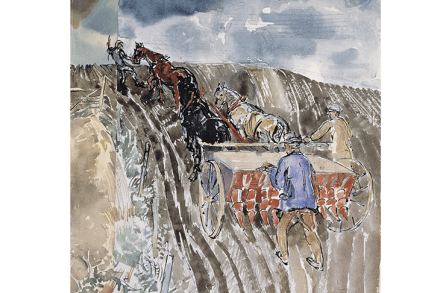
Thomas Hennell is one of that generation of painters born in 1903 whose collective achievements are such an adornment of modern British art. Among his contemporaries are Edward Bawden, Richard Eurich, John Piper, Eric Ravilious and Graham Sutherland. Some of these have been over-praised (Sutherland’s reputation was unhelpfully inflated for many years, then suffered a crash), others underrated, such as Eurich. In the current mood of reassessment, careers and deeds are being looked at again, and Hennell has benefited accordingly. Jessica Kilburn’s hefty book is very tangible evidence of this.

Rembrandt remains an enigma

From our UK edition

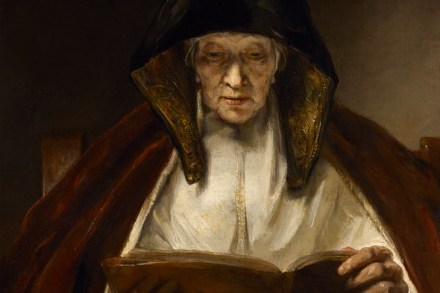
Rembrandt Harmenszoon van Rijn (1606–69) is not only the presiding genius of the Dutch golden age of painting, but one of the greatest painters of all time. His work — as painter, draughtsman and etcher — continues to fascinate and move us like none other. He has been the subject of innumerable books, from novels to weighty volumes of art-historical analysis and argument, and even some films (remember Charles Laughton as the heavily moustachioedartist?). Now we are offered a book which deals specifically with his early years, attempting to explain how the young man became an Old Master. It is heavily illustrated, with 100 colour photographs placed throughout the text, in a neat, reader-friendly format.

Art’s hard graft

From our UK edition

Once, when a number of Royal Academicians were invited to Buckingham Palace, the celebrated abstract painter John Hoyland (1934–2011) found himself enjoying a conversation with the Duke of Edinburgh about art. ‘The real problem with painting,’ said the Duke, in Hoyland’s delighted re-telling of this encounter, ‘is not so much the doing of it, as to know what to paint.’ Hoyland immediately concurred, adding that his friend Patrick Caulfield had been saying the same thing only the day before. This definition of painting’s central challenge appears again in Studio Voices, recollected by Tess Jaray as one of the first things her tutor at the Slade, Andrew Forge, told her.

Sculpture of the imagination

From our UK edition

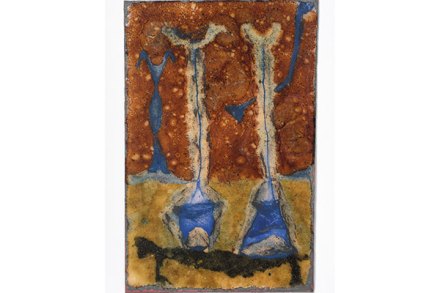
At the height of his fame in the mid-1960s, the sculptor Geoffrey Clarke (1924–2014) was buying fast cars and flying to architects’ meetings by helicopter. Within a decade the commissions for public sculptures had dwindled, and the rest of his career was something of an anticlimax. Yet he remained largely undaunted and was exceptionally prolific, making some 900 sculptures and more than 200 etchings, as well as 3,500 monotypes. He first came to public attention in 1952, as one of the artists representing Britain at the Venice Biennale.

Figures in a landscape | 10 November 2016

From our UK edition

Timothy Hyman’s remarkable new book makes the case for the relevance of figurative painting in the 20th century, a period effectively dominated by modernist abstraction. He identifies an alternative tradition of potent human-centred painting, coming out of Cubism and Expressionism and tracing its lineage through Chagall and Leger, the Italians Carlo Carra and Mario Sironi, the Germans Max Beckmann, Otto Dix and George Grosz, to Stanley Spencer, Edward Burra and William Roberts. Hyman claims many of the great independent artists for his argument — Balthus, Kirchner, Bonnard, Ensor — and registers them as resistance fighters in the war of influence and received opinion.

The artist as lover

From our UK edition

Roland Penrose (1900–84) was a Surrealist painter and object-maker, a collector and art world grandee, a writer and organiser of exhibitions, co-founder of the Institute of Contemporary Arts (ICA) and biographer of Picasso. He amply illustrates Goethe’s dictum that we are rich at the price of our contradictions. Born a wealthy Quaker, Penrose rebelled and became an artist. He was deeply involved with the revolutionary practice of Surrealism but was also an establishment figure: a substantial landowner who accepted a knighthood for services to the arts. His private life was equally divided. His first marriage, to the poet Valentine Boue, was never consummated. His second and more famous wife was the photographer Lee Miller.

From cave painting to Maggi Hambling: the best Christmas art books

From our UK edition

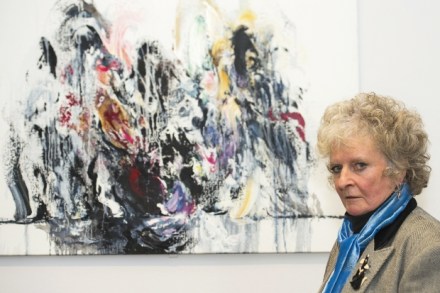
It’s been a memorably productive year for art books (I have published a couple myself), but certain volumes stand out. Chief among the illustrated monographs is Maggi Hambling: War Requiem & Aftermath by James Cahill (Unicorn Press, £30), a spirited examination of this wonderfully unpredictable artist. The book focuses on her recent paintings and sculptures, many on the theme of war. Art history meets forthright artistic statement, and it’s fascinating to see Cahill’s intellect in dialogue with Hambling’s visceral art. As she says: ‘Real art is the opposite of mere observation or reportage. It takes you to another place.

Lines of beauty | 24 September 2015

From our UK edition

David Jones (1895–1974) was a remarkable figure: artist and poet, he was a great original in both disciplines. His was an art of ‘gathering things in’ that engaged imaginatively with history and myth, with his Welsh heritage and the Christian religion. But art also comes out of conflict, and the tension between the two sides of Jones’s creative nature was the motive force that powered so much, both visual and written. Thus it can be misleading to separate his writing from his painting, for they form and express a single vision. However, Jones is presently most celebrated for his writing, particularly his first world war epic poem, In Parenthesis.

‘Paint goes on living’

From our UK edition

Maggi Hambling is 70 later this year, and a career that took off when she was appointed the first artist in residence at the National Gallery, in 1980, shows no signs of slackening in momentum. Hambling is still as uncompromising as ever, and as difficult to categorise. An artist of sustained originality and inventiveness who fits no pigeonhole and is part of no group, she is a resolutely independent figure (she enjoys the description ‘maverick’) who considers it her duty to keep questioning assumptions (her own as much as other people’s) and looking afresh at the world.

The pop artist whose transgressions went too far – for the PC art world

From our UK edition

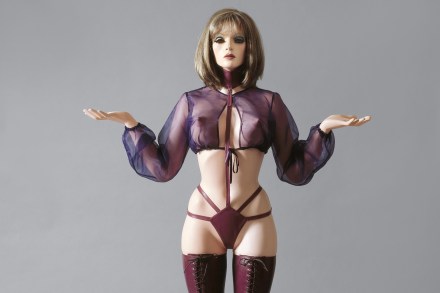
Allen Jones (born 1937) has been demonised. In 1969 he made a group of three sculptures of scantily-clad female figures. They were slightly larger than life and arranged in positions that enabled them (with the addition of a glass top or padded seat) to be turned into a table, a chair and a hat stand. These super-mannequins were highly modelled, wigged and leather-booted, and unavoidably realistic. When first exhibited in 1970 they provoked outrage among the feminist community. Jones’s 1978 retrospective of graphic art at the ICA caused a near riot even though the sculptures weren’t shown. In 1986, when the chair went on display, it had acid thrown over it by an incensed extremist.

All my doubts about Anselm Kiefer are blown away by his Royal Academy show

From our UK edition

In the Royal Academy’s courtyard are two large glass cases or vitrines containing model submarines. In one the sea has receded, dried up, and the tin fish are stranded on the cracked mud of the ocean floor. In the other, the elegantly rusted subs are mostly suspended like sharks in an aquarium: a fleet in fact, all pointed in the same direction. These works are the visitor’s first sight of the vast and glorious exhibition by Anselm Kiefer (born Germany, 1945) currently occupying the main galleries of Burlington House, and they are apparently related to his interest in the Russian poet and futurist Velimir Khlebnikov. At once we are confronted by several Kiefer themes: war, poetry (he says poems are ‘like buoys in the sea. I swim to them, from one to the next ...

Curator-driven ambitions mar this Constable show at the V&A

From our UK edition

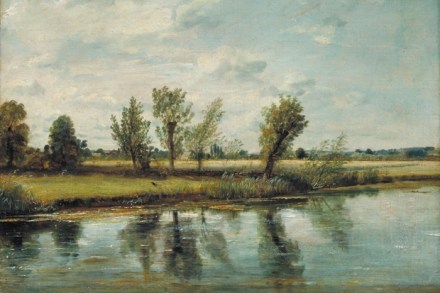
The V&A has an unparalleled collection of hundreds of works by John Constable (1776–1837), but hardly anyone seems to know about them. This is perhaps because they’re usually kept on an upper floor of the Henry Cole Wing, rather off the beaten track for most visitors. This new exhibition gives us the chance to examine the V&A’s treasures, but because it has been installed in the extensive suite of galleries usually reserved for big survey shows, such as Art Deco or Modernism, a great deal of other material is also required to fill the space. So, instead of an exhibition devoted to the genius of Constable, we have an intensely art-historical display intended to demonstrate how much he owed to the masters of the past.

Is John Hoyland the new Turner?

From our UK edition

What happens to an artist’s reputation when he dies? Traditionally, there was a period of cooling off when the reputation, established during a lifetime, lost momentum and frequently collapsed, quite often presaging a long fallow period before reassessment could take place. The Pre-Raphaelites suffered this to a very pronounced degree. Famously, Andrew Lloyd Webber tells the story of buying his first Victorian pictures for pocket money in junk shops, and just missing Lord Leighton’s ‘Flaming June’ because he didn’t have the £50 asking price. Closer to our own time, when Graham Sutherland died in 1980 his reputation plummeted terribly, having for years been overinflated by a loyal European market that bought him at increasingly high prices.