Culture

Culture

The good, the bad and the ugly in books, exhibitions, cinema, TV, dance, music, podcasts and theatre.

History will soon judge this fraught time

Columns

Good stories have a dénouement. The Act III moment when all is revealed and the narrative comes in to land is critical to most plays and novels. And so we want it to be with Brexit. Who will turn out to have been right, and who wrong? Whose bluff will have been called, and to whom will go the secret pleasures of ‘I told you so’? Real life usually disappoints, however. No single event settles matters, and both sides of a dispute tend to find ways of maintaining that they were right all along, and if outcomes confound them then this was somebody else’s fault.

If only Georges Simenon had been a bit more like Maigret

More from Books

Georges Simenon, creator of the sombre, pipe-smoking Paris detective Jules Maigret, pursued sex, fame and money relentlessly. By the time he died in 1989, he had written nearly 200 novels, more than 150 novellas, several memoirs and countless short stories. His demonic productivity and the vast sales and fortune it brought him were matched by a vaunted sexual athleticism. Simenon claimed to have slept with 10,000 women. (‘The goal of my endless quest,’ he explained, ‘was not a woman, but the woman’ — which is French for wanting lots of it, very often.) It was not love-making, but a desire for brute copulation that drove Simenon to demand sex at least once daily of his wives, secretary and housemaid-mistresses.

Taking pride in household chores really can ease depression

More from Books

There are many books about what it’s like to live with mental illness and the aftermath of child sexual abuse. Most of them, though, fall into that deeply off-putting category of ‘misery memoir’: greyscale covers and cloying titles such as ‘The Child Who Everyone Hurt’ and ‘When the Darkness Never Lifts’. You’re unlikely to want to read 300-odd pages of pain porn when healthy, let alone find yourself looking forward to the next page if, like me, you end up reading the book when you’re depressed too. I Never Said I Loved You isn’t like that. It’s funny.

Did Christianity make the western mind — or was it the other way round?

Lead book review

Nobody can accuse Tom Holland of shying away from big subjects. Dominion is nothing less than a history of Christianity with an underlying theme. The subtitle says it all. It is dedicated to the idea that Christianity has formed the western mind, not just in its moral and intellectual conventions but in their opposites, such as atheism or the natural sciences. An argument so paradoxical provokes thought, whether one agrees with it or not. This one is sustained with all the breadth, originality and erudition that we have come to associate with Holland’s writing. The technique is a sort of literary pointillism. An incident, an image, an individual, a place are presented as capturing the spirit of an epoch.

A hazardous crossing: The Man Who Saw Everything, by Deborah Levy, reviewed

More from Books

Serious readers and serious writers have a contract with each other,’ Deborah Levy once wrote. ‘We live through the same historical events, and the same Pepsi ads. Writers and readers, nervously sharing this all too fluid world, circle each other to find out what the hell is going on.’ Figuring out what the hell is going on within the fluid worlds of Levy’s fiction is not always straightforward. While other authors are increasingly drawn to autofiction, for Levy, uncertain times, it seems, call for uncertain realities. The characters in The Man Who Saw Everything shape-shift, and time bends back and then twists upon itself again.

The treasures to be found mudlarking by the Thames

More from Books

The 1950 B-film The Mudlark tells of an urchin who ekes out an unpleasant existence scavenging the slimy Thames foreshore. He finds a coin bearing the head of Queen Victoria, and creeps into Windsor Castle to see the sequestered sovereign for himself. Through sheer goodhearted pluck, he succeeds where sophisticated politicians have failed, appealing to the Queen’s feelings and reawakening her sense of public duty. Modern mudlarking is a hobby rather than a necessity, but chance finds of apparently insignificant items can convey powerful emotions. Over 23 squelchy years, Lara Maiklem has amassed a battered and stained collection of everyday things turned talismanic by time and immersion.

Spicing up local history —with a giant, a dragon and an ancient yew

More from Books

How interesting is local history? The history of my Cotswold village — recently celebrating the centenary of the Armistice with a well-researched exhibition and booklet on events in the Sibfords in the first world war — fascinates me, but I am not sure that people from other parts of Oxfordshire, let alone further afield, would agree.  This is the perennial problem of the local: unless it offers, in microcosm, insight into larger themes and topics, an element of ‘so-whatness’ colours the reader’s response. Christopher Hadley’s Hollow Places takes its inspiration from a mysterious stone let into the wall in his Hertfordshire village.

We should all share the blame for the Rohingya tragedy

More from Books

My local shop in Yangon was owned by a retired army officer and his wife and guarded by their handsome coal-black dog. When I asked the name of the hound the man smiled and said ‘Kalar’, before enquiring if I knew the meaning of the word. I did. Kalar is a racial slur, employed originally by the Burmese to describe the darker-skinned immigrants from India brought to Burma by the British as cheap labour in the colonial era. More recently, the word has come to be used as a derogatory reference to Burma’s Muslims, and especially the reviled Rohingya minority in the far western state of Rakhine.

Can’t anyone travel for fun any more?

More from Books

There was a time when travel writers would set off with a spring in their step: Coleridge knocking the bristles from a broom in his impatience to make it into a stick; Laurie Lee walking out one midsummer morning; Patrick Leigh Fermor singing as he headed down the lane. To travel was an expression of freedom and exploration; to step out of the front door the beginning of a grand  adventure. Not any more. Travel writers now come troubled and weary before they’ve even begun. A journey can no longer be a jeu d’esprit. It has to be undertaken to expiate some trauma. It is almost as if, in today’s new puritanism, it has to be painful. One thinks of the old nursery rhyme: ‘Wednesday’s child is full of woe, Thursday’s child has far to go.

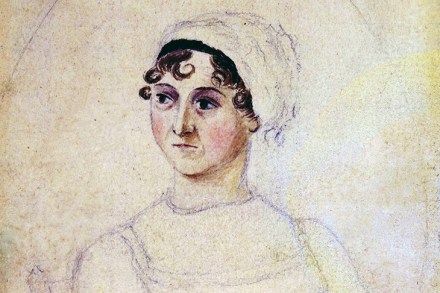
A single man of no fortune must be in want of a job: younger sons in Jane Austen’s England

More from Books

Readers of Jane Austen gain a clear idea of the task facing the daughters of gentlemen. They need to secure a husband who can enable them to keep or even improve their social and economic status. But what about their opposite numbers? How did the younger sons of gentlemen face up to the challenges and responsibilities of adulthood? Primogeniture meant that even those from a wealthy background often had to earn their living. While for girls marriage and career tended to be synonymous, for many of their brothers a profession came first, and then with luck a marriage would follow, since ‘a single man in possession of a good fortune must be in want of a wife’. How young single men went about achieving such good fortune is the question that Rory Muir sets out to answer.

From bitter loss to sweet relief: baking as therapy

More from Books

This is a gentle, lovely book. It will, I’m sure, appeal to many an aspiring cook and baker, and should be read by anyone grieving for the loss of someone they loved. It is a memoir — each chapter ending with a recipe — covering a few years, from the sudden death of a beloved mother, through the author’s bleak, enveloping sorrow to a change of career, retraining as a pastry chef, and a love affair. At first, I found it unengaging. The stages of grief — denial, anger, resentment of other people’s happiness, manic displacement activity, exhaustion, sudden outbursts of either wracking sobs or unsuitable laughter — are well-written and honest, but too familiar, too predictable. (Though what did I want? Originality in grief?

Spectator Books: Mick Herron on how to be a crap spy

The spy writer Mick Herron’s Slough House series of comic thrillers has steadily established him as perhaps the most influential author in the genre since Le Carre. The latest in the series, Joe Country, is out now — and we thought to celebrate its publication with another opportunity to listen to my conversation last year with Mick — when London Rules came out -- about Slough House, slow horses and his unkillable, curry-stained antihero Jackson Lamb. Normal post-holiday service will be resumed next week with a box-fresh podcast featuring Lemn Sissay.

Moving stories

Lead book review

Two words may pique the reader’s interest on the cover of this timely, panoramic history of Europe by the distinguished writer on human migration Peter Gatrell: ‘unsettling’ and ‘1945’. Why unsettling, and why choose the end of the second world war as a turning point? By the close of dramatic Part I (‘Violent Peacetime, Cold War Rivalry, Rebuilding Europe 1945–1956’), we have gained detailed insight into just how demographically, economically, politically and psychologically shattered — and geographically unsettled — Europeans were in the decade after 1945.

Wrong but revered

More from Books

Who was Walter Bagehot? For generations of politics students he has been the all-but-unpronounceable — Bayge-hot? Baggott? — author of the magisterial The English Constitution (1867). Since the 2008 crash he has enjoyed a vogue among central bankers for Lombard Street (1873), his brilliant anatomisation of the City of London. He remains the most revered, though not the first, editor of the Economist. The historian G.M. Young wrote in 1937 of him: We are looking for a man who was in and of his age… with sympathy to share and genius to judge… whose influence… can still impart, the most precious element in Victorian civilisation, its robust and masculine sanity. In short, ‘the greatest Victorian’.

Grit and grace

More from Books

The accepted story of mid-20th century culture in Britain belongs to the boys: the British Invasion, Beyond the Fringe and the Angry Young Men, with women relegated to bit parts. Celia Brayfield’s book is a corrective to that. She gathers seven young female writers who made their debuts in the late 1950s and early 1960s, and proposes them as a parallel clique to the Angries. Shelagh Delaney, Edna O’Brien, Lynne Reid Banks, Charlotte Bingham, Nell Dunn, Virginia Ironside and Margaret Forster never thought of themselves as a movement, but they ‘shared an inner place, the territory of girlhood,’ writes Brayfield.

Way out west | 15 August 2019

More from Books

Téa Obreht’s second novel is an expansive and ambitious subversion of Western tropes, set in fin de siècle America. We have the outlaw, the detached hero, the fainting woman. Yet our outlaw is a camel-rider, our desperado a mother defending her homestead. Everything save the relentlessly harsh Arizona desert — a ‘godforsaken place’ of ‘baking summer hillsides’ — is unreliable: memory, relationships, even the finality of death. Both our narrators are preoccupied with the dead. Lurie, ‘a small, hirsute Levantine’ and former grave-robber wanted for murder, is haunted by the ‘wants’ of dead orphans. Alive, they set him on the road to banditry, but once deceased they urge him to seek out comradeship.

An over-flogged horse

More from Books

On paper, Candace Bushnell and the medieval warlord El Cid don’t have a lot in common. The first made a fortune from persuading a generation of women that brunch with a bunch of broads was something to aspire to. The second scrapped his way through Spain, eventually establishing an independent principality. But the thing film fans recall about the latter is that immediately after his death he was propped up on his noble mount one more time to inspire his weary troops into battle. The story may be apocryphal, but while reading Is There Still Sex in the City? I couldn’t get the image out of my head. It isn’t salubrious to see a fine writer strapped to the same old over-flogged horse and sent out once again as the standard-bearer for sexy sexagenarians.

All skin and bones

More from Books

Nobody warns you when you start medical school that your career decisions have only just begun. Up to a decade of recruitment pitches follow: have you thought about becoming a haematologist? Leave the ward for the drama of theatre! If you don’t like patients, try radiology. A recent flush of popular medical non-fiction lets the public sample this professional pressure. From the heart to the gut, each author claims his or her chosen organ has been unfairly overlooked. The genre’s most recent additions are about skin and bone. Dermatologists and orthopods are often sidelined as medicine’s aestheticians and carpenters, responsible for the paintwork and scaffolding that encase and buttress the vital organs.

Spectator Books: books for the beach

Even books editors have to go on holiday sometimes, so Spectator Books is taking a hiatus for a couple of weeks. But so there's not a gaping gap in your life where the podcast used to be, we're bringing out some of our favourite episodes from our archive. This week, I am joined by the critic Alex Clark and Damian Barr — memoirist and host of the Savoy’s Literary Salon — to talk about summer reading. What do you take? What do you regret taking? Kindle, dead-tree or — 19th-century-style — cabin trunk full of books sent on ahead? Our discussion yielded a host of recommendations — from the brand new to the reliable old friends — that we hope will help you plan your own travelling library.

Dot your commas

More from Books

Now, how shall I start this review? I loved this book. I really did. (Too abrupt.) I loved this book, I really did. (Too rushed.) I loved this book: I really did. (Too planned.) I loved this book — I really did. (Too afterthoughty.) I loved this book... I really did. (Too uncertain.) I loved this book; I really did. Ah, that’s more like it. The semicolon gives me the best of both worlds. It helps me pause, and have a think, and yet pushes me forward to what I want to say next. It separates and unites simultaneously. It does a job that no other punctuation mark does. And the way to see this is to develop a sense of the contrast. What happens if we punctuate a sentence differently?

Sex and the married woman

More from Books

The epigraph of Three Women comes from Baudelaire’s ‘Windows’: ‘What one can see out in the sunlight is always less interesting than what goes on behind a windowpane.’ Inspired by Gay Talese’s 1980 reportage on the sexual revolution, Thy Neighbour’s Wife, Lisa Taddeo, a journalist and Pushcart prize-winning short story writer, peered into the windows of three ‘ordinary’ American women to illustrate their ‘erotic lives and longings’.

Bohemian bonhomie

More from Books

Mary Ann Caws, a retired professor of English and French literature at the City University of New York, published her first book in 1966. Since then she has written several dozen studies, many of them about surrealism or modernism; others with such varied subjects as the women of Bloomsbury, Robert Motherwell, Blaise Pascal, Provençal cooking, Dora Maar and the wonderfully titled The Art of Interference. Now, after a career of urbane, discreet academic distinction, Caws has decided that it is time for her to put her personality into her books as well as her name on the title page.

Glorious mud

More from Books

Francis Pryor claims he would be a rich man if every person who told him that the Fens were ‘flat and boring’ had given him five quid. Yet these million acres of water-logged land making their way from Lincolnshire through Norfolk and towards Cambridge have one quality that makes them irresistible to archaeologists like him. The peat preserves wood perfectly for thousands of years in a way that happens almost nowhere else in the country. As a result, and although few of us are aware of it, ‘some of the most imaginative and technically advanced excavations in the world are taking place in the Fens at the moment’.

Crime of passion

More from Books

No matter how exquisitely English —gobbets of blood amid the fireplace ornaments — murder annihilates meaning. Even when the motive is clear and strong, even when the progression to the fatal blow can be analysed step by step, all that is left amid the eviscerated lives of loved ones is an emptiness around the violence itself. In fiction, this void is filled: Agatha Christie understood very well about hatred, and her stories seethe with it. In 1935, as millions of her readers were devouring Murder on the Orient Express — a novel constructed around a biblical act of molten vengeance — the nation was suddenly mesmerised by a real-life shocker: a weird and savage killing in the genteel south-coast resort of Bournemouth.

The rabbit who came to stay

More from Books

Is there a more perfect children’s writer for this generation than Judith Kerr? She started with a tiger — The Tiger Who Came to Tea, published in 1968 — and ended with a bunny, The Curse of the School Rabbit, before she died three months ago. Both books are pitch-perfect little masterpieces of their kind. The tiger was fantastical but also down-to-earth. The bunny is an entirely plausible creature: a school rabbit, Snowflake, kept by Miss Bennet. She uses him to teach children English (they write about Snowflake); maths (they measure Snowflake in inches and centimetres); and art (they draw Snowflake).