Simon Heffer

It’s time to uncancel Enoch Powell

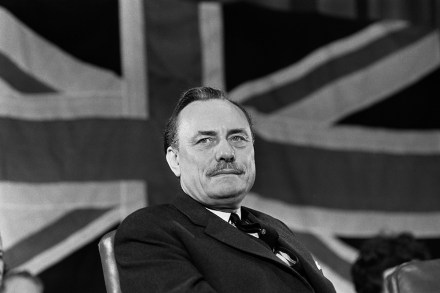
Despite a career of nearly half a century in public life, Enoch Powell is generally remembered for one utterance only: the so-called ‘Rivers of Blood’ speech he made in Birmingham on 20 April 1968, in which he voiced his opposition to the race relations legislation being taken through parliament by the then Labour government. Powell was the Conservative opposition’s defence spokesman. His speech threw the leader of his party, Edward Heath, into a profound panic, and he sacked Powell immediately, initiating decades of assertions that Powell was racially prejudiced. Powell always said – entirely honestly – that he never made a speech about race: just speeches about immigration policy and his profound disagreement with how it was usually managed.

Why the General Strike of 1926 could never succeed

From our UK edition

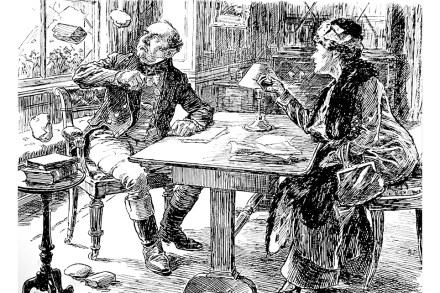
Although it may be in bad taste to have a favourite story about the General Strike of May 1926, one served up by David Torrance in his superb The Edge of Revolution is probably unbeatable. He quotes an anecdote told by Walter Citrine, the 39-year-old acting secretary of the TUC, who recalled a man ‘with rather sharp, hawk-like features’ turning up at the Congress’s London headquarters in Eccleston Square, near Victoria Station, and offering, in return for £1,000, to solve the unions’ problems.  He announced: I want 100 trusted men and if you cannot find them, I can. I will arm them, take them along to Downing Street, shoot the members of the cabinet and hold Princess Mary’s children as hostages.

James Heale, Lisa Haseldine, Simon Heffer & Lloyd Evans

From our UK edition

25 min listen

On this week’s Spectator Out Loud: James Heale reflects on Nigel Farage's leadership team; Lisa Haseldine argues that Europe is in denial over its defence; Simon Heffer looks at the extraordinary rise – and tragic fall – of the first Labour Prime Minister, Ramsay MacDonald; and finally, Lloyd Evans reviews the plays I'm Sorry, Prime Minister and American Psycho. Produced and presented by Patrick Gibbons.

James Heale, Lisa Haseldine, Simon Heffer & Lloyd Evans

The Labour party should finally grow up about Ramsay MacDonald and his conduct

From our UK edition

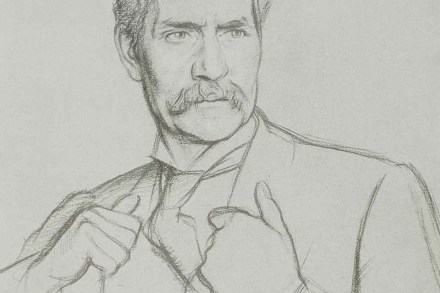
The subtitle of Walter Reid’s biography of James Ramsay MacDonald refers to ‘the extraordinary rise and tragic fall’ of Labour’s first prime minister. The rise was not especially extraordinary. In the first decades of the 20th century several people from relatively humble backgrounds – David Lloyd George and John Burns from outside MacDonald’s party, and Philip Snowden and Arthur Henderson (to give just two examples) from within it – reached the top or very near the top of British politics. But did MacDonald have a tragic fall? He was prime minister for six of the last eight years of his life; a cabinet minister to within six months of his death; and only left then because he was in his 71st year and in poor health. He turned down a peerage and the Thistle.

The last straw in Lloyd George’s cash for honours scandal

From our UK edition

Why another book about Maundy Gregory? The spiv who in the 1920s acted as middleman between David Lloyd George and potential peers, baronets and knights – the former desperate for money to fund his campaigns, the latter greedy for status, irrespective of any merit they might have – has been documented extensively. Gregory also features in histories of the period, in studies of the honours system and in countless newspaper and magazine articles. Stephen Bates’s book, which appears to have been published to mark the centenary of the 1925 Honours (Prevention of Abuses) Act, adds little to what we already know. Despite other potential candidates, Gregory is the only person ever to have been prosecuted under that act.

Patrick Kidd, Madeline Grant, Simon Heffer, Lloyd Evans & Toby Young

From our UK edition

28 min listen

On this week’s Spectator Out Loud: Patrick Kidd asks why is sport so obsessed with Goats; Madeline Grant wonders why the government doesn’t show J.D. Vance the real Britain; Simon Heffer reviews Progress: A History of Humanity’s Worst Idea; Lloyd Evans provides a round-up of Edinburgh Fringe; and, Toby Young writes in praise of Wormwood Scrubs – the common, not the prison. Produced and presented by Patrick Gibbons.

Progress is destroying the planet: the rants of a self-hating American

From our UK edition

In what may be the only joke in this book – it is hard to tell, because quite often reading it I started to believe the whole thing was an elaborate parody – Samuel Miller McDonald begins his acknowledgements by expressing his ‘infinite thanks’ to his editors (he merits six of them) on the grounds that ‘no work can be good without good editors’. Apparently some works can’t be good even with good editors – unless the author is trying to tell us that his, like his oeuvre, weren’t especially good at all. Progress is a prolix, tendentious book, radiating self-regard, arrogance and flannel.

Imperialism still overshadows our intellectual history

From our UK edition

Peter Watson begins his survey of the history of ideas in Britain with the assertion that the national mindset (which at that time was the English mindset) changed significantly after the accession of Elizabeth I. His book – a guide to the nature of British intellectual curiosity since the mid-16th century – begins there, just as England had undergone a liberation from a dominant European authority: the shaking off of the influence of the Roman Catholic church and the advent of the Reformation, and the new opportunities that offered for the people. He describes how a culture based largely on poetry and on the court of Elizabeth then redirected the prevailing intellectual forces of the time.

The real Brexit betrayal, bite-sized history & is being a bridesmaid brutal?

From our UK edition

44 min listen

The real Brexit betrayal: Starmer vs the workers‘This week Starmer fell… into the embrace of Ursula von der Leyen’ writes Michael Gove in our cover article this week. He writes that this week’s agreement with the EU perpetuates the failure to understand Brexit’s opportunities, and that Labour ‘doesn’t, or at least shouldn’t exist to make the lives of the fortunate more favourable’. Michael makes the argument that ‘the real Brexit betrayal’ is Labour’s failure to understand how Brexit can protect British jobs and industries and save our manufacturing sector. Historian of the Labour Party Dr Richard Johnson, a politics lecturer at Queen Mary University writes an accompanying piece arguing that Labour ‘needs to learn to love Brexit’.

Buckingham University’s shameful treatment of Professor Tooley

From our UK edition

One of many reasons I felt blessed, seven years ago, to be offered a professorship at the private University of Buckingham to teach modern British history was that Buckingham appeared to reject the doctrinal horrors that were, and still are, poisoning many other universities. I, blissfully, had never heard the term ‘woke’, which certainly did not apply at Buckingham. This did not mean we all went around being gratuitously offensive about minorities, women, people who change their gender or any other traditional targets of so-called white male privilege. What it did mean was that we had freedom of speech and of discourse, and proper academic liberty to advance anything we felt it important that our students, to be properly educated, should consider and reflect upon.

Does Kemi Badenoch have a plan?

From our UK edition

We are nearing the 50th anniversary, next month, of Margaret Thatcher becoming leader of the Conservative party. Only one other woman has ever become leader while the party was in opposition, and that is Kemi Badenoch. Mrs Badenoch is well aware of the strategy her legendary predecessor pursued between becoming leader of the opposition in 1975 and prime minister in 1979, and is sensibly emulating it: a willingness to include rivals in her shadow administration, and to take her time setting out policies (there is, after all, unlikely to be an election before the spring of 2028, by when anything could happen); but to precede the announcement of specific policies by statements of principle, to give a broad idea of what the Conservatives stand for.

Trump’s comeback, Labour’s rural divide, and World of Warcraft

From our UK edition

37 min listen

This week: King of the HillYou can’t ignore what could be the political comeback of the century: Donald Trump’s remarkable win in this week’s US election. The magazine this week carries analysis about why Trump won, and why the Democrats lost, from Freddy Gray, Niall Ferguson and Yascha Mounk, amongst others. To make sense of how Trump became only the second President in history to win non-consecutive terms, we’re joined by the journalist Jacqueline Sweet and Cliff Young, president of polling at Ipsos (00:58).Next: is Labour blind to rural communities? The changes to inheritance tax for farmers are one of the measures from Labour’s budget that has attracted the most attention.

Labour’s war on the countryside

From our UK edition

Two miles from where I am writing, the neighbouring village is plastered with posters demanding ‘Say No to Pylons’. The object of loathing is a 112-mile power line from Norwich to Tilbury that would carry wind-generated electricity from the North Sea to a supposed 1.5 million homes. As a concession to the famous landscape of Dedham Vale on the Essex-Suffolk border, the cabling will run underground for 3.3 miles. But because of John Constable’s inexplicable failure to paint the rest of the route, people living near the other 108.7 miles must have their vistas ruined by 160ft pylons. The developers claim it is twice as expensive to bury power lines than to hoist them on great metal towers. Objectors disagree and demand more consultations.

Edwin Lutyens: the nation’s remembrancer-in-chief

From our UK edition

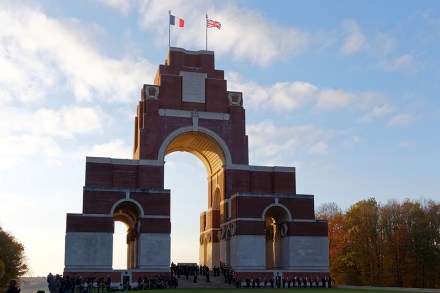
In unduly modest remarks at the opening of this immaculate book, Clive Aslet, one of our most distinguished architectural historians, notes that there have been substantial biographies of Sir Edwin Lutyens, and he does not pretend to emulate them. His achievement, however, is considerable. Aslet has spent more than 45 years in intense and enthusiastic study of ‘Ned’ and his works, and has not merely an encyclopedic knowledge of what Lutyens built, but two other invaluable qualities. First, he appreciates the sort of man Lutyens was, the influences upon him, and how he interacted with his family (especially his wife Lady Emily) and his clients.

After Queen Victoria, the flood

From our UK edition

Alwyn Turner writes early on that Little Englanders is ‘an attempt to take the temperature of the nation as it emerged from a century that had dominated the world and was beginning – whether it knew it or not – a long process of decline’. Perhaps for that reason, or perhaps because the high (and low) politics of the years from 1901 to 1914 – the Edwardian era continues for four years after the death of the eponymous sovereign, up to the lights going out all over Europe in August 1914 – have been so exhaustively covered in recent years, he tells his readers that he will draw heavily on popular literature, on the songs of the music hall and on the newspapers.

Get Rishi: the plot against the PM

From our UK edition

35 min listen

This week: For her cover piece, The Spectator’s political editor Katy Balls writes that Boris Johnson could be attempting to spearhead an insurgency against the prime minister. She joins the podcast alongside historian and author Sir Anthony Seldon, to discuss whether – in light of the Privileges Committee's findings – Boris is going to seriously up the ante when it comes to seeking revenge against his former chancellor. (01:02) Also this week: In The Spectator journalist Paul Wood writes about how Saudi Arabia is buying the world, after the Saudi Arabia Public Investment Fund negotiated a controlling interest in the main US golf tournament, the PGA. This took many people by surprise.

What do we think of when we think of Essex?

From our UK edition

Apparently much of the notoriety – or perhaps by now it has become allure – of Essex is my fault. In 1990, weeks before Mrs Thatcher was defenestrated, I wrote an article in the Sunday Telegraph called ‘Essex Man’, in circumstances that Tim Burrows describes entirely accurately in this exceptionally well-written and intelligent book. Although the Iron Lady was about to be history, the part of England that had come to exemplify her achievement and her legacy was throbbing with capitalist energy more than ever – which motivated the profile of Essex Man and his hard work and ability to seize opportunities in a society where native ability counted for more than class.

The Edwardian era was not such a golden summer

From our UK edition

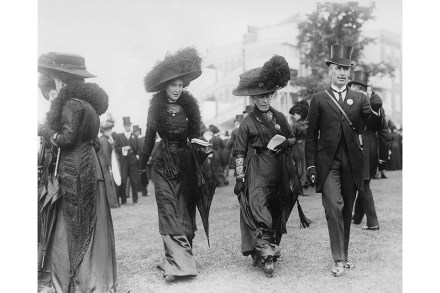
This is a rather odd book and, I regret to say (given the reading that seems to have gone into it), not a very good one. If one had little knowledge of the reign of King Edward VII, or of the jokes, anecdotes and scandals of that period, then it might serve as a useful introduction to it. To anyone familiar with the history of the opening years of the past century, however, there is little to learn from a book dependent entirely on secondary sources, old newspapers and copies of Tatler. Martin Williams is clearly fascinated by the Belle Époque and has read much about it; but in avoiding archives and serious research, he has produced nothing that other scholars of the period did not already know, which gives his otherwise articulate book a stale flavour.

The Britain Elizabeth II acceded to was barely recognisable within a decade

From our UK edition

The writer of contemporary history has a number of advantages over his colleagues who deal with the more distant past. It is not only that the profusion of media in recent decades supplies abundant first drafts of that history. There are also the twin forces of living witnesses and the author’s own memory. In this entertainingly written and generally even-handed account of roughly the first third of the reign of the late Queen – from her accession in 1952 to the arrival in Downing Street of Margaret Thatcher in 1979 – Matthew Engel deploys all of those forces.

John Major has taken a pounding (1992)

From our UK edition

It’s three decades ago this month since the UK government was forced to withdraw the pound from the European Exchange Rate Mechanism on ‘Black Wednesday’. As the pound sinks this week, we revisit Simon Heffer’s cover story from 1992 on how John Major dealt with the debacle. You can read more on our fully-digitised archive. Like many who profess affection for the works of Anthony Trollope, the Prime Minister is not thought to have strayed far beyond the well-known favourites. He is probably not familiar with a lesser work that accurately reflected his state of mind until the markets trussed him up last week — He Knew He Was Right.