Alex Burghart

The mixed legacy of Zbigniew Brzezinski, strategist of the Cold War

From our UK edition

In the autumn of 1938, within nine weeks of each other, two boys arrived in New York, fleeing the gathering storm: a 15-year-old Jewish German and a ten-year-old Catholic from Poland. Both would repay the mortal debt they owed by dedicating their lives to the Land of the Free. The older boy was, of course, Henry Kissinger, later Grand High Poobah to Richard Nixon and Gerald Ford. The younger was Zbigniew Brzezinski, Jimmy Carter’s national security adviser from 1977 to 1981 and the subject of a magisterial biography bythe Financial Times’sWashingtonsupremo, Edward Luce. From the first, Zbigniew Brzezinski (pronounced ‘ZbigNieff BreshinSki’, as Carter helpfully informed his team) sat in Kissinger’s shadow, always a step or two behind the great Bavarian.

Tony Benn, bogeyman to some, beacon of hope and light to many

From our UK edition

Among the most striking things about Tony Benn was his friendship with Enoch Powell. They entered the House together in 1950 and became regular presenters on The Week in Westminster before falling out over ‘rivers of blood’ and then making up. For Benn, politicians were ‘weathercocks’ or ‘signposts’, and Powell, like himself, was the latter. This new collection of speeches and articles assembled by his daughter in the centenary of his birth, combines both the ancient history of his left-wingery and the ongoing relevance of his signposts. Melissa Benn’s intention has been to ‘lay to rest a few myths’ about her father and the left and to inspire a new generation of radicals to maintain the barricades.

Is the future of democracy in the balance?

From our UK edition

At the turn of the century, the ineluctable march of democracy seemed assured. The Cold War extinguished and eastern Europe freed, a Whiggish history of the world continued to be written. A quarter of a century on, the great wave has broken and rolled back. Democracy is not what it was in Chile, Peru, Venezuela, Brazil, Hungary, Egypt, Turkey, Russia and Afghanistan. It has not emerged in China. The future looks less democratic than the past. Such concerns bother the big brain of the former Supreme Court judge and medieval historian Jonathan Sumption in his latest brilliant collection of essays.

The inglorious Twelfth

From our UK edition

Most people know more about the 12th century than they think they do. This is, as Richard Huscroft reminds us in his lively new history, because it is a story often told. Stephen and Matilda. Thomas Becket’s murder. Richard the Lionheart. Bad King John and Magna Carta. These are the familiar friends of Sellar and Yeatman’s ‘guide to all the history you can remember’. Huscroft sets out to find a new way in to this history through its oft-forgotten supporting cast — the men and women caught up in the political eddies caused by the great — and gives us ten tales from an assortment of princesses, adventurers, clerics and exiles. The long 12th century started in 1066 with the Battle of Hastings and ended with the death of King John in 1216.

Was Graham Brady really the awesome power-broker he imagines?

From our UK edition

The great parliamentary sketchwriter Quentin Letts, the Henry Lucy of our day, has described Sir Graham Brady (now Lord Brady) thus: ‘Were he a yacht, his galley would gleam, the decks would be scrubbed daily and there would be a large brass bell to summon matelots to morning parade. Commodore Brady runs a tight ship.’ After 27 years in the Commons, 14 of them as Chair of the 1922 Committee, the commodore has swapped his deck garb for ermine and written a kiss-and-tell about his political encounters with five Tory prime ministers. The 1922 Committee – the fabled men in grey suits who represent the parliamentary party’s backbenchers – is ‘the closest thing the Conservative party has to its own trade union’.

What the Anglo-Saxons made of 1066 and all that followed

From our UK edition

By any yardstick, the Norman Conquest was a ghastly business. Within two decades, the English aristocracy had been more than decimated, all of England’s cathedrals were being levelled and rebuilt, the north had been harried and the language of government changed. What made it worse was that it was utterly unnecessary. In 1066, Edward the Confessor had an heir of the blood royal – Edgar Ætheling, the grandson of Edmund Ironside (d. 1016). Had he not been shoved aside by bigger men, much fuss might have been avoided. In her superbly adroit new history, Eleanor Parker examines how memories of Edgar and his like – the generation that straddled the Conquest – survived, or were melded to meet the needs of the time.

The evolution of England — from ragbag kingdoms to a centralised state

From our UK edition

The title of Marc Morris’s new history makes me want to get up and dance a little jig. The modern Inquisition has been jabbing its finger at the term ‘Anglo-Saxon’, accusing it of thought crime and threatening it with the cucking stool. (At least one august history society in the US has renamed itself in response.) Bad people have no doubt used the word, but Alfred the Great (871–99) and Æthelstan (924–39), among others, identified as such, and so contemporary historians have a reasonable case for using it too. Bravo Mr Morris for getting on with it. Having spent many years at academic conferences around the world, I can reassure readers that if today’s Anglo-Saxon scholars are closet white supremacists, their cover is pretty darn deep.

Oswald of Northumbria – an Anglo-Saxon saint-king of the north for our time

From our UK edition

In Hamlet a gravedigger asks the riddle: ‘What is he that builds stronger than either the mason, the shipwright, or the carpenter?’ Answer: ‘A grave-maker: the houses that he makes last till doomsday.’And yet they do not; this character has disturbed the bones of Yorick. ‘Doomsday’ is, of course, the archaic word for ‘judgment day’ and Hamlet is soon asking questions of the dead jester’s skull. So it is in modern times with those odd folk, archaeologists — always scrabbling around in the dirt, asking questions of the dead with their grubby fingers. Medievalists are lucky that they do, because without their digging and scraping we would have to rely on a finite number of heavily thumbed sources.

The making of a monstrous metropolis

From our UK edition

When Bishop Guy of Amiens looked across the Channel in the 11th century he saw ‘teeming London [which] shines bright. A most spacious city, full of evil inhabitants, and richer than anywhere else in the kingdom’. Well, plus c’est la même chose. Even then those Mammonic associations were already old. Over 300 years earlier the Venerable Bede had called London an ‘emporium of many nations who visit it by land and sea’ — a place of markets and mints, of North Sea slave-traders and missionaries seeking martyrdom east of the Rhine, of wine and wool merchants trying to make ends meet. The hubbub and hum of the city had begun. London of the early middle ages has — like much early medieval history — often been ignored.

A heavy cross to bear

From our UK edition

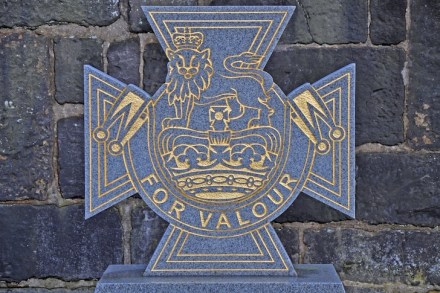
‘The Victoria Cross,’ gushed a mid-19th-century contributor to the Art Journal, ‘is thoroughly English in every particular. Given alike to the highest and the lowest in rank, but given always with a cautious and discriminating hand... the Victoria Cross is an epic poem’. Like all epic poems, the VC has its tragedies. For some that tragedy lay on the field of battle; for others, as Brian Izzard details in his often depressing new book, it lay in the life that followed. The original Royal Warrant by which Victoria instituted her eponymous medal stipulated that it was to be given only for service ‘in the presence of the enemy’ for some ‘signal act of valour, or devotion to country’.

Perfect, gentle Knight

From our UK edition

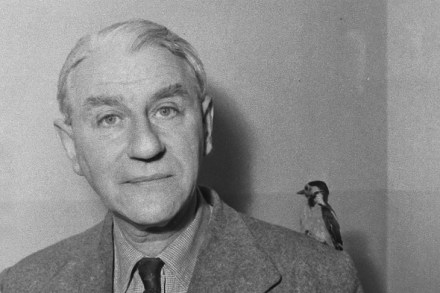
I once asked Baroness Manningham-Buller, the former head of MI5, what she did to relax. Nailing me to the wall with her no-nonsense look, she said: ‘I keep sheep.’ A similar association with the animal kingdom resounds through Henry Hemming’s excellent new life of Maxwell Knight, the famous spymaster and possible archetype for Ian Fleming’s ‘M’. Knight’s family and friends observed that, at an early age, he had a particular way with animals that allowed him to bring them under his spell. As a young man he kept a menagerie in his small London flat consisting of a bulldog, a bear and a baboon.

Atlas shrugs

From our UK edition

In his Forward Prize-winning collection of 2014, A Cartographer Tries to Map a Way to Zion, Kei Miller’s hero describes his craft thus: ‘My job is to imagine the widening/ of the unfamiliar and also/ the widening ache of it;/ to anticipate the ironic/ question: how did we find/ ourselves here.’ This bringing of the unfamiliar into scope looms large in three new collections of cartographic curiosities which tell us about places that never were, places we’ve never been and places we will never go to. Edward Brooke-Hitching’s beautifully illustrated The Phantom Atlas presents the stories of over 50 locations that unwarrantedly found their way on to maps.

An Oxford treasure trove

From our UK edition

‘What distinguishes Cambridge from Oxford,’ wrote A.A. Milne in 1939, is that nobody who has been to Cambridge feels impelled to write about it… [whereas] every Oxonian has at least one book about Oxford inside him… Oxford men will say that this shows what a much more inspiring place Oxford is, and Cambridge men will say that it shows how much less quickly Oxford men grow up. The hefty and brilliant tome that has escaped from inside Professor Brockliss is very grown up indeed and, as a history of the university, greater than all those that have come before. (The previous, eight-volume account that inspired this one has many fine qualities, but accessibility is not one of them.