John Jolliffe

The chilly charm of Clarissa Eden

From our UK edition

Clarissa Churchill – as she was known until her marriage to Sir Anthony Eden – was brought up in a now vanished privileged world of intellectual, social and political London. In the introduction to his biography, Hugo Vickers provides a valuable roll-call of names. Those still living who knew Clarissa have proved invaluable sources of information, though a note of unconscious humour sometimes slips in – as when Antonia Fraser comments: ‘I was not quite glamorous enough for her’ (‘quite’ being the operative word). Born in 1920, Clarissa began life with the ostensible advantage of being a Churchill, the niece of Winston. In fact this was not the case: her real father was Harold Baker, known as ‘Bluey’, a scholar, barrister, Liberal politician and friend of H.H.

Whole world in his hands: a fascinating story of globes and globemaking

From our UK edition

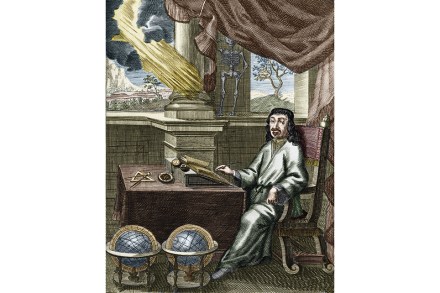
Despite the subtitle of this fascinating book, it soon turns into an account of how Peter Bellerby’s obsession eventually led to a considerable personal triumph. Unable to find a worthy 80th birthday present for his father, he set out to create a globe himself, which led him to found Bellerby & Co, ‘the only fully bespoke globemakers in the world’. His chatty style sometimes seems at odds with the meticulous professionalism of his work, which in due course led to him selling his car and his share in a house in north London. There was nothing easy about the process of establishing the company. Requirements included ‘knowledge and skill in engineering, geographical knowledge, and artistic ability in painting’, not to mention financial acumen.

Robert the Bruce — master of guerrilla warfare

From our UK edition

The story of Robert the Bruce runs from the death of Alexander III of Scotland in 1286 to Robert’s own death in 1329, aged 54. His extraordinary achievement was to fend off both rivals at home and formidable English enemies to firmly establish his country’s independence. In 1292, John Balliol had been proclaimed King of Scots, with the full support of Edward I, to whom he formally paid homage. Four years later he was forced to resign his kingdom to Edward, and his own claim to it was doomed, though it survived for a few more years.

The grand old man of nature writing continues his noble crusade

From our UK edition

Richard Mabey is the grand old man of nature writing. He has produced 40 books in his noble crusade against the enemies of natural life, so a certain amount of repetition can be forgiven in Turning the Boat for Home, since in the opinion of many (not only Prince Charles) the dangers in some places are still increasing. What Mabey doesn’t explain about his subject is how the scourge of pesticides and excessive fertilisers originally began. During the second world war the danger of starvation was second only to that posed by the Germans, as food imports were threatened by the U-boats. Fortunately for Britain, farmers became increasingly efficient, buying up land for which there had been no demand in the 1930s.

Swagger and squalor

From our UK edition

This is a monumental but inevitably selective survey of all that occurred in Britain, for better or worse, in the late 19th and early 20th centuries. It is certainly a useful summary, with much illuminating detail to carry the story forward: describing the opulence that was so much in evidence, Simon Heffer mentions the diamond which adorned Lord Randolph Churchill’s cigarette holder. He kicks off with Queen Victoria’s Jubilee of 1877, and Disraeli’s proclamation of her as Empress of India. At home, swagger and squalor went side by side, and living conditions, both rural and urban, were often appalling. The population increased from 35 million in 1881 to over 40 million by 1906.

Derring-do in the desert

From our UK edition

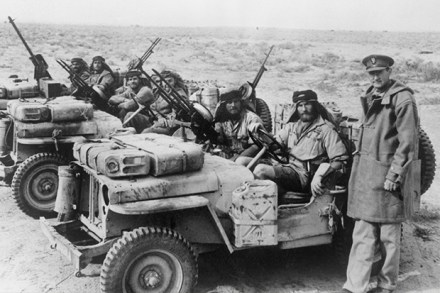
The SAS was the first unit to be granted regimental status for generations. Its chief aim was to damage the enemy from behind their lines in the North African desert. It was an entirely independent unit, not answerable to any superior command and therefore anathema to the regular army mind. Its creator, David Stirling, had a record of complete allergy to discipline or serious work either at school at Ampleforth or later, briefly, at Cambridge, where the Master of his college sent him down after showing him a list of 28 transgressions and asking him to choose the three which ‘would be the least offensive to his mother’.

Putting Germany together again

From our UK edition

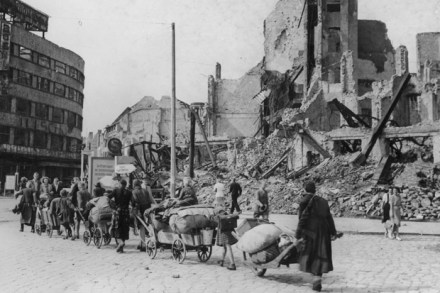
The purpose of Lara Feigel’s book is to describe the ‘political mission of reconciliation and restoration’ in the devastated cities of Germany after 1945 (though no politicians were directly involved). The chief needs of the shattered population at the time were, of course, practical: food, water, sanitation and the reconstruction of buildings. But a vital supplementary effort was made to address what was left of German culture and history after the crimes and falsifications of the Nazis. The idea was that the arts should revive an alternative, peaceful and civilised way of life in the ruins of the country.

The powers that were

From our UK edition

Ivan Maisky was the Russian ambassador in London from 1932 to 1943, and his knowledge of London, and affection for it, went back to his time there as a political exile from 1912 to 1917. Even after the multitude of books published on the subject, these diaries throw new light from a fresh angle on the lead-up to 1939, and the subsequent course of the war. Maisky’s commitment to communism was total. On 4 November 1934 he writes: Today, any man, even an enemy, can see that Lenin is an historical Mont Blanc… a radiant guiding peak in the thousand-year evolution of humanity, while Gandhi is just a cardboard mountain who shone with a dubious light for some ten years before disintegrating.

Awfully arrayed

From our UK edition

John Keegan, perhaps the greatest British military historian of recent years, felt that the most important book (because of its vast scope) that remained unwritten was a history of the Austrian army. Richard Bassett has now successfully filled the gap, and few could be better qualified to do so. During many years as the Times’s correspondent in Vienna, Rome and Warsaw, he made friends with most of the leading local experts, as his acknowledgements testify.

The very model of a modern duke

From our UK edition

Miles Fitzalan-Howard was one of eight children of a fairly distant cousin of the previous two Dukes of Norfolk, and so grew up in the give and take of life in a large family. Up until the age of about 30, he had no great expectation that he would succeed his predecessor, who was married, with four daughters, and might well have produced a son and heir. He had been a rather average schoolboy at Ampleforth, excelling neither at work nor games, but ‘always cheerful and keen’. He made life-long friends there, including several of the monks.

Mistress of the royal game

From our UK edition

Marie of Romania (1875–1938), though little known to most readers today, was probably the most dynamic and effective royal consort of the 20th century, and certainly the most glamorous. A granddaughter of both Queen Victoria and the Tsar Alexander II, she was brought up in England by her parents, the Duke and Duchess of Edinburgh. Among her many gifts were vitality, courage, leadership and a great sense of duty, as well as of humour. She was also a prolific author, of novels, short stories, poetry and children’s books. But what brought her literary fame were the first three volumes of The Story of My Life, covering the years down to 1918.

‘The only man in Paris’

From our UK edition

Eugenia de Montijo was born in a tent, during an earthquake, in Granada in 1826. Her father, a Liberal minor grandee, had joined the French army, been wounded at Trafalgar, and welcomed the replacement of the Bourbons by the mediocre Joseph Bonaparte in 1808. Threatened by the Carlist wars, in 1833 he sent his wife and two daughters to Paris, where Eugénie, as she became, grew up in the world of Stendhal and Mérimée (both of whom became close family friends), Balzac and Chopin. Her ambitious mother sent her to learn English at a school in Bristol, which she disliked so much that she and another girl tried to stow away and sail off to India. This fierce spirit of independence was never to leave her.

The third man

From our UK edition

In the 1840s and 50s, Douglas Jerrold, Dickens and Thackeray were the three best known literary men in England, and it was said at the time that it was 'hardly possible to discuss the merits of any of them without referring to the other two. What happened to Jerrold? He was born into a family of strolling players, and at the age of 11 served for a few months on a ship commanded by Jane Austen's brother. When he started writing plays, his great success began with a nautical melodrama called Black-Eyed Susan, the central figure being an innocent ordinary seaman who escaped the gallows in the nick of time. From then on, Jerrold, zealously and even brilliantly, continued to champion the cause of the poor and defenceless against arbitrary brutality and injustice.