Amanda Craig

A nasty little tale about a marriage: Look What You Made Me Do, by John Lanchester, reviewed

From our UK edition

Adultery and betrayal have always been richly rewarding subjects in fiction, as John Lanchester’s Look What You Made Me Do confirms. Set in contemporary London and featuring architect-designed homes, book groups and the Oxbridge-educated middle-class, it comes perilously close to being that dread thing, a Hampstead novel – only to subvert it. For after one chapter, Kate’s husband Jack is dead. Her long marriage and comfortable life are cast into turmoil, first by bereavement and then by a hit TV series which suggests that Jack had been having an affair with its scriptwriter, Phoebe. Interleaved with Kate’s account of agonised grieving is the TV script of Cheating.

Horror in Victorian Hampstead: Mrs Pearcey, by Lottie Moggach, reviewed

From our UK edition

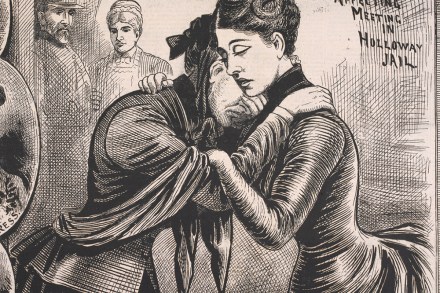
Our appetite for true crime is nothing new. The Victorians devoured it and, as Lottie Moggach’s fourth novel shows, they were as gawking and prone to erroneous judgments as any crowd on social media. Mrs Pearcey is about two women in 1890s London: sparky young Hannah Teale, engaged to a rising journalist on the Star and living with her widowed mother in Camden Square; and impoverished Mary Pearcey, who lodges in a Hampstead boarding house and is accused of the grotesque murder of a woman and her baby. It was a celebrated case in its day, coming soon after the Ripper murders, and it is now revived in Moggach’s vivid, immersive imagination. Part of the novel’s attraction lies in its setting in and around Camden Town.

A marriage of inconvenience: The Bride Stone, by Sally Gardner, reviewed

From our UK edition

It’s 1796, and an idealistic young English doctor, Duval Harlington, just released from La Force prison in revolutionary Paris, learns that his father is dead. He is now Lord Harlington, heir to a fortune and the idyllic estate of Muchmore. But in order to gain possession of his heritage – and, as importantly, foil the aspirations of his unpleasant cousin Ralph Carson – Duval must marry within two days and seven hours. No suitable partner is available, so he buys a woman in a Norfolk wife sale for ten guineas. Money, its acquisition and loss, is woven through this hugely enjoyable novel.

Who’s deceiving whom?: The Art of the Lie, by Laura Shepherd-Robinson, reviewed

From our UK edition

In this age of lies and delusions, the trickster may seem to be a peculiarly modern creature, but he or she is almost as old as literature itself. Long before phishing or fake news, stories about cunning foxes, Loki, Anansi the Spider-Man and Odysseus brought delight; Puck, Tom Ripley and Sarah Waters’s fingersmith Sue Trinder are some of their descendants. Encountering such a figure is always a joy, and in Laura Shepherd-Robinson’s latest novel, The Art of a Lie, there are two. Hannah Cole is a shopkeeper in 18th-century London, struggling to keep her confectionary business open. Her husband Jonas has been murdered, and we soon learn that not only is the celebrated author and magistrate Henry Fielding investigating Mr Cole’s death but that Hannah is, in fact, his killer.

Rather in the lurch: Small Bomb at Dimperley, by Lissa Evans, reviewed

From our UK edition

Stories and films set in stately homes continue to fascinate us, and Lissa Evans’s latest novel is likely to increase our appetite. It is 1945, and Dimperley Manor, the large, dilapidated home of the Vere-Thissetts near Aylesbury, has been almost emptied of its wartime evacuees. Only the widowed Zena Baxter (who adores Dimperley) and her small daughter remain, and the place has become a millstone round the neck of the heir, Valentine. The new baronet is expected to marry a rich bride to save his ancestral home. The nation, battered and bloodied, has just voted overwhelmingly for Labour. Is it a new dawn or a disaster? All this might seem familiar to fans of Evelyn Waugh, P.G. Wodehouse, Hannah Rothschild and Emerald Fennell’s Saltburn.

Jane Thynne pulls off a new kind of spy novel

To some, the female sex might seem ideally suited to spying, and as their exploits in the Special Operations Executive showed, women on both sides of the Atlantic could certainly match men in courage and daring during World War Two. Yet espionage fiction has tended to be a male preserve. Jane Thynne is one of the handful of women novelists to have absorbed the lessons of John le Carré: a spy novel can also be a love story, a quest for institutional integrity and an exploration of inconvenient truths. The female perspective on all this, unsurprisingly, turns out to be worth having. Set in 1938, Midnight in Vienna introduces us to poor, thirtyish, Oxford-educated Stella Fry.

Thynne

Cahokia Jazz is enormous fun

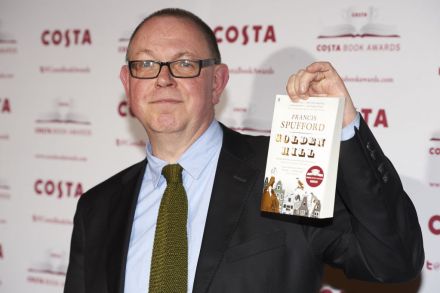
If you are a male, middle-aged, middle-class novelist, do not despair of being deemed unpublishable in our era of identity politics. On both sides of the Atlantic, the smartest chaps have turned away from the interiority of literary fiction. From Colson Whitehead and Marlon James to Mick Herron and Charles Cumming, they now write detective fiction, speculative fantasy, or a combination of the two. Francis Spufford, the award-winning author of best-selling novels such as Golden Hill, has come up with a zinger. Cahokia Jazz is set in a 1920s city in a counterfactual America. Here, the native Americans were not fatally weakened by a deadly strain of smallpox, but experienced the milder version which has just a 1 percent mortality rate and confers immunity.

spufford

The heart of Maria Callas’s genius

For much of the last century, a young woman’s concept of artistic vocation was forged by the ballet. The dream of being fêted for a body that was drilled, starved and exercised into a perfect instrument was preeminent — until Maria Callas came along. Daisy Goodwin’s fourth novel, Diva, is based on the life of Callas, whose affair with the other most famous Greek in the world, Aristotle Onassis, made her a worldwide celebrity. Her glamour and genius made her a superstar, but her life was crosshatched with tragedy. A singer’s voice, as her teacher told her, is like an amphora filled with golden coins: each time she sings, she is giving one gold coin away. Singing too much, too young, hastens destitution.

callas

The finger of suspicion: Ordinary Human Failings, by Megan Nolan, reviewed

From our UK edition

A toddler has gone missing on a council estate in London. Tom, a tabloid journalist, gets the whiff of a story that she may have been killed by another child, Lucy Green, the daughter of a young Irishwoman, Carmel. But Carmel is sunk in the misery of her first and only love affair in Waterford, which left her pregnant. She has never bonded with her daughter, seeing her as ‘a tiny, rabid, black-haired demon from hell’ and has remained obsessed by her erotic passion for her ex. Tom is equally obsessed by his need to get the big story that will make his name – even if it may not be true. Megan Nolan, one of the new wave of strikingly talented young Irish writers, has spun Ordinary Human Failings around suffering, responsibility and lies.

The quiet rise of Outback Noir

No Australian woman has ever won the Booker Prize — and yet in the stylish genre called Outback Noir, women reign supreme. Of these, the queen is Jane Harper. Her 2016 debut, The Dry (successfully filmed with Eric Bana), marked the start of a new kind of detective fiction that has gained an international following. Some of this may be due to the way we love this version of Down Under. Forget about Sydney, Melbourne or Perth. Portraits of small societies where embattled individuals get swallowed up by the big bad bush, parched or flooded, give an apocalyptic, Mad Max edge to a distinctly Australian setting. Arthur W.

harper outback noir

From Russia with love

Most readers, myself included, are sick of “fan fiction,” depending as it does on hijacking classic literature for its own feebler energies, but Vesna Goldsworthy’s Iron Curtain is a shining exception. Having successfully recast The Great Gatsby as the exploits of a Russian oligarch in twenty-first century London (Gorsky), and imagined the afterlife of Anna Karenina’s son in postwar Britain (Monsieur Ka), her latest novel has as its model something far more sinister. Its narrator, Milena Urbanska, is the daughter of “the second most powerful man” in an unnamed Soviet satellite country, and a creature of privilege, “the only fully convertible global currency,” as she remarks.

iron curtain

Forever young

Long before publishing dreamt up the category of Young Adult fiction to try to persuade adult children and childish adults to keep reading, there were novels that described what it felt like to be young. Catcher in the Rye was one such, as were The Bell Jar and Bonjour Tristesse; these books coincided with the invention of the teenager circa 1950 and have enjoyed lasting critical and commercial success. Though British writers reign supreme in the field of children’s literature, American authors have always written outstandingly about teenagers. But the changeover from fiction describing the condition of being young to the YA genre, with its accounts of first love, high-school hell and so on, has not necessarily served every reader well.

friends

The invisible hand

Few of us like cleaning our own homes, so it’s scarcely surprising that the cleaner, or maid, occupies a particular place in our imagination. To those who resent the imposition of domestic hygiene as an intrusion on privacy, cleaners can be sinister and even vengeful presences — as famously depicted in Jean Genet’s play The Maids. For those who feel guilt over the structural inequalities of capitalism, Kathryn Stockett’s The Help added an extra dose of racism and feminism. But to those who see only the relief of having their dirt lifted by someone else, the cleaner is a bringer of joy who deserves everything from a Dior dress (Paul Gallico’s Mrs 'Arris Goes to Paris) to a rich husband (the J.Lo vehicle Maid in Manhattan).

maid

Lost to addiction: Loved and Missed, by Susie Boyt, reviewed

From our UK edition

Ruth, the narrator of Susie Boyt’s seventh novel, is both the child of a single mother and a single mother herself. Intelligent, quirky and despairingly fastidious, she has tried to bring up her adored daughter in loving orderliness, but the results have been disastrous. By 15, the beautiful, gifted Eleanor is a heroin addict, living in filth and chaos. Before long, she is pregnant with Lily; and Ruth, ‘stodgy with intentions and conventions’, decides to make off with Lily in order to save her baby granddaughter’s life. Or perhaps it is Lily who saves Ruth.

The burden of guilt: The Living Sea of Waking Dreams, by Richard Flanagan, reviewed

From our UK edition

Thanks to the Booker Prize, Richard Flanagan is probably the only Tasmanian novelist British readers are likely to have heard of. His reworking of the life of the Australian hero ‘Weary’ Dunlop, a doctor who became a prisoner of war on the notorious Burma Death Railway, in The Narrow Road to the Deep North was a winner of a traditional kind of literary storyteller that has recently become extinct. It seems appropriate that his eighth novel, The Living Sea of Waking Dreams, is also about extinction, both personal and environmental. Tasmania is burning, and as its cornucopia of flora and fauna is wiped out, three children gather to decide whether to let their exhausted 86-year-old mother Francie die, or demand intervention by modern medicine.

Bombs over London: V for Victory, by Lissa Evans, reviewed

From our UK edition

Lissa Evans has been single-handedly rescuing the Hampstead novel from its reputation of being preoccupied by pretension and middle-class morality. Her original black comedy (Crooked Heart) concerned Vee, a middle-aged suburban scammer, and the prodigiously bright but orphaned Noel, who join forces in north London’s urban village during the second world war. Evans then went back in time to tell the story of Noel’s Suffragist godmother Mattie founding a disastrous girls’ club on Hampstead Heath during the 1930s (Old Baggage). In V for Victory, the story moves forward again. It’s 1944, and Hitler’s rockets are falling all over London. Mattie is dead.

A novel of terror and hope on the Mexican-American border

From our UK edition

Lydia and Luca are hiding in the shower room of their home while 16 members of her family are murdered. Lydia’s husband, a journalist, wrote about the latest drugs cartel in Acapulco and now, to stay alive, the mother and small son must disappear to America. Instead of the middle-class life Lydia has enjoyed as a bookshop owner, she and Luca must become one of those nameless, desperate migrants against whom President Trump vows to build his wall. This portrait of the deepening societal breakdown in Mexico gives a human face to an acute contemporary crisis So begins Jeanine Cummins’s third novel, and if you think this is another Roma-style examination of the lives of poor Mexicans, think again.

As Lyra grows up, Philip Pullman’s materials grow darker

From our UK edition

Two years after Philip Pullman published La Belle Sauvage, the prequel to His Dark Materials trilogy, we have its long-awaited sequel, The Secret Commonwealth. Set ten years after the end of The Amber Spyglass, it follows the further adventures of Lyra, now a 21-year-old student at St Sophia’s College. Oxford. No longer a child, orphaned and (as she is about to discover) penniless, she has bigger problems even than her yearning for Will. She is estranged from her daemon, Pantalaimon (or Pan). Part of Pullman’s striking originality lies in his conception of a world like and unlike our own, in which human souls are visible as animals. Everybody must stay close to theirs, but Lyra has learnt to separate from Pan — something that makes her a terrifying freak.

An agonising vigil

From our UK edition

Memoirs about giving birth, a subject once shrouded in mystery, have become so popular that another may seem otiose. We are all produced in variations of anxiety, pain and delight: what is the point of labouring labour? Two years ago, the novelist Francesca Segal gave birth to twins ten weeks prematurely. Her account of their struggle to survive in the neo-natal units of two London hospitals could be mawkish, banal and of no interest to anyone save those who have experienced a similar ordeal. That it is, in fact, as gripping as a thriller and as moving as a love story is testament to her exquisite writing and deep humanity.

James Ellroy’s latest attempt to unseat the Great American Novel

From our UK edition

Aficionados of detective fiction have long known that the differences between the soft- and hard-boiled school are so profound that, as P.D. James observed, it seems stretching a definition to place both groups in the same category. Over here we have, or used to have, a comforting story concerned with restoring order to the mythical village of Mayhem Parva; across the Atlantic, the detective novel is expected to tackle the rotten, usually urban, underbelly of the American Dream. Violent, cynical and disquieting, it has also become a significant challenge to the more refined attempts at the Great American Novel. James Ellroy’s detectives are not only inured to confronting vice but are often the perpetrators of it too.