Francesca Steele

A meditation on everyday life: Early Morning Riser, by Katherine Heiny, reviewed

From our UK edition

There were many moments in Early Morning Riser that made me laugh out loud in recognition. An episode where the main character, Jane, coaxes a wailing child to the car with marshmallows and milk after ‘a temper tantrum so severe that it might have qualified as a psychotic break’ so precisely pinpoints the absurdity of life with small children that it is hard to know whether to laugh or wince. ‘Patrice took a sip and yelled, Kalt! Apparently she had returned from psychosis speaking German.

Wistful thinking: Mr Wilder & Me, by Jonathan Coe, reviewed

From our UK edition

Mr Wilder & Me is not in any way a state- of-the-nation novel — and thank goodness. Brilliant as Jonathan Coe’s last work, Middle England, was, I’m not sure I could stomach a fictional barometer of pandemic Britain. Coe’s new book is instead a comfortingly nostalgic coming-of-age novel, or rather, a coming-of-old-age novel, probing the twilight years of a Hollywood great. Billy Wilder is predominantly famous for his work in the Golden Age of Hollywood, when post-war studios had plenty of cash to splash on the Oscar-winning comedies and noirs Wilder wrote and directed, including Sunset Boulevard, Some Like it Hot and The Apartment.

Primal longing: Blue Ticket, by Sophie Macintosh, reviewed

From our UK edition

Sophie Macintosh’s Blue Ticket is not classic feminist dystopia. Yes, it is concerned with legislated fertility, a world where women’s bodies are monitored like science projects by condescending medics.But the horror here is not impregnation but unwanted childlessness. Blue tickets, dispensed (randomly? It’s not clear) by a machine on a girl’s first bleed, decree a childless future; white tickets the opposite. Victims are not raped handmaids but sexually liberated working women, desperate to conceive and forbidden from doing so. Our narrator is Calla, a blue ticket, who grows increasingly dissatisfied with her lot, nurturing a ‘new and dark feeling’ inside herself.

The cure becomes the problem: The Seduction, by Joanna Briscoe, reviewed

From our UK edition

Beth, the protagonist of Joanna Briscoe’s The Seduction, reminded me of Clare in Tessa Hadley’s debut, Accidents in the Home. Both are domesticated mavericks with a reluctantly wandering eye: frustrated mothers looking for lovers to mirror their dormant wildness back at them. The fact that Briscoe’s work feels familiar — sharing the same bohemian preoccupations with adultery, motherhood and quirky interiors as other purveyors of the unfairly maligned Hampstead novel — is no bad thing. The author has a fine eye for aesthetic detail and an even finer one for parental relationships. The star of the show is not actually Beth’s love life, but her heart-breaking attempts to revive her relationship with her daughter.

What is driving the rise in extreme cinema?

From our UK edition

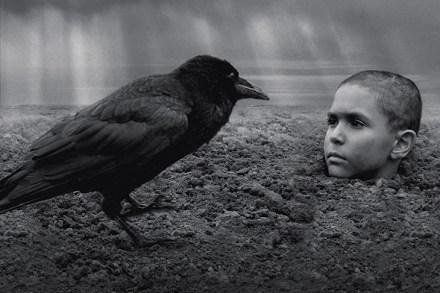
Why do we watch films like The Painted Bird? The movie tracks a young Jewish boy, an unclaimed innocent, wandering Eastern Europe as the second world war rages around him, drifting from village to village, encountering rape, paedophilia, mass murder and one spectacularly grisly scene where a miller gouges out his love rival’s eyes with a spoon — before tossing them to the cat. In the current climate you might want something more restorative than a film reminding us of forgotten civilian monstrosities. But increasing numbers are lapping up this kind of cinematic experience. This isn’t just cinema for people sick of Marvel. This is extreme cinema, endurance viewing for audiences keen on experiences that are viscerally unsettling.

Jan Morris, at 93, meditates on what it means to be old

From our UK edition

‘I’m getting rather tired of me,’ begins Jan Morris in one of the diary entries in Thinking Again, almost certainly the writer and journalist’s last book. She is only half kidding. This collection of essays and whimsical daily musings — a sequel to 2018’s In My Mind’s Eye — is both a deep dive into the charming and erudite mind of Morris, now 93, and also a moving meditation on just what it means to be old. Morris was launched to fame in 1953 when, as James Morris, she was the first journalist to report on Edmund Hillary and Tenzing Norgay reaching the summit of Mount Everest. She experienced a different type of fame altogether when in 1972 she had gender reassignment surgery in Morocco.

Two wide-ranging collections of short stories by and about women

From our UK edition

Zadie Smith’s first collection of short stories shows that she can pack all the astute social commentary of her novels just as deftly into the short form. A case in point is ‘Sentimental Education’, a comic homage to Flaubert featuring a decidedly unsentimental protagonist, Monica. Middle-aged (‘Next stop menopause and no more denim’) and feeling hypocritical as she chides her children for bad behaviour, Monica remembers the way she once objectified men as if it were her degree subject. Of her university boyfriend, Darryl, she recalls: ‘Adorable cock, nothing too dramatic, suitable for many situations.’ They worked hard on writing their theses, even harder on finding her G-spot. Later she callously dumped and betrayed him.

Way out west | 15 August 2019

From our UK edition

Téa Obreht’s second novel is an expansive and ambitious subversion of Western tropes, set in fin de siècle America. We have the outlaw, the detached hero, the fainting woman. Yet our outlaw is a camel-rider, our desperado a mother defending her homestead. Everything save the relentlessly harsh Arizona desert — a ‘godforsaken place’ of ‘baking summer hillsides’ — is unreliable: memory, relationships, even the finality of death. Both our narrators are preoccupied with the dead. Lurie, ‘a small, hirsute Levantine’ and former grave-robber wanted for murder, is haunted by the ‘wants’ of dead orphans. Alive, they set him on the road to banditry, but once deceased they urge him to seek out comradeship.

The death of cosy Christie

From our UK edition

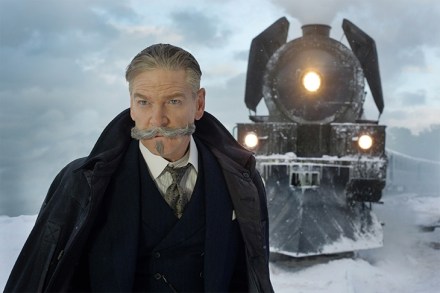
This is not Midsomer Murders. The new film adaptation of Agatha Christie’s Murder on the Orient Express is thick with violence and sexual innuendo. It elevates Hercule Poirot, the diminutive, fastidious Belgian detective, with his egg-shaped head and pot belly, to part-time action figure, a man who chases bad guys down dizzying descents in exotic snowscapes before straightening his magnificent moustache with a twinkle in his eye. This is less cosy, golden age detective fiction than a cross between Daniel Craig’s 007 and Scandi noir. Kenneth Branagh, who stars and directs, has brought his experience playing the dejected Swedish police inspector Wallander to the fore, giving the usually reserved detective unusual passion and vulnerability.

Affleck carries the film – with the help of that jaw: Manchester By The Sea reviewed

From our UK edition

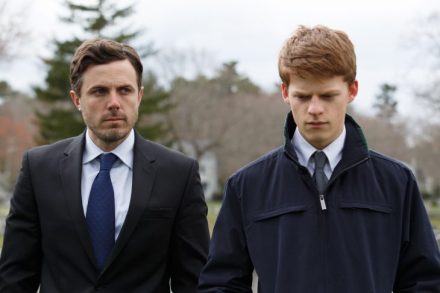
Everyone in Hollywood knows that if you want some good jaw-clenching you go to an Affleck brother. To older brother Ben for the big budget moves, for a chin dimple that looks good in a bow-tie or Batsuit. And to younger brother Casey for something a little more low key. Casey may have the jaw that is less defiantly handsome, a chin that is a little smaller, weaker and more upturned, but that jaw's acting skills in Manchester By The Sea are off the charts. As Lee, a man withdrawn and weighed down by grief amid the beautiful but bitter frost of a coastal Massachusetts town, Affleck’s Oscar glory seems assured, particularly following his Golden Globe win.

The Allen way

From our UK edition

Woody Allen has made a film nearly every year in the four decades since the release of the award-winning Annie Hall. Every one is hailed as a potential return to form, and of course some definitely are. Blue Jasmine, say. Possibly Midnight in Paris. How do the late-era Allens compare with the earlier ones? It’s an increasingly tricky question to answer the more prolific the writer/director is. However, perhaps a more useful question than ‘how good is it?’ is ‘will you actually enjoy Café Society?’, his latest. And the answer, most probably, is ‘Yes’.

Good clean fun

From our UK edition

I once forced some pals on a skiing holiday to spend an afternoon off the slopes watching Chalet Girl. Suffice it to say, I have a high tolerance for lowbrow ski films. So if saccharine tales about plucky Alpine underdogs really aren’t your thing you might want to give my views a miss — as you might Eddie the Eagle, a biopic so drenched in cheerful clichés about the British class system, the power of perseverance and cheap slapstick laughs, it is a kind of Downton Abbey on skis. That said, it’s hard to remember an afternoon at the cinema I’ve enjoyed more in recent times (and it’s definitely better than Chalet Girl). Such enjoyable silliness, such easy laughter.

Fashion faux pas

From our UK edition

‘I’m pretty sure there’s a lot more to life than being really, really, ridiculously good-looking,’ said a pouty Derek Zoolander back in 2001. Well, apparently not. Because Zoolander 2, the long-awaited sequel to Ben Stiller’s cult hit undercutting the male-model industry, is a good-looking bore, a fashion faux pas where hot celebrities such as Kate Moss, Penélope Cruz and Kim Kardashian are parachuted in to make a relentlessly dreary script look good. Except they don’t. They can’t. What on earth was Stiller thinking? Or Owen Wilson, back here as the loveable frenemy Hansel. Or, for that matter, the endless parade of fashion and rock-star cameos? Anna Wintour, Justin Bieber, Sting.

Dull and impenetrable: Hou Hsiao-Hsien’s The Assassin reviewed

From our UK edition

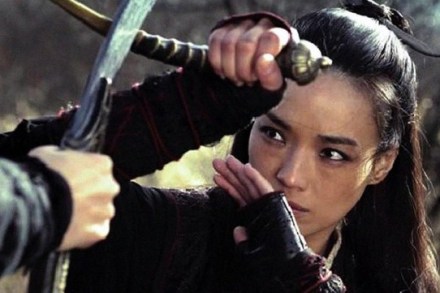
Fans of Crouching Tiger, Hidden Dragon be warned: this is not that. Never have I watched a film where the title so belied the tone and pace of the story. For The Assassin is slow, glacially so, and although it really is exceptionally gorgeous to look at – every frame is a sort of cross between a Turner landscape and a Chinese handscroll, all silver birch horizons and Bacchic waterfalls – I expect a few too many ticket-buyers, enticed by rave reviews and the film's director prize at last year's Cannes, will be quite taken aback by how dull and impenetrable they find it. That was not a flippant 'all martial arts movies are the same' reference to Crouching Tiger.

High and mighty

From our UK edition

‘Ain’t about what’s waiting on the other side,’ sang Miley Cyrus. ‘It’s the climb.’ She’s not usually a musician to be turned to for profound insight but in this case pop’s wild child has captured the absolute crux of this year’s Gravity wannabe, the visually spectacular 3D Everest, which kicked off the Venice Film Festival two weeks ago to a mixed reception. That’s because, even though in the case of the 1996 Mount Everest disaster (in which eight people died) what was waiting on the other side for most people was a cold and lonely death, it was indeed all about the climb.

Magic Mike XXL reviewed: stripping can be sexy – but lying on a pinned-down woman’s face is not

From our UK edition

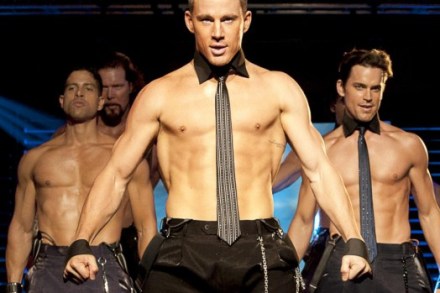
It’s hard to overstate how much I wanted to like Magic Mike XXL, the sequel to the 2012 Steven Soderbergh hit about male strippers. I have long proclaimed loudly to anyone who will listen that the first film is a stroke of genius, a subtle, sweet and, yes, gloriously sweaty exploration not just of women’s desire but of men’s too. It also, incidentally, features one of the last pre-Oscar performances from Matthew McConaughey before he got all serious in True Detective and Dallas Buyers Club, working that pop-eyed southern charm and those absurdly large abs in a tiny yellow crop-top and grotesquely leathery y-fronts until the audience wasn’t sure whether it was tickled or turned on.

Entourage review: its obsession with boobs, babes and oiled up bodies continues

From our UK edition

Look, could everyone please stop denigrating the Entourage movie for spurious reasons like 'it feels like an extended episode of the TV series'? Since the US release a few weeks ago, critics across the Atlantic have booed and shamed writer and director Doug Ellin’s long-awaited reunion of Vinnie Chase and co for just that. As if, instead of being a cheery summer feel-good flick for nostalgic fans, the show ought to have morphed into some erudite reflection for Entourage neophytes on how childish 20-something boys grow up into upstanding young gentlemen. Yawn. What a boring film that would have been. What did detractors expect? A brand new cast, novel character arcs and an entirely different raison d’etre?

The Falling reviewed: a film of beauty and magic

From our UK edition

Long live the glockenspiel, that typically dull percussion stalwart usually relegated to primary school memories, along with humdrum gym classes and endless repetitions of Kumbaya. Here the glock is like a new instrument altogether. Its eery, metallic tones haunt the early scenes of Carol Morley's The Falling, filling them with an unexpectedly ethereal quality that is both childlike and yet somehow sophisticated at the same time - just like the longed for worldliness of the impatient teenage girls at the heart of this warped coming of age story. The music (recorded by Everything but the Girls’s Tracey Thorn) is the backbone of this flawed yet deeply atmospheric film, which gets under your skin and stays there.

I always think I’m going to hate Baumbach’s films and never do: While We’re Young reviewed

From our UK edition

Every time I sit down to a Noah Baumbach film I think I’m going to hate it, but I never actually do. From the French New Wave idiosyncrasies of 2013’s Frances Ha to the growing pains of his semi-autobiographical breakthrough The Squid and the Whale, Baumbach always manages to stay just the right side of pretentious, creating lively hipster-filled worlds that amuse as much as they annoy. Nowhere is this delicate balance more on display than in While We’re Young, a heartbreaking and cautiously funny swipe both at unwelcome middle age and the follies of youth. For Josh (Ben Stiller) and Cornelia (Naomi Watts), the childlessness of their forties has hit them somewhat unexpectedly.

The Boy Next Door reviewed: a terrible new J-Lo movie that’s disturbingly enjoyable

From our UK edition

Stateside critics, who panned Jennifer Lopez’s new film The Boy Next Door on its US release last month, may be unaware of the ability of the British to enjoy a film so bad it’s almost good. I suspect many Brits will shamefacedly delight in this so-called erotic thriller’s camp silliness, its truly dreadful script and its almost mockingly implausible premise. This is a film where a bespectacled Jenny from the Block plays a classics teacher (yes) who receives a pretty copy of Homer’s 3,000-year-old poem ‘The Iliad’ as a gift and quite sincerely exclaims, ‘Wow, is this a first edition?’ How can you follow a gem like that? The answer is with many more inadvertent jokes of a similar ilk, made all the funnier for their intended gravitas.