Hilary Spurling

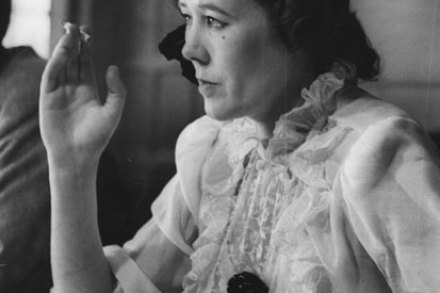
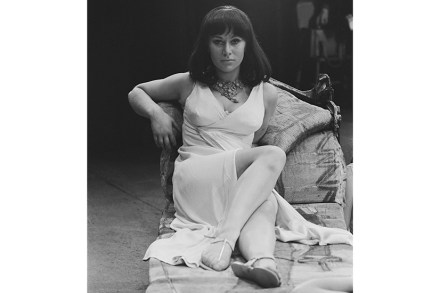
How The Spectator discovered Helen Mirren

From our UK edition

One of the first jobs I ever did for The Spectator was to find out if professional wrestlers fixed the outcome of their fights in advance. This was 1965. The editor who wanted to know was Iain Macleod, a future chancellor of the exchequer filling in time while his party was out of office by dabbling in journalism. He turned out to be an addict of the professional wrestling screened on Saturday afternoon TV. In spite of the spinal disease that had immobilised his back and neck, he mimed what he meant by throttling himself without getting up from his chair in an Indian deathlock. His deputy editor, his political editor and I watched this unnerving performance in horrified silence. ‘Wouldn’t it be better if we sent a man?’ asked the deputy editor after a long pause.
Three remarkable sisters at the heart of 20th-century Chinese politics

From our UK edition

In their lifetime, and afterwards, the Soong sisters from Shanghai seemed like figures from a Chinese fairy tale. There were three of them: ‘One loved money, one loved power and one loved her country.’ They came from a family of prosperous Methodist converts and, for almost 100 years, one or other of them presided at or near the centre of power in China. The middle sister, Chingling, married Sun Yatsen, the founding Father of the Republic, transferring her allegiance after his death to the small group of bandits, led by Mao Zedong, who formed the nucleus of the Chinese Communist party. To this day Chingling enjoys something like mythical status in the People’s Republic of China.

Surviving Mao’s China

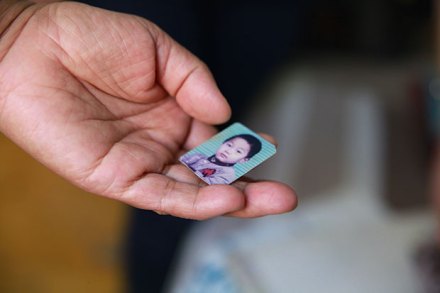
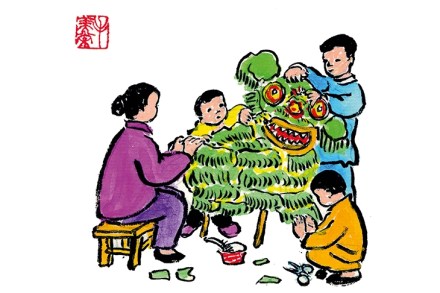
Rao Pingru is 94, and a born storyteller. His gripping graphic narrative weaves in and out of the violent, disruptive upheavals that marked China’s transition in the 20th century from an immemorial, apparently immutable imperial past to its current uneasy truce with the technology, morals and politics of the Western world. He was born in Nancheng, a city virtually unchanged in seven centuries since the end of the great Song dynasty. The first painting in this book shows Pingru himself as a small boy kneeling to knock his head on the floor in a traditional kowtow, performed at the foot of the man who had come to teach him to write. In ancient China, calligraphy embodied continuity, discipline, the accumulated wisdom of civilisation itself.

True grit | 14 September 2017

From our UK edition

As literary editor of the Sunday Times in the early 1980s, when the rest of the editorial staff routinely papered their offices with mildly erotic female images, Claire Tomalin stuck up pictures of sexy men: ‘Some found it hard to believe I could do anything so shocking.’ Double standards, casual sexism and blanket prejudice were normal at the time, even on a relatively civilised national paper. I know because I had the same job a few years earlier at The Spectator. Men ran the world and women answered the phone. Claire had come down from Cambridge with a first in 1955, but the BBC refused her a job on the grounds that it did not employ female graduates.

Spectator Books of the Year: The forgotten genius of Rose Hilton

From our UK edition

I choose Ian Collins’s Rose Hilton (Lund Humphries, £35), a remarkable artist elbowed aside, like so many women of her generation, by a more established, much better known and far more forceful husband. Roger Hilton reckoned there was room for only one artist in their household, and that was him. This handsome, inviting and splendidly illustrated volume follows Rose as she makes her own way, with a lot of help from Matisse and not much from Roger, to emerge after his death as an authoritative colourist of great strength and warmth in her own right.

One for all

From our UK edition

Mei Fong tells the routine story of a girl who managed to conceal an illegal pregnancy until the baby was almost due, when family planning officials surrounded her hiding place at night. ‘She ran and ran and ran until she came to a pond. Then she ran in, until the water was at her neck. She stood there and began to cry.’ Through her tears she explained that she needed the baby to stop her husband and his parents abusing her for not producing a son. This was the mid 1990s, but the same thing could have happened in rural China at any point in the past 1,000 years, except for the dénouement. Officials dragged the girl from the water, and hauled her off to hospital where the baby was killed.

Only the lonely

From our UK edition

This book starts with a Chinese boy so privileged and pampered that, at 21, he can’t open his own suitcase, let alone unpack it. It closes at the opposite end of the social scale with a small girl squatting on a plank over a village cesspit, watching the maggots seething and squirming far below as they struggle to climb the sides of the pit towards the light. The cesspit was the only place where a child of five could find refuge from back-breaking labour in the fields. ‘Granny said girls who don’t work get no food,’ she tells Xinran, who meets her two decades later as a student working for her doctorate in Europe.

John Aubrey and his circle: those magnificent men and their flying machines

From our UK edition

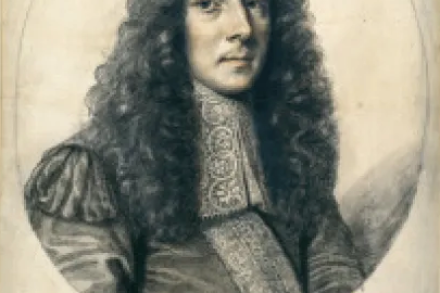
John Aubrey investigated everything from the workings of the brain, the causation of winds and the origins of Stonehenge to how to cure the fungal infection thrush by jamming a live frog into a child’s mouth (you hold it there until it — the frog — suffocates, then replace it with a fresh frog). He seemed half-cracked as often as not to less empirical 17th-century contemporaries, and for most of the next 200 years posterity forgot him. His astonishing renaissance in the last century owed much to two novelists: Anthony Powell, who published a biography, followed by a selection of Aubrey’s Brief Lives in 1949, and John Fowles, who brought out his Monumenta Britannica for the first time in 1980.

Literature’s least attractive power couple

From our UK edition

This book charts the rise and fall of one of the strangest power couples of modern times. The senior partner was initially Pam Johnson, a rising literary star, 28 years old and happily married with five novels under her belt and a fiction column on the Liverpool Post, when she singled out a novel by an obscure Civil Service scientist called C.P. Snow. He responded with a fan letter assuring her she could if she wanted ‘become quite easily the best woman writer in the world’. Snow at 35 was tubby, pop-eyed and lumbering but his effect on her was electric, ‘like a current of magic energy’.

An enchanted forest of family trees

From our UK edition

Michael Holroyd describes the first copy of his last book of memoirs plopping through the letterbox, the kind of moment that might have called for champagne anywhere but in the Holroyd household, which celebrated the book’s arrival with macabre revulsion: ‘I seemed to see, clambering through its pages, a troupe of ungainly, poignant, gesticulating clowns (my own relations) whose griefs and disappointments, as they tumbled over one another, rang out in sidesplitting farce.’ Holroyd shuddered and shut the book, which was Basil Street Blues, shortly afterwards hailed in three continents as an autobiographical masterpiece.