Culture

Culture

The good, the bad and the ugly in books, exhibitions, cinema, TV, dance, music, podcasts and theatre.

Brexit has at least inspired John le Carré — his thriller on the subject is a cracker

More from Books

Since 1903, when Erskine Childers warned of the rising tide of German militarism that preceded the first world war in The Riddle of the Sands, spy fiction has enthralled and chilled its readers by holding a cloudy mirror to the murkier corners of international politics. During the Cold War, John le Carré’s novels were hugely influential in shaping popular perceptions about the private manoeuvres behind the public antics. His books have continued to explore the dark places of the world we live in, their subject matter evolving with the headlines. Agent Running in the Field — an intentionally ambiguous title, no doubt — is le Carré’s 25th novel. The first and most important thing to say is that it’s a cracker.

Whatever happened to glasnost and perestroika?

More from Books

This is a timely book. It addresses the challenges of a fractious and fractured Europe. The first word of the title means ‘truth’ in Russian, and the author’s point is that we have collectively lost sight of that essential commodity. Rory MacLean, whose previous books include Stalin’s Nose, Under the Dragon and Falling for Icarus, retraces in reverse a journey he made 30 years ago. Starting in Moscow this time and ending in London, his aim is ‘to understand what had gone wrong’ since the heady optimism following the fall of both the Soviet Union and the Berlin Wall: ‘I wanted to learn how refugees, the dispossessed and cyberhackers had been used by nationalists.

A sublime lyricist, but no letter writer: Cole Porter’s correspondence is sadly wit-free

More from Books

‘In olden days, a glimpse of stocking/ Was looked on as something shocking’, carolled the company of Cole Porter’s 1934 Broadway smash musical Anything Goes. Eighty-five years on, in this age of Love Island and Naked Attraction, what wouldn’t you give for a retooled version? Not that the song is wholly out of date. When the show opened at the Palace Theatre in London the following year, the lyric to ‘Anything Goes’ was nationalised. Out went Porter’s lines about Rockefeller and Max Gordon and in came two couplets on current parliamentary antics: ‘When in the House our Legislators/ Are calling each other “Traitors”/ And “So and So’s”/ Anything goes’. Hmmm.

Jamal Khashoggi’s assassination was one of the century’s blackest farces

More from Books

The story of Jamal Khashoggi’s death is well known. A prominent Saudi journalist, he walked into his nation’s consulate in Istanbul on 2 October 2018 to obtain divorce papers permitting him to marry his fiancée Hatice Cengiz. Eighteen minutes later, he was drugged and then murdered by a hit squad sent from Riyadh. After another six minutes, a bone saw brought in by a forensic doctor was heard chopping up the body, although the parts were never found. The killers, all senior intelligence figures, returned home in private jets. This act of savagery, which showed stunning contempt for diplomatic norms, rightly sparked an international storm.

London has a genius for self-renewal — but what do we miss as a result?

More from Books

In the autumn of 1987, after London had been hit by a fierce storm, Simon Jenkins wandered through Bloomsbury and noticed that workers clearing away the fallen plane trees were finding it hard to cut through the branches. When he looked closely, he saw this was because their chainsaws kept snapping against embedded fragments of wartime shrapnel. It’s a nice detail, and there are many in Jenkins’s new book, though he spoils this one by adding that ‘London never lets us forget its history’. On any other day, surely, this legacy of conflict would have eluded his attention rather than imposing itself upon it. One of London’s features is its genius for self-renewal — after the Great Fire, for instance, as well as after the Blitz.

Is there no field in which the Jewish mindset doesn’t excel?

Lead book review

More than 20 years ago, George Steiner, meditating on 2,000 years of persecution and suffering, posed the ‘taboo’ question that no one dared ask: ‘Has the survival of the Jew been worth the appalling cost?’  It was not just the horrors of the pogroms or of Auschwitz that ‘enforced’ the question for Steiner, nor the centuries of exclusion and violence but — equally destructive — ‘the fear, the degradation, the miasma of contempt, latent or explicit,’ which has been the hereditary birthright of every Jewish child ‘across the millennia’. ‘Would it not be preferable, on the balance sheet of human mercies,’ Steiner asked, ‘if he was to ebb into assimilation and the common seas?

Spectator Books: Greek myths, reimagined

This week the Books Podcast leaves its dank burrow and hits the road. I travelled to the southern Peloponnese to catch up with the Orange-prize winning novelist Madeline Miller, where she was hosting a reading weekend at the Costa Navarino resort. Madeline’s first novel, The Song of Achilles, retold the Iliad from Patroclus’s point of view. Her second, Circe, takes on the great sorceress of the Odyssey. She talked about how — as a classicist as well as a novelist — she approached reworking these canonical stories; about taking liberties with Circe; and about how the 'rape culture' of Ancient Greece speaks to us in the age of #metoo.

A prince among men: could Albert have changed the course of history?

More from Books

Double identities have never been rare: Norman French conquered England. Anglo Irish led its armies to victory. German Jews helped create the modern world. Perhaps thinking of the many Germans living in London, and British in Hamburg, Munich and Dresden, Prince Albert’s eldest daughter Vicky, Crown Princess of Prussia, invented another hybrid: ‘Anglo-Germans’. This new biography of her adored father, Albert: The Man who Saved the Monarchy is, appropriately, an Anglo-German book, written from both English and German sources and perspectives, by an English author who knows Germany well.

Two wide-ranging collections of short stories by and about women

More from Books

Zadie Smith’s first collection of short stories shows that she can pack all the astute social commentary of her novels just as deftly into the short form. A case in point is ‘Sentimental Education’, a comic homage to Flaubert featuring a decidedly unsentimental protagonist, Monica. Middle-aged (‘Next stop menopause and no more denim’) and feeling hypocritical as she chides her children for bad behaviour, Monica remembers the way she once objectified men as if it were her degree subject. Of her university boyfriend, Darryl, she recalls: ‘Adorable cock, nothing too dramatic, suitable for many situations.’ They worked hard on writing their theses, even harder on finding her G-spot. Later she callously dumped and betrayed him.

The concluding volume of Charles Moore’s life of Margaret Thatcher is – as its predecessors are – a triumph

More from Books

This outstanding biography comes to an end, not in an atmosphere of triumph and achievement, but in a welter of frustration, division, anger and conspiracy. There is a widespread view that Margaret Thatcher’s first two administrations, from 1979 and 1983, were huge personal successes; the third, from 1987, was her mad period. That is unfair, and avoids the truth that she was partnered in this last phase with figures who conspired to frustrate policies arising from some accurate and perceptive insights.

An unconventional biography of the visionary architect Frank Lloyd Wright

Lead book review

Paul Hendrickson’s previous (and very fine) book was Hemingway’s Boat, published in Britain in 2012. It was a nice conceit to see the writer’s life through his singular obsession with Pilar, the boat he commissioned from a Brooklyn shipyard, which remained the steadiest companion in his choppy voyage. The enormous life of Frank Lloyd Wright — the architect who was born two years after the Civil War, and died in 1959 when Bobby Darin’s ‘Mack the Knife’ was a hit — offers no such straightforward device. With more than 500 completed designs, splendid eccentricities and a well-developed taste for confrontation, every single Wright building could have become a novella.

Spectator Books: how fake news took over the world

My guest in this week’s Spectator Books is Peter Pomerantsev. Peter lived in Moscow for a decade as a TV producer, and chronicled the metastasis in that country of 'post-truth politics' in his bestselling Nothing Is True and Everything Is Possible. His fascinating and dismaying new book, This Is Not Propaganda: Adventures in the War Against Reality, describes how Russia’s surreal new information politics turned out not to be a weird exception, but the harbinger of a worldwide phenomenon.

Patti Smith had a bad year in 2016

More from Books

In the Chinese zodiac, 2016 was the year of the monkey, a trickster year full of the unhappy and the unexpected for Patti Smith. It starts badly at New Year: ‘Some guy with a greasy ponytail leaned over and puked on my boots.’ Then it gets worse, private tragedies and political shocks drawing Smith into a restive, twilight state: ‘The mischievous monkey, toying with the climate, toying with the coming election, toying with the mind, producing sour sleep or nothing at all.’ She tells us how she ‘skated along the fringe of a dream’ in this — well what exactly is it?

Donald Hoffman’s The Case Against Reality is hard to get your head around

More from Books

Vibrations, chemicals and light-waves exist in the world; sounds, tastes, smells and colours only seem to. ‘Many sensations which are supposed to be qualities residing in external objects have no real existence save in us,’ said Galileo in the 17th century. ‘They reside only in the consciousness.’ But is consciousness itself, then, other than, and outside, physical things? We have known for millennia that it is in some way linked to the brain, yet, for all the advances of science, no scientific world view is able to accommodate it. How conscious states are generated by movements of brain tissue remains, in Thomas Huxley’s analogy, just as ‘unaccountable’ as that the genie should appear when Aladdin rubs his lamp.

Betrayal in Berlin – a small but important part of the Cold War story

More from Books

The Berlin Tunnel was an Anglo-American eavesdropping operation mounted against Russian-controlled East Berlin in 1955–56.  It was a technical and engineering triumph which yielded a vast hoard of intelligence and, crucially, guaranteed early warning of any surprise Russian attack (as was mooted by the Russian military). Yet it was betrayed to the Russians by the British spy George Blake before a single sod was dug. This well-researched and readable account tells both stories, showing how they fed into each other. High-grade information on Russian military capabilities and intentions were scarce.  One of few successful sources was an MI6 tunnel in Vienna, tapping into Russian underground communications cables.

A thought-provoking work of ‘moral atonement’ and ‘comparative redemption’

More from Books

No nation’s defeat is ever quite straight-forward, and sometimes downfall can bring its own kind of posthumous victory. By the end of the American Civil War in 1865, for example, the Confederates had managed to recast themselves as Christ-like victims, exalted by the myth of a noble lost cause. The South had lost 20 per cent of its white male population to the Union armies, but that only confirmed its moral superiority over the money-grubbing Yankee. According to Susan Neiman, postwar Germans approximated the vanquished Confederacy in their inability to imagine their own defeat. Attempts were made to recompense the Jewish community, but most Germans, East and West, refused to accept responsibility for the war at all.

Oswald of Northumbria – an Anglo-Saxon saint-king of the north for our time

More from Books

In Hamlet a gravedigger asks the riddle: ‘What is he that builds stronger than either the mason, the shipwright, or the carpenter?’ Answer: ‘A grave-maker: the houses that he makes last till doomsday.’And yet they do not; this character has disturbed the bones of Yorick. ‘Doomsday’ is, of course, the archaic word for ‘judgment day’ and Hamlet is soon asking questions of the dead jester’s skull. So it is in modern times with those odd folk, archaeologists — always scrabbling around in the dirt, asking questions of the dead with their grubby fingers. Medievalists are lucky that they do, because without their digging and scraping we would have to rely on a finite number of heavily thumbed sources.

Living on a nuclear submarine does your head in

More from Books

Richard Humphreys spent a good part of five years, between the ages of 18 and 23, living inside a nuclear submarine, which he describes variously as ‘sleek, black and athletic looking’, and ‘this fierce black messenger of death’, and ‘this huge, black leviathan’, and ‘a killing machine’, and ‘silent as death’. The first time he sets foot on it, he tells us, ‘I was shitting it.’ This is not the last we will hear of his negative emotions, or the state of his bowels. We are in the latter part of the Cold War. Humphreys is a sailor. The submarine is HMS Resolution, part of the Polaris fleet. It is 425ft long, 33ft wide and 30ft from top to bottom. Humphreys describes it as ‘cigar-shaped’.

A work of art in more ways than one

More from Books

Neil Hegarty’s new novel, The Jewel, is a mass of contradictions. It’s about an art heist, but it’s not fun. It’s a love story,  but it’s not romantic. And it features a woman’s wasted life, but it’s not without salvation. The overarching plot follows three characters. John, a ‘seedy’ artist-cum-art-forger-cum-art-thief, has been commissioned to steal an important work (‘The Jewel’ of the title) from a newly re-opened gallery in Dublin. As he prepares for the job, he reflects on his life, from his lonely, suburban childhood by the Thames, scouting for washed-up dogs on the foreshore, to his early twenties at art school, living in a bedsit smelling of gas and in love with a worldly blonde.

Three remarkable sisters at the heart of 20th-century Chinese politics

Lead book review

In their lifetime, and afterwards, the Soong sisters from Shanghai seemed like figures from a Chinese fairy tale. There were three of them: ‘One loved money, one loved power and one loved her country.’ They came from a family of prosperous Methodist converts and, for almost 100 years, one or other of them presided at or near the centre of power in China. The middle sister, Chingling, married Sun Yatsen, the founding Father of the Republic, transferring her allegiance after his death to the small group of bandits, led by Mao Zedong, who formed the nucleus of the Chinese Communist party. To this day Chingling enjoys something like mythical status in the People’s Republic of China.

Spectator Books: the sisters who founded modern China

In this week’s Spectator Books podcast my guest is Jung Chang — whose latest book is the gripping story of three sisters whose political differences put the Mitford even the Johnson clans in perspective. In Big Sister, Little Sister, Red Sister, Jung narrates the lives of the Soong Girls — one of whom was married to Chiang Kai-shek, another of whom became one of the richest women in the world and helped run Chiang’s government; and the other one of whom (the widow of the founding father of modern China, Sun Yatsen) threw her lot in with Chiang’s deadly enemy and eventual usurper, Mao Zedong. Every family has its little ups and downs!

Spectator competition winners: monstrous short stories

Your latest challenge, inspired by Joan Didion’s wonderful essay of that title, was to write a short story with the last line ‘I can’t get that monster out of my mind’. Another notable American female essayist, Susan Sontag, has come in for a bit of stick in these pages over the past few weeks, and she popped up again, in Hugh King’s short story: ‘Susan Sontag, naked, terrifying, had come to him in the night, pinned him down with hawser-like arms, and demanded to know his views on post-structuralism.’ Other memorable ‘monsters’ included Beowulf, the Minotaur and Jacob Rees-Mogg. The winners earn £25 each.

Why have the Swedes been incapable of finding Olof Palme’s murderer?

More from Books

Any Swede old enough to remember knows where they were when their prime minister Olof Palme was assassinated. On 28 February 1986, Palme was walking home from the cinema with his wife when an unknown assailant stepped out from the shadows and shot him. We mourned not just the man, but the death of the nation that Palme personified — a safe place where nobody, not even the prime minister, needed protection. As though to emphasise the inconceivability of the event, the murder investigation became a textbook study of police incompetence. Frustrated by the lack of progress, countless ordinary citizens began to conduct their own inquiries, fuelled by various conspiracy theories. One of the people who caught the ‘Palme bug’ was the late crime writer Stieg Larsson.

A ménage à trois that worked: Ivan Turgenev and the Viardots

More from Books

If we still bemoan a world of mass tourism, the mid 19th century, Orlando Figes reminds us, is where it began. Aristocrats were accustomed in youth to prolonged, libidinous grand tours through the Continent (the gap years of their day). For the masses, though, this was the start. ‘During the autumn months,’ grumbled one British newspaper, ‘the whole of Europe seems to be in a state of perpetual motion.’ Not only rich people were involved; so, heaven forfend, were the ‘lower classes’. The English were particularly at fault. Lonely on their island, enjoying surplus income and time, they ‘swarmed’ everywhere.

A frank description of dementia is a searing, suffocating read

More from Books

In Annie Ernaux’s The Years — her extraordinary act of collective autobiography —the ‘I’ disappears. Her memoir becomes the memoir of France since the war: each year of the author’s life is evoked in a collage of memories, images and historical fragments. Apart from a handful of photographs, in which Ernaux is the dispassionately observed ‘she’, the self is erased and in its place an ambiguous ‘we’ narrates the flow of years and the slippage of time. In I Remain in Darkness, the ‘I’ is everywhere, yet it is still a treacherous word. In this work of shocking honesty and intimacy, Ernaux bears witness to her mother’s final years of living and dying with dementia.

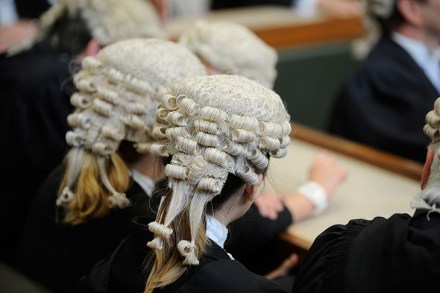
Is the judiciary really so bad at judging character?

More from Books

When I had a cough last week, my son Joe,  who has autism, shouted at me and covered his ears. I didn’t mean to cough but, to Joe, so what? His autism means he doesn’t get other people’s intentions. People like him are sometimes said to lack a ‘theory of mind’ — lacking the idea that Dad or anyone else even has a mind, possessed of its own thoughts and intentions. This complicates his life infinitely. And that alerts us to a commonplace miracle: the contrast with the rest of us. Often we can see inside other people’s heads. We’re prolific theorisers about what they’re thinking.