Andrew Scull

Are we any closer to finding a cure for depression?

From our UK edition

Some years ago, the Harvard psychiatrist Leon Eisenberg commented that, in the course of his lifetime, his discipline had swung from the brainless psychiatry propounded by psychoanalysts to the mindless psychiatry of those enamoured of biological reductionism and neuroscience.  Camilla Nord, who runs a neuroscience laboratory at Cambridge, is firmly a member of the latter camp. Though in a few places in The Balanced Brain she is driven to concede that social factors seem to play a role in mental health or mental distress, she immediately insists that ‘the process by which social factors are able to cause mental illness is entirely biological’.

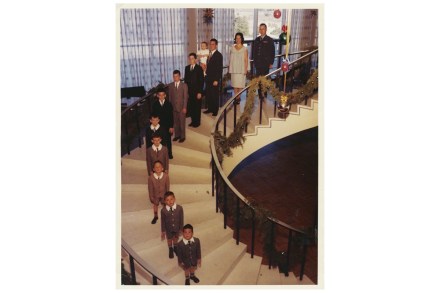
When six of her 12 children went mad, Mimi Galvin did her best to make to light of it

From our UK edition

Don Galvin and Mimi Blayney married in December 1944. It was a shotgun wedding. They had been high school sweethearts. Just before Don was about to be shipped out to join the fighting in the South Pacific, Mimi called from New York to say she was pregnant. A rushed wedding across the Mexican border in Tijuana followed: a not uncommon wartime story. But Mimi’s pregnancy turned out to be the first of a dozen, each accompanied by severe morning sickness. Between 1945 and 1965, a procession of children arrived, ten boys and then, at last, even after Mimi’s gynaecologist had warned that further pregnancies might prove life-threatening, came two girls. Don had remained in the Navy after the war, but his career stalled.

How a fraudulent experiment set psychiatry back decades

From our UK edition

In January 1973, Science (along with Nature, the most influential general science journal in the world) published an article that immediately captured major media attention. David Rosenhan, a Stanford social psychologist, reported that eight pseudo-patients had presented themselves at a variety of mental hospitals, 12 in all, complaining that they were hearing voices saying ‘hollow, empty and thud’, but otherwise behaving completely normally. All of them, he reported, were promptly admitted, and all but one diagnosed as suffering from schizophrenia (the other receiving the somewhat more hopeful diagnosis of manic depressive psychosis). It took weeks for them to be released, though they were instructed to show no symptoms once admitted.