Emma Byrne

Emma Byrne is an assistant editor of The Spectator.

How to eat and drink your way around the Dubrovnik Riviera

From our UK edition

‘I hope you’re hungry,’ crows a fisherman, setting down a plate piled high with freshly shucked oysters. They say you should face your worst fears head on. Well, here I am addressing mine – but I never thought it would be done in quite so idyllic a spot. I’m in Mali Ston, a small, picturesque town on Croatia’s Pelješac peninsula, about an hour’s drive from Dubrovnik. It’s 9.30 a.m. and many shops are still shuttered, but already Game of Thrones fans are out in force, taking selfies along the hillside’s 14th-century network of towers and fortresses. (The three-and-a-half-mile walls doubled as King’s Landing and the Eyrie in the fantasy drama.


The opulent Nile cruise that evokes Agatha Christie’s Egypt

From our UK edition

We’ve been warned about Aswan’s ‘little crocodiles’ – and it’s not long before they make their appearance. Gliding through the water, sleek bodies shining in the sun, they circle the felucca slowly, eyes glinting with curiosity. As only a handful of tourists currently exploring the Nile, we’re the exotic species – and potential rich pickings at that. ‘A dollar, please, a dollar, please,’ cries the ringleader, stretching out a hand from his paddleboard as another breaks into an off-key rendition of the Macarena. ‘Lovely jubbly,’ grins a third, pocketing a scrunched up note with appreciation.

Why there’s never been a better time to see Venice

From our UK edition

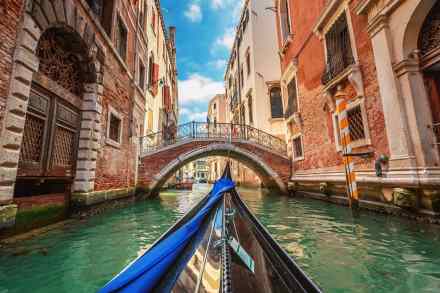
You’re never going to see Venice quite like this again. Usually swarming with tourists – not to mention the enormous cruise ships that dock in its waters ­– the city has been given a serious breather by the coronavirus pandemic. Those lengthy queues to get into its most famous hotspots have disappeared; the picturesque back streets lie empty and a dramatic fall in water traffic has seen the sediment in its 150 canals settle, allowing their vibrant colour to return. La Serenissima – much to many of the locals’ relief – has become serene once more.

Is this the next cladding scandal?

From our UK edition

18 min listen

After the Grenfell Tower fire, new fire safety legislation was introduced in an attempt to ensure the tragic incident was never repeated. But the new rules have left some tower block tenants unable to sell their properties, and they could be forced to pay tens of thousands to replace dangerous classing. Why? Fraser Nelson speaks to Emma Byrne, assistant editor of the Spectator, alongside the Telegraph's Liam Halligan.

Is the government about to bankrupt thousands of homeowners?

From our UK edition

Within the next year or two, I could go bankrupt. My mistake: to join a government-backed affordable housing scheme and purchase a one-bedroom flat in east London. For the past four years, it has been my pride and joy — not to mention my savings, my pension and my financial future. I was grateful for the government’s help in getting a foothold in the city. But now another government policy is hurtling towards me, against which I have no defence. Nor do potentially tens of thousands of first-time buyers and the owners of affordable housing in my position. It might be the next big scandal to hit the government. It’s about cladding.

The new cladding scandal that could bankrupt a generation

From our UK edition

Within the next year or two, I could go bankrupt. My mistake: to join a government-backed affordable housing scheme and purchase a one-bedroom flat in east London. For the past four years, it has been my pride and joy — not to mention my savings, my pension and my financial future. I was grateful for the government’s help in getting a foothold in the city. But now another government policy is hurtling towards me, against which I have no defence. Nor do potentially tens of thousands of first-time buyers and the owners of affordable housing in my position. It might be the next big scandal to hit the government. It’s about cladding.

Whores of phwoar: women talking dirty

From our UK edition

Jonathon Green is a tosher. As a lexicographer he dives into archives and emerges with armfuls of slangy curios, such as ‘bell-polisher’ and ‘bitchin’. In Sounds & Furies he sifts English slang from tosheroons as diverse as the Wife of Bath to Fast Times at Ridgemont High. Green’s passion for his subject is infectious. His corpus of 110,000 slang words and phrases, published in 2010 as Green’s Dictionary of Slang, is filled with coinages both common and rare. In his latest volume, he’s set himself the challenge of unlocking women’s love-hate relationship with slang. As he says at the beginning, we know plenty about the status of women in slang, but not much about how women use it. He offers plenty of examples of women coiners.

Ballet’s Antichrist

From our UK edition

William Forsythe has been called a lot of things in his four decades as a dancemaker: wilful provocateur, ‘pretentious as hell’, even ballet’s Antichrist. But nothing, he claims, to warrant US government officials showing up, unannounced, at his door and threatening him with arrest. Had he been reported by an angry dance purist, perhaps? After all, this is the choreographer who has done more than any other to push the limits of what ballet can be, the great forward-thinker hailed for his athletic, sometimes bewildering, deconstructions of an art form that goes back centuries. It’s gained him an army of devoted (read obsessive) fans, but also some vocal detractors.