Christopher Priest

Victorian science fiction soon ceased to be fanciful

From our UK edition

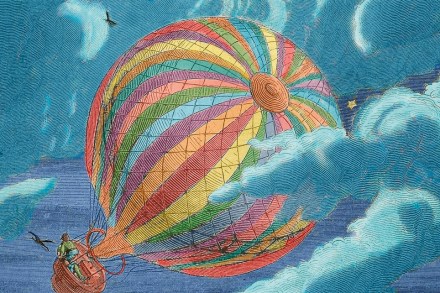
One of the more daft but enduring spin-offs of the science fiction genre is steampunk – fiction fashioned with a retrofuturistic love of 19th-century industrial technology. Think of an ironclad of the air, shaped like a fantasy submarine, with six or more propeller engines powered by cogs and levers, funnels pumping out coal smoke from the steam turbines, windows replaced by watch dials, and hundreds of rivets holding the whole thing together. Inside would be a palm court saloon hosting a tea dance. Many of the gentlemen are garbed in comic-book versions of the army officer and entrepreneur style of British imperialism, the ladies in dark velvet, veils and stays, and an orchestra in evening dress and moustachios. Weird eyepieces, top hats and ancient firearms are omnipresent.
A glimpse of the real Patricia Highsmith through her diaries and notebooks

From our UK edition

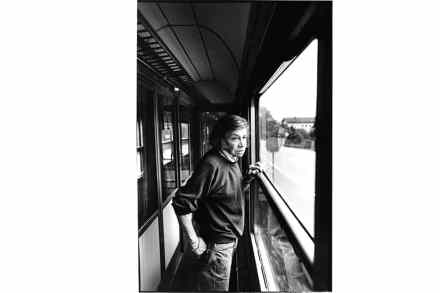
There are three ways of knowing Patricia Highsmith. First, of course, she was the author of 22 novels and several story collections published between 1950 and 1995, the year of her death. Then the woman herself: Mary Patricia Plangman, born in Dallas in 1921, long-term resident of New York City, when young a socially and sexually active lesbian, later in life a mostly solitary literary figure in almost constant movement around Europe. Much biographical work has been written about her. And, finally, a revelation: she was the keeper of not only an intimate diary for most of those years, but also workbooks she called ‘cahiers’, all now published in a single volume.

Too much sound and fury in Christopher Nolan’s movies

From our UK edition

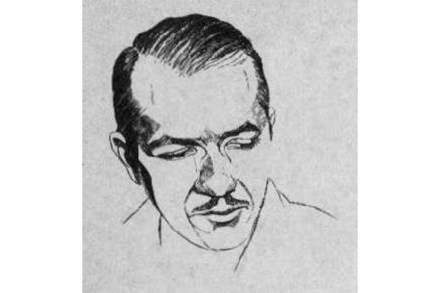
In 2006 the director Christopher Nolan filmed an adaptation of one of my novels, written a decade and a half earlier. Other than providing the source book, I had no involvement with any part of the filming. Unlike some novelists who have a Hollywood film made, I was not at all disappointed with the result: it struck me as an intelligent, skilful and imaginative adaptation, both similar to but also subtly different from the novel. That it has since become something known as ‘Christopher Nolan’s The Prestige’ seems slightly odd from my point of view, but that’s the name of the game. Another decade and a half further along, The Prestige still looks pretty good to me. Some people describe it as his masterpiece, which is probably debatable but close to what I think.

Was Dresden a war crime?

From our UK edition

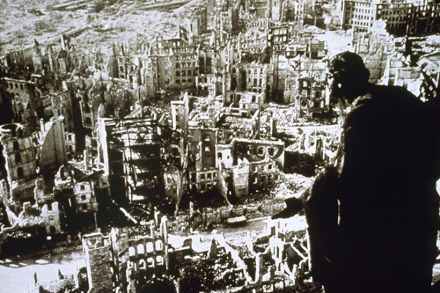
The literature of second world war bombing campaigns is surprisingly extensive. The books written in Britain largely focus on the night sorties by RAF Bomber Command, but the equally destructive second world war campaigns by the US 8th Air Force (daylight raids on Germany) and the Luftwaffe (the Netherlands, the Blitz on the UK) are covered too. There is little or no equivalent literature from Germany, although in recent years there have been several deeply researched books by German authors about the destruction of their cities. The RAF books take all forms. There are authoritative personal histories (pilots, air chiefs, politicians), as well as vernacular accounts (WAAFs, ground crew, rear gunners). There are squadron histories. Bio-graphies of notables like Gibson, Cheshire, Bennett.

How did the infamous Josef Mengele escape punishment?

From our UK edition

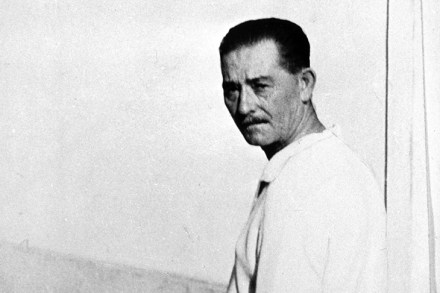
The atrocities of the concentration camp at Auschwitz–Birkenau are now universally known, but it is still almost beyond belief that Auschwitz could exist in modern Europe. The history of the camp is a comparatively recent one: construction began in April 1940, less than 80 years ago, and the first victims died there, or were killed, not long after. Some of the people who were transported to the camp managed somehow to survive the war and a few of them are still alive today. Perhaps we shy away from knowing too much about what they suffered because the totality of awfulness is beyond description and the world is still contemplating that.

Darkness visible | 9 May 2019

From our UK edition

With his first novel about looking after an engineered wood floor, and a second novel about what it is like to stay in a chain hotel, Will Wiles seems determined to corner the market in unpromising literary subjects. His latest novel, Plume, is about a chap who lives in a rented flat in London and who works in an office. Hooray! — the sainted few who are already Wiles fans will learn this with their hearts pumping with anticipatory happiness. Mine certainly did. A quick summary is appropriate, as Wiles’s novels remain, for now, under-regarded. Care of Wooden Floors (2012) was exactly what it said on the tin. The narrator flies to a European city to house-sit an apartment of an absent friend called Oskar.

Out of this world | 28 March 2019

From our UK edition

Like someone who has bought a first computer, then reads the manual from front to back but never actually gets around to switching the thing on, Robert A. Heinlein appears in his late fifties to have come across a how-to book about sex. Thereafter an instant expert, he wrote novel after novel brimming with it, much of it laughably theoretical and, well, wrong. Famously, to those who managed to get through an interminable book called The Number of the Beast (1980), he describes a kiss in the voice of a young woman: ‘Our teeth grated, and my nipples went spung!’ Nor were these the only breasts and nipples under discussion. The book is full of lubricious references to them, and other women’s parts, invariably objectified.

An electrifying genius

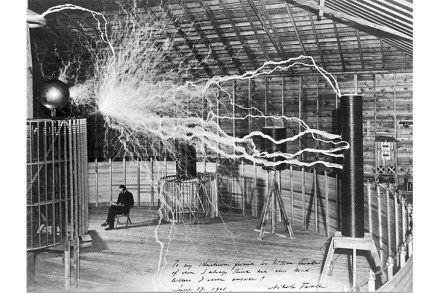
Nikola Tesla, the man who made alternating current work, wrote to J. Pierpont Morgan, the industrialist and banker. It was 1902 and Tesla was broke. ‘Am I backed by the greatest financier of all time? And shall I lose great triumphs and an immense fortune because I need a sum of money? Are you going to leave me in a hole?!! Financially, I am in a dreadful fix.’ This was not perhaps the best way of approaching a millionaire who had made his fortune in the very industry Tesla was setting out to transform. It was a time of scientific entrepreneurs and robber barons. Morgan was a man of many concerns. He did not reply. Begging letters continued to be sent, and duly ignored.