Ariane Bankes

Why one of Renoir’s most celebrated paintings languished unloved

From our UK edition

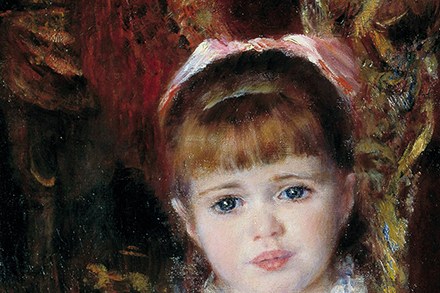
Shimmering off the cover of The Renoir Girls are sisters Alice (aged four) and Elisabeth Cahen d’Anvers (six), portrayed in all the promise and innocence of a pampered childhood by Pierre-Auguste Renoir. Aged 40, Renoir was then the coming portrait painter for the gratin of Paris, as he struggled to make ends meet with smart commissions from wealthy sponsors – a network of Catholic and Jewish banking families that included the Ephrussis (memorialised by Edmund de Waal in The Hare with Amber Eyes), Camondos, Rothschilds and Cahen d’Anvers.

Defiantly creative to the end: the transgressive Dorothea Tanning

From our UK edition

I received this book for review on the same day that Dorothea Tanning was making headlines in the auction world, breaking records with the sale at Christie’s of a tiny but key early work for more than £4 million. Her prices have risen an astonishing sevenfold in the past year, as collectors cotton on to her significance as a Surrealist; and while she may still be trailing on Leonora Carrington’s coat-tails, she looks to be steadily catching up.   Born in America to Swedish parents, Tanning was the very model of a fiercely independent artist, and her works are singular and disquieting like few others. She was largely self-taught as a painter and developed a virtuoso technique.

From enfant terrible to dame: Tracey Emin in her own words

From our UK edition

On the eve of a major retrospective at Tate Modern comes this portrait of Tracey Emin as a painter, told largely in her own words. It traces a remarkable trajectory, from gobby Margate teenager to one of the UK’s most respected and celebrated artists, and a Dame of the British Empire. At its heart is a series of conversations with Martin Gayford, a critic with a deep engagement with the nature of painting and insights gleaned from close friendships with 20th-century giants, Lucian Freud and David Hockney among them. It is a book full of heart – frank and confessional – and presents Emin at the zenith of her powers, having survived near-fatal cancer and found new purpose and conviction.

The fertile chaos of Albert Camus’s mind

From our UK edition

To read Albert Camus’s Notebooks – comprehensive, newly translated and expertly annotated by Ryan Bloom – is to enter the engine room of the writer’s mind and to glimpse its complex workings and components stripped back to their essentials. They comprise an intellectual and spiritual autobiography, not an account of his life. But of course they contain seductive vignettes lifted straight from experience among the aphorisms, observations, drafts and schemas for writings, stitched together in a collage that reflects a remarkably agile mind in constant motion. The Notebooks bring to mind the fertile chaos of an artist’s studio.

Art and radicalism in 1930s Britain

From our UK edition

What is art for? How can it, should it, relate to the political framework of its time? How far can it shade into ‘propaganda of the imagination’? These are some of the questions threading through Andy Friend’s compelling account of the first decade of the Artists International Association, or AIA, a vital but under-explored British movement welding art and politics against the growing threat of international fascism.  The story opens in 1933 in the candlelit rooms of Misha Black above Seven Dials, Covent Garden, where a dozen impecunious jobbing artists met to discuss a sensational report from the Soviet Union.

Anselm Kiefer’s monstrous regiment of women

From our UK edition

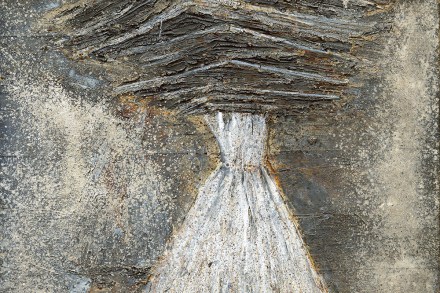
The visionary artist Anselm Kiefer has restlessly challenged and redefined recent German history and cultural shibboleths in an extraordinary body of work that spans more than six decades. Two months ago he turned 80, an anniversary marked by the staging of exhibitions from Amsterdam to the Ashmolean and the publication of this impressive study devoted to the notable women that thread their way through his work, endlessly shape-shifting. Women are to be found everywhere in Kieferland: haunting, teasing, beckoning, seducing; imperious, impassive, poetic and unknowable. There are martyrs, queens and heroines of the revolution, Brunhilde and the Valkyries, Madame de Stael and Marie-Antoinette.

The Bloomsbury Group’s precarious paradise

From our UK edition

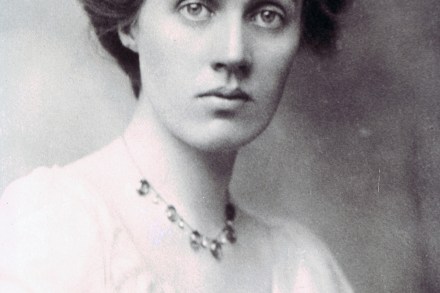
The artist Vanessa Bell, née Stephen, the wife of Clive Bell, is enjoying the limelight this year as an exhibition of her work travels the country. Hot on its coat-tails comes Wendy Hitchmough’s beautifully illustrated new study of Bell’s life and art. As the former curator of the painter’s home at Charleston, Hitchmough writes with insider knowledge, supported by an armoury of scholarship: the bibliography alone stretches to 14 pages and the notes to 45. Somewhere within this carapace is a uniquely original and talented artist struggling to get out – a true radical whose story was one long, rolling sequence of experiments in leading as creative a life as possible within or without the constraints of her time.

Ariane Bankes: The Quality of Love

From our UK edition

35 min listen

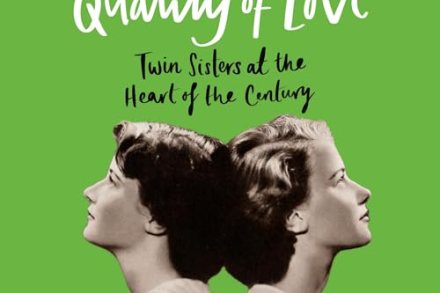
On this week's Book Club podcast I'm joined by Ariane Bankes, whose mother Celia was one of the great beauties of the early twentieth century. Ariane's new book The Quality of Love: Twin Sisters at the Heart of the Century tells the story of the defiantly bohemian lives of Celia and her twin sister Mamaine, whose love affairs and friendships with Arthur Koestler, George Orwell, Albert Camus, Edmund Wilson and Freddie Ayer put them at the centre of the political and intellectual ferment of their age.

Why Ronald Blythe is so revered

From our UK edition

Ronald Blythe, the celebrated author of Akenfield, is to turn 100 next month, and to mark his centenary a beguiling calendrical selection has been made of his ruminations for the Church Times, for which as a lay reader he penned a weekly ‘Word from Wormingford’. It is distilled from 25 years of musings that chase the months from first ghostly intimations of snow at New Year to the blaze of the fire at Wood Hall’s mid-winter supper, while outside ‘the trees crack and the moon is made of ice’.

The ‘delishious’ letters of Lucian Freud

From our UK edition

Love him or loathe him, Lucian Freud was a maverick genius whose life from the off was as singular as his paintings were celebrated. He never really knew his famous grandfather, who left Vienna in 1938 only a year before his death, and one can only speculate what Sigmund would have made of his wayward and wildly gifted grandson on the strength of this effervescent collection of early correspondence. He certainly would have admired it on aesthetic grounds: a handsome quarto volume, cloth-bound and embossed, whose contents are a model of intelligent design.

The high and low life of John Craxton

From our UK edition

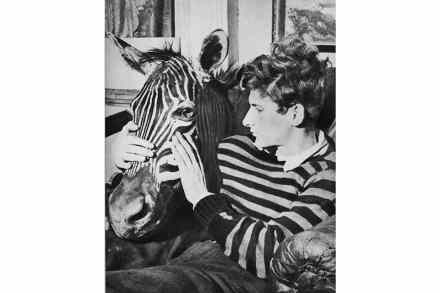
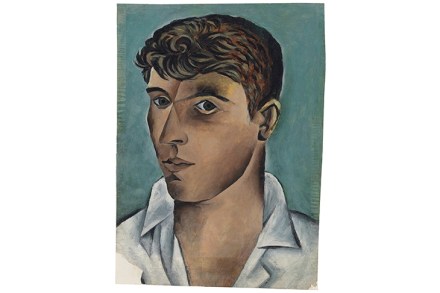
Charm is a weasel word; it can evoke the superficial and insincere, and engender suspicion and mistrust. But charm in its most authentic sense was surely the defining quality of the painter John Craxton, and it flavours this lively and richly coloured account of his life. Ian Collins only met the elderly Craxton — by now sporting the moustaches, shepherd’s stick and general demeanour of a Cretan chieftain — in the last decade of his life (he lived to 88), and was immediately seduced by his joie de vivre and his fund of recondite knowledge, stories and jokes, and drawn into Craxton’s charmed circle.

A power for good: the Sharp family were a model of vision and humanitarianism

From our UK edition

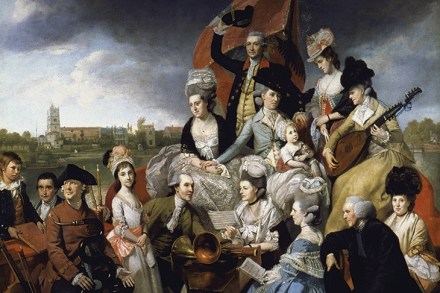
Who would imagine that Johann Zoffany’s celebrated 1780 depiction of the extensive Sharp family happily making music on their pleasure barge could be parsed so deftly into a portrait of an age? Or that Hester Grant, embarking upon her research, could have foreseen how topical Granville Sharp’s determined champaign against slavery would seem at the present moment? Or that his surgeon brother William’s new-fangled passion for ‘variolation’ or vaccination (against smallpox in those days) should strike such a chord today?

Arthur Jeffress: bright young person of the post-war art scene

From our UK edition

The name Arthur Jeffress may not conjure many associations for those not familiar with the London post-war art world, but this wayward, flamboyant, controversial connoisseur and patron who left much of his ‘small but subversive’ collection to the Tate and the Southampton Art Gallery after his death in 1961 certainly deserves his footnote in history. ‘Small but subversive’ could describe the man as well as his collection: his fabulous wealth, inherited from Virginian tobacco plantation-owning ancestry, coupled with his rampant homosexuality, shaped a life of compulsive and conspicuous extravagance, in which art and sex vied with one another for supremacy against the backdrop of Belgravia and a palazzo just off the Grand Canal in Venice.

Five bluestockings in one Bloomsbury square

From our UK edition

The presiding genius of this original and erudite book is undoubtedly Virginia Woolf, whose essay ‘A Room of One’s Own’ provided the rallying cry, whether consciously or not, for five remarkable women, all drawn at some point in their careers to Bloomsbury’s Mecklenburgh Square. There they found the freedom and independence they craved to explore new ways of living and loving and writing during the volatile interwar decades. All five were ‘blue-stockings’: the radical modernist American poet Hilda Doolittle, or ‘H.D.’; the crime writer Dorothy L.

The Lost Girls of World War II – a tribute

From our UK edition

It is to Peter Quennell in his memoir The Wanton Chase that D.J. Taylor owes his concept of wartime London’s ‘Lost Girls’: ‘adventurous young women who flitted around London, alighting briefly here and there, and making the best of any random perch on which they happened to descend’. They were courageous, living ‘without any thought for past or future’ in that bomb-blasted city, but what most touched Quennell’s heart was ‘their air of waywardness and loneliness’. He should know: he was married to one Lost Girl (Glur) while madly, frustratedly in love with another (the high-octane Barbara Skelton) who he introduced to Cyril Connolly alongside a third, Lys Lubbock, with ultimately cataclysmic results.

Mysteries unfold

From our UK edition

The striking yet subtle jacket image from Donatello’s ‘Madonna of the Clouds’ announces this book’s quality from the outset. Its focus is drapery, and the way that artists of the Italian Renaissance clothed their subjects, and furnished their narratives, to articulate veils of meaning that were infinitely suggestive. Marshalling a lifetime’s inquiry into the art of that era, Paul Hills — emeritus professor at the Courtauld, and author of the classic Venetian Colour — deploys an X-ray vision to drill beneath the skin, to find the pulse, the heartbeat of a painting or sculptural relief. He offers a key, a new entry point into works we thought we were familiar with; in doing so, he tweaks back a veil between us and them.

A husband to die for

From our UK edition

What will we do when there are no longer caches of letters to piece together and decipher; only vague memories of myriad emails? We will be like butterfly hunters flailing around with our nets, hoping to catch some rare specimen with glittering wings among the detritus of daily exchanges. The letters of Ida Nettleship, first wife of the arch-bohemian Augustus John, are a case in point: gathered together here from diverse sources by her granddaughter Rebecca John and expertly introduced by John’s biographer Michael Holroyd, they constitute a rare epistolary treasure trove.

Dizzying swirls of impasto

From our UK edition

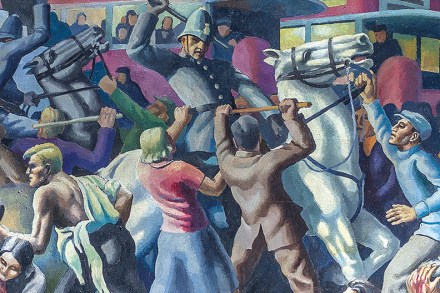
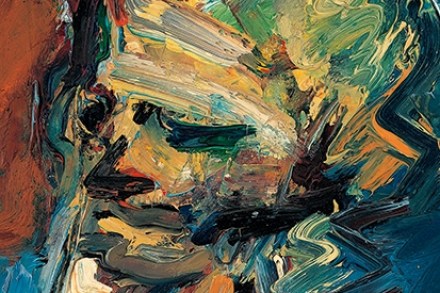
With a career of more than 60 years so far, Frank Auerbach is undoubtedly one of the big beasts of the British art world. His personal reticence, however, and the condensed, impacted idiom of his painting have contributed to his enigmatic, somewhat opaque reputation. Catherine Lampert, who has sat regularly and patiently for him since 1978, is uniquely qualified to throw light both on the man and his art, but the tactics she employs here are very different from those of Martin Gayford in Man with a Blue Scarf, his intimate, engrossing account of sitting for Lucian Freud. Matching Auerbach’s reticence with her own, she keeps herself largely out of the story, focusing instead on observations made by the artist over the many decades of his career.

‘I would find myself forging my own work’: Quentin Blake on how he came to found the House of Illustration

From our UK edition

The illustrator Quentin Blake is uncannily like one of his own creations: tousled, bright-eyed, quizzical, and apologetic about his summer cold. He greeted me warmly and conducted me down a dimly lit hallway into his lair, a studio giving on to a leafy London square, piled high with the tools of his trade: papers teetering on plan chests, jars of brushes, palettes of paints, toppling books — all the shambolic clutter of a busy artist’s life and work. I was there to find out about the eagerly anticipated House of Illustration, which opened this week in the old railwaymen’s house on Granary Square, that ineffably cool destination north of King’s Cross, home to Central St Martins College of Art and just over Regent’s Canal from Kings Place.

Hannah Höch – from Dada firebrand to poet of collage

From our UK edition

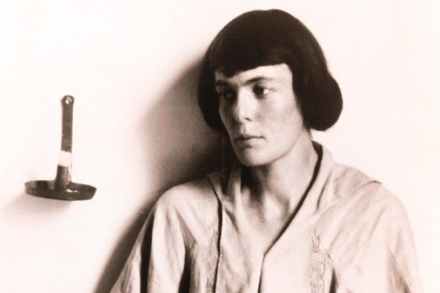
I suspect I am not alone in finding it surprising to encounter at the close of this exhibition an unexpected Hannah Höch — a gently spoken elderly lady filmed wandering among the overgrown flowers in her garden, talking of beauty. A far cry from the radical firebrand and Dada collagiste of interwar Berlin whose works epitomised the edgy fragmentation of Weimar life and culture. It was a long journey, and one traced with admirable even-handedness by this first and welcome UK survey of Höch’s works on paper, at the Whitechapel.