Max Décharné

The sad story of the short-lived Small Faces

From our UK edition

One Sunday in October 1967, about 16 per cent of the British population settled down at 8.15 p.m. to watch the Morecambe & Wise Show on ITV. This was mainstream family entertainment aimed at all age groups, but there was also a place each week for teen-friendly acts from the pop charts. That evening it was the turn of four sharply dressed East End mods, who managed to inject some real heart and soul into their band’s performance. ‘They look very nice, don’t they?’ said Ernie, to which Eric replied: ‘They look extremely nice, except for one thing. Their faces are too small, I feel. Much too small.’ Mild leg-pulling of this kind was par for the course.

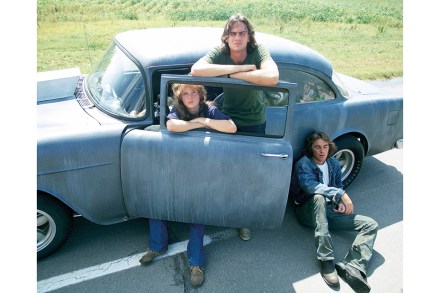
The glamour of grime: revisionist westerns of the 1970s

From our UK edition

In 1967, the unexpected worldwide success of Bonnie and Clyde blindsided the Hollywood film industry, which then spent the next half decade attempting to adapt to the changing tastes of the new youth audience it had apparently captured. No matter that the picture took a pair of vicious, sociopathic thrill-killers who in real life were about as appealing as the Manson family and reinvented them as glamorous Robin Hood figures, there was obviously money to be made, and the studios wanted a slice of it.

A trip down Ronnie Lane: from child busker to international star

From our UK edition

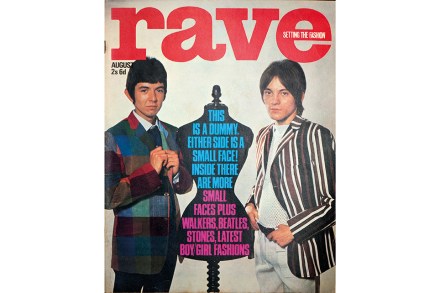
Thirty years ago, I worked for a while in a shop in Soho selling vintage newspapers and magazines. The holy grail for some customers might be the 1955 Playboy featuring Bettie Page or the 1976 Daily Mirror with the Sex Pistols’ ‘Filth & the Fury’ headline. But those of a born-again Mod persuasion were usually looking for 1960s publications with the Small Faces on the cover – preferably the August 1966 copy of the teenage music and fashion bible Rave, showing Ronnie Lane and Steve Marriott from that most style-conscious of bands, complete with a double-page poster of the group inside.

The short-lived wonder of Creedence Clearwater Revival

From our UK edition

Million-selling rock bands are rarely happy families. They are an uneasy combination of a creative alliance and a business partnership, which is frequently thrown together on an ad hoc basis by people barely out of their teens. They are tested to destruction by long hours, minimal sleep, deafening noise, international travel, a bedroom schedule that would have made Caligula blush and a seemingly unending cocktail of legal and illegal stimulants. As the old joke goes, there is also a downside. This is the accepted pattern.

A glimpse of lost London – before the yuppie invasion

From our UK edition

In a 1923 book called Echo de Paris, the writer Laurence Houseman attempted to conjure up in a very slim, elegant volume the atmosphere and especially the conversation of an afternoon a quarter century earlier that he had spent in the company of the exiled Oscar Wilde. It was a conscious act of imaginative recreation, seeking to place the reader at the same boulevard table alongside the participants. As the author explained in his introduction: The scene, as regards its setting — the outside of a Paris restaurant — is true to history; and if, toward the end, a touch of drama has been introduced, the reader will understand that it is more symbolic than actual.

The musical gravy train: Leaving The Building, by Eamonn Forde, reviewed

From our UK edition

Musicians cast a long cultural shadow. Politicians may wield considerable power in their time, but although today’s young people are still generally aware of John Lennon, they are less likely to have heard of Sir Alec Douglas-Home, despite the fact that he was running the country during the year the Beatles first came to international prominence. This is not the place to discuss the relative merits of writing ‘I Am the Walrus’ as against introducing the Resale Prices Bill (1964), but try offering T-shirts of both gentlemen on eBay today, and see which one sells.

What’s a scribbled signature worth?

From our UK edition

In 2002 I was living in Berlin. One day my upstairs neighbour Peter told me he had just returned from outside the Hotel Adlon, having seen the self-proclaimed ‘King of Pop’ casually dangling a baby from a third-floor window. Peter was not there among the onlookers as a Michael Jackson fan but rather as a committed autograph collector and dealer, accustomed to haunting stage doors and hotel entrances when celebrities visited the city, tipped off by specialist monthly news-sheets giving the names, dates and locations of likely suspects. He failed to secure a signature that day, but at least witnessed one of the more notorious examples of hands-on parenting of recent decades.

Capital entertainment: how the West End became the playground of London

From our UK edition

The West End was always something a little apart. Some years ago, I used to go drinking with a man who had jointly run one of the best Soho live music clubs of the late 1950s and 1960s. He told me that they received a visit in their early days from the Kray brothers demanding protection money, who were summarily told, in his words, ‘to fuck off’. When I expressed surprise at this apparently dangerous response, he explained that while the twins meant a lot in Bethnal Green at that time, ‘up West’ it was a different story.

Did George Formby and Gracie Fields really help Britain out of the Depression?

From our UK edition

Cinema history is a strange thing. A couple of months ago the Guardian began a series in which film critics write about ‘the classic film I’ve never seen’, some admitting to have unaccountably avoided exposure to genuine masterpieces such as Metropolis (1927) or À Bout de Souffle (1960). Others have revealed they have yet to sample undemanding box-office hits such as Top Gun (1986) or Titanic (1997). If the latter are classics, then so is On the Buses, the biggest selling British film of 1971. The showing of motion pictures to paying customers began in the 1890s, and crowds flocked to see brief footage of someone treading on a hosepipe.

The good boy of jazz: Dave Brubeck’s time has come round at last

From our UK edition

On 8 November 1954, Dave Brubeck’s portrait appeared on the cover of Time magazine, accompanied by the words ‘The Joints are Really Flipping’. Inside, the pianist and leader of his own jazz quartet was variously described as ‘a wigging cat with a far-out wail’ and ‘way out on Cloud 7’, who when at college chatted up his future wife Iola with the immortal philosophical enquiry: ‘Tell me about this Plato cat.’ Yet Brubeck’s life and habits were far from the archetypal drug-fuelled, self-destructive behaviour the public had sometimes been led to expect from best-selling memoirs of that world, such as Mezz Mezzrow’s hugely entertaining sustained exercise in jive-speak, Really the Blues (1946).

Chinatown – that late masterpiece of film noir – could never be made now

From our UK edition

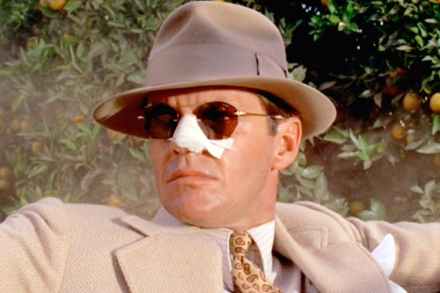
In one of the most frequently quoted lines of post-war European cinema, a character in the 1976 Wim Wenders film Kings of the Road remarks that ‘the Yanks have colonised our subconscious’ (‘Die Amis haben unser Unterbewusstsein kolonialisiert’). The Hollywood film, a powerful weapon broadcasting this almost mythological vision of American culture around the world, had already begun its long retreat from complex adult themes, after untold millions were made from the colossal success of pictures by George Lucas and Steven Spielberg such as Jaws (1975), Star Wars (1977) and Raiders of the Lost Ark (1981), all of which became franchises.

The dark past of the pioneering photographer Eadweard Muybridge

From our UK edition

A distinctive pattern of horizontal and vertical lines appears in the background of many of Eadweard Muybridge’s best-known photographs, giving his images of animal and human locomotion a strangely modern appearance, despite their being products of the 1880s. The lines also anticipate those adopted in the 20th century against which US criminals appear in police identification parades — which seems appropriate, given that a decade prior to taking these images, Muybridge himself was convicted of murder. Had the small-town jury not delivered a verdict of justifiable homicide — despite the fact that Muybridge deliberately sought out and gunned down his unarmed victim, and showed no remorse thereafter — then these images would never have existed.

When Decca records were part of everyday life

From our UK edition

In 1929 in America, Dashiell Hammett published his debut hardboiled novel Red Harvest, over in Paris Buñuel and Dalí began showing their film Un Chien Andalou at a small cinema, while in Britain the fledgling Decca Record Company opened for business. Issued to mark 90 years of the label’s existence, this large format, fully illustrated volume benefits greatly from access to its extensive archive of the days when Billie Holiday, Kathleen Ferrier, Tom Jones, Pavarotti, Bing Crosby, Buddy Holly, Herbert von Karajan, Billy Fury, Marianne Faithfull, George Formby, Slaughter & the Dogs, Georg Solti, Benny Hill, Winston Churchill and even the Playboy Club Bunnies appeared on Decca or its subsidiaries.

They just keep rolling along

From our UK edition

At the end of 1969, teenage Rolling Stones fans reading the new Fab 208 annual could be forgiven for thinking that time wasn’t on their side: After five years as Britain’s most controversial group, how much more moss can they gather before they call it a day? Will we ever see the world’s most exciting group ‘live’ again, and where do wicked Mick and Co. go from here on? Mick Jagger himself spoke of the dietary measures he had adopted to fortify his supposedly ancient 26-year-old body: ‘If you eat any old rubbish like lots of potatoes and take no exercise, then you end up looking like a potato — all knobbly knees and bloated.

Loved and lost | 21 March 2019

From our UK edition

On 19 June 1948, the modern LP was unveiled at a press conference by the Columbia Records president Ted Wallerstein, who, as Billboard magazine reported, ‘demonstrated listening qualities of both 10- and 12-inch vinyl microgroove platters’. The company issued Frank Sinatra’s long-player, The Voice of Frank Sinatra, a week later. The title of David Hepworth’s new book might therefore imply a starting point of 1948 — similar to the approach taken by Travis Elborough’s excellent 450-page history of the album, The Long Player Goodbye (2007) — but Hepworth’s book is both narrower and more autobiographical, largely confined to the years 1967 to 1982.

The road not taken | 25 October 2018

From our UK edition

In the 1970s, when Mark Kermode first picked up an instrument, the UK record business was a very different place. There were five weekly music papers — NME, Sounds, Melody Maker, Record Mirror and Disc. Around 15 million people tuned into Top of the Pops every Thursday; Radio 1 reached more than 20 million listeners a week, and chart 45s could sell 500,000 copies. Today, the idea of schoolchildren saving up their pocket money to buy the latest single feels as if it has long since gone the way of other formerly popular activities such as stamp collecting and origami. The times, as Dylan almost remarked, they’ve been a-changin’. ‘As a teenager, I wanted to do two things,’ says Kermode. ‘To become a pop star, and to watch movies.

Getting their kicks on Route 66

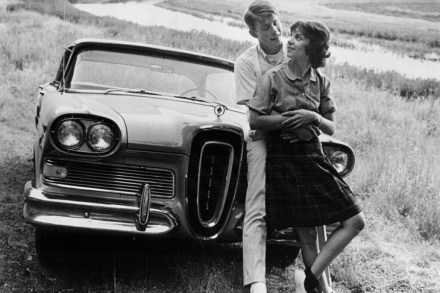
In 1973, four years before he disappeared down the Star Wars rabbit hole, George Lucas directed the film American Graffiti, eulogising his days as a teenage car fanatic in Modesto, California; parking at drive-ins, hot-rodding and cruising for dates. This vanished world was only a decade away —‘Where were you in 62?’ said thepublicity — the equivalent of someone today getting dewy-eyed about 2007. Yet the clashes and strife of the late 1960s in mainland America and the deepening quagmire of the Vietnam War had already made those days look like an age of lost innocence.

Angels with dirty faces

From our UK edition

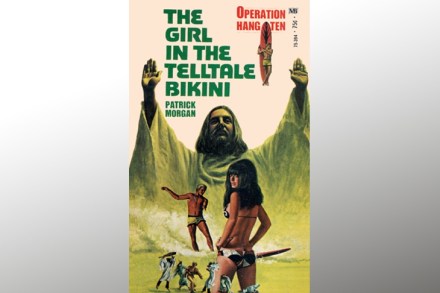
The year 1971 was a busy one for Mary Whitehouse, self-appointed ‘Clean-up TV’ campaigner. Not only did she help establish the Nationwide Festival of Light, making religious inspired protests against the so-called permissive society, she also wrote an autobiography, Who Does She Think She Is?, published by New English Library. Thus her thoughts regarding the impending moral collapse of the nation were brought to the public by the same outfit responsible for a comprehensive range of sinew-stiffening pulp fiction delights such as The Degenerates by Sandra Shulman, Bikers at War by Jan Hudson and Gang Girls by Maisie Mosco.

War of words

From our UK edition

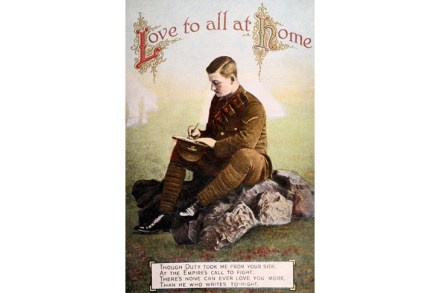
At the close of the 1970s, I found a selection of postcards in an antique shop which had been sent from the Western Front in 1917 by a soldier named Private Howe to his young daughter Ena. I was struck by the immediacy of the language, and the careful avoidance of anything hinting at danger, combined with the tastefully chosen French photomontages of flowers and romanticised battlefields. In Words and the First World War, Julian Walker has examined many such postcards, alongside letters sent to and from the Fro nt, private diaries, trench publications such as the Wipers Times, national and regional newspapers and other sources.

In cold blood

From our UK edition

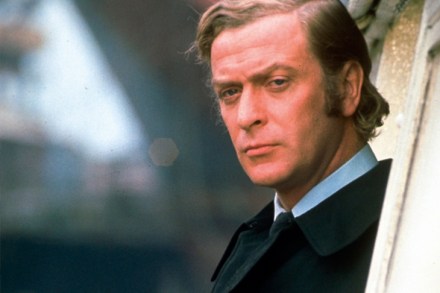
If you search Google Images for Ted Lewis, the results show an American jazz-age band-leader in a battered top hat, or the determined features of the world champion boxer Ted ‘Kid’ Lewis, the ‘Aldgate Sphinx’. In between falls a picture of the crime writer Ted Lewis perched on a stool at a cable-strewn film location in 1970, portable typewriter on his knees, cigarette on his lip, and a sardonically knowing look which says that after years of struggle, overnight success has finally arrived. The film was Get Carter, anote-perfect transcription of Lewis’s hardboiled masterpiece Jack’s Return Home, published in February that year.