Simon Ings

The art of ageing

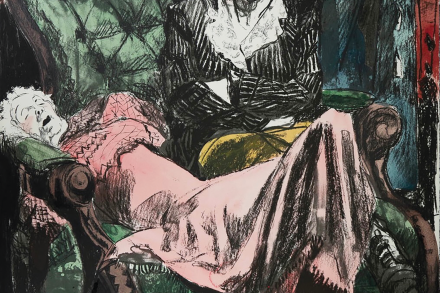
More than 30 contemporary artists have contributed to the Wellcome Collection’s latest exhibition, which asks what it’s like to age at a time of unparalleled longevity. But as so often happens at the Wellcome’s exhibitions, it’s the ephemera that draws the eye first.  ‘These 2 men are the same age,’ says a leaflet advertising Kellogg’s All-Bran breakfast cereal. ‘One has driving power – energy – the will to succeed. The other is listless – tired all the time – it is an effort for him to plod through each day’s work.’  The point being that ageing is, to a not inconsiderable degree, something we do to ourselves, and something we do to each other. It is a process, not an event.

Seeing the trees for the wood

From our UK edition

You’re up an oak tree somewhere between Ashtead and Epsom in Surrey. Wet lichens glow as you hunt for a footing on slick limbs. From the top of the canopy, the land turns to sea and glades appear as ‘oceans between continents of trees’. A ghostly armada of dead oaks lies becalmed in a clearing – a bleached collection of hulks left from a fire that happened decades ago. Like the titular character of Dr Seuss’s The Lorax, Luke Barley speaks for the trees, and his ambition is to make armchair woodlanders of us all. Ancient is his history of British woodlands – which turn out to be a lot more ancient but a lot less wild than the neophyte reader might expect. And if the history doesn’t grab you, there’s always the memoir.

The turbulent life of the Marquis de Morès – the 19th-century aristocrat turned populist thug

From our UK edition

The Marquis de Morès (1858-96) was a man of many abilities, but balancing a chequebook was not one of them. Bested (savaged, frankly) by the Chicago meat-packing lobby and frustrated in his attempt to build a railroad across Indochina, the soldier, duelist and self-styled ‘economist’ returned to his native France in 1886, caused havoc and invented fascism (if we allow the Italian historian Sergio Luzzatto to have his way) – only to meet his nemesis much closer to home.

Thrilling tales of British pluck

From our UK edition

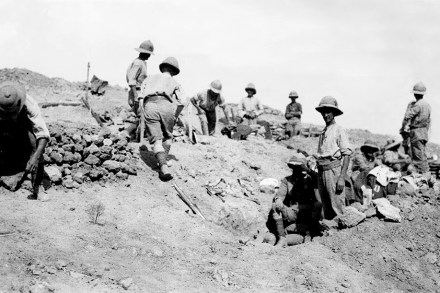
December 1917. For years the Ottoman Turks have been trying to spark a jihad of the world’s Sunni Muslims, hoping that Muslim subjects of the British Empire in India will rise in revolt. Now that Tsarist power in Russia has collapsed, the roads through central Asia are open and the war-weary British have virtually no resources left to prevent the Turkish empire from expanding into India.  Edward Noel, an aristocratic Catholic political officer who is supposed to be in Persia, sends a telegram to his betters from the city of Baku, perched on the western shore of the Caspian Sea and the source of half the world’s oil. He wants to plug the strategic gap in central Asia by raising a force of local troops.

How the US military became world experts on the environment

From our UK edition

In 1941, as it entered the second world war, the US Army barely bested Bulgaria’s for size and combat readiness. Nor did US forces have very much idea of what conditions were like in their new theatres of operation. In the winter of 1942, hot-weather gear and lightweight machinery landed in the deserts of North Africa where hot and dry conditions were assumed to persist throughout the year. Men froze half to death, even as their digging equipment foundered in winter mud. Sand, Snow and Stardust is the story of how the US military shed its ignorance and, by harnessing logistical intelligence and environmental knowledge, turned America into a global superpower. Before the second world war the US operated just 14 overseas military bases.

Waiting for Gödel is over: the reclusive genius emerges from the shadows

From our UK edition

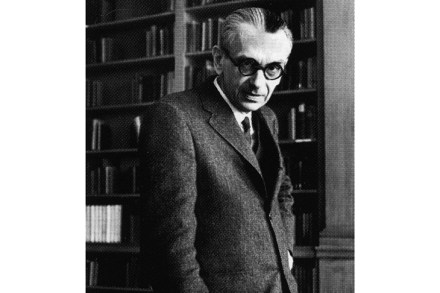
The 20th-century Austrian mathematician Kurt Gödel did his level best to live in the world as his philosophical hero Gottfried Wilhelm Leibniz imagined it: a place of pre-established harmony, whose patterns are accessible to reason. It’s an optimistic world, and a theological one: a universe presided over by a God who does not play dice. It’s most decidedly not a 20th-century world, but ‘in any case’, as Gödel himself once commented, ‘there is no reason to trust blindly in the spirit of the time’. His fellow mathematician Paul Erdös was appalled: ‘You became a mathematician so that people should study you,’ he complained, ‘not that you should study Leibnitz.

What rats can teach us about the dangers of overcrowding

From our UK edition

The peculiar career of John Bumpass Calhoun (1917-95), the psychologist, philosopher, economist, mathematician and sociologist who was nominated for the Nobel Peace Prize and was the subject of a glowing article in Good Housekeeping, comes accompanied with more than its fair share of red flags. He studied how rodents adapted to different environments and specifically how the density of a population affects an individual’s behaviour. He collected reams of data but published little, and rarely in the mainstream scientific journals. He courted publicity, inviting journalists to draw from his studies of rats and mice apocalyptic conclusions about the future of urban humanity.

Life among the world’s biggest risk-takers

From our UK edition

The Italian actuary Bruno de Finetti, writing in 1931, was explicit: ‘Probability does not exist.’ Probability, it’s true, is simply the measure of an observer’s uncertainty; and in The Art of Uncertainty, the British statistician David Spiegelhalter explains how this extraordinary and much-derided science has evolved to the point where it is even able to say useful things about why matters have turned out the way they have, based purely on present evidence. Spiegelhalter was a member of the Statistical Expert Group of the 2018 UK Infected Blood Inquiry, and you know his book’s a winner the moment he tells you that between 650 and 3,320 people nationwide died from tainted transfusions.

Will the photo of your lost loved one be replaced by a chatty robot?

From our UK edition

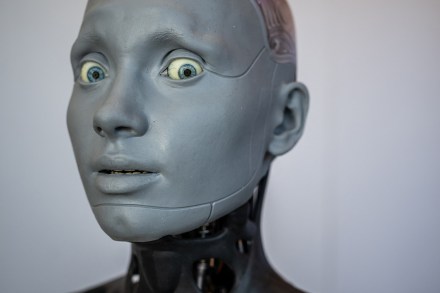
They didn’t call Diogenes ‘the Cynic’ for nothing. He lived to shock the (ancient Greek) world. When I’m dead, he said, just toss my body over the city walls to feed the dogs. The bit of me that I call ‘I’ won’t be around to care. The revulsion we feel at this idea tells us something important: that the dead can be wronged. Diogenes may not have cared what happened to his corpse, but we do; and doing right by the dead is a job of work. Some corpses are reduced to ash, some are buried, and some are fed to vultures. In each case, the survivors all feel, rightly, that they have treated their loved ones’ remains with respect.

Why today’s youth is so anxious and judgmental

From our UK edition

What’s not to like about a world in which youths are involved in fewer car accidents, drink less and wrestle with fewer unplanned pregnancies? Well, think about it. Those kids might not be wiser; they might simply be afraid of everything. And what has got them so afraid? A little glass rectangle, ‘a portal in their pockets’, that entices them into a world that’s ‘exciting, addictive, unstable and... unsuitable for children’. So far, so paranoid – and there’s a delicious tang of the documentary maker Adam Curtis about the social psychologist Jonathan Haidt’s extraordinarily outspoken and well-evidenced diatribe against the creators of smartphone culture.

The beauty of medieval bestiaries

From our UK edition

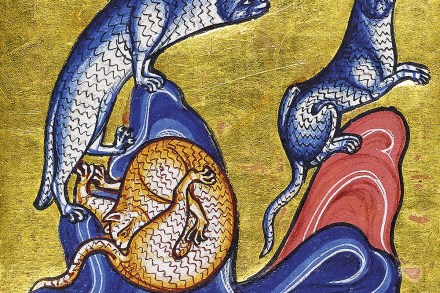
How to hunt an elephant. Find a tree and saw most of the way through it without felling it. Sooner or later an unwary elephant is bound to lean up against it. Down comes the tree and down comes the elephant, which, since it has no joints in its legs, will be unable to get up again. Dispatch your elephant with, um, dispatch, lest the herd arrives in answer to its plangent call. In that case, the youngest of them, being lower to the ground, will be able to lift their fallen comrade back on its feet.

Sounds and sweet airs that give delight

From our UK edition

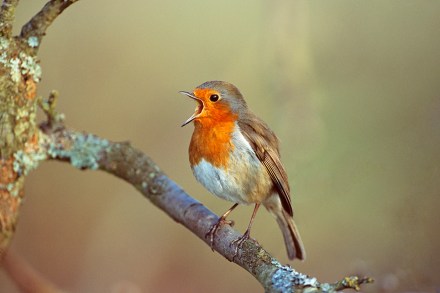
Caspar Henderson writes beguiling books about the natural world, full of eyecatching detail and plangent commentary. His Book of Barely Imagined Beings: A 21st-century Bestiary came out in 2012. A Book of Noises is a worthy companion – a pursuit of auditory wonders, a paean to the act of listening and a salute to silence. Item: the music of the spheres. (The planets’ orbits, proving unideal and elliptical, suggested to the musically minded astronomer Johannes Kepler an appropriately sad, minor-keyed leitmotif for the Earth, where, he felt, misery and famine held sway’.) Item: the world’s loudest sound.

Vivid, gripping and surreal: a new slice of Ellroy madness

From our UK edition

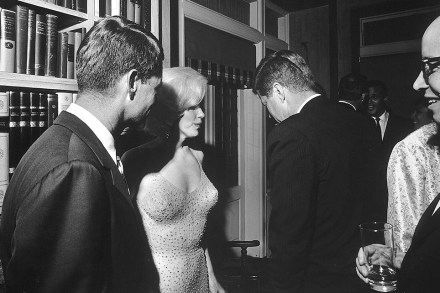
Los Angeles, August 1962. PI and extortionist Freddie Otash is snooping on Marilyn Monroe for labour leader and racketeer Jimmy Hoffa, who’s paying good money for dirt on Jack and Bobby Kennedy. Is Jack really schtupping Miss Monroe? Who cares? Make it so. But the operation is rumbled and then Monroe dies of an overdose (or does she?) and Otash finds himself pushed from pillar to post by greasepole Pete (Pitchess, 28th Sheriff of LA County) and ratfink Bobby (US attorney general Robert Kennedy), for they too have a stake in filthing-up the film star’s name.

‘We cannot turn back’ from the League of Nations, said Woodrow Wilson – but did just that

From our UK edition

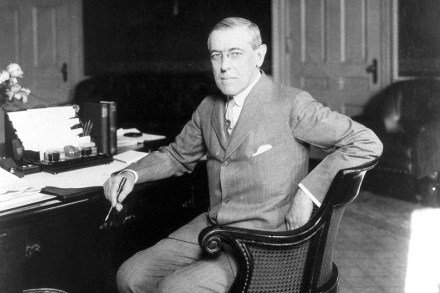
It was a vision that President Woodrow Wilson could not resist. The Treaty of Versailles, and the League of Nations founded during the negotiations, were meant not just to end the first world war but all future wars by ensuring that a country taking up arms against one signatory would be treated as a belligerent by all the others. Wilson took his adviser Edward ‘Colonel’ House’s vision of a new world order and careered off with it. Against advice, Wilson attended Versailles in person and let none of his staff in during negotiations Against advice, he attended Versailles in person and let none of his staff in with him during the negotiations.

Sports fans are rarely shamed for being overzealous

From our UK edition

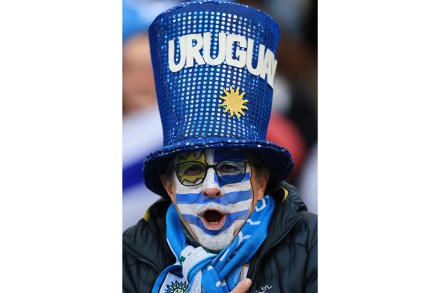
Have you ever loved someone and got nothing back? Next question: was it really so bad? We all feel things for people who don’t even know we exist, and the experience is often enriching. For me, David Bowie’s life held meaning. If the Thin White Duke did not rate as your personal companion, then our late Queen almost certainly did; or, if not her, then what about Walter White, from the TV drama Breaking Bad, since we love fictional characters too? Walt saw me through my divorce; and we enjoy these relationships in private. Sometimes we meet fellow fans, and then, as the cheery Michael Bond points out, ‘one of the incentives for being part of a fandom is that you get to do things with others’. Bond sketches the psychology of belonging very lightly in his book.

The eeriness of lockdown: To Battersea Park, by Philip Hensher, reviewed

From our UK edition

We never quite make it to Battersea Park. By the time the narrator and his husband reach its gates, it’s time for them, and us, to return home. The narrator is a writer, living just that little bit too far away from the park, inspired by eeriness of the Covid lockdown regime but also horribly blocked. All kinds of approaches to fiction beckon to him in his plight, and we are treated to not a few of them here.  Each section of this novel embodies a literary device. We begin, maddeningly, in ‘The Iterative Mood’ (‘I would have’, ‘She would normally have’ ,‘They used to’) and we end in ‘Entrelacement’, with its overlapping stories offering strange resolutions to this polyphonous, increasingly surreal account of lockdown.

The musical note that can trigger cold sweats and sightings of the dead

From our UK edition

Imagine that all the frequencies nature affords were laid out on an extended piano keyboard. Never mind that some waves are mechanical, propagated through air or some other fluid, and other waves are electro-magnetic and can pass through a vacuum. Lay them down together, and what do you get? The startling answer is a surprisingly narrow piano. To play X-rays (whose waves cycle up to 30,000,000,000,000,000,000 times per second), our pianist would have to travel a mere nine metres to the right of middle C. Wandering nine and a half metres in the other direction, our pianist would then be able to sound the super-bass note generated by shockwaves rippling through the hot gas around a supermassive black hole in the Perseus cluster – a wave that cycles just once every 18.

All successful spies need to be good actors

From our UK edition

On 2 October last year, when he became chief of the UK Secret Intelligence Service (MI6, if you prefer), Richard Moore tweeted (tweeted!): ‘#Bond or #Smiley need not apply. They’re (splendid) fiction but actually we’re #secretlyjustlikeyou.’ The gesture’s novelty disguised, at the time, its appalling real-world implications. Bond was, after all, competent and Smiley had integrity. Stars and Spies, by the veteran intelligence historian Christopher Andrew and the theatre director and circus producer Julius Green, is a thoroughly entertaining read, but not at all a reassuring one.

The great disrupter: how William of Occam overturned medieval thought

From our UK edition

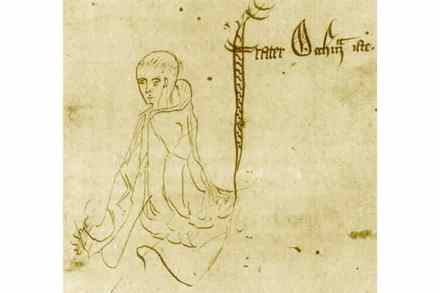
Astonishing where an idea can lead you. You start with something that 800 years hence will sound like it’s being taught at kindergarten: fathers are fathers, not because they are filled with some ‘essence of fatherhood’, but because they have children. Fast-forward a few years, and the Pope is trying to have you killed. Not only have you run roughshod over his beloved eucharist (justified, till then, by some very dodgy Aristotelian logic-chopping); you’re also saying there’s no ‘essence of kinghood’, either. If kings are only kings because they have subjects, then, said William of Occam, ‘power should not be entrusted to anyone without the consent of all’. Heady stuff for 1334.

Stephen Hawking: the myth and the reality

From our UK edition

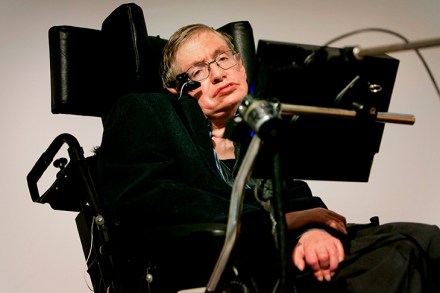
I could never muster much enthusiasm for the theoretical physicist Stephen Hawking. His work, on the early universe and the nature of spacetime, was Nobel-worthy, but those of us outside his narrow community were horribly short-changed. His 1988 global bestseller A Brief History of Time was incomprehensible, not because it was difficult but because it was bad. Nobody, naturally, wanted to ascribe Hawking’s popular success to his rare form of motor neurone disease, Hawking least of all. He afforded us no room for horror or, God forbid, pity. In 1990, asked a dumb question about how his condition might have shaped his work (because people who suffer ruinous, debilitating illnesses acquire compensating superpowers, right?