Culture

Culture

The good, the bad and the ugly in books, exhibitions, cinema, TV, dance, music, podcasts and theatre.

Spectator competition winners: ‘I love big BoJo’: Winston Smith applies for a job at No. 10

The latest competition asked for application letters for a job at No. 10 from a fictional character of your choice. This challenge was inspired by the PM’s chief special adviser Dominic Cummings’s suggestion, in a recruitment ad, that the ideal candidate for one of the positions on offer might resemble ‘weirdos from William Gibson novels like that girl hired by Bigend as a brand “diviner” who feels sick at the sight of Tommy Hilfiger’. The parade of hopeful candidates, in an entry that was competent if somewhat predictable, included George Smiley, Gregor Samsa, Bertie Wooster and Toad of Toad Hall, all of whom were pipped to the post by the winners below who snaffle £25 each. Adrian Fry/Holden CaulfieldAll resumes are phoney.

Philip Hensher’s latest novel is a State of the Soul book

More from Books

This is a very nuanced and subtle novel by Philip Hensher, which manages the highwire act of treating its characters with affection and anger at one and the same time. Politically, ethically and emotionally it places the reader in a kind of vertigo by addressing a singular moral question: is it better to be steadfast to your principles or to change tack as history twists? The narrator is ‘Spike’, whom we first meet when he is 16 at the school assembly — featuring a recruiting officer who is blind-sided by one of the pupils. Spike is invited into a group of idealistic and pretentious people. Whether their politics are classical Marxist, anarcho-syndicalist, Trotskyite or some mishmash of all three is probably even a mystery to themselves.

It’s not the dark hours the insomniac dreads but the clear light of day

More from Books

The insomniac may come to dread the night’s solitude, but the next day poses the greater challenge. That’s when you are obliged to walk among the rested population and pass for one of them, when in truth most interactions are conducted in a state of self-doubting confusion; when harnessing one’s thoughts is like grabbing at shadows; the right words, if found, won’t cohere into fluent sentences; and dark intrusions from the subconscious flicker up and distract from whichever simple task you’re attempting to complete. The novelist Samantha Harvey’s first memoir examines a year spent in this condition.

Lake Ohrid: an oasis of peace in the war-torn Balkans

More from Books

Kapka Kassabova’s previous travel book, Border, was rightly acclaimed and won several prizes. The author travelled to the edge of Europe, between Greece, Bulgaria and Turkey, and teased out ‘where something like Europe begins and something else ends, which isn’t quite Asia’. This is a sequel of sorts. She now travels to another border, that between Macedonia, Albania and Greece, where the vast and beautiful Lake Ohrid remains one of the Balkans’ surviving religious melting pots, despite considerable nationalist pressure. It is where her mother was originally from, so her journey is partly a rediscovery of her own roots.

How long is long enough to look at a work of art?

More from Books

There is a vogue at the moment for books which use art as a vehicle for examining the writer’s wider life and interests. Toby Ferris will certainly not have seen this as in any way an autobiography, but what it essentially does is use a quest for the 42 surviving paintings by Pieter Bruegel the Elder as a starting point for an exploration of anything and everything, from the death of a friend to art history, family history, philosophy, anthropology, mathematics, music and paragliding. The result of this — what Ferris calls his Bruegel Project — is an intricately plotted book that is by turns stimulating, moving and sometimes mildly pretentious.

A dark emerald set in the Irish laureate’s fictional tiara: Actress, by Anne Enright, reviewed

More from Books

Actress is the novel Anne Enright has been rehearsing since her first collection of stories, The Portable Virgin (1991). It is a perfect jewel of a book, a dark emerald set in the Irish laureate’s fictional tiara, alongside her Man Booker Prize winner The Gathering (2007) and The Green Road (2015). Its brilliance is complex and multifaceted, but completely lucid. Like its predecessors, it is a portrait of a matriarch. Norah, the novelist daughter of an invented Irish theatre legend, Katherine O’Dell, sets out to tell the story of her mother’s life as she approaches her own 59th birthday. She is acutely aware that she is about to have one birthday more than the actress managed: ‘I would spin beyond her, out into unchartered space.

There’s something hot about a hat

More from Books

When an American describes a woman as wearing a ‘Park Avenue Helmet’ you know exactly what is meant. This is a hairdo so precise and sculpted that it trembles, category-wise, between coiffure and armour. Both natural and artificial, it also accurately signals social status. The link between hats, hair and caste was first made by James Laver in his 1937 classic Taste and Fashion, a book not yet bettered in its field. Oddly, it does not appear in the bibliography of Drake Stutesman’s new cultural history of headwear.

The stomach for the fight: cooking for Churchill during the war

More from Books

Georgina Landemare cooked for the Churchill family in all their kitchens, during the 1930s and 1940s. She got as close to the inner workings of the prime ministerial stomach as it was possible to get for a non-family member. At Admiralty House, Chartwell, Chequers, Downing Street and even in the hastily put-up fitted kitchen in the Cabinet War Rooms, she eked out the rations into seven-course meals and accommodated both Churchill’s gluttony and his fussiness. There seem to have been plovers’ eggs in abundance. The food historian Annie Gray’s previous books include an examination of the life of Queen Victoria through that monarch’s enormous, indiscriminate appetite for eating.

Death in the Cape – the lonely fate of Mary Kingsley

More from Books

What compelled three well-known British writers to leave their homes and travel 6,000 miles to participate in a nasty late-19th-century conflict in the far-off South African veldt? This question lies at the heart of Sarah Lefanu’s excellent analysis of how Rudyard Kipling, Arthur Conan Doyle and Mary Kingsley found themselves following the flag in Britain’s last great imperial war. Her book starts with concise biographical introductions to these protagonists, up to the start of what is still widely known as the Boer War in 1899. We get the familiar Kipling odyssey from Bombay, through fostering in the ‘House of Desolation’ in Southsea to journalism in Lahore. Marriage took him to Vermont, where he started a family and fine-tuned his thinking on Britain and empire.

Unspeakably prolix and petty: will anyone want to read John Bercow’s autobiography?

Lead book review

John Bercow obviously intended his book to annoy people, and he’s certainly succeeded in that. MPs who don’t find their names in the index can generally count themselves lucky. He just loves pouring shit over other politicians, especially Tories. He finds David Cameron ‘an opportunist lightweight, sniffy, supercilious and deeply snobbish’; Theresa May ‘as wooden as your average coffee table’; Michael Gove ‘prone to oleaginous flattery’; Amber Rudd ‘all gong and no dinner’; Michael Howard ‘a decidedly cold fish’.

Spectator competition winners: T.S. Eliot’s cats get to grips with the 21st century

The latest competition asked for poems featuring one of T.S. Eliot’s practical cats getting to grips with the modern world. Your 21st-century reincarnations of Eliot’s felines (the poems were originally published in 1939 and inspired by the poet’s four-year-old godson, who invented the words ‘pollicle’ for dogs and ‘jellicle’ for cats) were terrific, making it especially difficult to decide on the winners. Some fine Macavitys narrowly missed the cut (take a bow, Nick Syrett, David Shields and Hamish Wilson), as did Bill Greenwell’s Jellicles and Brian Allgar’s Growltiger, the Tory Cat. This week’s top cats are printed below and pocket £35 each.

The real Calamity Jane was distressingly unlike her legend

Lead book review

‘This is the West, Sir,’ says a reporter in The Man Who Shot Liberty Valance. ‘When the legend becomes fact, print the legend.’ This is very much the advice that has applied to Calamity Jane over the years. She was the lover of ‘Wild Bill’ Hickok, avenged herself on his killer and bore his secret love-child. She rode as a female army scout and served with Custer. She saved a runaway stagecoach from a Cheyenne war party and rode it safely into Deadwood. She earned her nickname after hauling one General Egan to safety after he was unhorsed in an ambush. She was a crack shot, a nurse to the wounded, a bullwhacker and an elite Pony Express courier. Not one of these things is true.

Maaza Mengiste’s The Shadow King is certainly no Abyssinian Andy McNab

More from Books

In 1935 the troops of Benito Mussolini’s sinister-clownish Roman Empire II invaded Ethiopia, in large part out of spite for Italy’s embarrassing defeat there 40 years earlier. Initially largely uncontested — thanks both to Emperor Haile Selassie’s desperate faith in international brotherhood and to a hearty dose of Quislingism from his leading nobles — when ‘war’ eventually did break out it was so one-sided that Ethiopian women were gathering spent bullet casings for reuse while Italian planes (the older Ethiopians believing these were dragons) dropped poison gas on them. Selassie, meanwhile, fled to England.

The downside of mindfulness

More from Books

Way back in 1996 Norman E. Sjoman published a book called The Yoga Tradition of the Mysore Palace, in which he contested that much of what we now (in the West) consider to be yoga — a practice apparently steeped in millennia of ancient Indian tradition — is actually a veritable hotchpotch of disparate influences, some of which are surprisingly modern. In 2010 Mark Singleton’s controversial Yoga Body: The Origins of Modern Posture Practice consolidated Sjoman’s argument, and Yoga International (through somewhat gritted teeth, no doubt) claimed it represented ‘a watershed moment in the history of global asana culture’.

A grand romance: Sophy Roberts goes in search of lost Bechsteins in Siberia

More from Books

In the world of classic cars, barn-finds sometimes do occur. An old Mercedes Gullwing might be discovered under tarps and hay on a farm somewhere in Florida, say, or an E-type Jag exhumed from out-buildings in Norfolk. Such discoveries are relatively rare, yet news of them reaches far beyond specialist magazines and websites for one simple reason: people love classic cars. We all invent stories about their history and fate based on the model, where it was found and who found it. Musical instruments have nowhere near the same traction in our imagination. For a barn-find fiddle to garner international attention it would have to be a valuable violin, or its provenance would need to be mired in the murk and criminality of Nazi Germany.

Chinatown – that late masterpiece of film noir – could never be made now

More from Books

In one of the most frequently quoted lines of post-war European cinema, a character in the 1976 Wim Wenders film Kings of the Road remarks that ‘the Yanks have colonised our subconscious’ (‘Die Amis haben unser Unterbewusstsein kolonialisiert’). The Hollywood film, a powerful weapon broadcasting this almost mythological vision of American culture around the world, had already begun its long retreat from complex adult themes, after untold millions were made from the colossal success of pictures by George Lucas and Steven Spielberg such as Jaws (1975), Star Wars (1977) and Raiders of the Lost Ark (1981), all of which became franchises.

How could enlightened 18th-century Britain have believed that a woman could give birth to rabbits?

More from Books

Does a practical joke differ from a hoax? It could be a matter of scale. Anyone can deploy a whoopee cushion, but it takes rather more — as Virginia Woolf and others did, long before Ali G — to kit oneself out as Abyssinian royalty for a 1910 state visit by train to the deck of a dreadnought in Weymouth harbour. There was nothing in it for them, but that hoax brought questions in the Commons. Monetary gain, as with the Hitler Diaries, certainly sours claims for hoaxes as a pure art form. Where does this leave the humble,twentysomething mother-of-three Mary Toft, and those around her? The question is raised by Karen Harvey’s brief but amply detailed study of a woman who, in 1726, brought the Surrey market town of Godalming publicity it had not known before.

Hitler’s affair with his niece — and a failed attempt on his life — make for a sizzling thriller

More from Books

The journalist Deepa Anappara turns to crime with her debut novel, Djinn Patrol on the Purple Line (Chatto & Windus, £14.99). First off: great title. I really wanted to love this book, expecting, well, djinns on the purple line. The results are somewhat different. The purple line refers to a train line that runs through an area of an Indian city filled with slums and rubbish tips. Nine-year-old Jai is obsessed with TV cop shows. When young children start to go missing, Jai sets out to track down the people responsible. The hours he’s spent watching programmes such as Police Patrol will now come to good use, as he works a case the real police have little interest in. As many as 180 children go missing in India every day. This fact prompted Anappara to write the novel.

Dirty money and political manipulation: Independence Square, by A.D. Miller, reviewed

More from Books

A.D. Miller’s gripping new book is set largely during Ukraine’s 2004 Orange Revolution, which Miller covered as a journalist. Ten years later, I reported on the aftermath of the country’s 2014 Euromaidan Revolution. Independence Square details the first event and prefigures the second. It is several things: a thriller, a political novel and a statement on our times. It tells the story of Simon, a disgraced British diplomat who, one day on the Tube, sees the cause (so he believes) of his downfall. She is a woman called Olesya whom he met years earlier during the Orange Revolution. From this beginning the novel unfurls, switching between 2004 and the present day. Back in 2004 the protestors are angry and the government is getting desperate. Violence looms.

There was no fairy tale ending for the lovely Gladys Deacon

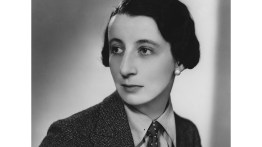
The story of how Hugo Vickers eventually tracked down the former Gladys Deacon, Duchess of Marlborough is almost as fascinating as how Gladys nailed her duke. Both were obsessions that began young, that of the 16-year-old Vickers when he read of ‘The love of Proust, the belle amie of Anatole France’, and was so taken that he wrote his first biography of her 40 years ago, and that of Gladys when at 14 she wrote (of the Duke) ‘O dear if only I was a little older I might “catch” him yet’.’ Gladys (born in 1881) was a star from the word go, extremely intelligent — her tutor called her a ‘brain genius’ — and avid to learn.

Spectator competition winners: ‘It was the best of pies, it was the worst of pies’: famous authors on food

Your latest challenge was to provide a passage about food written in the style of a well-known author. One of my favourite literary meals is in John Kennedy Toole’s A Confederacy of Dunces. Here is the novel’s protagonist, the Falstaffian Ignatius J. Reilly, sizing up a mid-afternoon snack: ‘In the boiling water the hot dogs swished and lashed like artificially coloured and magnified paramecia. Ignatius filled his lungs with the pungent, sour aroma. “I shall pretend that I am in a smart restaurant and that this is the lobster pond.”’ In a large and wide-ranging entry, Douglas G.

His own worst critic? Clive James the poet

More from Books

Clive James (1939-2019), in the much-quoted words of a New Yorker profile, was a brilliant bunch of guys. One of those guys was a poet. Alongside the celebrated columns in the Observer, and Saturday Night Clive, and the Postcard From… documentaries, and Clive James on Television, and so on and so forth, there was a lifetime’s outpouring of verse. Ian Shircore’s So Brightly at the Last is the first book-length study of James’s poetry. One sincerely hopes that it is not the last. Shircore has written books about JFK, on conspiracy theories, and a book about The Hitcher’s Guide to the Galaxy.

There are more negatively-loaded words than positive ones — so what?

More from Books

Negativity has a power over us. You know how it is. One bad thing can ruin your whole day, even if the day has been otherwise full of good or non-bad things. Infants react more quickly to an image of a snake than a frog, or unhappy or angry faces than happy ones. Then again, I reacted more strongly to Roy E. Baumeister’s face on the back flap of the book than I did to John Tierney’s, because Baumeister has a beard and a broad grin that suggests high self-esteem. And why not? He’s written or co-written more than a dozen books (first title, Meanings of Life) while Tierney has written only three. The aim of the book is to get us to compensate for the brain’s natural reaction to see the worst in everything.

Animation lends itself readily to propaganda

More from Books

Qasem Soleimani, the Iranian major-general blown up by the US over the New Year, will have seen himself arrested by Saudi troops in a computer-animated film of the ‘liberation’ of Iran from Ayatollah rule. Saudi Deterrent Force was a six-minute fantasy released online by anonymous video-makers in Saudi Arabia in 2017. It was viewed over 750,000 times before Iranian animators struck back with Battle of the Persian Gulf II, in which the Great Satan and perceived Saudi lackey Donald Trump is humiliated in an imagined Gulf battle led by Soleimani. Now that Soleimani is, in Pentagon-speak, a ‘vaporised non-person’, Saudi Deterrent Force acquires added interest for us as propaganda.

A novel of terror and hope on the Mexican-American border

More from Books

Lydia and Luca are hiding in the shower room of their home while 16 members of her family are murdered. Lydia’s husband, a journalist, wrote about the latest drugs cartel in Acapulco and now, to stay alive, the mother and small son must disappear to America. Instead of the middle-class life Lydia has enjoyed as a bookshop owner, she and Luca must become one of those nameless, desperate migrants against whom President Trump vows to build his wall. This portrait of the deepening societal breakdown in Mexico gives a human face to an acute contemporary crisis So begins Jeanine Cummins’s third novel, and if you think this is another Roma-style examination of the lives of poor Mexicans, think again.