Derek Turner

Everybody needs ‘good neighbours’: fairy folklore from time immemorial

From our UK edition

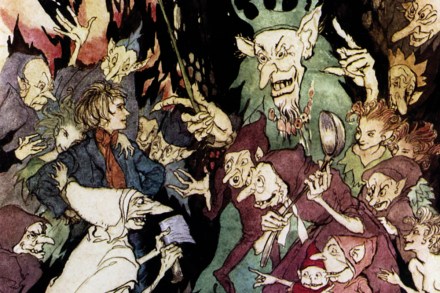
To our jaded century, ‘fairy’ carries connotations ranging from the sentimental to the sickly. It conjures childishness, foolishness, insipidity and softness – Tinker Bell, the Tooth Fairy, the Cottingley photographs that fooled Arthur Conan Doyle, cakes, twinkling lights and a certain brand of soap. Francis Young feels that the word should also be applied to countless other traditions of supernatural entities from earliest times on – that fairy stories help us fathom being human. Young has written or worked on many books about religion and folklore, and this is his third specifically on fairies.

Set in a silver sea: the glory of Britain’s islands

From our UK edition

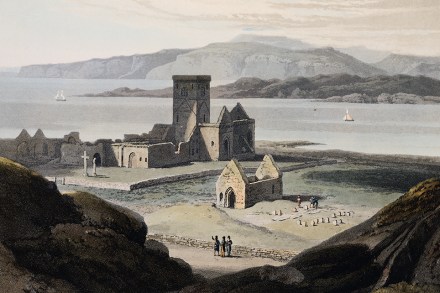
Islands always intrigue, hovering on the horizons of our imaginations – seen, according to your lights, as territories to be taken, ancient redoubts, repositories of secrets, even loci of lands of youth. Where there are no islands, we often imagine them – Plato’s Atlantis, the Celts’ Avalon, the Irish Hy-Brasil, Zeno’s Friseland, Columbus’s Antillia – and occasionally find them, like Terra Australis Incognita, postulated long before Europeans made landfall. Orkney was a trading station long before London, and Iona was the epicentre of Celtic Christianity Britain was once itself an imagined island – or rather islands plurally, called by Pliny Britanniae, one archipelago among others in the great geographer’s speculative world atlas.

England in infra-red: the beauty of the country at night

From our UK edition

John Lewis-Stempel is nearly as prolific as the natural world about which he writes so well. His voice is distinctive – that of a traditional agriculturist of lyrical articulacy, an observant ecologist who finds mythopoeic magic in everyday animals, who honours his Herefordshire origins but addresses all England. Cattle in a frosty field are transfigured into witnesses of the Nativity As with his monographs on meadows and ponds, Nightwalking looks at under-appreciated aspects of the rural scene – this time, the most enigmatic of all. Like Robert Frost, poets often aspire to be ‘acquainted with the night’, and many are cited here.

From hearts of oak to hulls of steel: centuries of the British at sea

From our UK edition

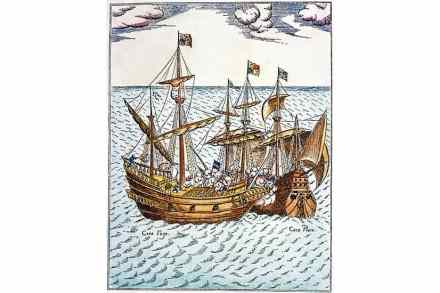
An ocean of clichés surrounds Britain’s maritime history, from Chaucer’s Shipman to the ‘little ships’ at Dunkirk. Tom Nancollas, whose 2019 Seashaken Houses treated lambently of lighthouses, now navigates debris-strewn territorial waters, sounding their depths. He examines 11 craft, from Bronze Age boats to ironclads, that epitomise Britain’s complex compact with the sea. Ships, so sturdily island nation-shaping, are themselves evanescent, exposed to danger and decay, and discarded once defunct. But their traces can be found almost anywhere.

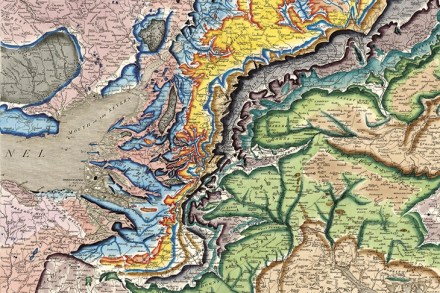
The map as a work of art

From our UK edition

’Tis the season of complacency, when we sit in warmth and shiver vicariously with Mary and Joseph out in the snowy wastes, A Christmas Carol or The Snowman. A handsome exploration of Antarctica seems equally appropriate festive fare. Peter Fretwell brings us chillingly close to a continent that has always inspired awe, evidenced by christenings such as Mount Erebus and Fenriskjeften — the Wolf’s Jaw mountains, named after Fenris, the Norse equivalent of the Beast, which will arise at the end of time to eat the world. The coldest, driest, remotest and windiest place on the planet, surrounded by the roughest ocean, has always seemed like somewhere primordial deities might live and secrets subsist — entrances to underworlds, hidden civilisations, UFO bases.

Eager for beavers: the case for their reintroduction

From our UK edition

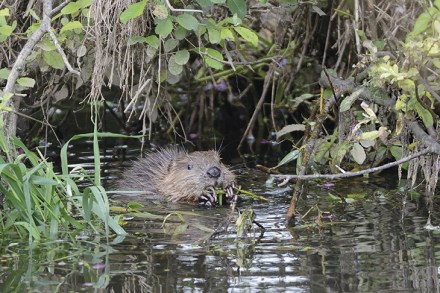
Conservationists are frequently criticised for focusing on glamorous species at the expense of others equally important but unluckily uglier — pandas rather than pangolins, birds rather than bats, and monkeys rather than mole-rats. Europe’s frankly lumpy largest rodent, the European beaver, Castor fiber, is therefore fortunate to have found an ardent advocate in Derek Gow. Beavers have always attracted attention, generally of the wrong kind. Not only do they have lustrous pelts, and flesh edible even in times of fasting (because conveniently classified as ‘fish’) but castoreum, exuded from sacs near their anal glands, which they use to scent mark territory, was thought to have medico-mystical properties.

Our rivers, as much as our oceans, are in urgent need of protection

From our UK edition

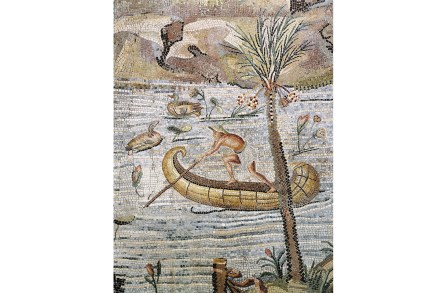
Geography can be history and history geography — and sometimes the most obvious things are overlooked. Laurence C. Smith’s Rivers of Power endeavours to make us see beneath the surfaces of arterial waters and consider them as carriers of civilisation and arbiters of destinies. Rivers are elemental and ambivalent. They are frontiers and highways, destroyers and fertilisers, fishing grounds and spiritual metaphors, power-givers and flushers of poisons. They are the veins of terrains, which like our own veins carry oxygen or pathogens, and extinction when they fail. They inspired Babylonian and Roman legal codes, outlining ideas about access, drainage, fishing, irrigation, maintenance, navigation, pollution and sharing that still course through 21st-century jurisprudence.

The treasures to be found mudlarking by the Thames

From our UK edition

The 1950 B-film The Mudlark tells of an urchin who ekes out an unpleasant existence scavenging the slimy Thames foreshore. He finds a coin bearing the head of Queen Victoria, and creeps into Windsor Castle to see the sequestered sovereign for himself. Through sheer goodhearted pluck, he succeeds where sophisticated politicians have failed, appealing to the Queen’s feelings and reawakening her sense of public duty. Modern mudlarking is a hobby rather than a necessity, but chance finds of apparently insignificant items can convey powerful emotions. Over 23 squelchy years, Lara Maiklem has amassed a battered and stained collection of everyday things turned talismanic by time and immersion.

Living with Leviathan

From our UK edition

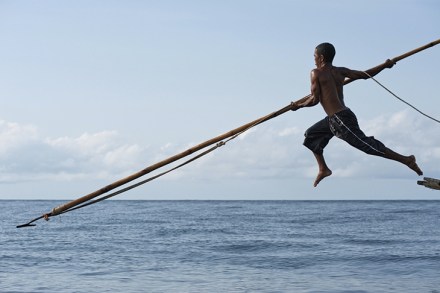
Our relations with cetaceans have always been charged with danger and delight, represented by the extremes of the Book of Revelation’s ‘beast out of the sea’, and the frescoed dolphin-riders of Pompeii. Rare, huge, and unknowable, whales have traditionally been omens, or metaphors for improbability — ‘very like a whale’, Hamlet chaffs the cloud-watching Polonius. They were long chased by daring Basques, Icelanders and Inuit, and prized whenever they washed up — they were declared ‘Fishes Royal’ by Edward II — but then they met 18th-century modernity.

Preachers, princes and psychopaths

From our UK edition

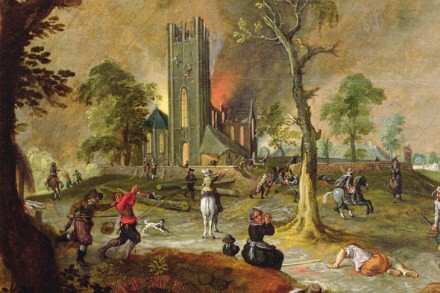
On 23 May 1618, Bohemian Protestants pushed two Catholic governors and their secretary through the windows of Prague Castle, in protest at the anti-Protestantism of Bohemia’s King Ferdinand, soon to be elected Emperor Ferdinand II. The defenestration was only injurious to dignity, and had farcical aspects, a rebel shouting: ‘We shall see if your Mary can help you!’, only to exclaim, ‘By God, his Mary has helped!’ when the men landed in a midden. This sparked what C. V. Wedgwood termed ‘the outstanding example in European history of meaningless conflict’ — the bloodiest campaign ever waged on German soil.